
REX REED: A REMEMBRANCE
Rex Reed, who died Tuesday, March 12th, at his apartment in the Dakota in NYC was famous for his sharp-edged reviews. He stated his opinions forcefully, with verve, in a take-no-prisoners style. But the man I knew for decades had a warmer, softer side offstage; I'd like to share a few remembrances.
By CHIP DEFFAA
Editor-at-Large
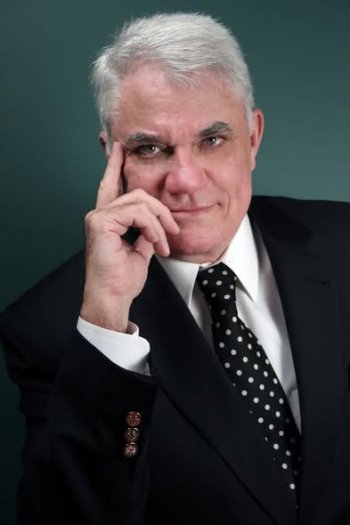
Rex Reed
I’m sorry to note the passing of Rex Reed. He was 87. And it’s startling for me to write that he was 87, because to me he was always the handsome, dashing young man about town whom I first met decades ago. (That’s why I’m posting a couple of publicity photos of him when he was younger, as well as one from more recent years, along with a snapshot of Rex, taken a few years ago, with several cabaret stars he liked very much: KT Sullivan, Joyce Breach, and Jeff Harnar.)
I liked Rex. Oh, he could be quite acerbic in reviews, if he didn’t like a film or a concert, or a cabaret show. And he cultivated a public image of being a curmudgeon. But if he liked you–and we always got along great–he was a pussycat.
I remember one night when we both saw some remarkably dreadful young cabaret singer, who was thrilled that anyone had even come to see her. After the show, she gushed to him that she couldn’t wait to see what he’d write about her. He was gracious to her. Then, when she left, he told me: “I’m not going to write anything about her; it would be like shooting fish in a barrel.” If she were some big-name celebrity doing a bad show, he’d have written a review dripping with acid. He definitely had that vitriolic streak. (And sometimes he could take things too far.) But he didn’t want to gratuitously skewer some unknown newcomer trying her best in a small cabaret room. I liked that.
When he wrote for The New York Post, his title was “film critic,” and some obits identify him as film critic. But he was much more than just a film critic. In the dozen years he wrote for The Daily News, they called him an “Arts Critic,” which he preferred; because he loved all of the lively arts; he liked cabaret, theater, and concerts as much as film. And his interviews with celebrities (often, famously, asking them in the early days, “Do you sleep in the nude?” and other “daring” questions in a more innocent age) were always fun to read. At one time or another, he wrote for seemingly every publication in New York. His journalistic “home,” in his later years, was The New York Observer. He continued writing for them through December of 2025, stopping only when his final illness made it impossible for him to keep writing.
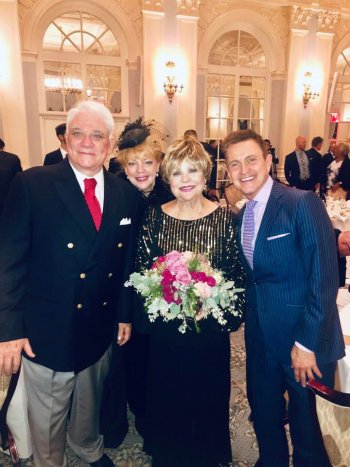
Rex Reed with KT Sullivan, Joyce Breach and Jeff Harnar (Photo credit: Chip Deffaa)
He occasionally appeared in films himself–the best-known one being Myra Breckenridge–which he proudly proclaimed was, in his opinion, “one of the year’s top-ten worst films.”
He was, I felt, almost born to be a critic. He had high standards, bemoaned mediocrity wherever he found it. And he was ready to evaluate and rate or rank seemingly anything he encountered. One night, at Feinstein’s at the Regency–then one of New York’s most celebrated nightspots–we were about to see Rosemary Clooney, a master artist. But long before Clooney came on stage to entertain us, Rex was passing judgment on every bit of food being served. When the dessert arrived, he took one taste–it was NOT up to his standards. “You call THIS crème brûlée?” he called out to a startled busboy. “Take it back and bring me a better one. This is not crème brûlée; this is concrete.” I laughed. He was a character.
If that nightclub had really wanted to please him, they should have served him a classic Cobb Salad, and some very good vanilla ice cream, drenched in the very best hot fudge (NOT ordinary chocolate syrup; which was absolutely unacceptable).
He was proud he came from somewhat humble origins. He said that the most successful members of his family were outlaws–he insisted that the members of the infamous Dalton Gang were relatives, and that his grandfather, as a boy, had sat upon the knee of Jesse James. His family moved around so much in his boyhood, he said, he rarely had chances to make friends. He was happiest watching movies, and wanted to somehow be part of that world. He initially dreamed of being an actor, but found his niche as a writer.
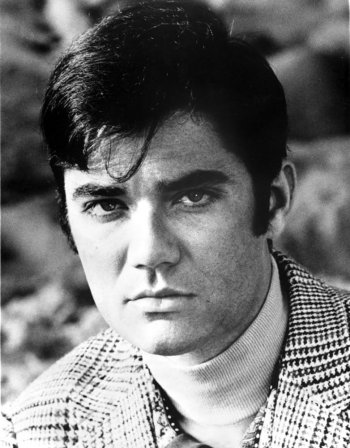
Rex Reed
He said his first “real” job was working as a publicist for 20th Century Fox. When the film studio fired him, he turned to freelance writing out of necessity, interviewing celebrities he’d met. He was surprised when New York newspapers accepted his freelance interviews. But he was on his way. And he really loved his work.
One reason his interviews with older film stars were so very good, right from the start, was that he clearly knew their work so well–and his genuine admiration for his favorites always came through so clearly–they opened up to him. He formed lasting friendships with older stars whom he’d admired as a boy.
He was truly passionate about old-time show business (as I was). And he seemed to be almost everywhere that even a hint of old-time show business could be found. I remember, in 1974, going to the out-of-town tryout of Good News at the Shubert Theater in Philadelphia. This was a revival of the hit 1927 Broadway musical, co-starring (at that point) Alice Faye and John Payne. (Payne would soon be replaced by Gene Nelson.) And, OF COURSE, Rex Reed was there. He wasn’t going to wait until the musical reached Broadway; he’d made the trek, as I had, to Philadelphia, to see this big-budget revival of a 1920 show (with two film icons from the 1930s and ’40s) as soon as possible. He felt he had to be there (as did I).
As for his personal life, he pretty much kept that private. No one was yet publicly “coming out” in the early 1970s. And he might often bring to public events an older actress friend as his guest. It certainly was no secret in the industry that he was gay. But he kept his private life separate from his public life.
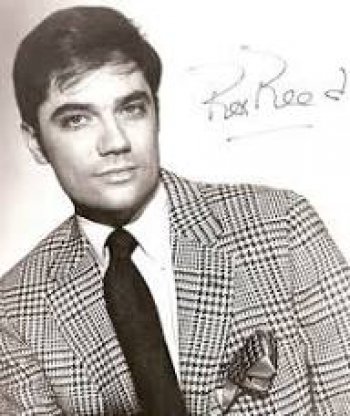
Rex Reed
For about a quarter-century, he and record producer Rick Winter (of DRG Records) were a couple. Their relationship lasted until Winters’ passing.
Rex felt that–apart from that long-lasting, meaningful relationship with Winters–he’d been generally luckier in his life with friendships than with love. And his life, over the years, was rich with friends.
His favorite era for films was the 1940s. He felt that the film industry–like so much of American pop culture–had gone through a dumbing-down in his lifetime. Not that there weren’t still some great films being made; but it felt to him that Hollywood, in the 1940s, turned out more films that he found to be intelligent, and smartly produced, than were being turned out today.
He was extraordinarily prolific, up until almost the very end, turning out countless reviews with great speed, year after year. Many of his interviews with stars (which I enjoyed more than his reviews) may be found in the eight books he turned out.


Leave a comment