
The New York Pops: “007: James Bond Forever”
Maestro Steven Reineke and guest artist Lena Hall open the season with the enduring glamour and changing musical styles of James Bond.
By Jack Quinn, Publisher
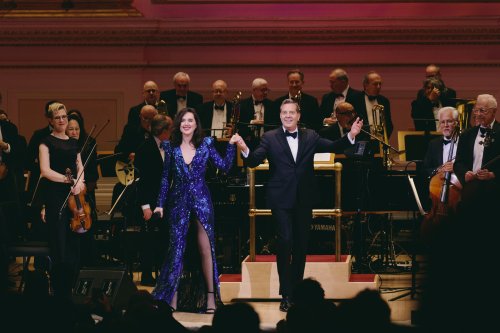
Guest artist Lena Hall with Maestro Steven Reineke and The New York Pops in “007: James Bond Forever” at Carnegie Hall on October 23, 2026 (Photo credit: Jenny Anderson)
James Bond’s most dependable weapon may be his music. Actors change, enemies come and go, and plots become increasingly elaborate. Yet a few guitar notes or a familiar brass figure can establish his presence before he appears.
The New York Pops opened its Carnegie Hall season on October 23, 2026, with “007: James Bond Forever.” Music director Steven Reineke conducted, with Lena Hall as guest artist. Drawing on 18 films released between 1962 and 2021, the program celebrated a musical identity strong enough to accommodate orchestral suspense, romantic ballads, soul, and hard rock.
Hall and the orchestra were strong throughout. The songs carry powerful associations with their original performers, including Shirley Bassey, Paul McCartney, Tina Turner, and Adele. Hall gave this varied material a consistent vocal presence. Reineke kept the orchestra an equal partner, emphasizing how much of Bond’s character lives in the instrumental writing.
The opening “James Bond Theme” from Dr. No (1962), composed by Monty Norman and arranged here by Reineke, established that character immediately. John Barry’s original arrangement supplied the familiar combination of guitar, brass, and tightly controlled menace. Released under John F. Kennedy and Soviet leader Nikita Khrushchev shortly before the Cuban missile crisis, Connery’s first Bond adventure turned space-race sabotage into stylish entertainment. The music makes confidence itself sound dangerous.
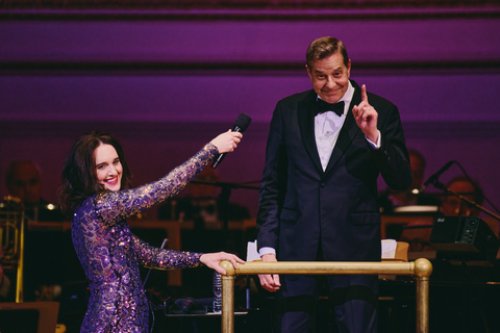
Guest artist Lena Hall with Maestro Steven Reineke and The New York Pops in “007: James Bond Forever” at Carnegie Hall on October 23, 2026 (Photo credit: Jenny Anderson)
Two selections from From Russia with Love (1963) separated action from romance. Barry’s driving “007 Theme” provided rhythmic momentum, while Lionel Bart’s title song, originally sung by Matt Monro, offered a smooth melodic invitation for Hall. Made during the same Kennedy-Khrushchev period, the film’s cipher-machine intrigue placed romance inside a world of uncertain loyalties. That tension gives the song an appealing double meaning.
“You Only Live Twice” (1967) brought a gentler atmosphere. Barry’s circling string introduction and expansive melody, with lyrics by Leslie Bricusse, suggest distance and longing. Nancy Sinatra’s original remains closely associated with the song’s dreamlike character. Released under Lyndon B. Johnson and Leonid Brezhnev, the film turned space-race fears into a spectacular adventure for Connery.
“Thunderball” (1965) supplied the more theatrical alternative. Barry and lyricist Don Black created a song whose broad phrases and demanding climax became a natural vehicle for Tom Jones. Hall took on that tradition of vocal command. Also released under Johnson and Brezhnev, the film built Connery’s mission around stolen nuclear weapons. The song turns its threat into something grand and almost luxurious.
Barry’s instrumental theme for On Her Majesty’s Secret Service (1969) gave the orchestra substantial material of its own. Its urgent pulse and the original score’s synthesizer writing expanded the Bond sound without weakening its impact. Released under Richard Nixon and Brezhnev as détente began to develop, George Lazenby’s only Bond film combined biological blackmail with an unusually consequential romance. The theme’s forward motion remains compelling without the images.
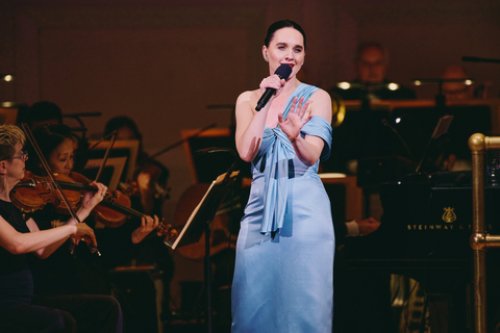
Guest artist Lena Hall and The New York Pops in “007: James Bond Forever” at Carnegie Hall on October 23, 2026 (Photo credit: Jenny Anderson)
“Nobody Does It Better,” from The Spy Who Loved Me (1977), offered warmth and affectionate humor. Marvin Hamlisch’s melody and Carole Bayer Sager’s lyrics, first sung by Carly Simon, allow admiration to carry a trace of exasperation. Released under Jimmy Carter and Brezhnev during détente, the film paired Roger Moore with Barbara Bach’s Soviet agent against a nuclear threat. The song makes Bond’s appeal sound personal.
Paul and Linda McCartney’s “Live and Let Die” (1973) changed the musical temperature. Its abrupt shifts from reflective ballad to explosive rock demand a different kind of control from singer and orchestra. Originally performed by Wings and produced by George Martin, it remains one of the series’ boldest departures. Released under Nixon and Brezhnev, Moore’s first Bond film exchanged superpower confrontation for a heroin-smuggling operation.
The instrumental “Theme from Moonraker” (1979) restored Barry’s spacious lyricism. The title song, recorded by Bassey with lyrics by Hal David, offers a romantic melody that can stand apart from the film’s extravagance. Released under Carter and Brezhnev shortly after SALT II, the adventure sent Moore into space against a billionaire’s extermination scheme. The music supplies elegance where the story favors spectacle.
“A View to a Kill” (1985), written by Barry and Duran Duran, brought sharper pop rhythms and the energy of the music-video era. Hall’s assignment shifted accordingly from sustained romantic lines toward a more pointed delivery. Released with Ronald Reagan in office and Mikhail Gorbachev newly leading the Soviet Union, Moore’s final Bond adventure centered on control of the microchip market.
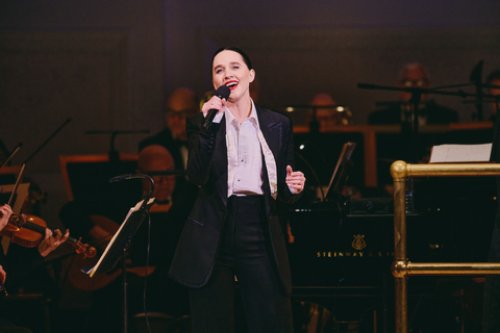
Guest artist Lena Hall and The New York Pops in “007: James Bond Forever” at Carnegie Hall on October 23, 2026 (Photo credit: Jenny Anderson)
The first half ended with “Diamonds Are Forever” (1971). Barry and Black’s song, another Bassey signature, combines a poised melody with a cool distrust of love. Hall took on music whose appeal lies as much in its attitude as its vocal demands. Released under Nixon and Brezhnev, Connery’s return linked diamond smuggling with satellite-based nuclear blackmail. The song’s sophistication has proved more durable than the machinery.
After intermission, “All Time High,” from Octopussy (1983), returned to Barry’s romantic writing. Tim Rice’s lyrics avoid the film’s difficult title, while the melody favors direct feeling over menace. Rita Coolidge recorded the original. Released under Reagan and Yuri Andropov during renewed nuclear tension, the film involved Moore in a Soviet general’s bomb plot. The music offers an affectionate escape from those stakes.
“Licence to Kill” (1989) brought Hall back to the commanding soul style associated with Gladys Knight. Written by Jeffrey Cohen, Narada Michael Walden, and Walter Afanasieff, the song carries emotional weight through its broad phrases and insistent refrain. Released under George H. W. Bush and Gorbachev months before the Berlin Wall fell, Timothy Dalton’s revenge mission shifted Bond toward the harder crime thriller.
David Arnold and Black’s “The World Is Not Enough” (1999) combined classic Bond grandeur with Garbage’s alternative-rock identity. Shirley Manson’s original vocal gives its elegant melody a watchful, possessive quality. Released under Bill Clinton and Boris Yeltsin amid renewed international tensions, Pierce Brosnan’s adventure placed oil interests and terrorism at its center. The song makes ambition sound seductive.
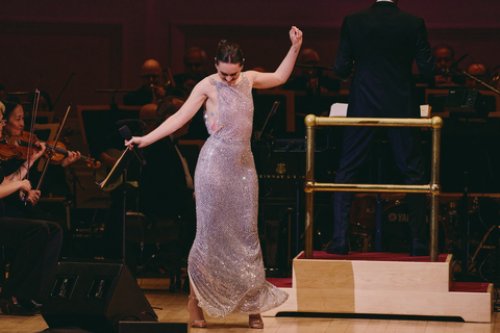
Guest artist Lena Hall with Maestro Steven Reineke and The New York Pops in “007: James Bond Forever” at Carnegie Hall on October 23, 2026 (Photo credit: Jenny Anderson)
“You Know My Name,” from Casino Royale (2006), took a more direct approach. Arnold and Chris Cornell’s hard-rock writing gave Hall another forceful stylistic change. Released under George W. Bush and Vladimir Putin during the post-September 11 wars, Craig’s first Bond pursued terrorist financing through a high-stakes poker game. The music announces a tougher, less comfortable hero.
“GoldenEye” (1995), written by Bono and the Edge for Tina Turner, restored a slower, more watchful atmosphere. Its controlled pace and dark color connect contemporary pop writing with the older Bond tradition. Released under Clinton and Yeltsin after the Soviet collapse, Brosnan’s debut made abandoned loyalties and a stolen satellite weapon its central threats.
Radiohead’s “Spectre” (2015), arranged by Reineke and sung by Hall, was an especially interesting choice. Written for the film but unused, it offered unsettled harmonies and a less predictable sense of resolution than the familiar Bond anthem. Released under Barack Obama and Putin after the Snowden disclosures, the film built its intrigue around a surveillance conspiracy. This musical alternative deserved its place in the program.
Billie Eilish and Finneas O’Connell’s “No Time to Die” moved further inward. Its spare opening and gradual orchestral expansion make distrust sound wounded rather than fashionable. Released under Joe Biden and Putin during the pandemic, Craig’s final Bond confronted a DNA-targeting nanobot weapon. The song’s restraint gives its larger passages greater emotional force.
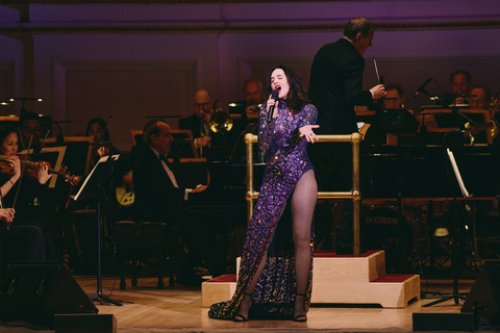
Guest artist Lena Hall with Maestro Steven Reineke and The New York Pops in “007: James Bond Forever” at Carnegie Hall on October 23, 2026 (Photo credit: Jenny Anderson)
The printed program ended with “Skyfall” (2012), written by Adele and Paul Epworth, in J.A.C. Redford’s arrangement. Its broad melody and stately orchestral scale provided a substantial musical close. Released under Obama and Putin as cyber threats challenged traditional intelligence work, the film placed Craig’s Bond between institutional loyalty and personal revenge. The song recalls the series’ past while accepting the possibility of loss.
Across the evening, Barry’s melodic imagination remained the central reference point. Arrangements by Nic Raine and Alex Johansson, alongside contributions from Reineke, John Langley, and Redford, brought changing popular styles into a shared orchestral language.
Hall’s sustained contribution and the orchestra’s strong playing held that range together. Reineke gave the music room to stand on its own. Long after the details of a villain’s plan fade, a Bond song can still summon the danger, romance, and impossible confidence that brought audiences back.
The New York Pops: “007: James Bond Forever” (October 23, 2026)
Carnegie Hall
Stern Auditorium / Perelman Stage, 881 Seventh Avenue at 57th Street, in Manhattan
For tickets, call Carnegie Charge at 212-247-7800 or visit http://www.NewYorkPops.org
Running time: two hours including one intermission


Leave a comment