News Ticker

Beethoven

Hershey Felder: The Piano and Me
August 1, 2026

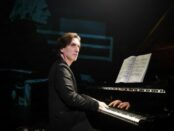
Famous pianist Hershey Felder has toured the world with his many shows about legendary composers from Chopin and Tchaikovsky to Gershwin and Irving Berlin giving over 6,000 performances. Now he has chosen to tell his own story from his upbringing in Montreal to the present and proves himself to be a consummate storyteller both on the piano and in words, incorporating the most famous piano show pieces of the last 250 years. Called "The Piano and Me," the show is riveting for both classical music aficionados as well as those unversed in anything other than pop music of today. Playing 16 people who were instrumental in his career, he brings them all to life for us. [more]
Compagnie Hervé KOUBI: “Sol Invictus”

January 25, 2024

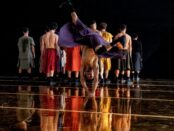
This hotbed of virtuosity, indeed, made his troupe one gorgeous community of physically exuberant and fearless citizens.  Whether he communicated any deeper existential or human truths probably differs with each viewer’s sensibility, but watching these fine physical specimens flip, fly, roll and balance on their heads had its vicarious thrills, perhaps dimmed with the constant repetition of feats of athletic prowess to the point of exhaustion.  Perhaps sensing this, Koubi doubled down and ended the work with dancers being tossed high and caught at the last moment, an adrenaline rush if there ever was one. [more]

Fall for Dance 2019: Program 5

October 16, 2019

Monica Bill Barnes totally changed the mood with her thoroughly delightful “The Running Show” which used physical contests as a metaphor for dance.  Barnes stood in the midst of sixteen students from Hunter College as her creative partner, Robbie Saenz de Viteri acted as a sports announcer, egging the large group on as they performed complicated patterns of finger snapping. Saenz de Viteri was the backbone of “The Running Show,” his narration, in turn witty, humorous and deeply thoughtful, drove the action which included more competitions; Barnes trying to beat her turning record; and an appearance of a young ballet dancer, Charlotte Anub.  She was clearly too young to dance on point, but she had a natural stage presence as she turned and performed basic pointe work, charming the audience.  “The Running Show” left a positive buzz in the audience, casting a quiet spell. [more]

American Classical Orchestra and Chorus: Cherubini, Beethoven and Mozart

November 24, 2017

The two soprano soloists were marvelous. Hélène Brunet combines supple lyricism with technical elegance. Clara Rottsolk’s voice is at once silvery and earthy, delicate and powerful. In their individual arias, both women committed to highly ornamented interpretations; both were able to make ornament feel like a spontaneous, unplanned and experimental development of ideas. In his conducting, Crawford gives his best singers – such as Brunet and Rottsolk – considerable room to make the music their own without ever losing coherence or the appropriate tempo. When singing together, as in “Domine Deus, Rex caelestis,” these sopranos’ voices were beautifully matched. [more]

Twyla Tharp and Three Dances

July 13, 2016

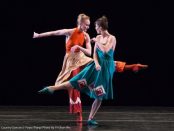
From 1976, “Country Dances” represented the post-experimental avant-garde phase after breakout success with her ballets for major dance companies. From 1980, there was “Brahms Paganini,” her entrée into her hybrid style combining her eccentric, seemingly casual movements with the classical ballet vocabulary and from 2016, “Beethoven Opus 130,” virtually a classical ballet with quirky touches. [more]

American Classical Orchestra: “As the Masters Heard It, Music by Beethoven, Mozart and Schubert”

March 22, 2015

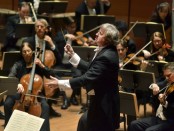
The pieces chosen by Crawford for this concert represented the very best of the Viennese Classical period: each piece in the evening's repertoire was a unique marriage of deep drama and expansive beauty. On this evening, the particular mission of the American Classical Orchestra – to play European masterpieces of orchestral music on period instruments – was brilliantly clear in both purpose and effect. Designed to enable audiences to hear what composers, their musicians and their audiences actually heard two or three centuries ago, this orchestra transported contemporary audiences back in time, revealing what the edginess and innovation of the past first sounded like. [more]