
Sue Matsuki and the Heartbeat of Winter Rhythms
At Winter Rhythms, the lights warm, the lobby hums, and Sue Matsuki runs Urban Stages with the grace of a mentor and the stamina of a producer who loves every beat of the work. More than 150 artists gather for 11 nights of music, community, cookies, and the unmistakable generosity that defines this festival.
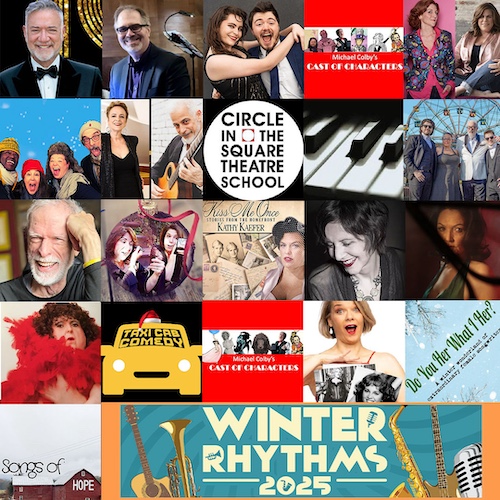
All Performers of Winter Rhythms 2025
By Jack Quinn, Publisher
Urban Stages always feels a little warmer in December. Something in the air shifts. The lobby lights soften. The house carries that faint mix of evergreen, cold air, and anticipation. It’s the start of Winter Rhythms, and Sue Matsuki is exactly where she belongs—moving through the space with quiet confidence, greeting performers, checking schedules, vacuuming the front lobby, smoothing the night into place.
She knows this rhythm by heart. Every year, she begins in July, crafting a lineup that will stretch across eleven nights and showcase more than 150 artists. “Once everything is set,” she said with a laugh, “I don’t get exhausted. I get exhilarated. Exhaustion comes later.”
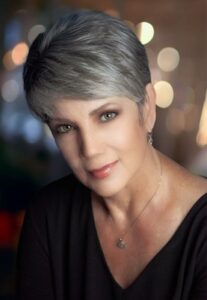
Sue Matsuki, Photo by Stephen Mosher
That mix of pride and disbelief is earned. The festival she now produces single-handedly began as a much smaller idea—a week of cabaret tribute shows. Back then, it was more experiment than institution, a nod to the Musical Theater and Cabaret communities. Yet something clicked. A spirit took hold. By the time Matsuki joined as a performer five years later, Winter Rhythms was already evolving, widening its scope and nurturing a growing community of artists eager to be part of it.
Today, it’s one of New York’s most beloved musical traditions. In its own modest way, it has the glow of a holiday ritual: the champagne toast on opening night, the two nightly performances, the hallway buzz between sets, the closing-night “Song of Hope” sung as a toast to the year ahead. At the center is Matsuki, moving quickly but with purpose, offering calm, offering cookies, offering space for artists to simply do what they do best. She carries the generosity of the season and the precision of the profession. Every detail matters. Every performer is welcomed. And all of it fuels a mission larger than any single show.
Winter Rhythms is the primary fundraiser for Urban Stages’ outreach programs—kids’ songwriting camps; dance and theater workshops in public libraries in several languages; Kindermusik programs; reading to the elderly; and more. Quiet scholarship opportunities thread through the organization’s year. “That’s the real reason I do it,” she said. “Musicians supporting musical theater, supporting the arts. If Frances calls, I’m there. She’s the heart of Urban Stages.”
Frances Hill, Urban Stages’ Founder/Director, sets the tone of kindness that still permeates the theater. It’s the invisible foundation. Matsuki sees it as her duty to honor that legacy, protect it, and extend it.
The festival’s spirit is not complicated. It’s just sincere. And sincerity, in New York, has a way of standing out.
Origins and the Long Arc Forward
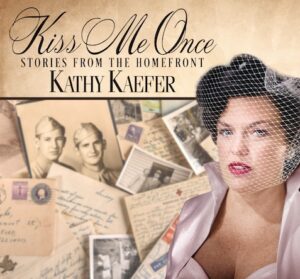
Kathy Kaefer
Winter Rhythms began small: one week, a handful of tribute shows. One of those early pieces—a Kaye Ballard tribute by Gretchen Reinhagen—won the Bistro, the MAC, and the Nightlife Awards, a rare hat trick that signaled the festival’s growing artistic pulse. In a full-circle moment, Gretchen returns this year for a stand-up comedy show with Joan Crowe called Laughing Matters.
Matsuki entered later—first as talent, then as helper, then as co-producer. In 2021, the responsibilities fully shifted to her. She didn’t make a speech about it. She simply stepped in and began doing the work. Anyone who knows her will tell you that’s exactly her style. When producer Tom Toce, now President of Urban Stages’ Board, passed her the baton, she was proud and honored to take over.
Now, in its seventeenth year, Winter Rhythms is a world of its own. More than twenty shows. Eleven nights. A waiting list that forms almost instantly. “We only give a small musical stipend,” she explained. “Everyone donates their time. The fact that some of the biggest names want to do this—it’s a tribute to Frances and to the program.”
The festival’s identity is unmistakable. Cabaret is the spine, but the limbs stretch wide: jazz, pop, blues, musical theater. “It’s a big umbrella,” she said. “And everybody fits.”
This year’s opening night centers on Eddie Bruce’s Tony Bennett tribute. It’s polished—a big Vegas-style show with a video element—and a smart opener for a gala attended by deeper-pocketed audiences. “Tony’s centennial is next August,” she said. “It’s the right show at the right time—hopefully with the right draw!”
But the heartbeat of Winter Rhythms lies in everything that follows: returning favorites, new experiments, and unexpected delights woven together into a single tapestry.
A Festival with Many Voices
Winter Rhythms is proudly eclectic. Mark Dundas Wood of Bistro Awards once wrote that it is “the largest gathering of diversified cabaret talent outside the Cabaret Convention.” Matsuki quotes the line often. It’s accurate—and it captures the festival’s breadth.
This year, she pushed those boundaries even further.
For the first time, she incorporated stand-up comedy. “We haven’t really had stand-up before,” she said. The addition feels both refreshing and inevitable. The festival grows by instinct; when something belongs, she knows it instantly.
A comedy troupe called Taxi Cab Comedy joins the lineup with improvised sketches nodding to the absurdities of going home for Christmas. “They’re kind of like those Progressive Insurance commercials,” she said. “Just funny, relatable scenarios. I love them already.”
Jazz has its spotlight night with Bistro and MAC Award winners Rosemary Loar and Mary Foster Conklin, bringing the polish and sophistication the festival is known for.
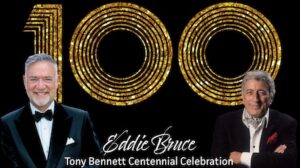
Eddie & Tony
Several “residency acts” return as anchors. Married couple Ritt Henn and Beth Falcone present their tenth Holiday Survival Kit, a whirlwind of global holiday music. “Beth plays like nine instruments, and Ritt treats the upright bass like a guitar and a cello. It’s incredible.”
Circle in the Square’s graduating musical-theater class returns under Sarah Louise Lazarus’s direction. “They’re stellar,” Matsuki said. “They bring these Broadway blockbuster songs and light up the room.”
Lyricist/Librettist Michael Colby offers new installments of Cast of Characters, while Tom Toce’s Songs of Hopebrings the festival home with the warmth of a small gift.
Seven recurring acts form the festival’s framework. Around them, Matsuki builds a rotating lineup each season. “I diversify the talent,” she said. “I diversify the bands. I want more working musicians to have a chance to participate.”
New artists this year include Eden Casteel with a Madeleine Kahn tribute; Kathy Kaefer with her WWII-veterans tribute; Scott Barbarino & the BevNaps; jazz pianist Ron Drotos with Juliet Ewing, Susan Mack, and Leslee Warren; and one of New York’s most beloved drag queens, Ruby Rims.
Longtime supporters and alumni also return: Deborah Stone with Sean Harkness, Alara Magritte & Daniel Rosen, Steve Schalchlin (donating his stipend to sponsor the drum-kit rental), songwriter Amy Engelhardt with Tracy Stark, and the beloved Meg Flather sharing a show with Lisa Viggiano.
And before the first chord is played, Winter Rhythms begins the same way it always does: with a champagne toast. “From seven to seven-thirty,” she said. “It’s our moment to bless the whole thing.”
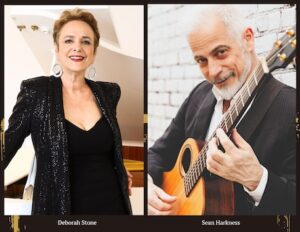
Deborah Stone & Sean Harkness
The Practical Magic of Producing
One of the wonders of Winter Rhythms is that it feels expansive despite its tiny budget. “Twenty-one shows over eleven nights for about six thousand dollars,” she said. “It’s insane. But it’s generosity—our community.”
Every performer donates their time. Musicians receive a small stipend based on ensemble size and instrumentation. Matsuki’s honesty about money keeps everything simple. “I’m very direct,” she said. “And everyone still says yes.”
To support the theater’s needs, she created a Holiday Wish List—a donor-friendly registry ranging from a $40 makeup mirror to a $2,000 lighting instrument. “If one person buys a light and someone else buys batteries, that’s wonderful,” she said. “It all helps.”
Wish List: https://www.urbanstages.org/wishlist
This year, Urban Stages will send every artist a letter acknowledging their tax-deductible donation—a small gesture of fairness that reflects Matsuki’s values and her understanding as a performer herself.
Success, for her, is not defined by numbers. “Sold-out houses are great,” she said. “But if twenty-five people see something meaningful and walk out talking about it—that’s success.”
She carries both the creative expectations of a producer and the emotional stewardship of a community organizer. Few people hold both. She handles publicity, graphic design, coordination, troubleshooting. She and the stellar Antoinette Mullins have even built a Black Friday ticket sale opportunity—“watch for that code,” she added. She posts every social-media update. She keeps the festival moving with clockwork efficiency.
“It has to run like a Swiss Army watch,” she said. “And it does.”
Mentors, Protégés, and the Living Songbook
What gives Winter Rhythms its soul is the conversation between generations. Matsuki is deeply invested in mentorship—both teaching and bridge-building. “It’s everything,” she said.
Her dream project, still percolating, is a concert titled Mentors and Me—a special fundraising idea that would pair cabaret icons like Marilyn Maye, Jeff Harnar, and KT Sullivan with the artists they’ve shaped. “It would celebrate the lineage,” she said. “Passing things down. Keeping the flame alive.”
“Cabaret is America’s living songbook,” she said. “When younger singers discover Gershwin or Porter or Berlin, they realize how much depth is in those songs. That’s our mission too. Keeping the music alive.”
 Behind the Curtain
Backstage at Winter Rhythms is different from most festival spaces. It hums with something warmer. Matsuki greets everyone with snacks. She bakes cookies. She keeps chips and water on hand. Her tone of welcome steadies nerves instantly.
Upstairs, two dressing rooms open into each other. Performers wander between them before the show, talking, laughing, adjusting costumes. When Ruby Rims performs, feather boas spill into corners, trailing a little glamour behind them.
Volunteer Mary Lahti deserves a shout-out. The first to raise her hand, she shepherds tech changes, handles entrances, maintains pacing between early and late shows, pours wine—and she’s also a singer who has performed in the festival. “Mary’s amazing,” Matsuki said.
House Manager Leigh Selting, added a few years ago, has been a game-changer. “I could not do this festival without him,” she said.
The result is a backstage that feels like extended family. “I wouldn’t book anyone who isn’t kind,” she said. “There’s no room for divas. I’ve got a wait list of ten acts ready to go without attitude.”
Only once in Sue’s twelve years did someone cross that line. She didn’t elaborate. She didn’t need to. The boundary is clear. The community protects itself.
Sue Matsuki, the Artist Behind the Producer
Before producing full-time, Matsuki spent twenty-three years as personal assistant to a billionaire—rigorous work that sharpened her organizational instincts and taught her to manage personalities, structure time, and control chaos. Those skills serve the festival daily.
Her artistic life is equally rich. She writes Sue’s Views, now in video form on her YouTube channel—a column on professionalism and etiquette in performance spaces. She hosts open mics at Pangea. She co-wrote So You Want to Sing Cabaret with David Sabella, a book used by teachers nationwide.
Her mentors included titans like Julie Wilson, Jan Wallman, and Trudi Mann. Wilson, especially, left her mark. “Julie gave me the first Julie Wilson Award,” Matsuki said. “She told me, ‘I’m giving this to you not just because you’re a great singer but because I know you’ll carry forward the boa.’”
(“Torch,” in Julie’s vernacular.)
Matsuki carries it still.
When asked what she wishes she’d known earlier, her answer was simple: “Keep it about the talent. Don’t compromise. Surround yourself with people you want to be a family with.”
It’s exactly how she runs Winter Rhythms.
The Season Closes, and the Work Begins Again
When the final show ends on December 14 and the champagne flutes are cleared, Matsuki will finally allow exhaustion to settle in. She always says the same thing: “Talk to me on December 15. Mama needs a break.”
But mama will go straight into co-producing the NATS Musical Theater Competition in January, so maybe she’ll get a brief nap between gigs.
The truth is that her mind is already circling next year’s ideas—she mentioned wanting to come full circle with a festival of all tribute shows. New voices, new partnerships, the familiar and the unexpected.
Winter Rhythms is a celebration of music, yes. But it is also a celebration of community, generosity, and the beautiful way New York holds tradition and change at the same time.
It’s only fitting that Sue Matsuki is the one holding the reins. She has the heart for it. She has the discipline for it. And she has the love for it.
Urban Stages glows a little brighter because of her.


Leave a comment