
The Invention of Love
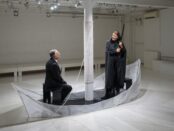
At the center of this improbable vessel is David Greenspan, who gives one of those performances that make the phrase “command of language” sound insufficiently imposing. As the elderly Housman—identified in the play as AEH—Greenspan enters in a close-fitting three-piece academic suit, immaculate facial hair, and the deliberate gait of a man whose body has finally been persuaded to move at the same speed as his thoughts. He speaks Stoppard’s enormous sentences with an old-fashioned, almost declamatory musicality, and although the Theaterlab acoustics occasionally swallow a softened syllable, the overall effect is extraordinary. Greenspan does not seem to be delivering Stoppard’s prose so much as discovering it. Latin, Greek, textual criticism, literary gossip, manuscript variants, etymology, metaphysics, and the occasional barb emerge as if they were all part of the same nervous system. What could, in another actor’s hands, become an endurance test in the history of Western thought becomes something closer to chamber music. Greenspan makes Housman funny without making him cute, sorrowful without making him sentimental, and formidable without ever asking us to admire his cleverness. He simply inhabits it. Watching him negotiate this verbal Himalaya is itself worth the price of admission. [more]