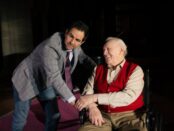

Scotty Bennett is a retired businessman who has worn many hats in his life, the latest of which is theater critic. For the last twelve years he has been a theater critic and is currently the treasurer of the American Theatre Critics Association and a member of the International Association of Theatre Critics.
He has been in and around the entertainment business for most of his life. He has been an actor, director, and stage hand. He has done lighting, sound design, and set building. He was a radio disk jockey and, while in college ran a television studio and he even knows how to run a 35mm arc lamp projector.
"January" presents a story about the emotional impact of the killing of one child by another by weaving together the thoughts and actions of the two single mothers involved and how the national media treats the event. There are scenes blending memories and dreams with reality, presenting the protagonists' thoughts as if they existed in real-life moments with an almost hallucinogenic quality. These dramatic devices work most of the time. Still, there is a critical point in the play where what is being presented goes on for too long, almost to the point of losing the story thread. The projections used are effective but sometimes come very close to being propagandistic. Even with some of the unevenness of the production, it does present an important story that needs to be told. "January" is a heavy lift emotionally but ultimately worth the effort. [more]
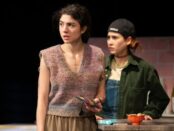
Charlotte Bennett directs an exquisite cast of three in an exploration of these themes. Nicole Sawyerr solidly leads the ensemble in the lead role of Abigail Waller, a working-class playwright. Sawyerr is supported by Samuel Armfield, who perfectly embodies two characters: an unnamed theatrical director with a class-based condescending attitude and Darren, Abigail's brother. The third member, Debra Baker, skillfully takes on a number of other characters, the two most important of which are Abigail's mother and an actress portraying the character of a mother in a play written by Abigail. Baker gives distinctly different presentations of these two pivotal characters. She also takes on a number of other ancillary characters who voice supporting elements to the overall story. [more]
There are a number of problems with these vignettes, ranging from the individual characterizations of the men involved to the superficial nature of the historical details of the events being discussed. Sheppard overacts in portraying O. Henry as a barely coherent alcoholic. It is not credible that a person as "drunk" as O. Henry would be engaged in any serious discussion with the likes of Mark Twain and William Hearst, let alone Teddy Roosevelt or even Schiff. The performances don’t engage the viewer to care about who the character is and what he has to say. In a number of the scenes, the dialogue seems contrived to present a particular socio-political viewpoint without any explication or depth. [more]
Sarah Blush directs a cast of five in the story of a father and daughter on a road trip from New York City to a storage unit in California. It is a trip that is both se in the present and past, and it is filled with a flow of information that mixes reality with fantasy in a liminal space between sanity and insanity. This story operates from a different dimension the moment one walks into the performance space. The set is a large orange square, shag-carpeted pit with no clues as to the staging. The two principal characters making this trip by car never sit as if they are in a car but casually walk the raised outside edge of the box. It is an element of this stagecraft that adds beautifully to the edginess of the production. [more]
"Welcome to The Big Dipper" is a musical comedy with music and lyrics by Jimmy Roberts and a book by Catherine Filloux and John Daggett (inspired by the play "All Dressed Up and Nowhere to Go" by Filloux). It is under the direction of DeMone Seraphin and is billed as being based on an actual event. However, the nature of the event is never revealed. It is a mixed bag of things that work and don’t, which leads to confusion about what it’s about and where it’s trying to go. [more]
"Woman on a Ledge" is an adaptation by Hershey Felder of harpist Rita Costanzi’s writings about her life. Ms. Costanzi is a world-renowned harpist whose life experiences have been woven into a fascinating and highly engaging theater piece. As directed by Lissa Moira, this one-woman production beautifully integrates Ms. Costanzi’s superlative playing with her solid storytelling. One does not have to be a harpist or classical music fan to enjoy this production. Her storytelling alone is worth the time spent, and it becomes exceptional when coupled with her exquisite playing, used to underscore elements of her story. [more]
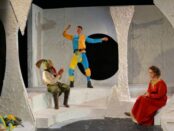
Ako's portrayal of Izumo no Okuni combines traditional Japanese dance movements with Western-style acting. The nature of the script limits the impact of her performance. The dialogue is simplistic, verging on a museum presentation. The story being told is too small for someone who is such a large character in the folklore of Japan. It is a story that calls for a larger cast to show the impact her dance and performance style could have on audiences. Okuni certainly did not dance alone, so what needs to be added is the pageantry and bravado of a fully engaged dance ensemble. Ako also portrays Lady Yodo, the mistress of the late Toyotomi Hideyoshi, credited with the unification of Japan that led to the establishment of the Tokugawa shogunate. [more]
"Café Utopia" by Gwen Kingston and directed by Ashley Olive Teague tells the tale of a juice bar that, on the surface, appears to be socially progressive, but behind the scenes, is a different story. Based on real stories from workers involved in the current efforts to unionize juice bars and coffee shops, this play lays bare the corporate behavior that puts profits before workers. During changes in some scenes, different characters read statements collected from workers about their work-related experiences. These moments are important in underscoring the overall content of the show as it relates to the plight of workers who lack union protection. [more]
Haller has created a world where robots have conquered all of humanity through the ability to copy, with precision, the technical aspects of a functional society. The lack of understanding of human artistic creation keeps them from destroying a particular element of human culture: creative artists. The missing element in the totality of their superior nature is the spark of artistic creation. It is an aspect of humans they do not fully understand. So, they keep alive those humans considered to be creative artists in an attempt to understand and replicate the human ability of singular artistic creation. [more]
Fisher directs a solid ensemble through a production of "Medea" that is a spoof of a college production with a gay man in the role of Jason and a feminist as Medea. It takes place from the last days of rehearsals to opening night. It is a play within a play with a romantic entanglement between the actor playing Jason and the actor playing Medea. It is amazing that with all the different elements of two storylines being played out the show works as well as it does. [more]
"Rawshock" is a powerful, insightful, compelling play that lays bare the craven manipulation of corporate healthcare in the name of profits. It is beautifully written by Rita Lewis and superbly directed by Ken Wolf, who also did the lighting and sound design. It is a story about a group of patients in a psychiatric hospital setting and what happens to them when the new corporate owners of the hospital disrupt their therapeutic group. It is a gem of a show with outstanding performances that should not be missed by anyone who enjoys solid dramatic theater. [more]
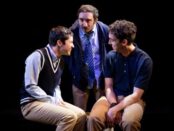
The story weaves together the group's history with flashbacks to their childhood, high school years, and a time immediately after college. It is a show that tries to cover too much territory without getting a solid handle on any of it. There are two potential dramatic threads, either of which would provide a strong story arc if developed as the heart of the story. One is the Vietnam War's social, political, and personal impact on the group members, and the other is the interpersonal romantic relationships within the group. These two themes are the strongest in the show but lack the depth to explore the dramatic possibilities fully. [more]
Welcome to 'Lakeplay," a character study-play written by Drew Valins and directed by Hamilton Clancy. It is billed as “a terrifying adventure” but does not live up to that description. There are moments of suspense, but not terror-filled. If being frightened by a story is what you are looking for, this is not the show for you. The show is more of a work in progress with issues relating to the venue, sets, and unevenness of some of the scenes. [more]
"Dickhead," written by Gil Kofman and directed by Richard Caliban, is a story about the patriarch of a dysfunctional family in the midst of a near-total disintegration. The action is centered on Richard (Ezra Barnes), an abrasive, abusive lawyer who is rightly called “a dick” by his wife and just about everyone who interacts with him. He is also called Dick, as a nickname for Richard. The only time he is called "Dickhead" is midway through the action, in a maybe friendly comment by his oldest friend Howard who is given a solid portrayal by Chuck Montgomery. In the opening scene, Richard is in the office of his therapist Dr. Adams (Frank Licato) on a cell phone call with a tech support person at the internet company. This action provides a portrait of Richard’s personality: nasty, abrasive, ego-centric; a real dick. It also indicates that things are not going well in Richard's home life and job. Barnes' performance is well-tuned to the character, although, at times, getting close to being too much of a dick. Licato effectively embodies the therapist who is not as balanced as he appears to be in the opening. Licato gives a good performance of another character late in the play, the doctor’s wife. [more]
"Honor," a one-act play, written and superbly directed by T.J. Elliott, explores the conceptual nuances of “honor” within the context of a corporate investigation into a case of harassment and intimidation brought against a corporate executive. It is a clashing of privilege and ego between executives, revealing some ugly truths about corporate management while also dealing with the ambiguities of personality and individual perceptions. The play is short and solidly to the point, and I don’t see how expanding it will add anything to the mix. It is a beautifully executed production and will resonate with anyone with a passing familiarity of executive corporate culture. [more]
This adaptation, directed by John Hickok, uses the Fitzgerald story as a counterpoint to a tale of a couple caught in the legal vagaries of the United States and Canadian immigration laws. The connection between their experiences at the border and the satirical nature of the Fitzgerald piece does not work even with the addition of musical numbers. It would be better to make a show of the original story without the contemporary border issues thrown into the mix. [more]
"In Search of Elaina" is a story by Kara Ayn Napolitano that digs into the weeds of a remembered past. It explores what happens when the life left behind catches up and crashes into the carefully laid-out landscape of now. Joy Donze skillfully directs a strong ensemble on this journey into the clash of the now with the memory of then. [more]
Although meaningful dialogue is written in iambic pentameter, not all text is so structured. There is a skill in delivering lines within the structure of iambic pentameter, but it is equally important that the rhythm of all the dialogue be consistent. The lines must be spoken as if they were a normal speech pattern without paying attention to the structure. Unfortunately, the delivery by the ensemble varies widely, ranging from sounding like a textual reading to a clear, direct delivery to one completely out of character for the words spoken. As a result, the interconnections between the elements of the story are lost, causing a breakdown in clarity. [more]
"Odd Man Out" takes what is essentially a radio drama and puts the audience within the physical context of the story. You can hear the characters moving. You can smell the flowers in the garden or the blooming tree in the yard. You can hear and feel the rain. It is a sensory augmentation of what was once only an aural experience. Smelling a rose is no longer an act of imagination but one of immediacy, and that enhances the suspension of disbelief that an audience undergoes to make them actual though passive participants in the action of the story. [more]
The cast does a beautiful job interpreting their characters. Watson plays Reynaldo as an anxious, emotionally fragile person ready to fulfill their employer's slightest request. Moore imbues Jacques de Boys with the haughty imperiousness of someone who feels his position is one of substance and importance, even if only for a brief moment on stage. Ethridge puts an interesting spin on his Boatswain, giving him a laid-back, almost California surfer vibe. It is not quite what one may expect from a character in a 17th century play but the characterization provides an interesting contrast. Parks embodies the Stage Manager with a flat-affect, matter-of-fact efficiency as expected until she reveals an inner child excited about trying new ways of being. DeBoer gives The Messenger an energy and perspective that delivers the play's central theme by showing the other characters and the audience that it is possible to escape the limitations of a static definition of self and explore the wonders of imagination. [more]
"It’s Not What It Looks Like," is a two-hander, written by John Collins in collaboration with Chesney Mitchell. It is the winner of the 2023 Soho Playhouse Lighthouse Series competition for new plays. The play is a cleverly devised procedural drama that does justice to its title: somebody died, but the how and why are unknown. It is a mystery with which to spend a summer evening. [more]
A Hundred Circling Camps, written by Sam Collier and superbly directed by Rebecca Wear, is a story based on the "Bonus March" of 1932. It is more than a play about a historical event. It is also a commentary on the nature of citizens exercising their right to assemble and petition the government to redress grievances, rights established in the First Amendment to the U.S. Constitution. It is a show worth seeing because of its story and the actors' performances. The Bonus March of 1932 was a demonstration by veterans of World War I asking that the financial promises made by the U.S. government be honored in advance of the original payment date of January 1945. The economic situation for people in the United States was desperate during the Great Depression, and the veterans, most with families to support, felt that the money promised would help them survive. [more]
"Bill’s 44th" is a story of loneliness told within the context of a birthday celebration. It is a wordless puppet show for grown-ups created and presented by Dorothy James and Andy Manjuck. James and Manjuck combine to inhabit Bill, a middle-aged man with a belly paunch and a paper-maché bald head with bushy eyebrows, a mustache, and deep, empty eye sockets. His legs are those of Manjuck, and his arms are those of James and Manjuck. It is a remarkable display of puppetry. Their collaboration brings emotional heft to the puppet with actions that are choreographed to perfection. Jon Riddleberger plays a supporting role as a pizza delivery man and later as the puppeteer of a human-sized dancing carrot stick. [more]
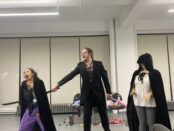
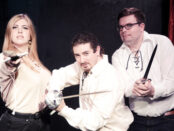
"A Man Among Ye" is episodic, with flashbacks and confusing dialogue. It is filled with sword fights, sea shanties, revenge plots, mermaids, witches, and mythical creatures. As a highly stylized dark comedy, it misses more than it hits. Despite the claims that it is based on a true story, it is mostly fiction and fantasy and lacks consistent explication. It needs a more straightforward, consistent storyline, and, in several cases, there is superficial character definition and development. The cast does a respectable job of trying to make sense of a show that doesn't know what it wants to be. [more]
"cunnicularii," beautifully written by Sophie McIntosh and sensitively directed by Nina Goodheart, is a fantasy that deals with many of the adjustments in attitudes and perspectives encountered by new parents. It is a fable focusing on the sometimes overwhelming physical and emotional issues faced by mothers on their first time into the world of motherhood. It is a beautifully realized drama, both funny and serious. If you enjoy good theater, with solid acting, it will be very much worth the effort to see this production. It will only be around for a short time, so make the time to see it. [more]
"Isabel" is a story written by reid tang and directed by Kedian Keohan. It uses various stylistic techniques to tell the story of a trans sibling relationship. It has elements of dark comedy mixed within a dramatic arc of psychosexual exploration of gender, all wrapped within a framework of dark mystery but without a clear point of view. The performances are uneven, the “smoke” special effect is distracting, and the staging misses defining the locales of the scenes. The production comes across as more of a dress rehearsal than a fully-realized staging. [more]
"The Employees: A Workplace Novel of the 22nd Century" is a tone-poem play adapted by Lauren Holmes and Jaclyn Biskup from a novel of the same name by Danish poet and novelist Olga Ravn (translated by Martin Aitken). Biskup directs an ensemble of four who portray multiple crew members on a spaceship sent to search for a new planet for the people of Earth. The novel's structure of narrative reports to tell a story about the human condition, the future of work, and the ills of late-stage corporate capitalism does not transfer well to a dramatic stage presentation. [more]
"Push Party" is a story by Nia Akilah Robinson that reaches into the supportive community spirit that celebrates a woman’s status as a mother, independent of a child or children. It is a story that explores the relationships of a group of friends as they gather to celebrate the impending birth of a new child to one of their numbers, but in this case, a child that has been born but is not yet in the arms of her mother. It would be a relatively simple story if that were the only focus, but Robinson gives something much more with socio-political commentary on the conditions under which pregnant women must endure in a patriarchal society, and most especially, women of color. [more]

This is the story of Claudia Bernardi, a visual artist and activist, as told in a one-woman show, "How to Eat an Orange." It tells of Bernardi’s time growing up in Argentina in the profound gloom of the military junta and the stories of the “desaparecidos,” the missing ones. It was written by Catherine Filloux, a French Algerian American playwright who traveled to and wrote plays about human rights conflicts in countries worldwide. She brings a first-hand narrative understanding of what Bernardi experienced during and after the time of the junta and her work in other countries with this collection of desaparecidos' stories. [more]
When it comes to coffee klatches, wine seems to be a good substitute, or at least that is the case with the women in "Winesday: The Wind Tasting Musical," with book and lyrics by Jenne Wason and music by Joseph Benoit. It is a show that could leave you tipsy at the end but generally satisfied with the experience. The songs are clever and well-sung by a solid group of five actors, and the book doesn't rely on a straightforward plot but provides a series of entertaining vignettes that help define the characters' lives with details about their ups and downs. Jamibeth Margolis's direction effectively guides the cast to deliver funny, well-integrated performances in a constrained setting. [more]

'My True Love: A Perfect Musical Fairytale" is a musical fairy tale, written by Ben Boecker, about the choices made when the world is a place of dreams. Solid direction by Carolyn Popadin guides the diverse cast as it takes the audience on a romp through a magic land of self-discovery as a young witch explores the complex ideas surrounding consent, self-realization, and acceptance. Don’t let the heavy-sounding themes throw you off; the show is a frothy musical comedy with a good ensemble and a couple of outstanding individual performances. It intentionally comes close to a feeling of a student production, but that idea strongly supports the overall thrust of the show. [more]
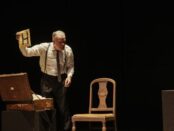
If the play's goal is to pay homage to Wright, it misses the mark for most audiences. If one is unfamiliar with Wright, most of the symbols revealed in the play will not be understood in terms of her life story. This fact is not necessarily a distraction from the action since the play provides a suitable level of mystery, imagination, and surprise, resulting in an entertaining but possibly unsettling experience, starting with the opening and carrying through to a satisfactory ending, all without spoken dialogue. [more]

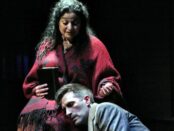
"Redemption Story," written by Peregrine Teng Heard, is an exploration into the psyche of Connie Lee, an actor with 20 years of experience acting in noir films of the 1940’s and 1950’s, who now calls herself a housewife. Christine Toy Johnson expertly embodies the character, skillfully revealing the psycho-social dynamics that keeps her somewhere between the reality of 1971 and the roles she played in film. Director Sarah Blush guides a strong cast, effectively supporting the narrative themes of the show as it explores the idea of redemption in a self-perception fashioned by past film roles. It is coupled with the social alienation of being an Asian woman playing stereotypical characters. It was the norm in the movie business in those years, but if those issues are not enough, mix in feelings of conditional love and estrangement. [more]