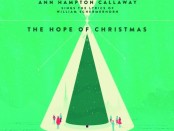
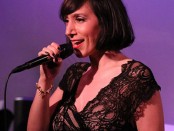
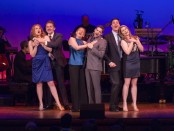
On Union Street” with music by Wesley Whatley is the lively and wistful opening track of the delightful jazz based recording, The Hope of Christmas. It is performed by the acclaimed vocalist Ann Hampton Callaway and is one of the twelve songs on it she magnificently sings. Lyricist William Schermerhorn has crafted eleven wonderful original songs for this work that range from sentimental to inspirational to the warmly comic that perfectly capture the spirit of the holiday. His fine words are matched by the gorgeous melodies of accomplished composers. [more]
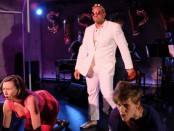
Two veterans of the most recent revival of On the Town were splendid interpreters of Finn’s songs. First, Stephen DeRosa conjured a second-rate out-of-town production of "March of the Falsettos" populated by egos and amateurs. He sang “The Baseball Game” brilliantly-and schizophrenically—taking on each character of this bitingly satirical song. Later he sang the scathing, sexually explicit “Republicans” in which a liberal gets even with a Republican in an unprintable way. Then his colleague Alysha Umphress sang a rousing “Set Those Sails” ("In Trousers") and “Change” ("A New Brain"), both songs dealing differently with moving on. Ms. Umphress’s “Song of the Full Refrigerator,” about the temptations of food—“eat first and get depressed later”—was scarily right on the money. [more]
The evening consisted of two sets; the first six pieces lasted from 8:00 to 9:05 PM, were then followed by a between-set break of almost an hour for last-minute rehearsals and sound checks, and the concluding five pieces lasted from 10:00 to 11:15 PM. Before each piece was performed, a pre-recorded introduction was provided. These were fairly conversational in tone; some contained useful contextual information about the piece while others were more wandering; unfortunately, these recorded introductions were often difficult to understand. [more]
Performed by two bonafide Boogie Woogie experts, Baldori and Migliazza are positioned on stage next to each other in front of their dueling grand pianos. With a lifetime of experience in the business, Baldori has played with Chuck Berry for the past 40 years in over 100 performances. This is evident in his stylings, technique, and from the hilarious and entertaining stories that are told in between songs. As his counterpart, Migliazza is a skilled and formidable musical opponent. Together the two take turns singing, playing the piano or keyboard, or cracking jokes to the audience to vary the pace. [more]
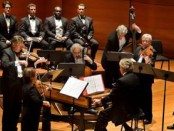
The American Classical Orchestra and Chorus' recent performance of Georg Philipp Telemann's "Der Tag des Gerichts" (Day of Judgment) realized the very best of their original mission of “preserving and performing the repertoire of 17th to 19th century composers, playing the works on original or reproduced period instruments.” Presented in the generously resonant space of the Church of Saint Ignatius of Antioch on West 87th Street, Telemann's brilliant piece was at once accessible and intellectually elegant. [more]
As always, Holbrook was dapper in his signature tux and brought real class and style to the stage. His rich, tenor voice was soothing to the ears and stirred the packed audience, mostly an older crowd, into reminiscing with him about the old days when these songs were written. Their enthusiasm was undeniable, underscored by their continuous applause. Holbrook's vocal instrument is not particularly robust but, what he lacks in volume, he makes up for in passion; a great interpreter, he really feels the music and sings with a lot of heart just like the title of his cabaret. This, along with his great stage presence, connects him with his audience and they find themselves being reeled in.
[more]
The New York Pops’ 33rd season opened with a joyful tribute to one of the legendary songwriting teams of Broadway. Entitled “My Favorite Things: The Songs of Rodgers and Hammerstein,” the evening featured guest artists American soprano Sierra Boggess and British baritone Julian Overden, along with Judith Clurman’s Essential Voices USA. All proved to have an affinity for this music which was greeted rapturously by the sold-out audience. [more]
Sunny Knable’s music is romantic and lilting. He has called his style a cross between Stephen Sondheim and Benjamin Britten. In this he does himself an injustice as his music is much more melodic. As an American opera composer, he follows in the footsteps of Douglas Moore, Carlyle Floyd, Dominick Argento and Thomas Pasateri. Jim Knable’s libretto cleverly uses spoken dialogue for the prose passage and rhymed verse for the musical settings. The vocabulary is suitable for young children but the sentiments and plot complications are entertaining for adults. [more]
"Run Time Error," an evening of recent and new works, including both New York and United States premieres composed by Simon Steen-Andersen, who performed with the JACK Quartet, had all the makings of a wonderful evening. Steen-Andersen, Danish born and now Berlin-based composer has received numerous accolades and awards internationally. JACK Quartet – Christopher Otto/violin, Ari Streisfeld/violin, John Pickford Richards/viola and Kevin McFarland/cello – are stunning musicians equally at home in traditional classical and contemporary experimental literature. "Run Time Error" should have been marvelous: there were all sorts of promising elements. It was meant to be a splendid opening to Miller Theatre's 27th Season. There were indeed some fun parts, but it wasn't marvelous. [more]
Fulfilling a dormant desire to give it a try and armed with a well-placed, strong voice, Seth Sikes took the plunge and got booked into 54 Below for one show only singing Garland's showstoppers laced with some personal anecdotes thrown in. To cut to the chase, the show quickly sold out and was a huge success. He's returned several times to the landmark club since and continues to sell out. The word was out that this charismatic guy is the big noise around town and his future looks bright. Tickets have been selling very fast for his next show there on September 18. And, he's got bookings through next March. So, how did it all begin? Where is it all going? [more]
With considerable fanfare and extensive advance publicity, Chinese opera singer Zhang Juoding made her American debut at Lincoln Center's David H. Koch Theater. Performing with the National Academy of Chinese Theatre Arts, Zhang Huoding brought her own very modern magnetic star power and the very old, formal traditions of a highly stylized traditional Chinese art form to an exuberantly adoring, largely Chinese audience. Over two nights, the company presented "Legend of the White Snake" and "The Jewelry Purse." On both evenings, the house was packed; about a quarter of the audience came to both evenings. The atmosphere of excitement about The Jewelry Purse on the second evening was fueled in part by the audience delight with the first evening. [more]
The song that made Pink Martini famous, “Sympathique,” was performed early on and welcomed much applause. Performed by China Forbes, one of Martini’s resident vocalists, “Sympathique” is a genre bending song which received critical acclaim internationally. Though Forbes was one of featured performers of the evening, all the vocalists associated with Pink Martini were top notch. As a whole this was as well-polished an evening of standards that one could ask for. Other highlights include Storm Large’s charismatic performance of “Quizáas, Quizás, Quizás.” [more]
“Papa” was the elder Theodore Bikel’s sobriquet to the younger members of the touring company of "Fiddler on The Roof." Mr. Bikel died at the age of 91 on July 21, 2015, and a warm and very well performed tribute to his life and career was the centerpiece of the splendid concert "Another Hundred Years," at 54 Below. Part of KulturfestNYC’s Encore Series, this show also celebrated the impact of Jewish songwriters on Broadway musicals and marked the centennial of The National Yiddish Theatre Folksbiene which co-produced it. This is the oldest continually performing Yiddish theater company in existence. [more]
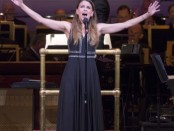
“The epitomy of a true triple threat performer,” was how Mr. Reineke introduced Ms. Foster. “I’ve never been here or sung outside with a big orchestra before” was her sweet response to the huge audience response. First clad in a slinky blue dress, she later changed into a tailored gray tunic and then into a striking black gown with rhinestones. Her versatility was ever present as she opened with the thrilling Duke Ellington collaborative composition, “I’m Beginning to See The Light.” Then it was on to rollicking renditions of “Anything Goes” and “I Get a Kick Out of You,” from that Broadway revival for which she won her first Tony Award. [more]
Sally lays out her heart and soul onto the stage and her chemistry with the talented composer and pianist, Matthew Martin Ward, is unmistakable. At the end of the show, she turned to him and said, “What would I do without you?” to which he replied, “Back at you.” He then leapt up from the piano and they embraced in a kiss which led them into their encore, “Here's to Us.” [more]
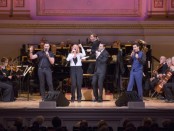
An astounding array of Broadway singers triumphantly performed without any electronic assistance at Scott Siegel’s Broadway Unplugged 2015 at The Town Hall. All were terrific. Several were magical. Most pre-1960’s shows were unamplified. The act of listening was different then. Technology has changed all that. Some believe performances are more nuanced today. Others miss the excitement of hearing “real” voices. Whatever one’s opinion, Scott Siegel assembled a program that clearly showed what we’ve been missing lately. [more]
His commanding voice often begins with a light and an expected approach to these often very familiar songs and then veer off into surprisingly much deeper tones and shift back and forth. Like the artist he emulates, Mr. Malavet is a master of phrasing as well as a charismatic vocalist. He is also a highly engaging entertainer making great use of his marvelously expressive face. He wears a cool suit and for one number puts on a fedora. With strategically used blackouts, dimness, and brightness, the show’s lighting achieves compelling visual effects that convey the moods of the songs. [more]
Neglected, ignored and then forgotten, Harry Lawrence Freeman's opera "Voodoo" was brought back to the stage in a compelling production in June, 2015. The opera was last seen at what turned out to be its only production in 1928. Now, more than three-quarters of a century later, it has been brought back to life by Morningside Opera, Harlem Opera Theater, The Harlem Chamber Players and scores of named and unnamed supporters and fund-raisers in the Harlem music community. [more]
Over a period of six hours, on an early summer afternoon and evening at Symphony Space, twelve choruses gave “mini-concerts” of 15 – 25 minutes, following one another with little break except an emcee's brief, efficient and entirely cheerful introduction of the next choir. Each group of singers performed pieces that, in one way or another, represented that particular group's identity. Some groups, by their very nature, commit themselves to just one kind of music – music for men, or for women; Jewish music; inspirational songs; contemporary composers' works – though a closely circumscribed repertoire rarely limits the breadth and richness from which choral directors can choose works to perform. Part of Choralfest USA's purpose, in fact, is to celebrate this richness. [more]
Hobbling on crutches and with one injured leg encased in a large boot, all due to a recent automobile accident, Sahr Ngaujah made a dramatic entrance from the wings onto the stage of The Town Hall to appear at "Broadway by the Year: The Broadway Musicals of 1991-2015." Joined by the accomplished guitarist Ricardo Quinones, the charismatic Mr. Ngaujah passionately sang “Sorrow, Tears of Blood,” from 2009’s "Fela!" In which he starred. It was a galvanizing episode that came near the end of a concert that had been packed with powerhouse sequences. [more]
“It’s been a rough two years,” Mr. Jackson observed. Deaths in his family, a disintegrating romantic relationship, and becoming sober, were all detailed during his heavily autobiographical patter that was integral to this presentation. This quirkily handsome Broadway performer dazzled his fans with a variety of songs and personal anecdotes during this 95 minute presentation. Being openly gay has been characteristic of his career and this fact was expressed simply during his commentary. [more]
St. Peter's Episcopal Church in Chelsea was used to near perfect effect as the setting for all three acts of the opera. "Tosca"'s first act, which does, in fact take place in a church was, precisely because of the narrative, “easy” to stage, but the successful transformation of the St. Peter's Chelsea chancel into first, the emotional claustrophobia of the villainous chief of police's quarters and then, for the last act, the open air witness to revenge and tragedy resulted from the imaginative, effective stage direction and set management of Chelsea Opera's co-founders Leonarda Priore and Lynne Hayden-Findlay. [more]
Now in its fourteenth year, the remarkable Ensemble for the Romantic Century, founded by Eve Wolf, has been presenting musical programs of intellectual coherence and imagination, examining themes and subjects central to the development and character of the “long” nineteenth century, from the Enlightenment to the end of the Victorian Era. ERC's most recent production, The Sorrows of Young Werther, represents the best of this kind of production. Rich and subtle interdisciplinary critical and creative thinking informed the careful merging of a dramatic presentation of Goethe's novella, The Sorrows of Young Werther with Robert Schumann's Dichterliebe. The result was an evening of considerable artistic beauty and intellectual rewards. [more]
“Is there anything left to discuss? There IS!” exclaimed Rob Fisher, artistic director of the 92nd Street Y’s Lyrics & Lyricists Series about "Fiddler on the Roof," in his introductory remarks to the concert “To Life! Celebrating 50 Years of ‘Fiddler on the Roof” with Sheldon Harnick.” A violinist and Klezmer clarinetist, who played tunes from that show, then joined him briefly before they settled in on stage with the other band members. The format of the presentation was to commemorate this milestone anniversary of that classic Broadway musical in a unique fashion. “Those expecting to hear the entire score of 'Fiddler on the Roof' will be very disappointed,” explained "Fiddler on the Roof"’s 91 year-old lyricist Sheldon Harnick, and the concert’s affable host. “These songs are twenty outtakes that were not heard in the final version.” [more]
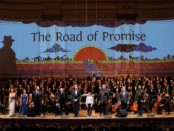
On May 6 and May 7, 2015 at Carnegie Hall, presenting a concert version of Franz Werfel and Kurt Weill's 1937 The Road of Promise, (Der Weg der Verheissung), The Collegiate Chorale conducted and directed by Ted Sperling undertook a near-daring project … and failed. The performance was uneven at best. The work was more interesting for its problems than its ultimate beauty or success. [more]
Founded by Albert Bergeret in 1974, he continues to this day as artistic director for the NYGASP, and on this occasion served as director and conductor, with an assist by choreographer David Auxier on the direction. A daunting and impressive achievement, this production also marked the conclusion of the first season in which the NYGASP performed in their new residence: NYU Skirball Center for the Performing Arts. A beautiful and state of the art theater, this is a space that can handle the grandeur and scale of a G&S piece. The theater provides remarkable production value, including a massive pit to house the almost thirty person orchestra. Thanks to the latest in acoustic engineering and innovation, the music of "The Gondoliers" was robust and invigorating. Led by Bergeret, the score filled every inch of the theater and truly transported the audience to another time and place. [more]
“Life Is,” from the 1968 Kander and Ebb musical "Zorba" as grandly performed by it’s original Tony-nominated cast member, Lorraine Serabian, was the show stopping highlight of the historical survey concert, Broadway by the Year: The Broadway Musicals of 1966 – 1990. With fiery hued hair, in a flowing black dress, tied with an elaborate gold belt, Ms. Serabian, fabulously recreated her theatrical moment of glory with this hard-edged anthem. Her deep, rich, expressive voice was matched with intense facial expressions that ranged from fierce to joyous. Mesmerizing on all levels, her performance of this one song felt like an entire concert all by itself. She was initially the understudy in the show, and was picked by director Harold Prince to replace the first actress during the out-of-town tryouts. [more]
In both concerts, eight artists played and performed together in the sort of flexible, happy collaboration which is possible only among colleagues of equal discipline, excellence and experience on the one hand and extended, mutually respectful friendship on the other. The Parthenia quartet members – Rosamund Morley/treble viol, Lawrence Lipnik/tenor viol, Beverly Au/bass viol and Lisa Terry/bass viol – were joined by theorbist Richard Stone, soprano Amy Burton, actor Paul Hecht and conductor Gary Thor Wedow. [more]
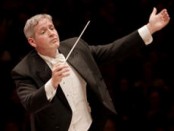
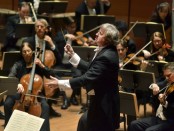
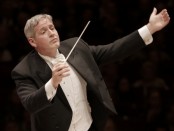
Maestro Steven Reineke, backed up by the largest pops orchestra in the United States, took us on an astonishing musical journey. The song selections made the perfectly-paced concert one of the most memorable nights of music in the past decade. [more]
The program consisted of three fairly short works, an intermission, and then the complete, relatively unknown Maddalena ai piedi di Cristo by Venetian Baroque master Antonio Caldara (1670-1736). The Church of St. Mary the Virgin provided an especially marvelous venue for this concert: the organic warmth of the American Classical Orchestra's period instruments and the singers' felicitous precision were exceptionally clear and clean in the high, mysteriously golden American Gothic space of The Church of St. Mary the Virgin in the Times Square area. The concert suffered only one difficulty: it was too long. Some people left starting around the middle of the second half; fortunately, their furtive, tip-toed departure did not disrupt the concentration of the musicians or compromise the performance. [more]
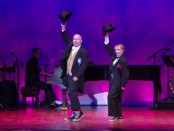
Sandy Duncan and Don Correia, wearing shabby tuxedos, top hats, and Converse high top sneakers, beautifully dancing and singing, “A Couple of Swells,” was one of the many highlights of the 92 Y’s Lyrics & Lyricists Series’ "All Dancing! All Singing! Irving Berlin in Hollywood." Ms. Duncan and her husband Mr. Correia vibrantly demonstrated why they have had such enduring careers in show business, which have included a number of appearances on Broadway. Guest starring here, they effortlessly recreated that famous number from MGM’s 1948"Easter Parade," originally performed by Judy Garland and Fred Astaire, who replaced the injured Gene Kelly. The tune itself dated from 1917, when it had the unpopular title and lyrics, “Smile, and Show Your Dimple.” [more]
On the evening of this performance under review, the audience was treated to a rare surprise: Victoria Bond, writer of the music, was not only present but was also the conductor for the evening. Gramercy Trio, under Bond’s musical direction, skillfully maneuvered through the score. Filled with atonal and complex orchestrations, Bond’s music strikes a fine balance between some very vibrant and cheery melodies followed by quite a few haunting and more chaotic progressions which coincide with the show’s climax. [more]
Clyne's music is a combination of electronic and recorded material on the one hand and live performance on the other. In both process and product, Clyne incorporates and is inspired by other creative media; her works can “stand alone” or in conjunction with their original collaborators. Two works originally conceived in collaboration were performed on April 23 “on their own.” Fits + Starts for amplified cello and tape (2003) was performed without dancers; Rapture for clarinet and tape (2005) was presented without the visual components that accompanied its original performances. [more]
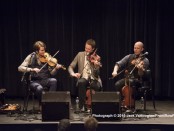
The Nordic Fiddlers Bloc consists of Olav Luksengard Mjelva from Norway (hardanger and octave fiddles), Kevin Henderson from Shetland (fiddle) and Anders Hall from Sweden (fiddle and viola); the three met informally through mutual friends and colleagues and have been playing together seriously for some five years. Each artist has an extensive and stellar career apart from and in addition to Nordic Fiddlers Bloc. They live their professional lives in overlapping spheres of teaching and composing as well as collaborating, recording and performing with other artists and groups. As the competently English speaking Nordic Fiddlers Bloc, they have developed a congenial performance style that alternates humorously self-deprecating but helpfully informative banter with individual “tunes.” The evening had the feel of both formal concert and calmly funky gig. [more]
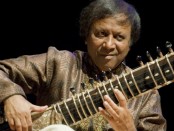
Shahid Parvez Khan comes from a long line – seven generations – of musicians and sitar masters. This fact is emphasized in both the musician's own and the World Music Institute publicity materials. Shahid Parvez Khan's ancestry is critically important for those who are well versed in both historical and contemporary Indian culture and music, but for those who know little about Indian music, it figures only as an interesting biographical fact. What is much more relevant to the listening experience is Shahid Parvez Khan's assertion that “the Sitar and Self are identical entities,” a statement confirmed by the experience of simultaneously watching and listening to the sitar player as well as his colleagues. [more]
The Hindemith was beautifully performed and the second half of the concert was successful. But the first half, the Adams, was not a success. It was not an abject failure – Hayes wouldn't permit that – but the performance did not produce the kind of considered satisfaction that New York Choral Society concerts typically do. The reasons for this lay in the nature of Adams' piece and in particular features of the performance itself. [more]
The Handel and Haydn Society – sometimes called the H + H Society, for contemporaneity's sake – is celebrating its Bicentennial with a number of special short-term and long-term events and programs. One of these, most recently, was the sponsorship of a Music Critics Association of North America Institute, a two-day long immersion for eleven MCANA members in the current life of the H + H Society. The informative, intelligent and extremely well-organized Institute was conceived primarily by Marie-Helene Bernard, H + H's Executive Director since 2007, and administered with graceful, quietly effective attention to detail by Matthew Erikson, H + H's Public Relations and Communications Manager. The MCANA Institute provided opportunities for learning and robust exchanges of insights and ideas; it was an affirmation of the H + H Society's place in the contemporary world of classical music. Though the purposes of the MCANA Institute were primarily musical, it also provided access to information about the Society's positive, effective engagement in the cultural life of Boston as a whole. [more]
December 12, 2015 marks the 100th birthday of Frank Sinatra. Sinatra’s singing career spanned seven decades starting in the 30’s until shortly before his death in 1998, winning him eleven Grammy Awards. Even those born after his death know his iconic songs such as “Love and Marriage,” which was used as the theme song of the TV sitcom Married with Children. Sinatra is one of the best-selling artists of all time, having sold more than 150 million records worldwide. He is considered by many to be "the greatest singer of the 20th century.” Led by the energetic and creative Music Director Steven Reineke, The New York Pops Presents "Let’s Be Frank" affectionately and admirably paid tribute to the prolific and unique singing career of Frank Sinatra with the help of four robust and polished guest singers, Storm Large, Tony DeSare, Frankie Moreno and Ryan Silverman. [more]
Gotham Chamber Opera's hour-long program at the Metropolitan Museum, entitled "The Tempest Songbook," took these truisms into account by alternating Shakespeare settings by the contemporary Finnish master Kajia Saariaho, with Baroque-era settings attributed to Purcell. Those who found Saariaho's language unfamiliar or taxing were given a reassuring figured bass to fall back on, while those who found the typical Baroque Aria da Capo form tediously repetitious were never more than a few minutes away from the next of Saariaho's elegant and colorful modernist miniatures. Soprano Jennifer Zetlan and bass-baritone Thomas Richards were both excellent, sounding completely at ease and consistently expressive in this sometimes challenging music. The ensemble of Baroque instruments was conducted with élan by Neal Goren, and the production directed and choreographed elegantly by Luca Veggetti. [more]
As part of their splendid yearlong Bicentennial Celebrations, the Handel and Haydn Society of Boston have been presenting major choral works that have figured prominently in the Society's long distinguished history. In March 2015, in the very depths of Lent, the featured work was Bach's extraordinary "St. Matthew Passion." Any successful performance of this monumental work demands elegant artistic discipline and a coherent intellectual and creative vision; the Handel + Haydn Society's Artistic Director and Conductor, Harry Christophers, the Handel + Haydn Society Period Instrument Orchestra and Chorus, the six wonderful soloists, and the Vocal Arts Program Young Women's Chamber Choir and Young Men's Chorus all effectively brought the necessary rigorous musicianship and artistic clarity to this performance. The result was indeed wonderful. [more]
In the course of Mr. Siegel’s erudite remarks, the work of key figures responsible for these often classic musicals recurred. Composer and lyricist Cole Porter was represented by four shows, composer Richard Rodgers and lyricist Oscar Hammerstein II by three shows, as was composer Jule Styne. Most monumental was the achievement of legendary producer David Merrick who was responsible for bringing five of the shows to Broadway. [more]
Eleonor Sandresky is not the first composer to be attracted to Parthenia's affinity for collaboration with contemporary music-writers. Her new piece, “John Donne Songs Without Words,” was written for and with Parthenia and Patton, as Sandresky herself explained in her brief introduction of the piece to the March 22 audience. Sandresky builds on these musicians' ability to make their instruments accomplish everything that Baroque composers expected them to as well as much that their seventeenth century sensibilities would never have imagined. Sandresky assumes, as well, these musicians' wide-ranging intellectual literacy, their willing ability to stretch their performance skills and purposes, and their exceptionally good-willed, down-to-earth lack of pretense. [more]
Lyrics & Lyricists artistic director Deborah Grace Winer was the show’s host. Charming, and with dry humor and passion, Ms. Winer delivered informative and entertaining commentary between songs. Her funny material included riffs on Seinfeld, the high cost of pastrami, and King Kong climbing The Empire State Building: “Not everyone makes it in New York.” [more]
The pieces chosen by Crawford for this concert represented the very best of the Viennese Classical period: each piece in the evening's repertoire was a unique marriage of deep drama and expansive beauty. On this evening, the particular mission of the American Classical Orchestra – to play European masterpieces of orchestral music on period instruments – was brilliantly clear in both purpose and effect. Designed to enable audiences to hear what composers, their musicians and their audiences actually heard two or three centuries ago, this orchestra transported contemporary audiences back in time, revealing what the edginess and innovation of the past first sounded like. [more]
The concert’s triumph was due largely to its headliner, the incomparable Sutton Foster. Since her Tony Award-winning portrayal of the title character in the 2002 Broadway production of Thoroughly Modern Millie, she has proven herself to be one of the most versatile leading ladies to grace the Great White Way. Her brassy, yet lithe voice soared over the melodies of Cole Porter classics; her feet glided precisely across choreographer Michelle Elkin’s tap number (yes, a tap number at a New York Pops concert!); and her storytelling chops shone during heartrending takes on a couple of choice Sondheim ballads. She is a true triple threat in a way that most, if not all, of her Broadway diva contemporaries simply are not. [more]
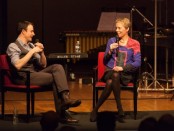
Recently, as part of the Miller Theatre at Columbia University's Composer Portrait series, Augusta Read Thomas was briefly interviewed between performances of recent and new works for string quartet and percussion. The first half of the program featured the world premiere of Capricci for violin and viola (2014) and of Selene for percussion quartet and string quartet (2015) as well as “Invocations” from Sun Threads for string quartet (1999). The second half of the program began with an informal interview between Thomas and percussionist David Skidmore and then concluded with the New York premiere of Resounding Earth. [more]
Stile Antico's February 28 concert, part of the Miller Theatre at Columbia University's Early Music series, at the Times Square Episcopal Church of St. Mary the Virgin, was marvelous. Stile Antico sang thrillingly; their choice of repertoire – sixteenth century Renaissance a cappella music associated with the Hapsburg imperial court … the core content of the 2014 CD – was artistically exciting and intellectually rewarding. [more]
Beaming Broadway musical comedy veteran, Lee Roy Reams presented the final honor, the ASCAP Major Engagement Award to Lillias White. “My grandmother’s table was my cabaret,” she recalled about the beginning of her long and successful career. In a full-out performance, she then recreated her Tony Award-winning role as an aging prostitute, from the 1997 Broadway musical The Life, with her signature song, “The Oldest Profession.” It was a commanding and fitting finale to this exuberant event. [more]
The structure of the early evening concert was simple, sensible, intimate … and exhilarating. The JACK Quartet was seated on the stage, as were several rows of spectators; more spectators were in the auditorium proper. The concert consisted of three parts: first came the world premiere of the new twenty-minute quartet, then an informal discussion by the composer, then the second performance of the new quartet. What a treat, to hear a new work … twice! [more]
"Sisyphus" played at the Abrons Arts Center this February, the newest avant-garde production from Experiments In Opera. Composers Jason Cady, Aaron Siegel, and Matthew Welch (acting as their own librettists) created a promising concept for an opera, with a cultural abundance of Greek myth at their disposal to create a beautiful libretto. However, this world premiere was a case of more tragedy, full of missed opportunities, rather than inspiring. [more]
Director Mindy Cooper’s very well executed transitions between the show’s 27 numbers, the personable Scott Siegel’s erudite remarks, and the variety of gifted performers who participated made "Broadway by the Year: The Broadway Musicals of 1916-1940" a brisk and very enjoyable event. [more]
The eclectic world of cabaret is unique in the entertainment industry. It allows artists' to connect with an audience in an intimate setting. Today, the clubs are ripe with new, rising and mature talents and the beginners who want to make it. But, who are today's torchbearers? Who will make their mark? And, who will take cabaret into its next phase? Time will tell. [more]
Leading The New York Virtuoso Singers with characteristic wit, panache and artistic integrity, Harold Rosenbaum presented an a cappella evening of a songs about love – from its first beginnings to its very end, with every bit of flirtation, fun, fornication, fancy and foolishness in-between – at Merkin Concert Hall, bringing considerable warmth to a happy audience on a cold, cold February night. [more]
The second half of the concert consisted of Fauré's Requiem. This familiar, deeply loved work – an examination of requiem themes that is more about interior considerations of mortality than about cosmic confrontations with hell or pleas for salvation – depends for its success on clear, clean musicianship. The shimmery delicacy and complex harmonic richness of Fauré's music were brilliantly served on this evening by the Voices of Ascension … as they always have been: the Fauré Requiem has been a signature piece of this chorus since its creation twenty-five years ago. In this performance, soprano Sarah Shafer and bass-baritone Evan Hughes both brought a deeply personal sense of prayer to their singing. Shafer's “Pie Jesu” was intimate without being sentimental, and ethereally beautiful. Hughes sang with unrestrained and eloquent passion. [more]
Mr. Busch, known as a playwright of campy homages to old movies in which he often plays female roles, was an appropriate and authoritative host. For most of the proceedings, he sat off to the side wearing male attire wryly reading the often affectionate commentary. He chronicled the history of the Hollywood musical, its stars, its songwriters and its studios. This background material described the distinctive cinematic styles of the major studios, and the idiosyncratic moguls who ruled them. The musical movie histories of Warner Brothers, MGM, Universal, Paramount, 20th Century Fox and Columbia were detailed. Well-selected illustrative slides and film clips were projected above the orchestra. [more]
Though Lhamo has absorbed all sorts of Western musical idioms and made them her own, her voice is distinct in its range of octaves and volumes and in its gorgeous ability to make both human and nature sounds that Western singers wouldn't permit themselves to attempt. Lhamo's musical origins are identifiably Tibetan, but the accumulation of her human and artistic experience has made of both her voice and her intentions something entirely her own. [more]
Led by David Hayes, Music Director, the New York Choral Society and Orchestra, together with first rate soloists and the Princeton Girlchoir, presented a magnificent performance of Felix Mendelssohn's magisterial 1836 oratorio "St. Paul" on January 25, 2015 in Carnegie Hall. Mendelssohn's oratorio is a huge work; on this afternoon, the work's sweeping monumentality was fully realized without any loss of musical subtlety, nuance or detail. From beginning to end, chorus and orchestra alike presented the music they cleared loved with unflagging energy and endlessly renewed, fresh passion. [more]
Hearing these Sondheim classic songs well performed and seeing them vibrantly staged was reason enough for this concert to be considered a success. That it also paid tribute to the artistry of Harold Prince with its revelatory documentary presentation made it an even more glorious event. [more]