Concerts
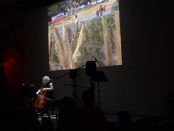
In spite of the Festival’s lengthy booklet and daily concert updates, the rich creative vitality of the electroacoustic musical community remains only tangentially documented: composers and performers clearly work in close collaboration. Internationally recognized cellist Madeleine Shapiro, for instance, director of the important NewMusicMannes ensemble at the New School’s Mannes College of Music, is on the NYCEMF 2017 Steering Committee, and performed in several of the 2017 Festival’s concerts. She is clearly the sort of artist who can turn her instrument into both the composers’ muse and their servant. Shaprio’s ability to incorporate the cello’s entire history into its creative use in contemporary classical and experimental music suggests expanded incorporations of cello sounds in new music to contemporary composers. [more]
2017 New York City Electroacoustic Music Festival: Overview
In the seven concerts of the second half of the 2017 New York City Electroacoustic Music Festival held this month at National Sawdust in Brooklyn, New York, the full diversity and eclectic versatility of electroacoustic music was on vibrant, energetic display; the densely packed weekend of music was exciting, sometimes disconcerting and sometimes thrilling, and always fascinating. Sixty-six works by sixty-six composers were performed … a dizzying array of instruments, equipment, performers, sensibilities and effects! [more]
Jen Shyu: Nine Doors
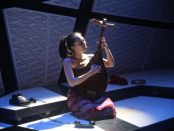
After fifteen years of formal study, Shyu incorporates five distinct music traditions in her newest work: “epic storytelling (Pansori), East Coast shaman music (DongHaeAhnByeolShinGut), and Binari, usually performed as a blessing for an audience, all from Korea; music from sub-districts Aileu and Atauro ferom East Timor; Hengchung Folk Song with moon lute from Taiwan; Ledhekan, which combines Javanese dance with improvisational singing (Sindehenan) from Indonesia; and the ‘speaking-the-song’ or ‘katari’ with Japanese bias, the rare 4-stringed instrument originally used by monks and priests.” [more]
92Y’s Lyrics & Lyricists Series: “From Camelot to California: The Worlds of Lerner and Loewe”
The show’s writer and host, Rob Berman, introduced many of the songs and, essentially, gave us the story of Lerner and Loewe’s difficult, on-again, off-again partnership. Referring to them, at one point, as an “odd couple,” Berman explained that the composer Frederick (or “Fritz”) Loewe was an “old world” European, and lyricist Alan Jay Lerner a “New York sophisticate,” who was educated in England. Berman also claimed that the common denominator for all of their musicals was a kind of “idealism,” making the pair “dreamers.” [more]
Composer Portraits Series: Klas Torstensson
"Elliott loves bebop" is a much more satisfying piece than either "Sonerna" or "No slash" on their own. It would be no matter what. But the experience of having listened to the two quartets one after the other immediately before the octet immeasurably enriched the experience of hearing the octet: the octet’s complexities were more intelligible and the patterns of their interconnections were more clear. Without compromising or simplifying the work’s density, its meanings were more accessible. [more]
The New York Pops 34th Birthday Gala: “Something Wonderful”
The sensational highlight of the concert was a medley from "South Pacific." “I’m Gonna Wash That Man Right out of My Hair” had the luminous Ashley Park euphorically performing that showstopper. Ms. Park was filling in for the previously announced and indisposed Laura Osnes. Female members of The Camp Broadway Kids Ensemble, who were dressed in colorful outfits and sailor caps, wonderfully joined Park. This thrilling production number was representative of Cynthia Thole’s vigorous direction and choreography. [more]
Babes in Toyland (MasterVoices)
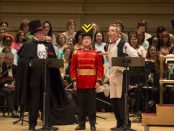
Victor Herbert’s 1903 operetta "Babes in Toyland" was presented by MasterVoices (formerly The Collegiate Chorale), in a splendid concert production, to celebrate its 75th anniversary. Music director and artistic director, Ted Sperling superbly conducted the dynamic Orchestra of St. Luke's, and the terrific MasterVoices choral group, that appeared onstage with them. [more]
The New York Pops: “You’ve Got a Friend: A Celebration of Singers and Songwriters”
“A really fun mix-tape of some our favorite songs…with no through line,” was how Steven Reineke, the exuberant music director and conductor of The New York Pops, described this delightful tribute to notable singer-songwriters from the past 60 years. [more]
Alam Khan: Maestro Ali Akbar Khan Birthday Celebration
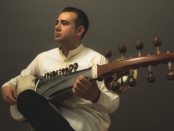
Thanking his packed audience at Le Poisson Rouge for coming to hear him play, Alam Khan described his music on this evening as a tribute to his father, Ali Akbar Khan, whose ninety-fifth birthday it would have been. But it was more than an ancestral honoring: it was a tribute to a rich centuries-old tradition of Hindustani classical music. [more]
World Music Institute: Salif Keita
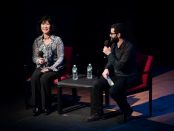
Over the course of Salif Keita’s recent appearance at The Town Hall there was a story whose shape reflected both Keita’s identity and his music. At 7:00 p.m., there was a question-and-answer session with Keita, musician and writer Banning Eyre of www.afropop.org, and translator Isabelle Dupuis. By the end of the evening, audience and performers were inseparably merged; singing and dancing had become one, and Keita had made us all his own. Far from needing any explanation or translation, the music of Salif Keita is entirely universal. [more]
Glass @ 80: Philip Glass & Foday Musa Suso
Beginning in the 1980s, Glass and Suso collaborated on several projects. Genet’s difficult, demanding, essentially un-actable and relentlessly fracturing play, "The Screens," elicited from Glass and Suso unexpectedly warm and affirming music. The setting for Genet’s play – the wretchedness of the French Algerian War – calls for music that is both European and African, but to imagine Glass’ contribution as “the European one” and Suso’s as its African opposite is to misunderstand the creative relationship. [more]
The New York Pops: “Life is a Cabaret: The Songs of Kander and Ebb”
“It looks like when you got your Kennedy Center Honor!” exclaimed Mr. Reineke, as a spotlight shone on John Kander, who was attending the concert from a first tier box at Carnegie Hall. He grinned to a thunderous reaction. Sitting with him, was Susan Stroman, who has directed several Kander and Ebb productions. Near the end of the show, at Reineke’s instigation, the house lights went up, and the orchestra and the audience joined in for “Happy Birthday” to Kander. [more]
Composer Portraits Series: Misato Mochizuki
Neither a “Western composer” nor a “Japanese composer,” Mochizuki hasn’t sought to manufacture some sort of mix-and-match blend. She doesn’t borrow or build add-ons. Instead, seeking inspiration in nature on the one hand and in human projects as diverse as photography, genetics and cooking on the other, she produces music that is about both being and story. Embedded within every piece one beginning after another, her stories unfold from each; then she builds them into each other. Though she incorporates elements of theater in the use of lighting and musicians’ movements around the stage, her music is fundamentally unpretentious and unfussy; her writing is equally straight-forward and optimistically fresh. [more]
Composer Portraits Series: Beat Furrer featuring Either/Or
This is serious work. Without defiance of traditional or conservative contemporary classical music simply for mere defiance’s haughty sake, Furrer is developing his own particular vocabulary. And successful performance of Furrer’s music requires serious musicians. The musicians of Either/Or are a good match for this composer. Their technical skills are superb, marked by both muscular stamina and virtuosic creativity; equally important, their willingness to take performance risks is grounded in intellectual and artistic integrity. [more]
92Y’s Lyrics & Lyricists Series: “Get Happy: Harold Arlen’s Early Years”
The show began with Arlen’s first hit, “Get Happy,” 1930, and ended with his 1939 score for the MGM film, "The Wizard of Oz." The first half of the evening was devoted to Arlen’s stand-alone popular tunes, his songs written for the Cotton Club Revues (1932-1934), and musical numbers for early sound movies. Blackhurst recounted how Arlen (born Hyman Arluck of Buffalo, New York), was a child prodigy singing in his father’s choir when he was seven, forming his own bands in his late teens, and occasionally appearing as a vocalist with them on records in his twenties. [more]
The New York Pops: “Make the Season Bright”
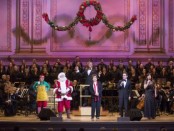
The beautiful wreath and garlands hanging above the stage were festively lit up for the wonderful finale, the “Jingle Jangle Sing-Along.” All of the performers appeared and encouraged the audience to join in for convivial group singing of “Rudolph the Red Nosed Reindeer,” “Frosty the Snowman,” “Here Comes Santa Claus,” and “Jingle Bells.” [more]
Boubacar Traore
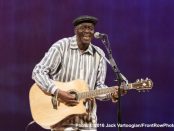
For those who could not understand the lyrics of Traore's songs – he sang in Mali's French – each song was an experience of four interconnected musical sounds: the calabash thump and click rhythms, the harmonica, the amplified acoustic guitar, and Traore's voice. The songs' lyrics – love songs, folk tales, celebrations, imprecations – added particular locations and stories to what, all together, was a full, rich exploration of human experience through the lens of the blues, of hard-won wisdom and infinite empathy for joy and anguish, for hope and despair. [more]
Da Capo Chamber Players: Milton Babbitt Centennial Da Capo
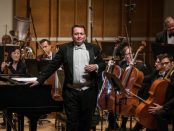
Joined by percussionist John Ferrari and conductor Jeffrey Means, the five members of the Da Capo Chamber Players – Curtis Macomber/violin, Chris Gross/cello, Patricia Spencer/flute, Meighan Stoops/clarinet and Steven Beck/piano – recently presented a concert inspired by the vibrant, important music of Milton Babbitt (1916-2011) on the occasion of the centennial of his birth. One piece was written by Babbitt himself, but all the other pieces, ranging in date from 1981 to 2013, were written by contemporary composers who at one point or another had studied with Babbitt at either Princeton or Juilliard. [more]
The New York Pops: “Concert for Courage”
Music director Steven Reineke led a perfectly respectable concert with the help of The Soldiers’ Chorus of The U.S. Army Field Band (First Lieutenant Alexandra Borza, Associate Bandmaster), a robust ensemble that proved itself song after song, including several songs in which soloists emerged to sing as in Barry Manilow’s “Let Freedom Ring” and the Toby Keith/Chuck Cannon “American Soldier.” [more]
John Zorn: Composer Portraits
In the first concert of the 2016-2017 Composer Portraits season at Columbia University School of the Arts' Miller Theatre, current music of American composer John Zorn (b. 1953), including five premieres, was presented and enthusiastically received. More accurately: Zorn's music-making – his understanding of individual composing and collegial collaborating as interconnected projects – was exuberantly celebrated. [more]
The New York Pops: The Musical World of Lerner and Loewe
Music Director/Conductor Steven Reineke chose three fine singers, Colin Donnell, Laura Osnes and Nathan Gunn, to animate the Lerner and Loewe songbook, along with the terrific choir, Essential Voices USA (Judith Clurman, Music Director). They, plus the lusty sounding New York Pops, brought songs from "Camelot," "Paint Your Wagon," "Gigi," "Brigadoon" and, the biggest hit, "My Fair Lady" to life. [more]
Dell’Arte Opera Ensemble: Verdi’s La Traviata & Chansons de Baudelaire
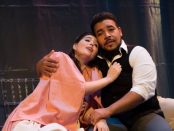
The performance of Verdi's "La Traviata" featuring Bonnie Frauenthal as Violetta and Jose Heredia as Alfredo Germont was wonderful in many ways. Frauenthal sang and acted her complex role compellingly: she is a confident singer, capable of both womanly sturdiness and subtle virtuosity, and she inhabited the dense narrative of Violetta's story credibly and compellingly. Heredia's youthful and earnest Alfredo was also convincing; his deep love of Violetta and grief at her death were poignantly believable. Interestingly, as an actor, Heredia stuck so literally to the movement of Alfredo's character in Piave's libretto that Alfredo's subservience to his father was maddening: the son's filial weakness undercut the manliness of his love for Violetta. Both Frauenthal and Heredia sang with integrity; they held nothing back from full commitment to either their roles or their audience. [more]
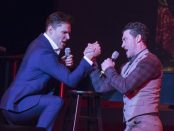
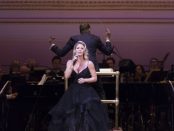
The New York Pops with Megan Hilty and Matthew Morrison
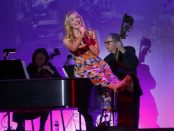
Megan Hilty with conductor Steve Reineke and The New York Pops (Photo credit: Richard Termine) [more]
PRISM Quartet Color Theory: Sō Percussion and PARTCH
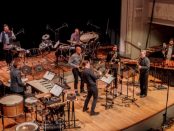
Over the last several years, PRISM and two colleague chamber groups, Sō Percussion on the one hand and PARTCH on the other, have been engaged in the “Color Theory” project, and presented two separate concerts. Taking as their model early modern visual artists' examination of pigment mixes through the insights of Isaac Newton's discovery of color theory and prisms, the four saxophonists and composers with whom they collaborate have been using “color theory as a framework to explore the spectra that make up instrumental sound.” The results were exhilarating. [more]
SONOS Chamber Orchestra (May 24, 2016)
In the program notes and in informal remarks to the audience, Ochsner encouraged the audience to listen to all the works as music inspired by nature; this theme proved to be a useful organizing device for the concert. It was both literal – stars, storms, forest transformations and water events – and allusive: the vocabulary of nature works as well for human psychology as for meteorology. The size and composition of the 36-member chamber orchestra made both intimacy and grandeur possible. [more]
92nd Y’s Lyrics & Lyricists Series: I Have Confidence: Rodgers After Hammerstein
Above the stage on a screen throughout the presentation were projected photographs illustrating Rodgers’ career and appropriate backdrops for the locales of the shows. Brief insightful video interviews with Rodgers’ daughter Linda, lyricists Sheldon Harnick and Martin Charnin, playwright Sherman Yellen, historian Ken Bloom, Rodgers grandson Peter Melnick, record producer Thomas Z. Shepard, and the actor John Cullum were shown. A 1974 Public Television interview conducted by James Day showed the aged Rodgers ravaged by strokes and throat cancer but still vital and articulate. [more]
Either/Or: Music of Gyorgi Ligeti
In the hands of less virtuosic musicians, Ligeti's material can spin out of control. Kigawa, Choi and Drehmann, however, from the very opening, invited the audience into an experience of listening based on complete trust. The work's elegant, almost wistful conclusion – a distillation of harmonic lines into quiet, unresolved ambiguities – was compelling. [more]
The New York Pops: Do You Hear the People Sing
Inspired by the musical Olivier! was "La Révolution Française" that was Mr. Boublil Mr. Schönberg’s first collaboration. Created in 1973, this was the first French rock opera and dealt with The French Revolution. The rousing “Parisians, Awake and Rise/ Français, Français” was performed by Ms. Glover, Mr. Jordan, Mr. Scatliffe and Essential Voices USA. The original French Cossette from "Les Misérables," Marie Zamora, was a marvelous Marie Antoinette for the wistful song “Au petit matin/In the early morning.” [more]
92Y’s Lyrics & Lyricists Series: Everything’s Coming Up Ethel: The Ethel Merman Songbook
“Our goal is not to impersonate her but to channel her,” said Mr. Sperling, the artistic director, writer and director of this entertaining event. In addition to these tasks, he also sang, played piano and as the genial host effortlessly delivered his authoritative biographical statements. A fan of Merman’s since childhood, Sperling’s conception and execution of this show was a very well done labor of love. His patter skillfully documented her renowned charisma, saltiness and, most importantly, her unique vocal abilities. [more]
The New York Pops: The Music of John Williams
Though the evening was studded with some of the more famous and mainstream orchestral pieces of William’s career—namely the March from "Raiders of the Lost Ark" or the Theme from "Jurassic Park," the evening also highlighted some of the more experimental pieces that came with Spielberg’s influential works of science fiction. A series of excerpts from "Close Encounters of the Third Kind," as well as a suite from "E.T. the Extra-Terrestrial," shed light on the fact that, though Williams is gifted at the art of creating a catchy melody, he is also an expert at concocting complex, ethereal music that makes the world of science fiction seem wholly believable. [more]
Dave Douglas Meets The Westerlies
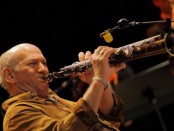
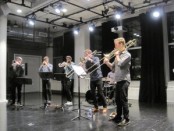
The Douglas-Westerlies music, whether its subject is lament or celebration, protest or affirmation, is artistically coherent: testing and stretching traditional genres, the music is about forward movement, about the exploration of “Great American Themes” as they end in felicitously determined encouragement and optimism. This music's informing energy and spirit shine and summon. Audience and listeners are invited into a musical experience in which history provides context, inspiration and goad; references to the political, musical and cultural past do not tether the music to old habits but liberate it for new conversations. Together, Douglas, Royston and the Westerlies generated a warm and rich brass-and-percussion sound; the Westerlies' happy virtuosity, discipline and irrepressible affection for the full range of their instruments' sounds make them a perfect collaborative partner for Douglas' genre mixing and generously imaginative expansion of the artistic possibilities of trumpet, trombone and drums. [more]
Ensemble Pamplemousse
And Ensemble Pamplemousse, an exciting and distinctive six-member “composer performer collective” founded in 2003, and performing at Miller Theatre for the first time, had all sorts of fine surprises to offer. Each of the musicians composes and performs; each seems able to play several traditional and non-traditional instruments, though their publicity material identifies one primary instrument of each. All six, fresh off their extensive recent European tour – Natacha Diels/flutes, Jessie Marino/cello, Andrew Greenwald/drums, David Broome/keys, Bryan Jacobs/electronics and Ross Karre/miniature drumset – contributed equally to their recent Pop-Up performance. [more]
C4: Unusual – Music of the strange, the absurd, and the surreal
For the winter concert of their eleventh season, the twenty-three member C4: The Choral Composer Conductor Collective – elected to honor “Unusual - music of the strange, the absurd, the surreal.” The evening included three premieres, all by current C4 composers, among the eight pieces performed. Some of the works were splendid and some weren't, but all were presented with C4's characteristic superb musicianship and artistic integrity as well as their willingness to take risks. [more]
Witchcraft: The Jazz of Cy Coleman
“He was tied to the life of jazz clubs,” said Billy Stritch of Cy Coleman, the subject of The 92nd Street Y’s Lyrics & Lyricists Series Presents: "Witchcraft: The Jazz Magic of Cy Coleman." Mr. Stritch was the personable host, artistic director, and performed on piano and was a vocalist along with four other talented singers during this very entertaining and jazzy concert. [more]
Composer Portrait: Iancu Dumitrescu with Either/Or
The evening was less about contemporary Romanian composer Dumitrescu, born in 1944, than about the music for which he is, in some mysterious sense, a medium. Each work is unique, each a premiere, even if its originating shape has existed before. The style of music in which Dumitrescu operates has recently been called Romanian Spectralism. Dumitrescu himself doesn't much use this phrase; he calls his music and the impulse to make music 'Orphism,' describing it, variously, as “natural, alive and intuitive” and “sonorous and refined ...from archaic sources.” [more]
The New York Pops: 42nd on 57th: Broadway Today
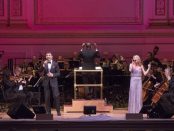
A pulsating medley from Kander and Ebb’s musical "Chicago" was the thrilling second act opening number of The New York Pops’ pleasant concert of eclectic show music, "42nd on 57th: Broadway Today." The evening opened with a lush and dramatic selection from Andrew Lloyd Webber’s "The Phantom of The Opera." "Les Misérables" also received a superb symphonic treatment, as did the lovely overture from "Ragtime." Hearing these familiar melodies performed by this supremely accomplished 78 piece orchestra was uniquely enthralling. [more]
Composer Portraits: Alex Mincek with Yarn/Wire and Mivos Quartet
In the compositions of New York composer Alex Mincek (b. 1975), music is explored by means of separating out its constitutive elements: as indicated in Miller Theatre program notes for his Composer Portrait concert, Mincek examines “sound worlds,” music states and the “sense of interconnectivity that reveals underlying qualities of coherence and unity.” These principles were on full display as two stellar contemporary groups, Yarn/Wire and Mivos Quartet, presented four recent Mincek works, including two world premieres. [more]
From Moses to Mostel: A History of the Jews
Robert Klein, the comedian/actor/writer, was the laid back host whose shtick—a cell phone conversation with God (a humorless lady)—provided the backbone of the show. Klein had to prove to the very distracted all-powerful lady that the world was worth saving. From this fragile premise came a very amusing, slightly overlong, program, performed by a large band conducted by Frank London and four fine singers: Joanne Borts, Rachel Stern, Rob Evan and Steve Rosen, plus a guest artist or two. [more]
92Y’s Lyrics & Lyricists Series: “Battle for the Airwaves: The Songbook Meets Rock and Country”
Breezily delivering his erudite script from a music stand, black-backed cards that he occasionally held, and from memory, Naughton cited Jazz, Gospel, The Blues, Country and Doo-wop. He also imparted historical facts and biographical details about the key figures involved. These included Nat King Cole, The Mills Brothers, Hank Williams, Jr., Louis Jordan, Jerry Lee Lewis, Elvis Presley, The Everly Brothers, Patsy Cline, The Coasters, The Platters, and Ray Charles. Much of the commentary was accompanied by appropriate slide projections. [more]
Broadway by the Year: The 1930’s
Though most of the performances of the evening were solely from vocalists, some of the performers showed versatility by playing with various different instruments. This added a refreshing amount of variety, and led to a handful of outstanding performances. Pianist and singer Billy Stritch performed in the first act, and the combination of his smooth vocals and stride-style piano was a welcome treat. The highlight of the evening for Stritch was “Comes Love” (Yokel Boy), which earned mid-song applause from the audience. Also showing versatility was Nellie McKay, who—at different times—performed on both the piano and the ukulele. McKay, who possesses a voice with an almost calm quality, is to be thanked for some of the more subtle, quiet, moments of the evening. [more]
92Y’s Lyrics & Lyricists Series: “A Funny Thing Happened: Songs from the Road to Broadway!”
Displaying her flawless vocal abilities, superb comic timing, dramatic range and exuberant presence, Ann Harada was the standout of the six-member company. She was in the original Broadway cast of "Avenue Q" and appeared in the recent Broadway production of "Cinderella." Her exquisite renditions included “Getting to Know You” from "The King and I," “Do You Love Me?” from" Fiddler on The Roof," “Sing Happy,” the 11:00 number from Flora The Red Menace, and “Distant Melody,” from "Peter Pan." Ms. Harada vividly demonstrated her delightful skills throughout. [more]
The Carnival of the Animals, featuring the poetry of Ogden Nash
The gifted puppeteer-dancers – Kristen Kammermeyer, Brendan McMahon, Justin Perkins, Rachael Shane – were barefoot and dressed in black; they moved with graceful economy of movement and made themselves into a fantastic combination of invisibility and magisterial artistry. They manipulated more than two dozen every-day-object puppets in gorgeous worlds of sky for birds, water for fish, field and forest for all sorts of creatures large and small. All these animals – made of sticks, brooms, mops, feather-dusters, cardboard-cut-outs, fabric scraps, familiar bits of this-and-that, and unexpected parts of who-knows-what – were right there in front of us. They leapt and loped, swooped and soared; they teased and pleased, tested, tormented and befriended each other and the narrator; they made each person in the audience – old and young, big and little – feel individually included in the menagerie's movements. [more]
The New York Pops Family Concert: “A Charlie Brown Christmas”
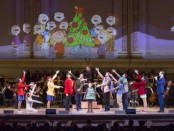
Members of the classic Peanuts gang were voiced by students from TADA! Youth Theater. Joshua Andino-Nieto took on the role of Charlie Brown and was joined by Amanda Treibner who starred as Lucy and Michael Wells as Linus. The trio brought the wholesome characters to life as they recreated Charlie Brown’s journey to finding the meaning of Christmas, including the famous scene picking out his sad tree, played by the adorable Finley McElhinney – and made the audience fall in love with these friends all over again! [more]
The New York Pops: It’s Christmas Time in the City
Opening with a soaring symphonic “Deck the Halls” and then joined by the wonderful Essential Voices USA chorus for it, The New York Pops closed their concert, "It’s Christmas Time in the City,." with a rousing audience sing-a-long of “Come All Ye Faithful” and “Silent Night.” In between, there was a delightful selection of classic and newer Christmas songs several performed by Broadway stars Stephanie J. Block and Brian d’Arcy James. Santa Claus and one of his elves also comically visited. Beaming music director Steven Reineke commandingly conducted the 78-piece orchestra and personably hosted this engaging presentation. [more]
Matthew Welch Music: Three Residency Concerts
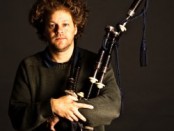
At the 10:00 show on Wednesday, December 9, Welch played bagpipes with Brendon Randall-Myers on electric guitar and Brian Chase on drums and electronics performing "The Library of Babel," a 35 minute piece Welch composed in 1999. In a subsequent post-concert conversation, Welch indicated that the work of Jorge Luis Borges had been a foundational inspiration in his composing early in his career. This piece, titled to pay homage to Borges' astonishing 1941 story of the same name, is an immediately recognizable child of Borges. It is also, however, strong enough to stand on its own, meaningful and effective, even for listeners unfamiliar with the works of the Argentinian writer. [more]
The New York Pops: Sophisticated Ladies
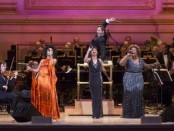
In this centennial of the birth of jazz great Billie Holiday, The New York Pops November concert was devoted to Harlem Renaissance ladies like Ella Fitzgerald, Sarah Vaughan and Dinah Washington as well as Holiday. Titled "Sophisticated Ladies," the evening was graced by three dynamic guest artists, Montego Glover, Capathia Jenkins and Sy Smith, who have a tremendous affinity with this music, along with music director and conductor Steven Reineke who narrated the story of this spirited and electrifying music. Beginning with Sam Shoup’s orchestral arrangement of Billy Strayhorn’s “Take the ‘A’ Train,” and ending in a rousing encore of “Get Happy,” performed by all the artists, the evening brought the audience to its feet. [more]
Modern Art Orchestra
Founded in 2005 and led by Kornel Fekete-Kovacs, trumpeter and composer, the Budapest-based Modern Art Orchestra is a marvel. Its twenty musicians – five in the rhythm section (piano, percussion, guitar, double bass) and fifteen on horns of all sorts (saxophones, trombones, tuba, French horn, trumpets and flugelhorn) – form a tight, cohesive group, sharing features of big band brash and a chamber group's intimate connectedness. Many of the musicians played more than one instrument, even within the span of a single piece; in a few pieces, individual musicians had extended solos. At any given moment, if one or more players weren't playing, they were watching their colleagues with delight, bobbing the rhythms with their heads and tapping out the complicated syncopations with their feet. [more]
Broadway Close Up: William Finn
Two veterans of the most recent revival of On the Town were splendid interpreters of Finn’s songs. First, Stephen DeRosa conjured a second-rate out-of-town production of "March of the Falsettos" populated by egos and amateurs. He sang “The Baseball Game” brilliantly-and schizophrenically—taking on each character of this bitingly satirical song. Later he sang the scathing, sexually explicit “Republicans” in which a liberal gets even with a Republican in an unprintable way. Then his colleague Alysha Umphress sang a rousing “Set Those Sails” ("In Trousers") and “Change” ("A New Brain"), both songs dealing differently with moving on. Ms. Umphress’s “Song of the Full Refrigerator,” about the temptations of food—“eat first and get depressed later”—was scarily right on the money. [more]
The New York Pops: “My Favorite Things: The Songs of Rodgers and Hammerstein”
The New York Pops’ 33rd season opened with a joyful tribute to one of the legendary songwriting teams of Broadway. Entitled “My Favorite Things: The Songs of Rodgers and Hammerstein,” the evening featured guest artists American soprano Sierra Boggess and British baritone Julian Overden, along with Judith Clurman’s Essential Voices USA. All proved to have an affinity for this music which was greeted rapturously by the sold-out audience. [more]
The New York Pops with Pink Martini
The song that made Pink Martini famous, “Sympathique,” was performed early on and welcomed much applause. Performed by China Forbes, one of Martini’s resident vocalists, “Sympathique” is a genre bending song which received critical acclaim internationally. Though Forbes was one of featured performers of the evening, all the vocalists associated with Pink Martini were top notch. As a whole this was as well-polished an evening of standards that one could ask for. Other highlights include Storm Large’s charismatic performance of “Quizáas, Quizás, Quizás.” [more]
Another Hundred Years
“Papa” was the elder Theodore Bikel’s sobriquet to the younger members of the touring company of "Fiddler on The Roof." Mr. Bikel died at the age of 91 on July 21, 2015, and a warm and very well performed tribute to his life and career was the centerpiece of the splendid concert "Another Hundred Years," at 54 Below. Part of KulturfestNYC’s Encore Series, this show also celebrated the impact of Jewish songwriters on Broadway musicals and marked the centennial of The National Yiddish Theatre Folksbiene which co-produced it. This is the oldest continually performing Yiddish theater company in existence. [more]
The New York Pops at Forest Hills Stadium with Sutton Foster
“The epitomy of a true triple threat performer,” was how Mr. Reineke introduced Ms. Foster. “I’ve never been here or sung outside with a big orchestra before” was her sweet response to the huge audience response. First clad in a slinky blue dress, she later changed into a tailored gray tunic and then into a striking black gown with rhinestones. Her versatility was ever present as she opened with the thrilling Duke Ellington collaborative composition, “I’m Beginning to See The Light.” Then it was on to rollicking renditions of “Anything Goes” and “I Get a Kick Out of You,” from that Broadway revival for which she won her first Tony Award. [more]
Broadway Unplugged 2015
An astounding array of Broadway singers triumphantly performed without any electronic assistance at Scott Siegel’s Broadway Unplugged 2015 at The Town Hall. All were terrific. Several were magical. Most pre-1960’s shows were unamplified. The act of listening was different then. Technology has changed all that. Some believe performances are more nuanced today. Others miss the excitement of hearing “real” voices. Whatever one’s opinion, Scott Siegel assembled a program that clearly showed what we’ve been missing lately. [more]
Broadway by the Year: The Broadway Musicals of 1991-2015
Hobbling on crutches and with one injured leg encased in a large boot, all due to a recent automobile accident, Sahr Ngaujah made a dramatic entrance from the wings onto the stage of The Town Hall to appear at "Broadway by the Year: The Broadway Musicals of 1991-2015." Joined by the accomplished guitarist Ricardo Quinones, the charismatic Mr. Ngaujah passionately sang “Sorrow, Tears of Blood,” from 2009’s "Fela!" In which he starred. It was a galvanizing episode that came near the end of a concert that had been packed with powerhouse sequences. [more]
Cheyenne Jackson at The Town Hall
“It’s been a rough two years,” Mr. Jackson observed. Deaths in his family, a disintegrating romantic relationship, and becoming sober, were all detailed during his heavily autobiographical patter that was integral to this presentation. This quirkily handsome Broadway performer dazzled his fans with a variety of songs and personal anecdotes during this 95 minute presentation. Being openly gay has been characteristic of his career and this fact was expressed simply during his commentary. [more]
92Y’s Lyrics & Lyricists Series: “To Life! Celebrating 50 years of ‘Fiddler on the Roof’ with Sheldon Harnick”
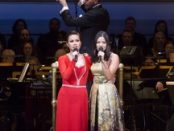
“Is there anything left to discuss? There IS!” exclaimed Rob Fisher, artistic director of the 92nd Street Y’s Lyrics & Lyricists Series about "Fiddler on the Roof," in his introductory remarks to the concert “To Life! Celebrating 50 Years of ‘Fiddler on the Roof” with Sheldon Harnick.” A violinist and Klezmer clarinetist, who played tunes from that show, then joined him briefly before they settled in on stage with the other band members. The format of the presentation was to commemorate this milestone anniversary of that classic Broadway musical in a unique fashion. “Those expecting to hear the entire score of 'Fiddler on the Roof' will be very disappointed,” explained "Fiddler on the Roof"’s 91 year-old lyricist Sheldon Harnick, and the concert’s affable host. “These songs are twenty outtakes that were not heard in the final version.” [more]
Broadway by the Year: The Broadway Musicals of 1966 – 1990
“Life Is,” from the 1968 Kander and Ebb musical "Zorba" as grandly performed by it’s original Tony-nominated cast member, Lorraine Serabian, was the show stopping highlight of the historical survey concert, Broadway by the Year: The Broadway Musicals of 1966 – 1990. With fiery hued hair, in a flowing black dress, tied with an elaborate gold belt, Ms. Serabian, fabulously recreated her theatrical moment of glory with this hard-edged anthem. Her deep, rich, expressive voice was matched with intense facial expressions that ranged from fierce to joyous. Mesmerizing on all levels, her performance of this one song felt like an entire concert all by itself. She was initially the understudy in the show, and was picked by director Harold Prince to replace the first actress during the out-of-town tryouts. [more]
The New York Pops 32nd Birthday Gala: “The New Golden Age”
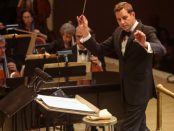
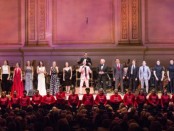
Maestro Steven Reineke, backed up by the largest pops orchestra in the United States, took us on an astonishing musical journey. The song selections made the perfectly-paced concert one of the most memorable nights of music in the past decade. [more]
92 Y’s Lyrics & Lyricists Series: “All Dancing! All Singing! Irving Berlin in Hollywood”
Sandy Duncan and Don Correia, wearing shabby tuxedos, top hats, and Converse high top sneakers, beautifully dancing and singing, “A Couple of Swells,” was one of the many highlights of the 92 Y’s Lyrics & Lyricists Series’ "All Dancing! All Singing! Irving Berlin in Hollywood." Ms. Duncan and her husband Mr. Correia vibrantly demonstrated why they have had such enduring careers in show business, which have included a number of appearances on Broadway. Guest starring here, they effortlessly recreated that famous number from MGM’s 1948"Easter Parade," originally performed by Judy Garland and Fred Astaire, who replaced the injured Gene Kelly. The tune itself dated from 1917, when it had the unpopular title and lyrics, “Smile, and Show Your Dimple.” [more]
Ustad Shahid Parvez Khan: An Evening of Indian Music
Shahid Parvez Khan comes from a long line – seven generations – of musicians and sitar masters. This fact is emphasized in both the musician's own and the World Music Institute publicity materials. Shahid Parvez Khan's ancestry is critically important for those who are well versed in both historical and contemporary Indian culture and music, but for those who know little about Indian music, it figures only as an interesting biographical fact. What is much more relevant to the listening experience is Shahid Parvez Khan's assertion that “the Sitar and Self are identical entities,” a statement confirmed by the experience of simultaneously watching and listening to the sitar player as well as his colleagues. [more]