Dance
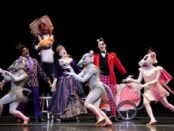
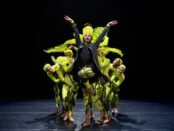
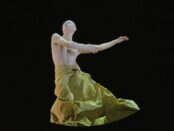
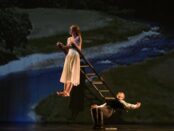
MOMIX’s "Alice" returns to the Joyce Theater for the first time since its 2022 premiere and continues to dazzle in its inimitable way with illusion and dance. Choreographer Moses Pendleton’s creation does not strictly follow the plot of Lewis Carroll’s two books, Alice in Wonderland and Through the Looking Glass, but appears to be a fantasia inspired by them and using all the elements of dance, gymnastics and imagery to bring it to teeming life. Using nine dancers, five women who seem to alternate as Alice, and four muscular men, the evening consists of 22 episodes taken from the two books but not always obvious as to their source. The score consist of 23 songs, some which seem to have been written specifically with the Lewis Carroll book in mind. [more]
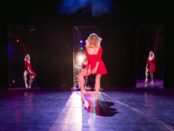
Gotta Dance!
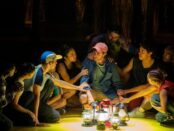
"Gotta Dance!" is a hugely entertaining revue of dance in the American musical recreating icon moments from 17 Broadway shows including four that started life as MGM movies starring Gene Kelly and later ended up as stage shows. Appearing under the auspices of The York Theatre, this is the work of the reconstituted American Dance Machine which existed from 1976 – 1987, and has been reestablished in 2012 by Nikki Feirt Atkins as American Dance Machine for the 21st Century along with co-founder choreographer Randy Skinner. American Dance Machine’s mission is to be a living archive of Broadway dance recreated by its original choreographers and/or dancers. All of the performers in "Gotta Dance!" are given a chance to show what they do best whether it is tap dancing, ballet, modern dance or swing. [more]
Rashid Johnson’s “The Hikers”
Performed beneath Rashid Johnson’s "A Poem for Deep Thinkers," "The Hikers" unfolds inside the Guggenheim rotunda, where architecture, elevation, and live music shape a restrained duet by Lloyd Knight and Leslie Andrea Williams. The building becomes an active partner in the choreography, guiding how the encounter is seen and felt. [more]
Limón Dance Company: Fall 2025 Season including “The Emperor Jones”
The Limón Dance Company is celebrating the start of its 80th Anniversary season with a triple bill at The Joyce Theater which in words of artistic director Dante Puleio celebrates “where we have come from and where we are going.” In this vein, the evening included “Chaconne” (1942) originally created by Jose Limón as a solo for himself, now expanded to 21 dancers including members of the Limón Dance Company, Limón2, Company Alumni, Students and Limón Family. This was followed by “The Emperor Jones” (1956), inspired by the expressionistic Eugene O’Neill play, but now updated to an urban setting in Puleio’s reconstruction. The final piece of the evening was the world premiere of “Jamelgos” by Diego Vega Solorza, who actually was born in the same region in Mexico as Limón and counts him as one of his mentors. The season is dedicated to the late Carla Maxwell who helmed the company for almost 40 years and died on July 6 of this year. [more]
Pilobolus: Other Worlds Collection
What has happened to Pilobolus? Two programs, A and B, under the umbrella title “Other Worlds Collection,” made up the repertory during this visit to NYC. If Program A at The Joyce Theater is any indication, the troupe has become—yipes!—a dance company: no gimmicks, no mirrors; no feathers; no shadow play; no nudity; and, worst of all, no sense of humor. Program A was particularly lacking in the last-listed quality, four works that took gloom and mystery to new heights (depths?). [more]
Breakin’ NYC
Each dancer contributes a unique personality and approach to the parade of styles, but when they all perform together it is as if they had been together forever. Each has a solo and a chance to speak about how they came to love hip-hop and how it changed their lives. Several impressed: Choung Woo Hyun has an elegance and lanky quality; Irina Brigita Laiciu’s bare midriff is as expressive as any ballerina’s toe-shoed feet; and Adrian T. Martin has a loose-limbed, easygoing quality. The other principal dancers are Jihad Ali, Messiah Brown, Kayla Muchotrigo, Rafaela Oliveira and Nicholas Porter, all displaying terrific individual qualities. [more]
CARMEN.maquia (Ballet Hispánico)
The twisty, but clichéd, choreography was not without its clever and eye-catching moments, but try as he might Ramírez Sansano never fully defined the characters, hindered by the equally colorless setting and costumes. The only variation on the relentless white of the ever-morphing pile of white bits and pieces that made up the set were several black-gray-white drops which divided the space and punctuated the action. The painting had clear references to Picasso’s masterpiece, "Guérnica." [more]
Parsons Dance: Spring 2025 Season
Six quite diverse works made up the program, four by Parsons and two by guest artists (Robert Battle and Rita Butler) who pushed the dancers to their limits. The guest choreographers worked the company in ways that challenged them after being used to Parsons’ style, which is a witty combination of ballet and modern dance, most particularly the modern dance exemplified by the late Paul Taylor with whom Parsons notably danced for a number of years. [more]
Tango After Dark
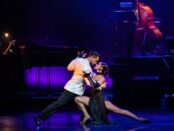
"Tango After Dark" came across as more of a slick cabaret act, albeit one that was performed and staged with professional polish. The dramatically focused lighting by original designer Charlie Morgan Jones (Clancy Flynn, assistant lighting designer and USA tour) gave theatrical flair to the choreography which, though a limited vision of this dance form, was entertaining and, at times, quite exciting. There’s nothing wrong with entertainment or excitement even if it isn’t high art. This ensemble provided two hours of fantasy even if it was a glib take on the Tango. It was a good show and a good time. [more]
Anima Animal (Grupo Cadabra)
Featuring ballet great and former American Ballet Theatre star, Herman Cornejo in the leading role, "Anima Animal" was choreographed by Anabella Tuliano on Cornejo’s ballet concert group from Argentina, Grupo Cadabra. A creation-themed work, the long program notes detailed the complex folk vision of the world, a story that once fascinated the legendary ballet titan, Vaslav Nijinsky when the Diaghilev Ballets Russes toured South America during the First World War. [more]
Dances by Charles Weidman
“Lynchtown” (1936), probably Weidman’s best known work, is an indictment of lawlessness and group anarchy. It is one section of a three-part work called “Atavisms.” Members of the Sokolow Theatre/Dance Ensemble (Samantha Géracht, Eleanor Bunker and Lauren Naslund artistic directors) honored Sokolow’s commitment to chilling psychology interpreting Weidman’s choreography. (Sokolow was a Graham acolyte who went off on her own artistic path.) The earth-colored paneled costumes (courtesy of Kanopy Dance) were a kind of camouflage for the large group of dancers led by the Inciter (Margaret Mighty Oak Brackey). They slinked in, stalking their poor Victim, Sam K who was distinguishingly dressed in blue. Their initial stilted, flex-footed walk slowly deteriorated into skitters, off-balance tilts and turns and stomps which turned into a pileup with the Inciter on top, scouting for their quarry. Lehman Engel’s strongly percussive music supported the choreography perfectly as the Victim is trapped like an animal and dragged to his fate. In its time, “Lynchtown” was a strong work and still retains much of its power. [more]
Malpaso Dance Company: Winter 2025 Season
This may not have been a typical program for the Malpaso Dance Company, but the troupe seems to lean towards the darker parts of life. As moving as each of the works are, they all painted a gloomy view. The movement style was an amalgam of ballet and the plasticity of good old-fashioned modern dance: lots of extensions, falls, turned-in legs and twisty partnering. [more]
Ronald K. Brown/Evidence: A Dance Company – 2025 Winter Season
The best constructed work was the finale, “Grace” (1999), in which Brown created a Goddess figure come down from Heaven “to spread grace among humans.” In addition to a score by Duke Ellington, Roy Davis, Jr. and Fela Anikulapo Kuti which went from darkly dreamlike to upbeat, guest vocalist Gordon Chambers sang an uplifting soulful, spiritual number as the angel-like lead ushered the cast through a portal to their ultimate fate: heaven. Was it my imagination or did the dancers costumed in red change into the white of the rest of the cast as they exited? Was this, perhaps, a symbol of the acceptance of …grace? Costumes were by Omotaya Wunmi Olaiya. [more]
Ragamala Dance Company: “Children of Dharma”
The troupe, led by a mother and two daughters—Aparna Ramaswamy, Ranee Ramaswamy (mother) and Ashwini Ramaswamy—presented “Children of Dharma,” based on elements of the famous Hindu epic "The Mahabharata." A totally original interpretation of this age-old story, it is a complicated tale about Krishna, “the embodiment of nature,” (a bare-chested Garrett Sour wearing just a plain dhoti), somewhat explicated by a voiceover narration recited by Leon Conrad. Two other characters dominate: Draupati whose epic dice game incites an epic war and Gandari, who tragically loses and mourns her many children. [more]
The Hard Nut
The main difference is the delightfully over-the-top, campy production that takes the audience into the fertile mind of Mark Morris and his artistic colleagues. The mostly black and white scenic design by Adrianne Lobel features circular prosceniums within circular prosceniums, exaggerated furniture and, wittily, a gigantic world map with lights indicating where the different ethnic dances—Chinese, Spanish, Russian---are from, as if Martin Pakledinaz’s hilarious costumes didn’t already tell the story. [more]
Alvin Ailey American Dance Theater: Winter 2024 Season
The second premiere was a battle of the sexes duet, “Me, Myself and You,” choreographed by Elizabeth Roxas-Dobrish to a Duke Ellington song, “In a Sentimental Mood” sung lustrously by Brandie Sutton. Caroline T. Dartey, in a long, silvery robe (costumes by Danté Baylor) rose from the floor and wandered beautifully towards a standing screen on the other side of the stage. Once unfolded, the screen was revealed to be a three-part mirror which seemed to fascinate Dartey as she almost made love to her own image. [more]
BalletX: Fall: 2024 Season
The final work of the evening was Takehiro Ueyama’s “Heroes,” dedicated to the brave, hard-working citizens of Japan who helped pull themselves out of the devastation of World War Two. Set to darkly emotional music by Kato Hideki and Ana Milosavljevic (played live) and a recording of John Adams’ moody, but energetic “The Chairman Dances – Foxtrot for Orchestra,” “Heroes” was filled with a wide range of emotions beginning with a long duet, a portrait of a deeply emotionally involved couple who, heartbreakingly, wind up parting, Ueyama’s choreography skillfully, but subtly illuminating a wealth of emotions. [more]
London City Ballet: Fall 2024 Season
“Larina Waltz,” choreographed by Ashley Page to the lilting melodies of Tchaikovsky, opened the program. It was a dynamic expression of the classical ballet bona fides of this youthful company. Arrayed in a line of five couples, the men in black tunics and the ladies in white tutus, they performed unison partnering showing off the easygoing style that became more evident as the program progressed. Couples peeled off until only one remained, soon replaced by a succession of couples, all of whom performed charming, if not dazzling, turns, lifts and complicated steps, the men leaping and the women showing off balance and grace. This was a charming lagniappe, a gift to warm up the audience’s expectations. [more]
Pilobolus: Summer 2024 Season
"Memory" brought back “Untitled,” a masterpiece from 1978. This work had everything that made Pilobolus the world class dance troupe it became. Choreographed by Pilobolus founders Robby Barnett, Alison Chase, Martha Clarke, Moses Pendleton, Michael Tracy and Jonathan Wolken, and using disarmingly and misleadingly pleasant music by Robert Dennis, “Untitled” began with two women (Feliz and Klinkman) wearing ornate 19th century dresses as they lay on the ground having a pleasant picnic. (Costumes by Kitty Daly and Malcolm McCormick.) As they rose they slowly grew into giants, their legs clearly those of men. These now eight-foot tall women moved gracefully about soon joined by two fully dressed men (Loman and Langford) who flirt with them. As the two ladies were lowered onto their own legs, their supporters proved to be two naked men (Chaparro and Ellis), a bit of a shock to the audience, softened by the beauty of the two. The two women wafted about blissfully unaware of the four men until the naked men resumed their positions under the women’s skirts as they floated off. This combination of period nicety, nudity and psychology and superb movement made for a hauntingly memorable work. [more]
Ain’t Done Bad
Jakob Karr conceived, choreographed and directed his full-length dance/drama, "Ain’t Done Bad" currently heating up the Irene Diamond Stage at the Pershing Square Signature Center just west of Times Square. It is a courageous, if generic look at the trials and tribulations of a young gay man confronting his inner demons and his hard-as-stone father. [more]
Introdans: Energy (triple bill)
The Netherlands-based dance troupe Introdans (Roel Voorinthoff, artistic director) exploded onto The Joyce Theater stage in an aptly titled program, "Energy," making a very welcome return to this esteemed home for dance. Although worlds apart stylistically, the first two works, “Kaash” and “Concerto,” were choreographically similar, their form based on repetition of simple themes that gathered strength as each work progressed. [more]
The Look of Love (Mark Morris Dance Group)
"The Look of Love" was filled with Morris’ least complex choreography, relying on repetition, walking, running and soft leg extensions along with simple arm gestures. Considering the sophistication and elegance of Iverson’s arrangements for the MMDG Music Ensemble, Morris, whose musicianship is his best feature, clearly decided to go for the obvious and easily digestible. Nothing wrong with this approach, but it made "The Look of Love" appear less substantial than it really was. [more]
Dongpo: Life in Poems
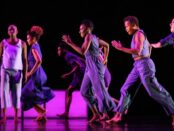
Dongpo’s travels through life is set forth in the lovely poems—projected in Chinese script and in English—full of observations of nature, sad inner monologues and thoughts intimating the end of a long life. They helped set the tone of "Life in Poems," including some humorous trips to the twenty-first century wittily added to the next-to-the-last act: dancers on skateboards, scooters and other unabashedly modern modes. Divided into six short acts, each defined by a Dongpo poem projected onto several large scrims, the ballet slowly builds to an eye-popping full cast finale. [more]
Illinoise
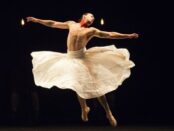
While "Illinoise" does not seem bigger than its individual parts nor transcend them, it is both satisfying and moving. Peck’s inventive and derivative choreography at the same time seems to pay homage to his teachers and sources but also is in his own style. Some will find "Illinoise" an emotional experience; others will be impressed by the vigor and high spirits of the dancers and singers. Several of the dancers should be come much better known through their roles in this work. Last but not least, Sufjan Stevens’ 2005 score is remarkable in its continued vitality after all these years. [more]
Pontus Lidberg: “On the Nature of Rabbits”
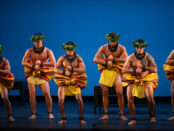
How the metaphor of rabbits fit into this was puzzling, yet the dreamlike (nightmarish?) rabbit imagery was the strongest visual idea and pervaded the work, from a toy stuffed bunny to grotesque rabbit masks the dancers wore throughout the show. Perhaps the stuffed bunny was akin to the madeleine which Proust tasted, leading to a river of memories and Á la Recherche du Temps Perdu, the rabbit inducing Lidberg to ponder his childhood? [more]
Twyla Tharp Dance: Winter Season 2024
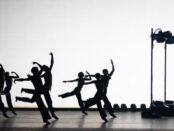
Like her masterful Sinatra solo for Mikhail Baryshnikov, “Brel” takes Cornejo from a strolling meditating figure (“Quand On N’A Que l’Amour”) to an anguished lover (“Ne Me Quitte Pas”). Cornejo twists and thrashes until the song “Amsterdam” had him gliding all over the stage. The mood rises through “Les Marquises” and “Marieke,” matching Brel’s penchant for crescendo, leading Cornejo into jags of runs, leaps, turns and wilder gestures. Although not as immediate a success as her other ballets to songs, “Brel” will soon be a favorite of solo danseurs all over the ballet world. [more]
White Wave: 2024 SoloDuo Dance Festival
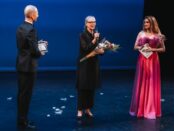
The host company, WHITE WAVE Young Soon Kim Dance Company ended the short, well-run program with the longest work, the three-part “Eternal NOW.” It also had the most complex costumes, geometrically shaped and brightly-colored two-part outfits designed by Sarah Cubbage. Putting her seven dancers through their modern dance paces, Kim displayed skill at handling the cast, pitting soloist against groups and each other as they moved to an alternately slow and fast score by Marco Cappelli. She is someone the other other dancemakers on this lineup could look up to. [more]
Compagnie Hervé KOUBI: “Sol Invictus”
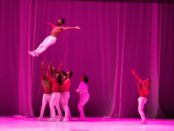
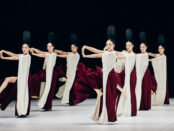
This hotbed of virtuosity, indeed, made his troupe one gorgeous community of physically exuberant and fearless citizens. Whether he communicated any deeper existential or human truths probably differs with each viewer’s sensibility, but watching these fine physical specimens flip, fly, roll and balance on their heads had its vicarious thrills, perhaps dimmed with the constant repetition of feats of athletic prowess to the point of exhaustion. Perhaps sensing this, Koubi doubled down and ended the work with dancers being tossed high and caught at the last moment, an adrenaline rush if there ever was one. [more]
Ronald K. Brown/EVIDENCE: Winter 2023-24 Season
Ronald K. Brown/EVIDENCE, the Brooklyn-based dance company founded in 1985 is back at the Joyce Theater presenting two works by Brown showing off the exuberance, sensuality and technical brilliance of its eight dancers plus one guest artist. “Walking Out the Dark” (2001) was the more substantial work. Using only four dancers—until the very end when company associate artistic director Arcell Cabuag performed a peculiarly out-of-place solo—Brown began in a quietly intense mood, gradually lightening up by the end of this uneven, but well-meaning 50-minute work. [more]
Momix: Fall 2023 Season
How the ten dancers of Momix create so many beautiful and mysterious images is a credit to artistic director Moses Pendleton and his associate Cynthia Quinn who, along with the dancers, create superb eye candy illusions. In fact, the performers of Momix are billed as dancer-illusionists. This season at the company’s New York headquarters, the Joyce Theater, sadly, there was only one new work, “Floating.” Instead, the program, entitled “Viva Momix,” consisted of sixteen oldies-but-goodies all staged with Momix’s signature expertise. [more]
Boris Charmatz: Somnole
Far less mystical that he would have us believe, "Somnole" nevertheless is Charmatz’s honest exploration of his stated theme, although self-indulgence reared its ugly head too often. The work could easily have been just as effective if edited, but Charmatz’s charm and virility helped fill out the hour. [more]
Room with a View
The dancers performed their dystopian tasks with great dedication and the occasional display of actual technique. They were all good-looking and clearly into what they believed was an iconoclastic work of social significance, but was actually a pretentious free-for-all that mimicked many clichéd tropes that were exhausted in the Sixties. [more]
HopeBoykinDance: States of Hope
The spine of the work wasn’t the choreography or dancing, but the lines spoken by the dancers as they walked about the stage; however, since the lighting by Crawford was shadowy and the dancers wore head microphones—their voices projected via speakers—it was often difficult to see who was speaking. Add to this the fact that the performers weren’t the best actors and this all important text became just as shadowy as the lighting (which, to be fair, had a moment or two of brightness and color). [more]
Fall for Dance 2023: Program 5
The immediate impression of "Gira" was of the semi-circle of lights designed by Gabriel Pederneiras and Paulo Pederneiras (the Grupo Corpo artistic director) and their somber illumination of the twenty dancers—an impressively large cast—that heightened the ceremonial tone of the very repetitious choreography. The music by Metá Metá varied from ominous rumbles to full-out thumping Latin rhythms. The dancers filled the stage with stomps, twisting torsos, wildly abandoned runs and quickly morphing groupings. They formed circles around soloists and spread across the stage in their recurring movement patterns, quite effective dramatically in a sweaty, sensual way. The audience was bowled over by "Gira" as they were, for different reasons, by the other works on this very varied program. [more]
Fall for Dance: Program 3
The Houston Ballet, Julie Kent and Stanton Welch, directors, opened the program with Welch’s genteel "Clear" to music by J.S. Bach. Originally staged on American Ballet Theatre, the Houston dancers, seven men and one lonely lady, couldn’t have been better: smooth, exuberant, beautifully trained and rehearsed and musical to a fault. Bare-chested, wearing tight pants that flared at the bottom, the men performed Welch’s classical ballet-based choreography which ranged from simple classroom steps to bravura leaps and partnering. Yuriko Kajiya, the mostly ignored female, appeared to exist to be ignored by the men who barely interacted with her and then only in the slower movements. What distinguished the steps in "Clear" were the unusual arm movements that sometimes seemed to have emotional overtones, but mostly made lovely shapes as the dancers showed off their soft-edged virtuosity, particularly Connor Walsh who whirled madly about in a series of fouettés, usually the preserve of female dancers. [more]
Fall for Dance Festival 2023: Program 1
Ballet BC, the Canadian-based modern ballet company, began the program with 'The Statement," Crystal Pite’s witty take on a boardroom meeting, a corporate boardroom meeting full of intrigue and tension. Jay Gower Taylor’s slick set made the ballet with its chic, but spare conference table over which hung an ominous large, chimney-like structure, all lit with sharpness by Tom Visser. There wasn’t much of a musical score, just some rumblings by Owen Belton, over which a mini-play by Jonathon Young, pitting two couples against each other—one in business casual and the other more formally attired (costumes by Pite and Joke Visser)—became the sound score to which the dancers moved. The actors speaking the lines were Meg Roe, Colleen Wheeler, Andrew Wheeler and Jonathon Young, himself. The stylish, nimble dancers were Patrick Kilbane, Sarah Pippin, Vivian Ruiz and Rae Srivastava. [more]
2023 Fini Dance Festival and Italian International Dance Awards
Antonio Fini in Ted Shawn’s “The Cosmic Dance of Siva,” performed as part of 2023 Fini Dance [more]
Seoul Metropolitan Dance Theatre: One Dance
Korean Arts Week celebrated the theatrical and fine arts of South Korea, a culture under-represented in New York City compared to, say, those of Japan, China and India. At the David H. Koch Theater at Lincoln Center, the Seoul Metropolitan Dance Theatre performed "One Dance," a celebration of historic formal, ritual dance forms of Korea. Although "One Dance" certainly had theatrical viability and a great number of performers, the problem of placing religious and ethnic rituals onto a proscenium stage and presenting them before an audience of three thousand wasn’t completely solved. [more]
Ballet Hispánico: Buscando a Juan
There is an elegiac formality to Buscando. However, other than Juan de Pareja’s name in the title there is little in the choreography that evokes either period or personality. The choreography is interesting, yes, but were it not for informative program notes available online, Brito might have been a Christ figure with a dusting of Latin finesse and pulse and Sprauve a Mary Magdalene substitute. [more]
Alvin Ailey American Dance Theater: Spring 2023 Season
"Dancing Spirit" was a gentle ballet choreographed by Ronald K. Brown to a suite of music by Duke Ellington, Wynton Marsalis, Radiohead and War. First one dancer, then two and then the entire cast slowly made their way down a darkly lit diagonal (perfect lighting by Clifton Taylor) dressed in Omotayo Wunmi Olaiya’s white flowing dresses for the women and dark pants and pale shirts for the men. This was a ritualistic journey. The simple movements—walking, tilting, dipping into deep, wide pliés and bending at the waist—were developed into complex combinations all to quiet music of Ellington. [more]
Ballet Hispánico: Spring 2023 Season
The major work of the evening was “Sor Juana,” choreographed by Michelle Manzanales (“in collaboration with the Company”) and performed to a selection of period music including a composition by the title character, Sor Juana Inés de la Cruz, the 17th century nun, proto-feminist, poet and composer. “Sor Juana” was commissioned by New York City Center. Gabrielle Sprauve as Sor Juana was dignified and powerful as she strode amongst the others, all dressed in extravagant period costumes by Sam Ratelle. A black and white habit straight out of a famous contemporary portrait of Juana was a standout even though it was soon stripped off to reduce Sprauve to a tight, white leotard as if reducing her to emotional essence. She is joined by the similarly attired Isabel Robles in what became the apex of the work: a sensual, yearning duet that included supported lifts and much entwining. [more]
Dance Theatre of Harlem 2023
A short documentary film about the fabulous actress, composer, pianist and wife of Adam Clayton Powell, Jr., Hazel Scott, preceded the new ballet, "Sounds of Hazel," choreographed by Tiffany Rea-Fisher. The film revealed Rea-Fisher’s inspiration to put her feelings about Scott into ballet form. The resulting work, though uneven, gave the DTH dancers many opportunities to show their zest, sensuality and grace while still not particularly illuminating the astonishing life of Scott whose career was sidelined by the McCarthy Blacklisting forces. The score, featuring only two Scott performances plus a pro-America speech she made, divides the work into seven sections designated by geographical locations: Trinidad, Harlem, Paris. The score was arranged and partially composed by Erica “Twelve45” Blunt. Although well-meaning, "Sounds of Hazel" is not well choreographed, uneasily combining sassy hip swings with ballet to evoke Trinidad and jazzy movements adorning ballet steps to bring Paris alive. Had Scott’s name not been in the title, there would be no way to infer that Sounds of Hazel was about her. [more]
Bob Fosse’s Dancin’
Perhaps it’s the difficulty of finding dancers who can perform the intricate, body isolation moves so emblematic of Fosse’s very individual style, but to those who know and experienced his brilliance when he was hands on, this cast is a bit too clean cut and even-tempered. (The late Ann Reinking, a Fosse muse, was more successful staging her revival of "Chicago" still setting records on Broadway after moving from its New York City Center Encores! birthplace.) Nevertheless, Cilento is using a great deal of the original vignettes, excluding a few (most particularly Fosse’s perfectly ludicrous sexualizing of a ballet class) and adding more spoken lines, including an intermittent narration given by the charming, solid Manuel Herrera who also shows off his great dancing chops. [more]
Tanztheater Wuppertal Pina Bausch: Água
"Água," making its American debut, created in 2001 during a residency in Brazil, is a work of great beauty, humor and creativity —and dishearteningly, an overlong dance/theater work. Even the most beloved visitor who overstays his welcome, enervates rather than stimulates. Its series of discrete sections never congealed into a seamless whole, each, though fascinatingly staged and performed by this impeccable troupe, not making much sense even in the surreal world of Bausch’s imagination. As usual, Bausch combined speaking with movement, not pairing them particularly smoothly in this work. Água actually began with a dancer speaking as she peeled and ate an orange, going on about a muscle cramp that caused her to leave her bed and gaze at the heavens through her window. [more]
Cullberg: “Horse, the Solos”
Though only an hour long, Deborah Hay’s Horse, the Solos (2021), set on the dancers of Cullberg (founded in 1967 as the Cullberg Ballet by the late, eminent Swedish choreographer Birgit Cullberg), was difficult to sit through, a meandering, shapeless work that provided few visual pleasures and even fewer moments of human interaction. Hay provided a Choreographer’s Note to explain how Horse was painstakingly produced during the recent Covid Pandemic, created on the dancers via instructions communicated by computer screens and a trusted rehearsal director. Hay stated, “Horse, the Solos" relies on two common attributes of survival, risk and efficiency.” Her opaque, overly intellectual analysis is a product of her years in the world of avant-garde dance, the Judson Dance Theater and the Merce Cunningham Dance Company. The dry, boring dance on Te Joyce Theater stage was a reflection of her experimental past, the influential lessons of which have long been absorbed into the greater dance world. [more]
tanzmainz: “Soul Chain”
Three solos were stunning in their display of physical endurance. One woman moved forward, repeatedly kicking one leg behind her nearly touching her head with her foot. Another, tall and lithe, stood at the foot of the stage and began writhing, wiggling and shaking in a very disturbing way, for a very long time. And, a young bearded man stood dead center nearly surrounded by the group and began gyrating his head—forward, right, back, left—for more than fifteen minutes at an ever-increasing pace! All three solos were attempts at exhibitionism amidst the tedium. All three solos were both horrifying and exhausting to watch, yet eerily fascinating. [more]
Natalia Osipova: Force of Nature
The ballerina Natalia Osipova easily transformed herself from spectral to sensuous to eerie in just the first half of her 'Force of Nature" program at the New York City Center. The show—presented sadly only once—was one of the best in the popular genre of ballet star-led gatherings. Osipova’s company members were all superb; it was a company of equals with little frivolous ego on display. Some came from her home troupe, the Royal Ballet; others from American Ballet Theatre and the rest from young ballet troupes. To display her classical bona fides, she opened the program with the Act Two Pas de Deux from "Giselle," brilliantly partnered by the handsome, technically smooth Marcelino Sambé, a principal dancer from the Royal Ballet. In this duet, the spirit of the title character meets for the last time her royal suitor whose attentions in the first act resulted in her early death. She is now a Wili, a girl who has died before being wed, but she is forgiving. His character is Albrecht. He meets her and partners her in lovely poses and windblown lifts. Osipova’s light as air jumps and floating arms were marvelous. These two produced a masterful performance helped by a particularly fine recording of Adolph Adam’s famous score. [more]
Hong Kong Ballet: “Romeo + Juliet”
Webre went for acrobatics and precision rather than passion. Perhaps, the Chinese Communist regime frowns upon openly sexual expression in dance. Perhaps Webre can’t summon anything but pretty pictures, but his Romeo + Juliet was theatrically brilliant, but emotionally shallow. [more]
Twlya Tharp: “In the Upper Room” & “Nine Sinatra Songs”
A scene from Twyla Tharp’s “In the Upper Room” at New York City Center (Photo credit: [more]
New York City Center Fall for Dance 2022: Program 4
"Men of Kyiv," choreographed to high-spirited traditional folk music by Pavlo Virsky, pitted two groups of men—one wearing blue T-shirts, the other yellow, the colors of the Ukrainian national flag—against each other in a friendly, boisterous competition which began with a high-kicking entrance mazurka. This was followed by one exhibition of prowess after another: barrel turns, high cheerleader jumps, kazatskis, split leaps and unison chain dances. It was almost as exhausting to watch as it was to dance and it left the audience totally in love with this good-natured dance troupe. [more]
Fall for Dance Festival 2022: Program 1
Perhaps the supreme dance festival in New York City, maybe even in the world, New York City Center’s Fall for Dance 2022 is celebrating its 19th year of presenting a panoply of domestic and international troupes. Initiated by outgoing City Center President Arlene Shuler, this celebration of the many facets of dance has brought some of the best and some of the mediocre representatives of world dance to many thousands of people who have been notoriously uncritical of what has been set before them. And, rightly so. This is an audience that has come to enjoy whatever entertainment is presented—and, at an affordable price. Program 1 of this year’s five-program edition was typical, presenting one local troupe, a Portuguese classical ballet couple and an all-male French/Algerian company which opened the program with in-your-face energy tempered by woefully mawkish “daddy was mean to me” back stories. [more]
The Sarasota Ballet 2022
The second Ashton ballet was "Varii Capricci," his clever take on Bronislava Nijinska’s "Les Biches" from 1924. Her ballet was a tongue-in-cheek comment on the sexually liberated, chic young people of France. Ashton set Varii to a witty score by Sir William Walton. La Capricciosa (a delightfully languid Danielle Brown, arrayed in Ossie Clark’s diaphanous white dress) is wooed by a gigolo, Lo Straniero (a hilarious, oily Ricardo Rhodes) whose intentions were clearly not honorable. These two were surrounded by a giddy ensemble that gamboled about watching them romantically self-destruct. "Varii Capricci" is light-hearted and lightweight, but impeccably presented. [more]
BAAND Together Dance Festival 2022 at Lincoln Center
The dancers were attired in puffy white tutus and black tights, the men bare-chested—chic costumes by the choreographer. They pranced, undulated their torsos, tossed each other around and vogued in lineups that spread across the stage. If there is one word to describe "One for All," it’s sassy. Despite steam room like temperatures, the cast was exuberant and daring, considering Lopez Ochoa had just finished staging it that afternoon! It was led by a sexy, spritely Chalvar Monteiro of the Ailey Company. [more]
Momix’s Alice
Pendleton, in a program note, assures us that "Alice" is not a retelling of Carroll’s book. Rather, he used some of the events and characters from the book, dividing the evening-length work into twenty-two sections with titles like “A Summer Day,” “A Trip of Rabbits,” “The Cheshire Cat,” “The Queen of Diamonds” and “The Wolf-Spied-Her.” Although characters reappear—Alice, the Rabbits and the various playing cards queens—the episodes don’t particularly flow one into the other. The takeaway is a series of fanciful images rather than a cogent whole work of theater. [more]
Pacific Northwest Ballet 2022
For the company’s director, Peter Boal, this short season was a homecoming of sorts. He was a principal dancer in the New York City Ballet which calls the David H. Koch its artistic home. He left seventeen years ago and, since 2005, has been the PNB’s artistic director. Boal should have put more thought into the ballets he brought, at least those on Program A. Only one of three had heart and emotional depth and was gimmick-free. All three works by established choreographers showed off different facets of the skilled dancers. [more]
Paul Taylor Dance Company 2022
The new work on the program, a world premiere, was “Hope Is the Thing with Feathers” by Michelle Manzanales, choreographed to John Lennon & Paul McCartney, Bob Marley, Harry Woods and several others. Using ten of the Taylor dancers, Manzanales produced a work that was charming if a tad repetitious. Santo Loquasto’s pale costumes had an elegantly informal look. The dancers trooped on in a long line performing unison steps, lunges, leans and twists until movements moved sequentially down the line, mostly soft falls to the stage. In between these unison sections there were jaunty solos and quick duets that segued into group dances. The pop song soundtrack underlined the work’s informal feel. Manzanales certainly put the dancers through their paces. There’s nothing more appealing to an audience than a line of performers dancing their hearts out in unison! Her work shows promise but also is clearly the work of a novice. What the ballet had to do with the Emily Dickinson poem it came from wasn’t clear. [more]
The Limón Dance Company (Spring 2022)
The final work was the world premiere of “Only One Will Rise,” a work by a new choreographer Olivier Tarpaga to a colorful score he co-wrote with Tim Motzer who was one of the three on stage musicians. Daniel Johnson and Saidou Sangare were the others.
“Only One Will Rise” used a large cast that Tarpaga handled adroitly, shooting groups across the stage in interesting patterns, eventually focusing on several soloists who appeared angst-ridden. His movement themes were decidedly Limón influenced with the addition of sensual twists and undulations taken from African ethnic folk dance, movements that the Limón troupe performed beautifully, wringing a myriad of emotions from these departures from their home base technique. [more]
The Little Prince
Essentially, Mouron boils the story down to a couple lines about love and beauty, while eliding any sense of the loss, isolation, and dread that the novella also poetically conveys. Her little prince is a man-child incapable of engaging with life's pain rather than Saint-Ex's courageously inquisitive child-man who can't help but look for happiness in sorrow and vice versa. In the absence of this existential heft, the production makes room for co-director Anne Tournié's, admittedly, often charming choreography. A pas de deux between Zalachas and Sulty is particularly lovely, thanks in part to the latter's stunning, and protean, red dress from costume designer Peggy Housset. [more]
Artists at the Center: Tiler Peck
By far, the audience favorite was the world premiere “Time Spell,” an entertaining attempt at a hybrid of tap dancing (choreographed by Michelle Dorrance and Jillian Meyers) and ballet (choreographed by Peck) with the assistance of Byron Tittle. The musicians Aaron Marcellus and Penelope Wendtlandt provided witty a cappella close harmony vocal accompaniment, even occasionally joining in the dancing. The alternating of tap dancing and ballet began slowly with the two dance forms not combining easily, but as the speed picked up so did the similarities until the ballet dancers were tapping in their toe shoes and the tappers were bourrée-ing in their tap shoes. The large cast included Dorrance, Meyers, Peck, Lovette and Mejia. [more]
Four Quartets
In her selection of the movements and structure of "Four Quartets," Tamowitz chose to ignore the depth and imagery of the poems, producing a cool Merce Cunningham-like ballet that glided along beautifully on the surface of Eliot’s heavy, sometimes distasteful, imagery. Movements were balletic, full of arabesques, skittery connecting steps, soft leaps and jumps. She built the work upon a series of steps and phrases that are repeated in various ways: jumped, turned, performed alone, performed in unison and performed in reverse. One salient image was that of a dancer jumping into the arms of another. Other than that there was very little touching. The barefoot dancers often mimicked each other or performed side by side. Only two duets occurred, one quite long near the end, watched by the other cast members gathered at the corners of the set. [more]