Archive
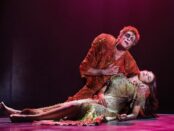
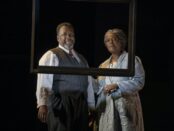
To be clear, the casting isn't colorblind; it's just casting, with director Miranda Cromwell delicately drawing out a different set of lived experiences from Miller's almost untouched words. The play's West-End co-director Marianne Elliott has not made the journey across the pond with its ongoing contributors, all of whom deserve kudos for the revelatory production, especially Wendell Pierce ("Broke-ology," "The Wire," "Treme") as Willy and Sharon D. Clarke ("Caroline, or Change") as Linda, his long-suffering wife. Though Pierce devastatingly pulls Willy apart in front of our eyes until all that's left is his sense of failure, it's Clarke who gives Willy's downfall its saddest dimension, convincing the audience, beyond any doubt, that the very-flawed Willy is loved. If seeing previous productions of "Death of a Salesman" has inured you to Willy's ultimate fate, this one should bring back the tears, and Clarke deserves a lot of credit for that difficult gift. [more]
1776
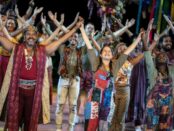
Directed by Jeffrey L. Page (who also did the simplistic choreography) and Diane Paulus, this production’s well-meaning gimmick is to have all the historic characters played by a “cast that includes multiple representations of race, ethnicity and gender [who] identify as female, transgender and nonbinary,” to quote the exacting language of the production’s press release. This casting coup works most notably as a political statement, hopefully forcing the audience take a fresh look at the original all-male contingent, however brilliant they may have been, and their flaws. The word “woman” never appears in the Declaration of Independence (nor the Constitution) and the millions of Black slaves were quite purposely and expediently left out of the Declaration. This multi-racial cast is a not-so-subtle slap in their faces. [more]
Leopoldstadt
Tom Stoppard’s "Leopoldstadt" is a powerful achievement, a history of our time as well as a cautionary tale. In depicting Jewish life in Vienna from 1899 - 1955, It also reveals a way of life and a culture rarely seen on our stage. Patrick Marber’s superb production keeps the story progressing at just the right tempo both to follow the plot as well as reflect family life as it is really lived. There is not a weak link among the 36 actors in which all of the children’s roles are double cast. The excellent design team puts four generations of Vienna on stage of Broadway’s Longacre Theatre. [more]
Everything’s Fine
Actor/writer/director Douglas McGrath is a charming storyteller and his one-man show "Everything’s Fine" is a total delight. He tells the entertaining and poignant story of his eventful 14th year when he was in ninth grade but also describes life in his family of five growing up in Midland, Texas. His tale of darkest adolescence is also nostalgic and reminiscent of the problems of life as a teen. The title turns out to be ironic as it was an expression his father used before announcing there was a new problem. [more]
Baldwin & Buckley At Cambridge
"Baldwin & Buckley at Cambridge" should stir up controversy as their 1965 topic is still relevant. Such a debate today would have a great deal more ammunition than either of these men had at the time. However, one can still hear both points of view today given by liberals and conservatives, respectively. The fact that the Baldwin/Buckley debate is still relevant can be witnessed from the rise of the Black Lives Matter Movement in 2013 as well as the 2019 publication of "The Fire Is Upon Us: James Baldwin, William F. Buckley, Jr., and the Debate over Race in America" by Nicholas Buccola. This is a question which has not been resolved in the intervening 57 years. [more]
Powerhouse
Harms’ play never lets up in its homage to corporate intrigue laced with humor. The audience’s caring for how Regan and Guy end up is a given, so that we can forgive his “poetic license” in that all legal personnel involved would be fully aware that the illegal recording of someone without their knowledge is a Class E felony in the state of New York, but nevermind. Director Ken Wolf keeps the story moving at a great clip and gently supports all five of the thoroughly believable characterizations, to the point we hope even Meena will be okay after her hysterical breakdown akin to professional suicide. [more]
Cost of Living
Perhaps because of its prestigious accolade, or just undeniable merit, "Cost of Living" is the first of Majok's heartfelt efforts to make the journey from off-Broadway to on-Broadway in the Manhattan Theatre Club’s production, a transition that, thanks to director Jo Bonney's returning and unflinching guidance, hasn't diminished any of the play's intimacy or daring. If anything, on Wilson Chin's Bergman-meets-Bayonne turntable set, gloomily lit in unrelenting twilight by Jeff Croiter, "Cost of Living" has become even more persuasive and poetic. Invaluably serving that dramatic growth are actors Gregg Mozgala and Katy Sullivan, repeating their roles from the play's 2017 New York City Center premiere by MTC. [more]
The Sea Lady
Neith Boyce’s "The Sea Lady," a Broadway-bound play in 1935, only now having its world premiere at Metropolitan Playhouse is an attempt at a Shavian play of ideas. Based on a 1901 novel by socialist H.G. Wells, this very Edwardian story resembles Shaw’s "Misalliance" but without the wit or the scope of ideas. Extremely tentative in how far it dares to go, "The Sea Lady" seems like a relic of an earlier age. It has charm but it lacks depth; its message may have been new in 1901 when the novel came out or 1935 when the play was finished, but today it seems extremely old hat. [more]
Washington Square
On what is either a shoestring budget or a conscious effort to strip Henry James’ novel down to its essentials, Randy Sharp’s new adaptation of "Washington Square" is both exciting theater and entirely true to its source material. The quartet of fine actors make this story of 1840’s New York entirely credible and engrossing at all times. While it avoids the beautiful trappings usually associated with the period, it is so gripping that they are not missed for a moment. [more]
Our Town…but Wilder
Krevolin is a clever writer, turning Wilder’s American folk tale into a modern comedy/drama with relevance to today’s audiences. Although he often makes his points a bit too obviously with the rantings of the bigots veering too close to cliché, he nimbly juggles the complex inter-relationships. His staging is simple, helped by Aurora Winger’s lighting. Characters often enter down the aisle as they approach the stage tossing off their lines, cheerfully lit by Winger. While waiting for the next inevitable production of Wilder’s Our Town, whet your appetite with its modern cousin, "Our Town…but Wilder." [more]

Complicity
On paper, Diane Davis’ play "Complicity" offers a stark, yet refreshing take on the now familiar Harvey Weinstein-tainted Hollywood story of women being victimized by a male-run, male-driven industry. On stage what we have instead are sometimes too-clipped scenes where an audience is left the chore of filling in the many blanks. The actors sometimes attempt to do just that with histrionics that are unfortunately not reined in by director Illana Stein. [more]
I’m Revolting
There are two truisms in life in addition to the one about death and taxes: it takes all kinds of people to make a world and something will get everyone in the end. The world premiere of Gracie Gardner’s "I’m Revolting" beautifully proves both points. A sensitive and perceptive play set in the waiting room of a private New York City skin cancer clinic, the play introduces us to all walks of people and many reactions to medical reports. The ensemble cast includes several veteran actors (Laura Esterman, Glenn Fitzgerald, Peter Gerety and Patrice Johnson Chevannes) and several not so well known faces. Knud Adams’ direction is subtle and unobtrusive allowing life to pass on the Linda Gross stage of the Atlantic Theater Company. [more]
Weightless
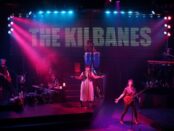
"Weightless" is an engaging little indie rock musical, little in the sense that it has only three characters plus a narrator and runs only 75 minutes of playing time. The show features the Bay Area rock band The Kilbanes (married songwriting and performing duo bassist Kate Kilbane and keyboard player Dan Moses) who also wrote the show, and the cast that also filmed the show in 2021 during the pandemic. Like "Hadestown," "Weightless" is based on a story in Greek mythology and includes the gods on Mount Olympus; in this case the source material is from Ovid’s "Metamorphoses," a work written in Latin. "Weightless" is performed as if it were a concept album staged as a concert with the characters all played by the six member band who sit or stand on the stage placed on various platforms. Peiyi Wong’s set design does not allow for much stage movement and Tamilla Woodard’s direction does not give the actors much to do in the way of stage business. However, the storytelling is clear and the characters well defined. [more]
New York City Center Fall for Dance 2022: Program 4
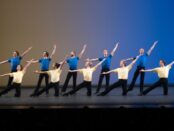
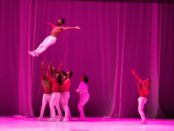
"Men of Kyiv," choreographed to high-spirited traditional folk music by Pavlo Virsky, pitted two groups of men—one wearing blue T-shirts, the other yellow, the colors of the Ukrainian national flag—against each other in a friendly, boisterous competition which began with a high-kicking entrance mazurka. This was followed by one exhibition of prowess after another: barrel turns, high cheerleader jumps, kazatskis, split leaps and unison chain dances. It was almost as exhausting to watch as it was to dance and it left the audience totally in love with this good-natured dance troupe. [more]
Cheek to Cheek: Irving Berlin in Hollywood
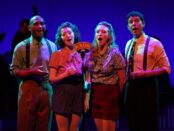
As conceived, directed and choreographed by Randy Skinner, who was also part of the creative team that brought the stage version of the 1954 classic Irving Berlin’s "White Christmas" to Broadway, "Cheek to Cheek" is a welcome addition to The York Theatre’s homages to Broadway and film composers. They strike gold again with this charming revue that focuses on the lesser known classic songs from the decades of Berlin moving seamlessly from movie lot to movie lot. The very talented Jeremy Benton and Kaitlyn Davidson, returning from the original run of this show, are joined by the radiant Darien Crago, Danny Gardner, Darrell T. Joe and Melinda Porto. The entire cast is made up of consummate singer-dancers, each featured in dance numbers and/or their own solo songs. [more]
Fall for Dance Festival 2022: Program 1
Perhaps the supreme dance festival in New York City, maybe even in the world, New York City Center’s Fall for Dance 2022 is celebrating its 19th year of presenting a panoply of domestic and international troupes. Initiated by outgoing City Center President Arlene Shuler, this celebration of the many facets of dance has brought some of the best and some of the mediocre representatives of world dance to many thousands of people who have been notoriously uncritical of what has been set before them. And, rightly so. This is an audience that has come to enjoy whatever entertainment is presented—and, at an affordable price. Program 1 of this year’s five-program edition was typical, presenting one local troupe, a Portuguese classical ballet couple and an all-male French/Algerian company which opened the program with in-your-face energy tempered by woefully mawkish “daddy was mean to me” back stories. [more]

This Beautiful Future
If you like your W.W. II history unadulterated, you may object to a love story between a French teenage girl and a Nazi soldier even if they are inexperienced and innocent and unaware of what is to come. The fact that they are both hopeful of life in the future in the middle of war and devastation notwithstanding, were people ever this naïve and unworldly? While "This Beautiful Future" is tastefully presented, it does not deal with the moral issues that the play hints at but refuses to recognize. [more]
Fauna
Is it possible to be completely truthful in attempting to tell the life of a famous author in a biofilm? That is the premise of Argentinian novelist and playwright Romina Paula’s "Fauna" now having its English language premiere at New York’s Torn Page Theater. As the play is philosophical, poetic, cerebral, and literary with quotes from many authors including Argentinian writers unfamiliar to Americans, it may be too erudite and esoteric for most theatergoers. However, April Sweeney’s production at the vest pocket Torn Page Theater is so intense that it carries its audience with it. With the actors only feet from the viewers so that you feel you are in the room with them, the play is a powerful experience that few productions ever achieve. [more]
Burn
Although Alan Cumming is a charismatic performer, the distracting video design, the often overpowering music, and the often flashing lighting by Tim Lutkin, gets in the way of viewing the show. Much of the effect is created by the atmospheric lighting which periodically changes color (blue, green, red) yet at times it turns the evening into a multimedia event. Since none of the poems are clear enough to be understood, we learn little of Burns’ output as a poet though we do hear about his triumphs that lead to being lionized in Edinburgh. The contemporary music only rarely suggests the period. The dance elements also seem an eccentric way to portray this 18th century man who attempted to live life to the fullest. Cumming charmingly depicts this Scottish icon though he does come off as a lovable rogue. It is all an example of too much being too much. The rather coy ending has Cumming sitting on the edge of the stage declaiming Burns’ now famous poem, “Auld Lang Syne,” after the final curtain has already descended. [more]
Faust et Hélène & L’heure espagnole
Maurice Ravel’s delightful 'L’heure espagnole," usually paired with his other opera, "L’enfant et les sortilèges," is here paired with "Faust et Hélène," an obscure cantata by Lili Boulanger, one of Ravel’s contemporaries. Hearing her exquisite Faust et Hélène is comparable to discovering a diamond you didn’t know you had. New Camerata Opera opens its seventh season with this very engaging double-bill. Director John de los Santos has envisioned a world where the passage of time is the focus of both of these operas. While the set for the Boulanger is spare, Mr. de los Santos is aided in this concept for the Ravel with projections of striking clockwork photography and a set filled with a collection of stylized grandfather clocks from NYC-based artist Atom Moore. Ashley Soliman’s costumes are timeless for the Boulanger work – the men are shirtless and barefoot in a variation on dhotis or male harem pants while Hélène is in an orange gown with a virtually endless train. [more]
Four Saints in Three Acts
Greenspan isn’t always totally clear when switching points of view, but made up for this by turning the entire, long script into a wonderland of gestures, vocalizations, postures and movements. His eyes and his hands are masterful communicators. His lean body’s dancelike movements add dimension to the onslaught of words. This is a performance that must be seen to appreciate how mindboggling his accomplishment is. [more]
Jasper
Most poignantly, when Drew starts to wonder if maybe their son's survival has been the opposite of a blessing, Andrea expresses horror for a thought that, thanks to Pimentel's touchingly subtle performance, we know she's had herself. To its strongest credit, MacDermott's play affords all three of its actors the opportunity to find meaning beyond their characters' words. Though, of course, with a less capable trio, this sort of dramatic freedom could have been a disaster. [more]
Sacco and Vanzetti: A New American Opera
The finished score by Lehrman is 50% music he created based on themes by Blitzstein: pieces of his unproduced 1932 opera "The Condemned" (an earlier work about Sacco and Vanzetti), a march, a cabaret song, a song cycle, a piano piece for mezzo-soprano Brenda Lewis who had starred in Blitzstein’s 1949 opera "Regina" (based on Lillian Hellman’s "The Little Foxes"), and portions of 13 songs from "Reuben, Reuben," his 1955 folk opera set in Little Italy which failed in Boston and which he had been recycling in later works. Blitzstein’s libretto for the three-act "Sacco and Vanzetti"(performed at Lehman College in two parts) was based on transcripts, letters, and interviews with the principals involved in the case. One addition approved by the estate was the inclusion of Governor Michael Dukakis’ exoneration of Sacco and Vanzetti in 1977, the 50th anniversary of their execution, as a fitting new ending to the opera. [more]
Our Man in Santiago
Mark Wilding’s "Our Man in Santiago" is billed as a “raucous political farce” but it is neither loud and noisy nor hilariously funny. Inspired by Gabriel Garcia Marquez’s 1974 article in Harper’s Magazine concerning the CIA involvement in the death of democratically elected President Salvador Allende, the play supposes that the CIA had operatives in Santiago ready to kill Allende when General Pinochet launched his coup that took out Allende’s government and democracy in Chile for the next 16 years. While Charlie Mount, who also directed LA’s Theater West production in 2021, keeps the play bubbling along, the one-dimensional characters and the lack of real farcical stage business diminish the play to an overlong attempt at satire. [more]
Love, Sex and Real Estate
"Love, Sex & Real Estate" moves swiftly, thanks to John D. McNally’s direction. He skillfully manages the quick shifts between romantic liaisons, real estate discussions, Ugo’s youthful angst, and Valter’s artistic stumblings. The writing, including an over-the-top version of a Feydeau farce, complete with slamming doors, tends toward cliché, but is saved by the performances of the eager cast of fine actors. [more]
Remember This: The Lesson of Jan Karski
Aside from his ability to create multiple characters with his voice and body language, Strathairn’s physicality is remarkable in aging from a young man to a senior citizen before our eyes as well as using the table for enacting various events such as jumping off of a train or Karski’s torture by the Nazis. (The movement director is Emma Jaster,) In the brief 90 minutes of playing time, Strathairn is able to establish a quietly heroic man’s entire life and career with modesty, sincerity and simplicity. It is not only a remarkable performance, it is also an impressive reconstruction of another man’s character and deeds. [more]
On the Verge or The Geography of Yearning
Revived by Retro Productions, we are treated to Eric Overmyer’s alternative Victorian fantasy, "On the Verge or The Geography of Yearning," that takes three vibrant, independent women of 1888 on an expedition not just through deepest, darkest “terra incognita” but also forward 67 years into a very different America. Mores, as well as language as they know it, are at risk. [more]
Strings Attached
From the clever double entendre title to its fantastical involvement of three famous long dead physicists, Carole Buggé’s "Strings Attached" tries very hard to rise out of the morass what is basically a sad love triangle but is ultimately overwhelmed by frippery and cliché. [more]
Burbank: Walt Disney in Crisis
Although "Burbank: Walt Disney in Crisis" occasionally has its actors delivering monologues out to the audience, the most compelling drama occurs from the interactive scenes between the actors themselves; more of this would have absolutely been welcome. Nevertheless, the play does entertain and inform, revealing the financial struggles Disney went through to make such iconic films as "Pinocchio," "Fantasia," and "Bambi," even in the wake of "Snow White"’s success. Bossert also managed to squeeze in the fact that Disney attempted to block Adriana Caselotti, the voice of Snow White, from getting other work, in order to not “spoil the illusion” of the character. [more]
My Onliness
"My Onliness," Robert Lyons’ latest stage work, is a musical homage to Polish avant-garde playwright Stanislaw Ignacy Witkiewicz (active 1918-1934) but who resurfaced during the 1960’s when his works began to be published and translated. Directed by Daniel Irizarry who also plays the leading role as the Mad King, "My Onliness" with lyrics by Lyons and original music by Kamala Sankaram, resembles the anarchic East Village plays and happenings of the 1960’s. It is part of a through line from Alfred Jarry’s "Ubu Roi" (1896) to Eugene Ionesco’s "Exit the King" (1962). A political fable for adults, "My Onliness" is performed as a cabaret and circus entertainment with exaggerated costumes, outrageous stage business, and audience participation. While the often obscure text is for the adventurous, it does touch on many hot current issues. [more]
Los Otros
A fresh antidote to the usual brassy, loud rock musicals of today, "Los Otros" slows down the tempo and the sound level with a story of the experiences of two people who learn to love, cope and risk over the course of many decades. Luba Mason and Caesar Samayoa are quite endearing as the two California residents whose lives overlap. They give remarkable performances mainly appearing alone on stage telling and singing their stories. Cudos to librettist Ellen Fitzhugh and composer Michael John LaChiusa for bucking the trend and giving us a deep but small-scale musical revealing two lives through variously well-chosen experiences which add up to lives well lived. Long after you see it, it you will recall incidents that Lillian and Carlos recount. This may be the result of the fact that Los Otros is based on real people and true life experiences. [more]
As You Like It (Public Works)
Public Works’ musical adaptation of "As You Like It" is an enchanting evening of summer fun under the stars. Trimmed to a long one act, the story is accessible for both those who know the Shakespearean original and those who don’t. The score is always easy on the ears and has many crowd pleasers. The huge cast led by Rebecca Naomi Jones as Rosalind and including non-professional community partners is totally comfortable with the Elizabethan language and the contemporary score by Shaina Taub. With this show, Shakespeare in the Park has a real winner. [more]
Kinky Boots
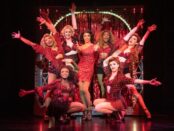
Several years after vacating its Broadway home, "Kinky Boots" has settled in to a cozier off-Broadway venue, Stage 42, at a presumed discount for theatergoers, albeit with a much smaller orchestra and actors whose talents far exceed their name recognition (and no mask mandates, which might be a dealer breaker for some). Also returning is director/choreographer Jerry Mitchell who gives the resized production the same energy as the original, nurturing a buoyant vibe that, as before, underscores the show's positive messages about celebrating difference, particularly as it relates to hoary conceptions of masculinity. But, when everything is said and sung, Fierstein and Lauper's joyously uplifting, but shallow, efforts are only memorable for meaning well. That's not nothing, especially these days, but the show could have been so much more. [more]
ONCE UPON A (korean) TIME
Commissioned by the Ma-Yi Theater Company, Daniel K. Isaac’s brilliant "ONCE UPON A (korean) TIME" was born out of the actor-playwright’s realization that he knew way more about Shakespeare and the Western canon than his own rich Korean culture of folk tales and origin myths. He has fashioned, over the course of five scenes, beautifully layered storytelling in situations clouded by utter despair, without sacrificing great brushstrokes of humor. [more]
The Near Disaster of Jasper & Casper
As a piece of writing, "The Near Disaster of Jasper & Casper" is whacky and creative, and except for a couple of out-of-place bits of humor, one involving a middle finger and another a candle called “Blow Me,” it is charmingly humorous. The story even becomes lightly touching when Jasper’s love for his brother Casper is tested, and Jasper learns the real meaning of family and what it is to be responsible for others besides himself. "The Near Disaster of Jasper & Casper" is a thoroughly enjoyable, quirky fairy tale told by an expert storyteller, Jason Woods. By the end of this foray into the woods, it was time to go, I hated to leave, I had to, though. Worth a second viewing. [more]
Two Jews, Talking
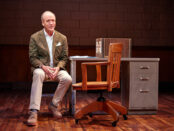
If Samuel Beckett had been a Jew, his "Waiting for Godot"’s Estragon and Vladimir could have emerged as the equally quirky "Two Jews, Talking," in the appealing new two-hander by Ed. Weinberger starring Hal Linden and Bernie Kopell, all three TV legends. The two characters in each one-act play, talk and talk and get nowhere—very pleasantly with just the right touch of surreal mystery. Weinberger ("The Tonight Show," "The Mary Tyler Moore Show," "Taxi," etc.) has fashioned a quiet tour de force for these two veterans. Linden, a spry 92, is not only a TV veteran ("Barney Miller") but a star of the Broadway stage, including his Tony Award winning performance in "The Rothschilds." Kopell (89) is remembered for his long-running turn as the ship’s doctor in "The Love Boat" among many other appearances. [more]
Randy’s Dandy Coaster Castle
Part of Ramón’s game plan to increase attendance is to create a Randy’s Dandy Coaster Castle mascot. In a move that changes his life, Arlo is drafted to don a hilarious, smelly rat costume transforming himself into the character Kuddly Kyle. Suddenly Arlo, the sweet, directionless shlub has found meaning in his life via this subterfuge. While in the costume, Arlo is the delightfully entertaining Kyle. Without the costume, he’s just Arlo. This is the most moving part of Coaster, a play that revolves around the emotions and inner lives of these everyday, working class characters, beautifully evoked by Perez and carefully chaperoned by director, Rebecca Martínez to keep it all down to earth and accessible. The fade-out is particularly moving as the workers have no idea that there is a disaster looming. Their lives will be changed—for the worse. [more]
HYPROV: Improv Under Hypnosis
'Hyprov" is a delightful and surprising evening as there is no telling how it will turn out. Will the Hyprovisers be good at their improvs? Will they stay in character? How will they deal with the somewhat preposterous suggestions by the audience or Colin’s instructions? Will the improvs make complete skits? Will the volunteers all remain on the same wavelength? One could see this show several times as both the improvs and the volunteers will vary from night to night. A clever evening is had by all with the charming Asad Mecci running the first half and Colin Mochrie organizing the second half. [more]
Titanique
"Titantique" is the most hilarious musical parody to play New York in many a year. Since international superstar Céline Dion only got to sing one song at the end of James Cameron’s blockbuster "Titanic," the now iconic “My Heart Will Go On” which went on to win the Academy Award for Best Song, why not turn the film into a cabaret musical with a score made up entirely from the Céline Dion catalog? That is just what Marla Mindelle, Constantine Rousouli and Tye Blue’s book has uproariously done, casting Mindelle in the leading role as a perfect mimic of Céline Dion, Rousouli as hero Jack Dawson, and Blue directing the show. Whether you recall the film from 25 years ago or not, the satire is pungent and the jokes skewer many pop culture icons. [more]
macbitches
It is not until the last 15 minutes of Sophie McIntosh’s new play, "macbitches," that a dramatic event takes place. Up until then the play is mostly the chit chat of acting majors talking about productions they have been in, eccentric directors they have worked with at the college, rehearsal horrors, and theater experiences elsewhere. While this has some interest for theater buffs, it goes on too long and tends to be more and more of the same. If you know such shows as "The Drowsy Chaperone," "The Crucible," "Hedda Gabler," "Antigone," "Guys and Dolls" and "Macbeth" very well you may be able to follow the gossip. If not, you may grow very bored by all the anecdotes. There is some talk of the toxic environment of male-run academic departments but very little of it makes much of an impression. We never hear what the male acting students think of the department or its practices, only their bad behavior in rehearsal. [more]
The Sarasota Ballet 2022
The second Ashton ballet was "Varii Capricci," his clever take on Bronislava Nijinska’s "Les Biches" from 1924. Her ballet was a tongue-in-cheek comment on the sexually liberated, chic young people of France. Ashton set Varii to a witty score by Sir William Walton. La Capricciosa (a delightfully languid Danielle Brown, arrayed in Ossie Clark’s diaphanous white dress) is wooed by a gigolo, Lo Straniero (a hilarious, oily Ricardo Rhodes) whose intentions were clearly not honorable. These two were surrounded by a giddy ensemble that gamboled about watching them romantically self-destruct. "Varii Capricci" is light-hearted and lightweight, but impeccably presented. [more]
New AMT Theater Opens with an Eye on Building Community
“We want to make a difference in people's lives,” says Tapper. “We want to do new shows, to encourage new writers and directors. We want to feature children's shows and get young people involved in theater at an early age. We also want to do cabaret because, well, it's just fun. We also want to serve as a regional theater to the people in our immediate area, to draw on their energy, and solicit their opinions - because we truly value the community around us.” The clean, sleek space features a futuristic lighting scheme set against a black and white motif. “When people hear about the black and white look, they’re a bit skeptical. Even I was skeptical!” says Sportiello. “But once they see the finished product, they agree it looks like a real work of art, and everyone’s been impressed. In my opinion, it’s the most unique and striking Off-Broadway theater in the theater district. We can’t wait to share it with the community, so we’re looking forward to welcoming local theatergoers and press at a special launch event that we’ll be announcing soon.” [more]
The Inconvenient Miracle: A Mysterious Birth Musical
Samantha Streich and Deijah Faulkner in a scene from “The Inconvenient Miracle: A Mysterious [more]
BAAND Together Dance Festival 2022 at Lincoln Center
The dancers were attired in puffy white tutus and black tights, the men bare-chested—chic costumes by the choreographer. They pranced, undulated their torsos, tossed each other around and vogued in lineups that spread across the stage. If there is one word to describe "One for All," it’s sassy. Despite steam room like temperatures, the cast was exuberant and daring, considering Lopez Ochoa had just finished staging it that afternoon! It was led by a sexy, spritely Chalvar Monteiro of the Ailey Company. [more]
Adventures in Vegas
A tiny dynamo, Bell Wolff, early in her career, found the perfect role as Ermengarde in several productions of "Hello, Dolly!". She yearned to perform the bigger part of Minnie Faye and nearly got the chance when she auditioned for the film version of "Hello, Dolly!". She tells of the disappointment of being passed over and sings “Moving the Line” (Mark Shaiman/Scott Wittman) about her frustration, one of 13 songs that punctuate "Adventures in Vegas," illuminating her life experiences. She is reprieved with an invitation to join a new act in Las Vegas, the "Bottoms Up Revue" at Caesars Palace, and jumps at the chance, starting a whole new chapter in her life which will include romance and, eventually, heartache. [more]
Oresteia (Almeida Theatre)
If you have ever seen a play by Aeschylus, you know how static and slow they are, made up entirely of monologues and choral odes with hardly any action. It was Sophocles and Euripides who added what we consider drama to ancient Greek plays. Director Robert Icke’s new version of Aeschylus’ "Oresteia," the only complete Greek trilogy that remains extant, has been adapted into a updated tetralogy that is accessible, easy to identify with, and dramatically exciting. The Almeida Theatre production now at the Park Avenue Armory features magnificent performances by Anastasia Hille (Baptiste's wife Celia in the television series of the same name) and Angus Wright (Claudius, in Icke’s current also modern dress production of "Hamlet" running in repertory with Oresteia) as Klytemnestra and Agamemnon. Presented as a long evening of four plays, this is a commitment for the audience as the running time is three hours and 35 minutes with three intermissions. [more]
Hit the Wall
Jake Shore’s "Hit the Wall," though limited in its range, is very successful in its goals. It gives Adam Files and Alexandra Guerrero juicy roles as the aging mentor and the younger student who may have surpassed the master. It also depicts a world unfamiliar to most of us. Whether this world is entirely accurate is another question which only those in the know can tell us. However, the play as it now stands is an impressive but small piece of work. [more]
Happy Life
Ng has a far-reaching imagination and spins the many stories and characters of her "Happy Life" with admiral skill and abandon. But it is just too heavy-handedly, head-scratchingly abstruse, not to mention unnecessarily full of foul language that somehow doesn’t jibe with the characters. This is Theater of the Absurd put through the David Mamet grinder. [more]
Cat on a Hot Tin Roof
While the play is rooted in its original 1955 period (its language, social mores, references, three-act form), this revival directed by Joe Rosario has attempted to place it in the present from the contemporary set and clothing and such props as cell phones and a great many uses of the f-word. However, without updating the dialogue, the play does not make sense reset in 2022, particularly in its archaic handling of homosexuality as it was referenced pre-Stonewall. Its themes of deception, greed and “mendacity” (a word made famous by this play) would seem to make the play contemporary but everything else about it including its hothouse atmosphere marks it as dated. [more]
The Kite Runner
The second problem is the performance of Amir Arison, star of nine seasons on NBC’s "The Blacklist," and eight Off Broadway dramas, playing both "The Kite Runner"’s narrator and its protagonist Amir. As the narrator, Arison is totally impassive giving little weight to the tumultuous events he describes. He also plays Amir as both a child and as an adult. While he is unconvincing as the child Amir from ages 10 to 12, his mostly unemotional portrayal of the adult Amir undercuts the events he describes. Still more damaging to the story, the violence has been toned down greatly, changing the villainous Assef from a psychopath to just a bully, and leaving out the shocking events in the soccer stadium demonstrating Taliban justice. The story still creates its own spell but is greatly diminished from the strengths of the novel. Luckily most of the supporting cast is quite excellent which saves the play. [more]
Into the Woods
Patina Miller as The Witch in a scene from the New York City Center Encores! Production of “Into [more]
A Black and White Cookie
The chips fall into place by the end of A Black and White Cookie, perhaps a bit too smoothly, but the path to the ending is well constructed and fascinating. Morgenstein has caught the nuances of each character and his dialogue rings true particularly as inhabited by these five actors who are ably directed by Marcello Rollando who quite wittingly provides the play-by-play radio commentary of the Mets games which Harold listens to throughout the story. [more]
Sex, Grift and Death: An Evening of Plays by Steven Berkoff and Caryl Churchill
For its 35th anniversary, PTP/NYC (Potomac Theater Project) continues is exploration of little known British plays by major playwrights with the New York premieres of one acts by Steven Berkoff and Caryl Churchill. The triple bill entitled "Sex, Grift and Death" includes the first local productions of Berkoff’s "Lunch" and Churchill’s "Here We Go," as well as the first NYC revival of Churchill’s "Hot Fudge," last seen here at The Public Theater in 1990. While the productions directed by Richard Romagnoli (Berkoff) and Cheryl Faraone (Churchill) are fine as far as they go, they all seem a little too underheated to be truly theatrical for these in-yer-face, confrontational authors. The evening’s title sums up the themes of this triple bill. [more]
Notre Dame de Paris
It may be a bit unfair, but there’s no escaping comparing "Notre Dame De Paris," currently exploding on the stage of the David H. Koch Theater at Lincoln Center, with its immensely popular French-literature-inspired brethren "Les Misérables" and "Phantom of the Opera." All three are audience-pleasing spectacles with lusty, manipulative scores that hit the audience right between the eyes. The major difference involves how their stories are told. The latter two are constructed as bigger-than-life plots driven by bigger-than-life songs. "Notre Dame," on the other hand, is a series of very French pop songs that are the plot, storytelling not particularly effective due to their being sung in French, albeit with good translations flashed on several screens. There is very little non-sung dialogue. All the songs were brazenly amplified to rock concert level so that their ubiquitous crescendos and climaxes could be savored. [more]
Mister Miss America
D'Astolfo (that’s duh-STAHL-fo, mkay?), who also wrote the piece, sends Taylor off like a firecracker from the moment he comes onto the stage, speeding through Taylor’s wry and witty dialect so fast, why Mother of Jefferson Davis, he’s passing the fox! D’Astolfo’s dialogue is chock full of delightful West Virginian-isms, gay and regional. Taylor is described in the script as “wide-eyed and winning,” and this definitely describes D'Astolfo in the role. He also adds to the play’s humor in a totally different capacity as the voice of the wry, off-stage announcer and master of ceremonies. [more]
Between the Lines
"Into the Woods" is not the only fairy tale for adults in New York right now. "Between the Lines," based on the best-selling novel by Jodi Picoult and Samantha van Leer, has been turned into a charming and delightful new musical which is actually an improvement over the overlong original. Featuring a talented and attractive cast headed by Arielle Jacobs, Julia Murney and Vicki Lewis as well as several unfamiliar faces, the show offers a melodic and bouncy score to witty and clever lyrics by Elyssa Samsel and Kate Anderson in their New York theater debuts. Jeff Calhoun’s direction is sharp and smart making this an extremely entertaining show. [more]
Richard III (Free Shakespeare in the Park)
And of his behavior Richard continues to explain, “And therefore, since I cannot prove a lover, I am determined to prove a villain.” In this production we see none of this though this speech comes near the beginning of the play. What we are offered is a one-dimensional action production which dilutes the play and entirely throws out historical authenticity. While Dede Ayite’s costumes are mostly period there are entirely modern touches like the two young princes, sons of the previous king, wearing gold sneakers. Instead, Richard is surrounded with people who have disabilities or physical challenges which somehow turns the play on its head: Lady Anne in a wheelchair, two deaf actors use sign language, Richmond (later King Henry VII) has cerebral palsy, and one of the courtiers who plays several roles is a dwarf. Nice to give all of these actors work but in this play it reverses the focus of the story and theme. [more]
Momix’s Alice
Pendleton, in a program note, assures us that "Alice" is not a retelling of Carroll’s book. Rather, he used some of the events and characters from the book, dividing the evening-length work into twenty-two sections with titles like “A Summer Day,” “A Trip of Rabbits,” “The Cheshire Cat,” “The Queen of Diamonds” and “The Wolf-Spied-Her.” Although characters reappear—Alice, the Rabbits and the various playing cards queens—the episodes don’t particularly flow one into the other. The takeaway is a series of fanciful images rather than a cogent whole work of theater. [more]
Prince Charming, You’re Late
If you ever lived through the angst of an unrequited love, a romance impossible for one reason or another, then Billy Hipkins’ "Prince Charming, You’re Late" will hit the spot. Directed by Perry Dell’Aquila, the monologue flows smoothly and movingly. Hipkins, a forty-something gay man with a gentle, softly sardonic nature, fell for a much younger actor in a Broadway show where he was employed as a dresser. Unfortunately, this was a job that put him up close and personal with the object of his frustrated affections. Hipkins’ description of this unattainable young man is both heartbreaking and heartwarming, a vision of unattainable perfection in every way. [more]
Hamlet (Almeida Theatre)
Modern dress "Hamlet" productions can be problematic when the directors don’t plan out all the details. Robert Icke’s staging for London’s Almeida Theatre now at New York’s Park Avenue Armory is that rare production which has updated the play so well that it appears to be intended to be set in our time all along. Original, surprising and ingenious, the production amazes to the point we wonder why no one has though of these ideas before. The sleek, cool settings and costumes by Hildegard Bechtler brilliantly convey the corridors of power while the video design by Tal Yarden, a sort of closed circuit CNN, make William Shakespeare's tragedy feel up to the minute. This "Hamlet" is also accessible and easy to follow, even at a running time of three hours and 30 minutes. [more]