Music
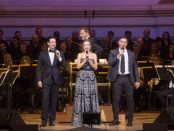
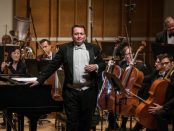
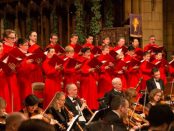
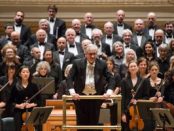
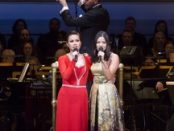
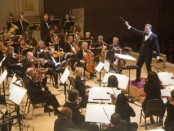
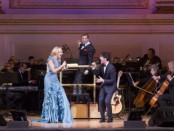
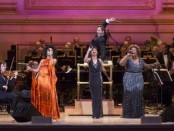
Music Director/Conductor Steven Reineke chose three fine singers, Colin Donnell, Laura Osnes and Nathan Gunn, to animate the Lerner and Loewe songbook, along with the terrific choir, Essential Voices USA (Judith Clurman, Music Director). They, plus the lusty sounding New York Pops, brought songs from "Camelot," "Paint Your Wagon," "Gigi," "Brigadoon" and, the biggest hit, "My Fair Lady" to life. [more]
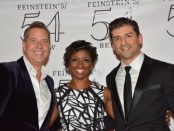
New York Pops Underground (Feinstein’s/54 Below)
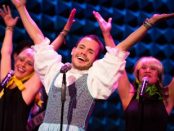
Hosted by the always charming Steven Reineke, the fundraising event, New York Pops Underground, featured two terrific Broadway stars, Montego Glover and Tony Yazbeck, whose performances clearly loosened the purse strings of a standing-room-only Feinstein’s/54 Below crowd. [more]
Dell’Arte Opera Ensemble: Verdi’s La Traviata & Chansons de Baudelaire
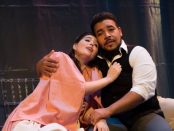
The performance of Verdi's "La Traviata" featuring Bonnie Frauenthal as Violetta and Jose Heredia as Alfredo Germont was wonderful in many ways. Frauenthal sang and acted her complex role compellingly: she is a confident singer, capable of both womanly sturdiness and subtle virtuosity, and she inhabited the dense narrative of Violetta's story credibly and compellingly. Heredia's youthful and earnest Alfredo was also convincing; his deep love of Violetta and grief at her death were poignantly believable. Interestingly, as an actor, Heredia stuck so literally to the movement of Alfredo's character in Piave's libretto that Alfredo's subservience to his father was maddening: the son's filial weakness undercut the manliness of his love for Violetta. Both Frauenthal and Heredia sang with integrity; they held nothing back from full commitment to either their roles or their audience. [more]

Aleko & Pagliacci (New York City Opera)
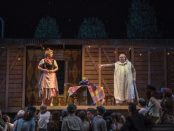
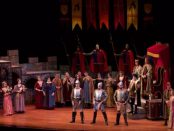
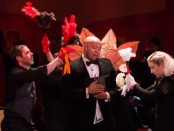
While the New York City Opera’s staging of "Aleko" could not be called a major rediscovery, it was an admirable attempt to offer a non-standard repertory work that had probably not been seen by any of its New York audience. The real surprise was the thrilling and commanding performance of "Pagliacci" which bodes well for NYCO’s future life and health at Lincoln Center. In addition, the New York City Opera Chorus, under the direction of William Hobbs, gave persuasive performances in both operas, another feather in the City Opera’s cap. [more]
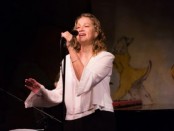
The New York Pops with Megan Hilty and Matthew Morrison
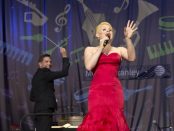
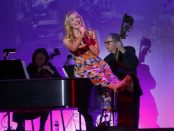
Megan Hilty with conductor Steve Reineke and The New York Pops (Photo credit: Richard Termine) [more]
PRISM Quartet Color Theory: Sō Percussion and PARTCH
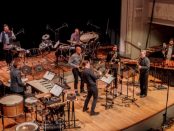
Over the last several years, PRISM and two colleague chamber groups, Sō Percussion on the one hand and PARTCH on the other, have been engaged in the “Color Theory” project, and presented two separate concerts. Taking as their model early modern visual artists' examination of pigment mixes through the insights of Isaac Newton's discovery of color theory and prisms, the four saxophonists and composers with whom they collaborate have been using “color theory as a framework to explore the spectra that make up instrumental sound.” The results were exhilarating. [more]
Florencia en el Amazonas
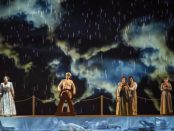
This production had two brilliant design/directoral conceits that worked hand in glove with the musical elements to tell the story. The first involved twelve dancers from Ballet Hispanico’s BHdos all in white body suits from head to toe, undulating virtually continuously down stage in front of the ship, representing the river and its secrets. With indefatigably choreographed by Nicholas Villeneuve and breathtakingly lit by Barry Steele, they, indeed, became a living part of the scenery, even interacting with the characters on the ship. [more]
C4: Choral Composer/Conductor Collective: Organic – New Works for Choir and Organ
C4 has always been driven by certain core values and goals; the particular repertoire “cornerstones” being emphasized this season, as indicated in the concert's program notes, were important but infrequently performed works, beauty, and the nurturing of new composers' voices. This concert contained all these features in both recent works and four premieres. [more]
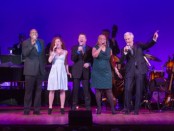
SONOS Chamber Orchestra (May 24, 2016)
In the program notes and in informal remarks to the audience, Ochsner encouraged the audience to listen to all the works as music inspired by nature; this theme proved to be a useful organizing device for the concert. It was both literal – stars, storms, forest transformations and water events – and allusive: the vocabulary of nature works as well for human psychology as for meteorology. The size and composition of the 36-member chamber orchestra made both intimacy and grandeur possible. [more]
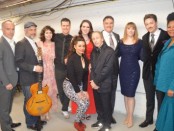
The Saint Thomas Choir of Men and Boys with Concert Royal: Music of Bach and Handel
Such feast days deserve magnificent music; Bach and Handel created it. And the Saint Thomas Choir of Men and Boys, the first rate period-instruments Concert Royal, and five marvelous soloists gave splendid performances of two Bach cantatas and a Handel psalm-setting that did both the feast days and the music proud. The first-rate concert was a particularly fine accomplishment for St. Thomas Church: rocked by the sudden death last summer of John Scott, choral director and organist, the school and the church had to both manage a top-knotch concert season without their director and perform the “director-less” concerts as suitable memorials to Scott. [more]
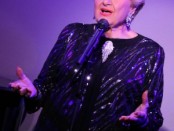
Princess Ida (2016)
Completing New York Gilbert & Sullivan Players’ 40th Season was a rare revival of 1884 "Princess Ida," the team’s eighth operetta and the only one in which the dialogue is in blank verse, it is presented in three acts, and it is based on a previous play by Gilbert. In the playwright/librettist’s second parody of Tennyson’s book-length poem "The Princess," the themes include feminism, education for women, Darwinism and the Battle of the Sexes. While the operetta still displays its relevance and timeliness, the NYG&SP production proved to be uneven in several categories. [more]
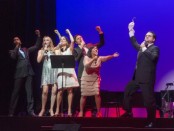
92nd Y’s Lyrics & Lyricists Series: I Have Confidence: Rodgers After Hammerstein
Above the stage on a screen throughout the presentation were projected photographs illustrating Rodgers’ career and appropriate backdrops for the locales of the shows. Brief insightful video interviews with Rodgers’ daughter Linda, lyricists Sheldon Harnick and Martin Charnin, playwright Sherman Yellen, historian Ken Bloom, Rodgers grandson Peter Melnick, record producer Thomas Z. Shepard, and the actor John Cullum were shown. A 1974 Public Television interview conducted by James Day showed the aged Rodgers ravaged by strokes and throat cancer but still vital and articulate. [more]
The Cecilia Chorus of New York with Orchestra: Ludwig van Beethoven, Missa Solemnis, Op. 123
Price, Bottoms, Richardson and Courville are all strong, clear singers; they were well matched in this performance, alert to each other's pacing and responsive to each other's sensibilities. Although any one of the four could have grabbed a center spotlight, they were unified – probably by a combination of their own individual understandings of Beethoven's purposes and by Shapiro's direction – in graceful collaborative cohesion in their singing. [more]
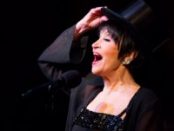
Chita Rivera at the Café Carlyle
She ran down the list of her Broadway co-stars: Ricardo Montalban, Donald O’Connor (the disastrous Bring Back Birdie), Antonio Banderas (upon whose shoulder she placed a shapely leg in Nine) and, her admitted favorite, Dick Van Dyke, with whom she co-starred in "Bye Bye Birdie" from which she sang “A Lot of Livin’ To Do” giving it a sassy, winking interpretation making it impossible to deny that the title is very on the mark. It wouldn’t be a Chita Rivera show without a mention of her iconic Anita in "West Side Story." A meeting with Leonard Bernstein to go over her songs just after she had been cast was nerve-wracking as she never had considered herself a singer. History has proved that her singing almost equals her dancing. “A Boy Like That” and “America,” complete with some mini-choreography were nothing short of electrifying. [more]
Either/Or: Music of Gyorgi Ligeti
In the hands of less virtuosic musicians, Ligeti's material can spin out of control. Kigawa, Choi and Drehmann, however, from the very opening, invited the audience into an experience of listening based on complete trust. The work's elegant, almost wistful conclusion – a distillation of harmonic lines into quiet, unresolved ambiguities – was compelling. [more]
Dido and Aeneas
Staged by director/choreographer Doug Varone, "Dido and Aeneas" was amusingly presented in modern dress with Varone’s dancers playing the ensemble in both operas and pantomiming unseen props and scenery. As the original Purcell music to the surviving Nahum Tate 1689 prologue has been lost, LaChiusa has created a witty new one entitled" The Daughters of Necessity: A Prologue," and lasting 15 minutes. After the Chorus (men in bleachers on stage left, women on stage right) welcomed us, they recounted the myth of the Fates: Nono (Sarah Mesko) who spins the thread of life, Decima (Anna Christy) measures it, and Morta (Clark) snips the thread with her scissors. [more]
The New York Pops: Do You Hear the People Sing
Inspired by the musical Olivier! was "La Révolution Française" that was Mr. Boublil Mr. Schönberg’s first collaboration. Created in 1973, this was the first French rock opera and dealt with The French Revolution. The rousing “Parisians, Awake and Rise/ Français, Français” was performed by Ms. Glover, Mr. Jordan, Mr. Scatliffe and Essential Voices USA. The original French Cossette from "Les Misérables," Marie Zamora, was a marvelous Marie Antoinette for the wistful song “Au petit matin/In the early morning.” [more]
Another Son of Venezuela
Dynamic performer Migguel Anggelo exhilaratingly recalls the showmanship of Desi Arnaz and the performance art of Klaus Nomi in his terrific autobiographical cabaret act, "Another Son of Venezuela," that has the razzle dazzle of a Bob Fosse production. [more]
Les Fêtes Vénitiennes
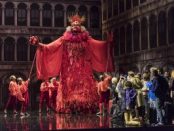
At turns beautifully silly, dreamy, exquisitely moving and always delightful, "Fêtes" is a sweeping, if daffy, look at life in eighteenth century Venice. Christie and his director Robert Carsen, framed the opera ingeniously by beginning the work in modern day Saint Mark’s Square complete with modern day tourists—mostly members of Ed Wubbe’s Scapino Ballet—with their cellphones, backpacks and obnoxious behavior. [more]
The Choir of St. John’s College, Cambridge
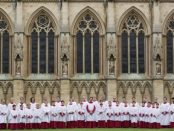
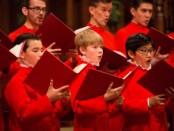
Since the 1670’s, the Choir has consisted of voices ranging from bass to treble, all students at St. John's College or the College School. There are currently six basses, five tenors, four counter-tenors and seventeen trebles; of the trebles – two or three of whom are no bigger than buttons – there currently appear to be thirteen families represented. In some senses, the trebles are the stars of the show: that such young boys should demonstrate such consistently high levels of both innate musicianship and disciplined formal training is remarkable. The sweetness of tone inherent to boys' soprano voices is not like anything else: its combined ethereality of the moment and promise of future sturdiness make it a perfect instrument for the invocation of angels, heavenly beauty and divine wisdom. [more]
92Y’s Lyrics & Lyricists Series: Everything’s Coming Up Ethel: The Ethel Merman Songbook
“Our goal is not to impersonate her but to channel her,” said Mr. Sperling, the artistic director, writer and director of this entertaining event. In addition to these tasks, he also sang, played piano and as the genial host effortlessly delivered his authoritative biographical statements. A fan of Merman’s since childhood, Sperling’s conception and execution of this show was a very well done labor of love. His patter skillfully documented her renowned charisma, saltiness and, most importantly, her unique vocal abilities. [more]
The New York Pops: The Music of John Williams
Though the evening was studded with some of the more famous and mainstream orchestral pieces of William’s career—namely the March from "Raiders of the Lost Ark" or the Theme from "Jurassic Park," the evening also highlighted some of the more experimental pieces that came with Spielberg’s influential works of science fiction. A series of excerpts from "Close Encounters of the Third Kind," as well as a suite from "E.T. the Extra-Terrestrial," shed light on the fact that, though Williams is gifted at the art of creating a catchy melody, he is also an expert at concocting complex, ethereal music that makes the world of science fiction seem wholly believable. [more]
Dave Douglas Meets The Westerlies
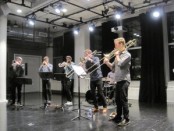
The Douglas-Westerlies music, whether its subject is lament or celebration, protest or affirmation, is artistically coherent: testing and stretching traditional genres, the music is about forward movement, about the exploration of “Great American Themes” as they end in felicitously determined encouragement and optimism. This music's informing energy and spirit shine and summon. Audience and listeners are invited into a musical experience in which history provides context, inspiration and goad; references to the political, musical and cultural past do not tether the music to old habits but liberate it for new conversations. Together, Douglas, Royston and the Westerlies generated a warm and rich brass-and-percussion sound; the Westerlies' happy virtuosity, discipline and irrepressible affection for the full range of their instruments' sounds make them a perfect collaborative partner for Douglas' genre mixing and generously imaginative expansion of the artistic possibilities of trumpet, trombone and drums. [more]
Ensemble Pamplemousse
And Ensemble Pamplemousse, an exciting and distinctive six-member “composer performer collective” founded in 2003, and performing at Miller Theatre for the first time, had all sorts of fine surprises to offer. Each of the musicians composes and performs; each seems able to play several traditional and non-traditional instruments, though their publicity material identifies one primary instrument of each. All six, fresh off their extensive recent European tour – Natacha Diels/flutes, Jessie Marino/cello, Andrew Greenwald/drums, David Broome/keys, Bryan Jacobs/electronics and Ross Karre/miniature drumset – contributed equally to their recent Pop-Up performance. [more]
The Saint Thomas Church Choir of Men and Boys: Seven Last Words from the Cross
The last piece of the concert was James MacMillan's substantive and moving 1994 "Seven Last Words from the Cross," a 35 minute piece of seven different movements, varying in length from nine to one-and-a-half minutes each, for choir and orchestra. As the piece progresses through the final Passion drama, from Jesus' plea for forgiveness for his executioners to his exhausted last breath, MacMillan explores aspects of prayer and petition, anguish and fear – Jesus' and humanity's – in music that bears close allegiance to Romantic liturgies and Requiems. Here, the Choir and the orchestra were elegant, boys and men singing with superb control, lush expressivity … and their usual clear diction. [more]
¡Figaro! (90210)
Virtually performed all in English with some Spanish for comic effect," ¡Figaro! (90210)" is true to the art form with recitative and arias, that is sung speech and grand solos rather then integrated dialogue and songs that characterize traditional musical comedy. Supertitles are projected above the stage for anything that may be vocally indecipherable. [more]
C4: Unusual – Music of the strange, the absurd, and the surreal
For the winter concert of their eleventh season, the twenty-three member C4: The Choral Composer Conductor Collective – elected to honor “Unusual - music of the strange, the absurd, the surreal.” The evening included three premieres, all by current C4 composers, among the eight pieces performed. Some of the works were splendid and some weren't, but all were presented with C4's characteristic superb musicianship and artistic integrity as well as their willingness to take risks. [more]
Witchcraft: The Jazz of Cy Coleman
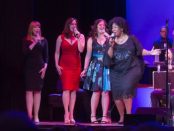
“He was tied to the life of jazz clubs,” said Billy Stritch of Cy Coleman, the subject of The 92nd Street Y’s Lyrics & Lyricists Series Presents: "Witchcraft: The Jazz Magic of Cy Coleman." Mr. Stritch was the personable host, artistic director, and performed on piano and was a vocalist along with four other talented singers during this very entertaining and jazzy concert. [more]
Richard Malavet in The Billy Eckstine Project: Songs In the Key of “B”
“He was the premier balladeer of his generation and the first African-American to sing a song on network radio,” Malavet declared of the entertainer. Billy Eckstine (1914-1993) was a Virginia born African-American jazz and pop singer, bandleader and songwriter. He sang with the bands of Earl Hines, Duke Ellington and Count Basie. During a career lasting over 50 years, Eckstine had several hit singles, toured extensively and appeared on major television network programs. [more]
Composer Portrait: Iancu Dumitrescu with Either/Or
The evening was less about contemporary Romanian composer Dumitrescu, born in 1944, than about the music for which he is, in some mysterious sense, a medium. Each work is unique, each a premiere, even if its originating shape has existed before. The style of music in which Dumitrescu operates has recently been called Romanian Spectralism. Dumitrescu himself doesn't much use this phrase; he calls his music and the impulse to make music 'Orphism,' describing it, variously, as “natural, alive and intuitive” and “sonorous and refined ...from archaic sources.” [more]
The New York Pops: 42nd on 57th: Broadway Today
A pulsating medley from Kander and Ebb’s musical "Chicago" was the thrilling second act opening number of The New York Pops’ pleasant concert of eclectic show music, "42nd on 57th: Broadway Today." The evening opened with a lush and dramatic selection from Andrew Lloyd Webber’s "The Phantom of The Opera." "Les Misérables" also received a superb symphonic treatment, as did the lovely overture from "Ragtime." Hearing these familiar melodies performed by this supremely accomplished 78 piece orchestra was uniquely enthralling. [more]
Composer Portraits: Alex Mincek with Yarn/Wire and Mivos Quartet
In the compositions of New York composer Alex Mincek (b. 1975), music is explored by means of separating out its constitutive elements: as indicated in Miller Theatre program notes for his Composer Portrait concert, Mincek examines “sound worlds,” music states and the “sense of interconnectivity that reveals underlying qualities of coherence and unity.” These principles were on full display as two stellar contemporary groups, Yarn/Wire and Mivos Quartet, presented four recent Mincek works, including two world premieres. [more]
Joan Osborne – Songs of Bob Dylan
Most people have difficulty imagining Bob Dylan as anything but the down-and-out troubadour singing for his supper in Greenwich Village nightspots in the early Sixties. He is, in fact, an incredibly prolific, sophisticated writer and Ms. Osborne slid easily from his country/western tinged ballads (“Tonight I’ll be Staying Here with You”) to his scathing, but clear-eyed philosophy of the world (“Gotta Serve Somebody”) to his tender love songs (“Forever Young”) and on to his Christian evangelical period (“Saved”). [more]
Fyvush Finkel
Finkel needed only minimal help to get up on the stage after recovering from a short illness. He began with patter about how Jews don’t usually drink because it interferes with their suffering. He also quoted humorist Sam Levenson’s retort to an anti-Semite. Levenson suggested that this person refuse to take advantage of all the cures and tests for illnesses discovered by men such as Sabin and Salk and their Jewish medical colleagues. [more]
From Moses to Mostel: A History of the Jews
Robert Klein, the comedian/actor/writer, was the laid back host whose shtick—a cell phone conversation with God (a humorless lady)—provided the backbone of the show. Klein had to prove to the very distracted all-powerful lady that the world was worth saving. From this fragile premise came a very amusing, slightly overlong, program, performed by a large band conducted by Frank London and four fine singers: Joanne Borts, Rachel Stern, Rob Evan and Steve Rosen, plus a guest artist or two. [more]
American Classical Orchestra: “L’Isola Disabitata”
The most psychologically complex role is Silvia's. Over the course of the opera, she moves from childlike naïveté to loving generosity of heart. Energetic and intelligent, she unlearns her sister's morbid lessons about men's wickedness so completely that as a newly emerged adult, she falls in love without reservation or fear. Sherezade Panthaki's Silvia was marvelous: the full evolution of her character was reflected in singing that moved from light sweetness to exuberant, vigorous sensuality. In her artistry, Panthaki made her Silvia a young woman with neither inhibition nor fear; Panthaki took every possible risk with Haydn's music and made it all feel like happiness in the process of being discovered. [more]
92Y’s Lyrics & Lyricists Series: “Battle for the Airwaves: The Songbook Meets Rock and Country”
Breezily delivering his erudite script from a music stand, black-backed cards that he occasionally held, and from memory, Naughton cited Jazz, Gospel, The Blues, Country and Doo-wop. He also imparted historical facts and biographical details about the key figures involved. These included Nat King Cole, The Mills Brothers, Hank Williams, Jr., Louis Jordan, Jerry Lee Lewis, Elvis Presley, The Everly Brothers, Patsy Cline, The Coasters, The Platters, and Ray Charles. Much of the commentary was accompanied by appropriate slide projections. [more]
Broadway by the Year: The 1930’s
Though most of the performances of the evening were solely from vocalists, some of the performers showed versatility by playing with various different instruments. This added a refreshing amount of variety, and led to a handful of outstanding performances. Pianist and singer Billy Stritch performed in the first act, and the combination of his smooth vocals and stride-style piano was a welcome treat. The highlight of the evening for Stritch was “Comes Love” (Yokel Boy), which earned mid-song applause from the audience. Also showing versatility was Nellie McKay, who—at different times—performed on both the piano and the ukulele. McKay, who possesses a voice with an almost calm quality, is to be thanked for some of the more subtle, quiet, moments of the evening. [more]
Marilyn Maye: “Marilyn by Request”
The crowd went wild when she sang some iconic favorites and became silent so as you could hear a pin drop when she crooned out others. Maye sure knows how to work a room. This snazzy, jazzy one-of-a-kind artist sang a lot of ballads, Broadway tunes and anything fabulous. Only the best would do for this phenomenal performer. Among the highlights were “Luck, Be a Lady Tonight, “Guess Who I Saw Today,” “Country Boy,” “That's Life” and “I'm Still Here” which was very apropos. [more]
92Y’s Lyrics & Lyricists Series: “A Funny Thing Happened: Songs from the Road to Broadway!”
Displaying her flawless vocal abilities, superb comic timing, dramatic range and exuberant presence, Ann Harada was the standout of the six-member company. She was in the original Broadway cast of "Avenue Q" and appeared in the recent Broadway production of "Cinderella." Her exquisite renditions included “Getting to Know You” from "The King and I," “Do You Love Me?” from" Fiddler on The Roof," “Sing Happy,” the 11:00 number from Flora The Red Menace, and “Distant Melody,” from "Peter Pan." Ms. Harada vividly demonstrated her delightful skills throughout. [more]
The Pirates of Penzance
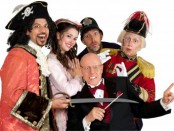
The cast includes beloved NYGASP favorites as well as some less familiar faces. Coloratura soprano Sarah Caldwell Smith’s Mabel wins a justly earned ovation signing her aria, “Poor Wandering One!,” declaring her love for Frederic. He is played with cheerful restraint by tenor Carter Lynch (alternating with Daniel Greenwood). Bass-baritone David Wannen has a fine swashbuckling time as The Pirate King. Contralto Angela Christine-Smith as Ruth gives a memorable rendition of her aria, “When Frederic Was A Little Lad.” Bass David Auxier as the Sergeant of Police deals delightfully with his band of bumbling officers. [more]
Meg Flather: “Portraits”
The act itself is a potpourri of story songs that she was drawn to at an early age starting in 1985 when making her cabaret debut with pianist Christian Daizey at the old Duplex on Grove Street. After a few incarnations, the show was booked into The Ballroom in 1993, the legendary, now defunct, club in Chelsea that presented star attractions such as Eartha Kitt and Peggy Lee. The act was a big success and received raves. Now, twenty-two years later, she brought it back for one show with the masterful Paul Greenwood as musical director and John Mettam on percussion/guitar. Shaped by Lennie Watts as director, her reminiscences and silly quips explaining her more mature take now on her song choices then made for an engaging and totally fun hour (“... I had no business singing these songs in my twenties!”) With a few nips and tucks, Flather steered it all into the twenty-first century. [more]
The Carnival of the Animals, featuring the poetry of Ogden Nash
The gifted puppeteer-dancers – Kristen Kammermeyer, Brendan McMahon, Justin Perkins, Rachael Shane – were barefoot and dressed in black; they moved with graceful economy of movement and made themselves into a fantastic combination of invisibility and magisterial artistry. They manipulated more than two dozen every-day-object puppets in gorgeous worlds of sky for birds, water for fish, field and forest for all sorts of creatures large and small. All these animals – made of sticks, brooms, mops, feather-dusters, cardboard-cut-outs, fabric scraps, familiar bits of this-and-that, and unexpected parts of who-knows-what – were right there in front of us. They leapt and loped, swooped and soared; they teased and pleased, tested, tormented and befriended each other and the narrator; they made each person in the audience – old and young, big and little – feel individually included in the menagerie's movements. [more]
The Algonquin Kid
Colby’s fascinatingly entertaining autobiography, "The Algonquin Kid," was turned into a one-time theatrical event as part of the Urban Stages’ Winter Rhythms series, hosted by Mr. Colby, produced and directed by Peter Napolitano, with Bill Zeffiro at the piano playing a rich list of songs associated with the many famously creative hotel guests and a few written by Mr. Colby himself. As a real-life Eloise, Mr. Colby was witness to much history and this show, barely scratching the surface, was witness to his good fortune. [more]
The New York Pops Family Concert: “A Charlie Brown Christmas”
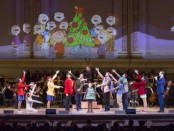
Members of the classic Peanuts gang were voiced by students from TADA! Youth Theater. Joshua Andino-Nieto took on the role of Charlie Brown and was joined by Amanda Treibner who starred as Lucy and Michael Wells as Linus. The trio brought the wholesome characters to life as they recreated Charlie Brown’s journey to finding the meaning of Christmas, including the famous scene picking out his sad tree, played by the adorable Finley McElhinney – and made the audience fall in love with these friends all over again! [more]
Rudresh Mahanthappa: “Bird Calls”
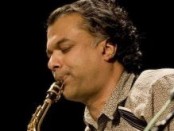
Mahanthappa's elegant and exciting compositional voice is well established. His jazz combines the full development of the genre since its inception with the idiom of South Indian classical music which is his personal inheritance. Mahanthappa – among other jazz artists featured in recent years in the Jazz at Miller Theatre series, such as Anat Cohen and Miguel Zenon – has already contributed to an expanded vision of jazz as an American art form that can incorporate global influences; Mahanthappa has indeed been both exemplar and participant in the necessary and welcome twenty-first century examination of the fluid meanings of “American” and “global.” [more]
The New York Pops: It’s Christmas Time in the City
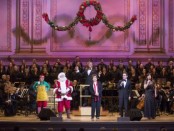
Opening with a soaring symphonic “Deck the Halls” and then joined by the wonderful Essential Voices USA chorus for it, The New York Pops closed their concert, "It’s Christmas Time in the City,." with a rousing audience sing-a-long of “Come All Ye Faithful” and “Silent Night.” In between, there was a delightful selection of classic and newer Christmas songs several performed by Broadway stars Stephanie J. Block and Brian d’Arcy James. Santa Claus and one of his elves also comically visited. Beaming music director Steven Reineke commandingly conducted the 78-piece orchestra and personably hosted this engaging presentation. [more]
Matthew Welch Music: Three Residency Concerts
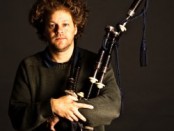
At the 10:00 show on Wednesday, December 9, Welch played bagpipes with Brendon Randall-Myers on electric guitar and Brian Chase on drums and electronics performing "The Library of Babel," a 35 minute piece Welch composed in 1999. In a subsequent post-concert conversation, Welch indicated that the work of Jorge Luis Borges had been a foundational inspiration in his composing early in his career. This piece, titled to pay homage to Borges' astonishing 1941 story of the same name, is an immediately recognizable child of Borges. It is also, however, strong enough to stand on its own, meaningful and effective, even for listeners unfamiliar with the works of the Argentinian writer. [more]
The Tallis Scholars: “Christmas Across Centuries”
The program itself was a masterpiece of artistic and theological integrity. Pieces by three composers – contemporary Estonian Arvo Part (b.1935), and Renaissance Englishmen John Sheppard (c.1515-1558) and Thomas Tallis (c.1505-1585) – carried the full chronological account of the earthly life of the Word made Flesh, from conception in the Virgin's womb to emergence as the salvation-bearing Lamb of God. The order of the program essentially replicated the Nicene Creed, each piece providing an illumination of a particular narrative or liturgical moment. [more]
Baby Jane Dexter: “It’s Personal!”
It wasn't until the sixth song, "Birth of the Blues" by DeSylva, Brown and Henderson, that she finally addressed the crowd which had filled the small venue. She commented that she has never considered herself a blues singer, although she has been identified as such for years, and went on to belt out a very heartfelt, bluesy rendition of the song. She then transitioned into one of her old-time favorites, a traditional English ballad from her Hair days, "The House of the Rising Sun." Interpreted with great feeling and emotion, this was one of her best performances maybe because of the memories it conjures up in her. [more]
C4: The Choral Composer/Conductor Collective: Vocal – C4 honors its foundations: music for voices alone
Calling their 2015-2016 season “Cornerstones,” C4 is exploring musical and artistic themes that have established the group's identity and excellence during its first decade. Their November program, "Vocal," included works by C4 composers, as well as others, familiar favorites and two premieres; the eleven works performed were conducted by seven C4 members. [more]
Chelsea Opera: Glory Denied
Launching its twelfth season with a revival of its 2010 production of Tom Cipullo's widely acclaimed "Glory Denied," Chelsea Opera made clear once again the reasons for which it has become and continues to be a leader among small regional opera companies here in the Northeast: presenting a varied and ambitious repertoire, it maintains consistently high standards of both music and theatrical direction. Both the fine complex score of "Glory Denied" and the first rate musicianship of the singers and instrumentalists who performed it were enhanced by the staging and direction of the company's co-founder and co-executive producer Lynne Hayden-Findlay. [more]
The New York Pops: Sophisticated Ladies
In this centennial of the birth of jazz great Billie Holiday, The New York Pops November concert was devoted to Harlem Renaissance ladies like Ella Fitzgerald, Sarah Vaughan and Dinah Washington as well as Holiday. Titled "Sophisticated Ladies," the evening was graced by three dynamic guest artists, Montego Glover, Capathia Jenkins and Sy Smith, who have a tremendous affinity with this music, along with music director and conductor Steven Reineke who narrated the story of this spirited and electrifying music. Beginning with Sam Shoup’s orchestral arrangement of Billy Strayhorn’s “Take the ‘A’ Train,” and ending in a rousing encore of “Get Happy,” performed by all the artists, the evening brought the audience to its feet. [more]
The Saint Thomas Choir of Men and Boys with Orchestra of St. Luke’s: Mozart’s Requiem & Haydn’s Missa in Angustiis
Nethsingha's reading of Mozart's Requiem was richly nuanced and widely expressive, and the success of his reading was established within the first three movements. The opening Requiem was graceful, nearly pensive: the treble voices were sweet and pure, and soprano Katharine Dain's brief opening solo was at once eloquent and ethereal. The swift Kyrie, with its tight runs, quarter and sixteenth notes, was a completely clear, crisp introit, an urgent summons of the clergy to their sacraments. The ensuing Dies Irae – one particularly pure exemplar of Mozart's genius – made beauty and terror inseparable. [more]
Modern Art Orchestra
Founded in 2005 and led by Kornel Fekete-Kovacs, trumpeter and composer, the Budapest-based Modern Art Orchestra is a marvel. Its twenty musicians – five in the rhythm section (piano, percussion, guitar, double bass) and fifteen on horns of all sorts (saxophones, trombones, tuba, French horn, trumpets and flugelhorn) – form a tight, cohesive group, sharing features of big band brash and a chamber group's intimate connectedness. Many of the musicians played more than one instrument, even within the span of a single piece; in a few pieces, individual musicians had extended solos. At any given moment, if one or more players weren't playing, they were watching their colleagues with delight, bobbing the rhythms with their heads and tapping out the complicated syncopations with their feet. [more]
American Classical Orchestra and Chorus: Johann Sebastian Bach’s Saint John Passion
Tenor Rufus Muller with American Classical Orchestra and Chorus (Photo credit: Arlette Landestoy) [more]
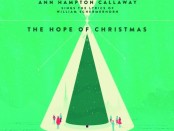
The Hope of Christmas (Holiday CD)
On Union Street” with music by Wesley Whatley is the lively and wistful opening track of the delightful jazz based recording, The Hope of Christmas. It is performed by the acclaimed vocalist Ann Hampton Callaway and is one of the twelve songs on it she magnificently sings. Lyricist William Schermerhorn has crafted eleven wonderful original songs for this work that range from sentimental to inspirational to the warmly comic that perfectly capture the spirit of the holiday. His fine words are matched by the gorgeous melodies of accomplished composers. [more]
Broadway Close Up: William Finn
Two veterans of the most recent revival of On the Town were splendid interpreters of Finn’s songs. First, Stephen DeRosa conjured a second-rate out-of-town production of "March of the Falsettos" populated by egos and amateurs. He sang “The Baseball Game” brilliantly-and schizophrenically—taking on each character of this bitingly satirical song. Later he sang the scathing, sexually explicit “Republicans” in which a liberal gets even with a Republican in an unprintable way. Then his colleague Alysha Umphress sang a rousing “Set Those Sails” ("In Trousers") and “Change” ("A New Brain"), both songs dealing differently with moving on. Ms. Umphress’s “Song of the Full Refrigerator,” about the temptations of food—“eat first and get depressed later”—was scarily right on the money. [more]
Experiments in Opera: “The Travel Agency Is On Fire: Burroughs Cuts Up the Great Bards”
The evening consisted of two sets; the first six pieces lasted from 8:00 to 9:05 PM, were then followed by a between-set break of almost an hour for last-minute rehearsals and sound checks, and the concluding five pieces lasted from 10:00 to 11:15 PM. Before each piece was performed, a pre-recorded introduction was provided. These were fairly conversational in tone; some contained useful contextual information about the piece while others were more wandering; unfortunately, these recorded introductions were often difficult to understand. [more]
Boogie Stomp!
Performed by two bonafide Boogie Woogie experts, Baldori and Migliazza are positioned on stage next to each other in front of their dueling grand pianos. With a lifetime of experience in the business, Baldori has played with Chuck Berry for the past 40 years in over 100 performances. This is evident in his stylings, technique, and from the hilarious and entertaining stories that are told in between songs. As his counterpart, Migliazza is a skilled and formidable musical opponent. Together the two take turns singing, playing the piano or keyboard, or cracking jokes to the audience to vary the pace. [more]