News Ticker

Opera

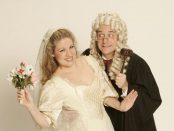
Mozart’s Don Giovanni: A Rock Opera

July 3, 2025

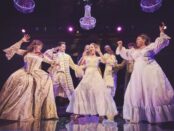
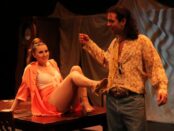
Ambition, that perilous double-edged sword, can elevate a work of art to soaring heights—or leave it flailing in the rafters, reaching desperately for resonance it cannot quite grasp. Such is the case with "Mozart’s Don Giovanni: A Rock Opera," Adam B. Levowitz’s audacious and heartfelt, if uneven, adaptation of Mozart’s canonical masterpiece. This leaner, louder take on "Don Giovanni," recognizing the latent synergy between operatic grandeur and rock bravado, now playing at The Cutting Room through August 26, replaces the classical orchestra with a ten-piece rock band and pares down the original three-hour-plus opera to a taut two hours and ten minutes. If only its dramatic momentum had received the same rigorous attention as its runtime. [more]

Zemlinskys Zimmer/Zemlinsky’s Room

June 10, 2025

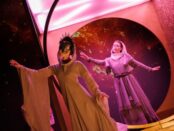
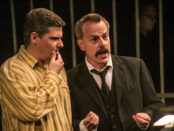
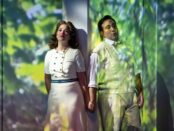
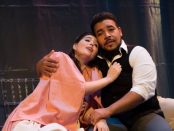
Conducted expertly by Tiffany Chang in a new chamber orchestration by Roland Freisitzer, this three-character opera is inspired by the lush romantic sound of Richard Wagner and Richard Strauss. As the libretto is based on a German prose translation of the Wilde play by Max Meyerfeld, there are no arias per se but the leading character Simone, a Florentine fabric merchant, has many long passages. Artistic director Philip Shneidman who staged the evening has chosen to set it in turn-of-the-last-century Vienna, home to Zemlinsky, rather than Florence in the 16th century as Oscar Wilde’s play is set. This takes a bit of getting used to considering the plot and the subject matter. However, Kylee Loera’s projection design of historical photographs of Vienna city streets and then an art nouveau wallpapered room sets the proper mood for pre-W.W. I Vienna. [more]

Faust (Heartbeat Opera)

May 23, 2025

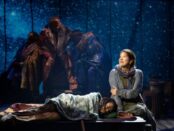
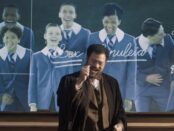
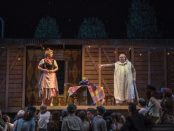
We get evocative shadow screens, puppetry and a silent-film fantasia. Heartbeat Opera’s two-hour whirlwind adaptation has everything—except an intermission. True to the company’s bold, iconoclastic style, this fiercely distilled staging trades grand opera’s lush orchestra for a lean, expressive band led by artistic director and violinist Ashworth. Brass and reeds give the score grit and immediacy, while the unexpected addition of a harmonium injects a raw, streetwise character—part cabaret, part back-alley prayer. The result? A "Faust" not of gilded prosceniums, but of shadows, sweat, and sharply focused vision. [more]

Beyond the Horizon (Teatro Grattacielo)

September 17, 2024

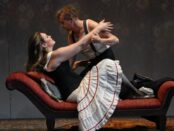
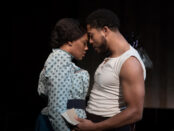
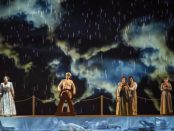
The libretto by the composer and musicologist Walter Simmons is very faithful to the O’Neill play, almost entirely dialogue taken from the original script. Unfortunately, they chose to shorten the text by 25% (as well as cutting the two intermissions) so that the tragedies happen one on top of the other with little time for intense emotional flights. This also dilutes the sense of irony that all the characters are down on their luck. Reducing the cast list by two tightens the play but changing the little daughter to a son and then keeping in the reference to playing with dolls seems inappropriate. Using O’Neill’s original text leaves hardly any room for arias and the opera sounds mostly like recitative set to music. The orchestrations which began with trumpet calls and included triangle and violin solos added to the power of the story. Conductor Christian Capocaccia did fine work with the orchestra but putting them behind the stage affected both the sound and the singers ability to follow them. [more]

The Reef (opera workshop)

April 13, 2024

On April 10, 2024, Merkin Hall at Kaufman Music Center presented a tantalizing teaser of a musical evening with the world premiere workshop of only the first act of 2020 Pulitzer Prize-winning composer Anthony Davis’ new opera, "The Reef." With a libretto adapted by Joan Ross Sorkin, from the 1912 novel by Edith Wharton, this was the first time that the work has been adapted for the stage, though it has been filmed as Passion’s Way. The workshop was sponsored by the Berkshire Opera Festival using a cast of emerging artists all of whom were vocally capable of singing the work. [more]

Eugene Onegin

April 6, 2024

Enter young baritone Edwin Joseph. He has that dark curly hair and handsome face, yes, and the crucial understanding of the necessary swagger and selfishness that carries this character through the opera, yes. Mr. Joseph brings to mind the earthy and always sexy television star Shemar Moore, someone who has the confidence without even trying; it’s just there, and in spades. Joseph is helped with Mr. Wills’ ingenious staging. Tatyana’s letter scene is performed with Onegin perched on the top stairs of a stage ladder in full view just stage left of her bedroom space. The implication that he is well aware he is desired by Tatyana is there long before he reads the letter. He doesn’t need to read her outpouring of her soul to know he has that effect on her. In the birthday party scene, it’s not the flaunting of Onegin’s flirtations with Olga that sets the tone for Lensky’s challenge to a duel, it is a brazen handjob administered by Onegin to an already emasculated Lensky off in a corner where Lensky hopes no one sees that is the trigger for everything that follows. And throughout, particularly in his closing aria in Gremin’s palace, Joseph with his rich resonant baritone has this score in the palm of his hand. [more]

American One Acts, a double bill

June 8, 2023

The little OPERA theatre of ny has become known for its adventurous programing of rarely seen and heard operas in English including the New York premieres of Benjamin Britten’s opera for television, "Owen Wingrave,"  and Carlisle Floyd’s final work for the stage, "Prince of Players," as well as new translations of works by Gluck, Mozart and, Rossini. Now in association with Harlem Opera Theater and National Black Theatre, they have presented an unusual double bill of contrasting "American One Acts," both set in the American South. Act I was a performance of "Highway 1, U.S.A." (1962) by William Grant Still, called the Dean of African American Composers, and the first Black composer to have an opera performed by a major company, his "Troubled Island" premiered by the New York City Opera in 1949. The second half of the bill was Kurt Weill’s "Down in the Valley," a folk-opera intended for schools and community groups, written for the radio in 1945 and then revised for stage production in 1948 at Indiana University by the Bloomington Opera Workshop. After its premiere it had 85 amateur productions in the following ten months. However, it has not remained in the repertory. [more]

Iolanthe (MasterVoices)

May 11, 2023

MasterVoices concluded its 2022-23 season with a lovely concert staging performance of Gilbert and Sullivan’s rarely seen comic opera "Iolanthe (or The Peer and the Peri)" staged and conducted by artistic director Ted Sperling. The cast was mainly made up of Tony Award winners (Christine Ebersole and Santino Fontana) and Broadway regulars (David Garrison, Jason Danieley and Phillip Boykin) with some fast rising young opera singers (Ashley Fabian and Schyler Vargas) and a principal ballerina from the New York City Ballet (Tiler Peck). All seemed to be thoroughly enjoying their Carnegie Hall outing.  The 120-member Master Voices chorus and orchestra gave a glorious rendition of the 141 year old score. [more]

Lady M (Heartbeat Opera)

April 22, 2023

Heartbeat Opera seems to have found the way to separate themselves from the rest of the pack of alternative opera companies here in New York. Their way is to inject the standard repertory of grand opera with fresh ways of presenting the rich beloved scores. Enter music director Daniel Schlosberg, a Brooklyn-based composer-pianist who is their ingenious arranger for both Puccini's "Tosca" and Verdi's renamed "Lady M," and conductor and pianist for "Lady M." He arranges "Tosca" for a band of eight, "Lady M" for a band of six. Consider both of these Herculean feats with sumptuous results. [more]

Tosca (Heartbeat Opera)

April 20, 2023

Just when you think you’ve seen an opera so many times you can’t imagine it being told anew along comes Heartbeat Opera with a riveting take on Puccini’s "Tosca."  Director Shadi G. sets it as a thriller in Teheran, Iran with a cast of singers trying to get through a performance in defiance of the censors. The opera "Tosca" has always been set under a dictatorship of an authoritarian regime. It is usually set 1800 with the Kingdom of Naples’s control of Rome threatened by Napoleon’s invasion of Italy. The Heartbeat production underlines the usual terror with Irani police officers in shadows, hidden in stairwells and behind stage entrances ready to arrest the performers if they do anything outside the strict code of ethics and behavior in the Irani culture. This added layer to the story provides a lot of exciting running exits into the audience to avoid capture by the authorities. [more]

Iceland

March 30, 2023

Composer/librettists O-Lan Jones and Emmett Tinley have created what they refer to as “a re-Creation Myth” in this fascinating interdisciplinary opera theater work entitled "Iceland."  It is profoundly musical in that it embraces both opera and contemporary musical theatre by casting 12 opera singers as The Hiddenfolk and Mythic Beasts of Icelandic folklore and two musical theater singers who would be equally comfortable sitting on the Billboard Hot 100 as the two leads that are pushed together romantically over the course of 17 hours one New Year’s Eve in Iceland. [more]

Lady in the Dark

January 31, 2023

Unfortunately, this is musical comedy and does not need operatic voices, Lawrence being famously a singer with a very small range, while Kaye came from cabaret and night club. With all of the leads double cast, Sunday matinee’s singers seemed either miscast or poorly directed by Eric Lamp and Benjamin Spierman. Matthew Imhoff’s sets which are carried on and off by the singers took an inordinately long time and there were moments of dead time during office scenes which also seemed underpopulated. While conductor and artistic director Michael Spierman gave a creditable performance of the complete score, it did not seem to hang together but felt like individual numbers, unlike many other Weill scores which feel integrated and whole. [more]

H.M.S. Pinafore (NYGASP)

January 5, 2023

While Albert Bergeret’s old-fashioned production does not sparkle, it is a solid, steady ship that satisfies with all its jokes intact plus a few new ones like the hilarious drunken scene between the captain and the First Lord of the Admiralty. Associate conductor Joseph Rubin kept the orchestra in close harmony and gave an excellent account of Sullivan’s lilting score. Albère’s attractively realistic scenery looked brand new and created interesting stage pictures. The lovely late Victorian costumes by Gail Wofford helped complete the stage picture. Benjamin Weill’s lighting design bathed the stage in sunlight for the daytime scenes in the first act, and used blues and purples for the evening scenes of the second act. [more]

Faust et Hélène & L’heure espagnole

September 21, 2022

Maurice Ravel’s delightful 'L’heure espagnole," usually paired with his other opera, "L’enfant et les sortilèges," is here paired with "Faust et Hélène," an obscure cantata by Lili Boulanger, one of Ravel’s contemporaries.  Hearing her exquisite Faust et Hélène is comparable to discovering a diamond you didn’t know you had. New Camerata Opera opens its seventh season with this very engaging double-bill.  Director John de los Santos has envisioned a world where the passage of time is the focus of both of these operas.  While the set for the Boulanger is spare, Mr. de los Santos is aided in this concept for the Ravel with projections of striking clockwork photography and a set filled with a collection of stylized grandfather clocks from NYC-based artist Atom Moore. Ashley Soliman’s costumes are timeless for the Boulanger work – the men are shirtless and barefoot in a variation on dhotis or male harem pants while Hélène is in an orange gown with a virtually endless train. [more]

Sacco and Vanzetti: A New American Opera

September 20, 2022

The finished score by Lehrman is 50% music he created based on themes by Blitzstein: pieces of his unproduced 1932 opera "The Condemned" (an earlier work about Sacco and Vanzetti), a march, a cabaret song, a song cycle, a piano piece for mezzo-soprano Brenda Lewis who had starred in Blitzstein’s 1949 opera "Regina" (based on Lillian Hellman’s "The Little Foxes"), and portions of 13 songs from "Reuben, Reuben," his 1955 folk opera set in Little Italy which failed in Boston and which he had been recycling in later works. Blitzstein’s libretto for the three-act "Sacco and Vanzetti"(performed at Lehman College in two parts) was based on transcripts, letters, and interviews with the principals involved in the case. One addition approved by the estate was the inclusion of Governor Michael Dukakis’ exoneration of Sacco and Vanzetti in 1977, the 50th anniversary of their execution, as a fitting new ending to the opera. [more]

Goodbye, Mr. Chips

March 4, 2022

The production is a combination of film and theater techniques which keep reminding us that we are watching a dramatization: realistic sets (designed by Jacquelyn Scott) give way to scenes in which we are on a stage. Sets also revolve for no specific reason except possibly to show the passage of time. As seen up-close on camera, they all look too clean and tidy which suggest theater sets. The 20 members of the Young People’s Chorus of New York City, augmented by an additional 20 voices (all conducted by Francisco J. Núñez), are only seen in video that appears on Chips’ blackboard or behind the windows of various rooms. We never get a sense of Chips’ running a class or his interaction with a roomful of boys. [more]

Intimate Apparel

February 11, 2022

The new opera, "Intimate Apparel" is a very impressive, accessible work. If it has a fault, it is completely humorless but then the original play did not include comic relief either. Unlike Ricky Ian Gordon’s last opera, the recent Garden of the Finzi-Continis, the music here is not only beautiful but suitable and appropriate as the singers and the music are one. Lynn Nottage’s libretto is a masterpiece of economy, though her play was too. Will the opera supersede the play? Probably not, but it should certainly do well in other intimate opera houses where its charms can be fully appreciated. [more]

The Garden of the Finzi-Continis

January 31, 2022

While Gordon has said in interviews that his model for the music was Puccini, in fact, the atonal orchestral score sounds more like operas by Gian Carlo Menotti, Carlisle Floyd and Dominick Argento. The singers are usually so loud that they tend to drown out the orchestra which is playing something different than the vocal score. Placed on the far right of the stage, the orchestra plays to the side wall muffling the sound. The orchestral score suggests background music for a film rather than music for the opera house. On paper, Korie’s text reads fairly well; however, in performance the singers are punching his rhymed couplets so hard that they seem a mistaken intrusion. At almost three hours, "The Garden of the Finzi-Continis" feels overwritten though episodes have been left out of the original novel. In the libretto provided to the press in advance, Alberto’s story deviates from that of the novel, but on opening night this was changed back to the book’s ending. [more]

Sun & Sea

September 17, 2021

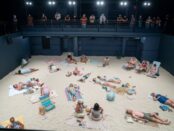
Performed by a cast of 15 singers and enacted in pantomime by numerous local volunteers all dressed in swimwear, Sun & Sea is a typical day at the beach in which we hear the thoughts of the singers, some of whom worry about the state of the world while others are entirely oblivious to it. Not only is it opera lite and a great deal of fun without being funny, it is also a very subversive way to communicate a message on as serious a subject as climate change. While the singers communicate their thoughts, the beachgoers frolic and enjoy their day oblivious to us but not to each other. The cast is a cross-section of all ages and races, including young children and two well behaved dogs – but no vendors. The totally realistic action (aside from the singing) includes reading, texting, eating, chatting, drinking, walking, cuddling, tanning, playing ball or games, while the children dig in the sand and build sandcastles. Some sit on beach chairs or chaise lounges while most lie on blankets on the sand or stand. [more]

The Mikado or, The Town of Titipu (NYGASP)

December 31, 2019

The framing device is not a completely elegant solution to the problem, but it gets the job done. Gilbert gets knocked out cold while examining the contents of the trunk. While incapacitated, he imagines the members of the company playing the roles that he and Sullivan will eventually create. In this fantasy 'Mikado," the citizens of the town of Titipu are more British townsfolk than Japanese villagers. They dress in bright Victorian-era costumes by Quinto Ott. The set by Anshuman Bhatia includes a railway depot from which the characters who have arrived in town emerge (giving a multiple meaning to the lyric “Comes a train of little ladies…”). The cast consists of actors of various racial backgrounds. [more]

Owen Wingrave

May 15, 2019

Witnessing the LOTNY production makes one wonder why "Owen Wingrave" is not performed more often: it has a small cast of eight with juicy roles for all of the characters, evenly divided between men and women’s roles, not true of either of the composer's operas, "Peter Grimes" or "Billy Budd." Although it makes use of the twelve tone scale, its dissonances are not hard on the ear. The plot is simple to follow and it can be performed in a unit set as was demonstrated by Josh Smith’s attractive and flexible design with six playing areas at the GK Arts Center. With the use of video or slide projections and atmospheric lighting, one can make the production as spooky as one wishes for this late Victorian ghost story. [more]

Rameau, Maître à Danser (Les Arts Florissants)

March 7, 2019

Unlike the company’s 2016 luxuriously staged "Les Fêtes Vénitiennes," also at the Gilman, "Rameau" was purposely staged by Sophie Daneman as if in a village square, simply but effectively, the “effects” improvised as only peasants would: entrances to temples and heaven were curtains stretched between two poles; Jupiter appeared in a high stage box as an improvised Mount Olympus; a dancer as a god glided bare-chested undetected amongst the celebrating peasantry.  According to the program, this type of performance is called “théâtre de la foire” (theater of the fair). [more]

The Pirates of Penzance 2018 (NYGASP)

January 2, 2019

In the plus column, it was easy on the eyes. Scenic designer Lou Anne Gilleland created agreeable though not particularly elaborate sets: a rocky stretch of seashore for the first act and a gloomy ruined chapel for the second. Lighting designer Benjamin Weill gave us a kaleidoscope sky that turned lavender or red or some other dramatic shade, according to the changing moods of the story. And Gail J. Wofford and Quinto Ott’s costumes were bright and playful, especially the flouncy sleepwear (Queen Victoria’s Secret?) worn by the female wards of Major General Stanley, the operetta’s famed “Modern Major General.” [more]

Experiments in Opera: Modularias

December 7, 2018

Though vastly different from each other, all four operas dealt either directly or indirectly with time, with the ways in which the past -- personal, historical, mythic -- influences the present. Each work, though short, provided a compelling immersion in a very particular and individual moment. [more]

The Yeomen of the Guard

October 30, 2018

As for cast standouts, Greenwood excelled both musically and dramatically. His ringing, expressive vocals and crisp diction made him an audience favorite. And he created an effective character shift when the assertive and seemingly self-adoring Fairfax shaves his beard to become a rather diffident novice yeoman. Another notable turn came from David Auxier as the austere, thoughtful Sir Richard Cholmondeley, the Tower lieutenant. (Auxier also served as choreographer, providing a few athletic dance moves of the sort not always seen in Gilbert & Sullivan productions.) In terms of musicality, Benke’s Phoebe had a warm, winning, almost musical-theater sound, while Watson Chase prompted goose bumps with her vibrant top notes. The production’s orchestra sounded rich and full from overture to Act II finale. [more]

Brokeback Mountain

June 3, 2018

While "Brokeback Mountain" impresses in its sincerity, it does not move which is a serious problem considering the romantic and tragic plot. Director Jacopo Spirei’s cast is in fine form as singers though the music and its libretto fail to fulfill this story’s potential. Daniel Okulitch and Glenn Seven Allen as the two doomed lovers make indelible impressions of men in a repressed society which does not allow them freedom of expression - even though they are not given the kind of music that can move the heart to tears. Brokeback Mountain which is fine as far as it goes offers the same disappointment of many new modern operas in that its writing falls short of its high-reaching intentions. [more]

Master-Pieces, A Chamber Opera

May 7, 2018

However, it’s not what we normally think of as an opera. And the performance, characterized by both moving strengths and disconcerting weaknesses, unfolded, awkwardly and interestingly … and then, at the end, quite powerfully … as a not-opera. Typically, operas’ drama lies in their plots; as audiences, when we’re moved, it’s because we’ve witnessed something dramatic. But in this performance of Kotik’s "Master-Pieces," the dynamic and moving intensity of the work’s conclusion lay in the fact that the work’s fundamental plotlessness – the libretto is essentially a series of poetic extractions from a 1936 lecture on aesthetics, ontology and existentialism – was transformed into a very personal drama in which the audience cannot avoid a shift from witness to participation. [more]

Jerry Springer – The Opera

March 9, 2018

"Jerry Springer - The Opera" is not for opera purists nor is for people who are easily offended by four letter words and other bad language of which there is a multitude. However, its irreverence skewers social, religious and political hypocrisy. The New Group’s production directed by John Rando is one of the most exciting musical theater experiences to be currently obtained in New York. It actually seems more relevant in Trump America where this sort of thing is cable-fodder every night of the week. If you are a dedicated theatergoer, miss this show if you dare. [more]

H.M.S. Pinafore (NYGASP)

December 30, 2017

Along with some contemporary updating which always gets a laugh, Albert Bergeret’s direction is sharp and shrewd and his conducting of Sullivan’s sprightly and animated score is equally assured as well. The diction is crystal clear, a must for Gilbert’s intricate and clever lyrics. With an attractive and realistic setting by Albère and pleasingly color-coordinated costumes in blue, white and red (the colors of the Union Jack) by Gail J. Wofford, this is a delectable and entertaining revival for both those familiar with it and others discovering its pleasures for the first time. [more]

The Nubian Word for Flowers/Rainbird

December 29, 2017

The set for the opera was itself a living, organic phenomenon; it functioned as an additional character in the opera. IONE sat near the moveable stage-flats; her back was to the audience, yet she was one of us. Hovering above the stage set were great canvas triangles – mildly billowed faluka sails – on which IONE projected Victorian and Edwardian era images of the British Empire in all its beauty and its ugliness. Priestess and manager, oracle and medium, IONE was at once a participant in the visual commentaries on Kitchener’s internal dramas and their director. [more]

Dolores Claiborne

October 26, 2017

King’s "Dolores Claiborne" would seem a strange choice for dramatization as the book is a monologue told entirely by its protagonist at a police interrogation over a murder on Little Tall Island off the coast of Maine. Though J.D. McClatchy’s streamlined libretto is very faithful to the book (while eliminating some characters and complications), it never approximates the compelling and wry narrative voice in Dolores’ first-person tale which makes her sympathetic and gives a sense of urgency to her story. Mezzo-soprano Lisa Chavez creates a believably passive character as a maid/companion to a selfish, rich woman whom she is accused of killing and an abused wife saddled with an alcoholic and brutal husband who died 30 years earlier but she brings no sympathy to the role. She just seems a tired, traumatized woman, not very interesting for the leading character in an opera. [more]

The Sorcerer (New York Gilbert & Sullivan Players)

September 17, 2017

This 1877 operetta, now celebrating its 140th anniversary, has been reduced to the nine major roles and the chorus has been eliminated. The result is a streamlined version that moves along at a steady pace under Albert Bergeret’s music and stage direction. The problem with the production is that although this is listed as a comedy, the new NYGASP revival wasn’t very funny except for several contemporary references such as “Amazon Prime” and the “changes at the White House.” [more]

La Fanciulla del West (New York City Opera)

September 10, 2017

The newly reconstituted New York City Opera opened its second full season with a shared production of Puccini’s rarely performed "La Fanciulla del West" created in collaboration with the Teatro di Giglio di Lucca, Italy; Teatro Lirico di Cagliari, Sardinia; and Opera Carolina of Charlotte, North Carolina. Ivan Stefanutti’s production is solid but old-fashioned and traditional except for huge projections that fill the back wall of the three sets, some which work and some which don’t. Conducted by James Meena, Opera Carolina’s general director and principal conductor, with a cast led by soprano Kristin Sampson in the title role, both the orchestra and cast gave sturdy though only intermittently exciting performances in this unusual Italian opera. [more]

Angels in America (New York City Opera)

June 23, 2017

By eliminating most of the extended fantasy elements of the play, they reduced the storyline to the domestic turbulence of two couples and a deservedly ugly portrait of Roy Cohn. Add in a visit by the iconic Bethesda Fountain Angel (here totally generic) and some very dramatic, brass-heavy music and you have this intriguing production by New York City Opera that succeeds as an opera as long as one is not familiar with the source material. What seemed heavy going and existential in the original comes across on a much more human level in the opera. [more]

Heartbeat Opera: Butterfly

June 9, 2017

The artistic team responsible for this "Butterfly" made radical decisions and changes. Puccini’s original three acts of linear story – love and “wedding,” waiting, betrayal and death – are reorganized and abbreviated into three scenes of waiting, remembered love, and then betrayal. Some minor characters in the original opera are eliminated to create a caste of just five singing characters. The entire orchestra is reduced to a chamber orchestra of just six musicians, the Cantata Profana. The adaptation of Puccini’s orchestral score for this small chamber group by Daniel Schlosberg is remarkable: unexpectedly, its absolute faithfulness to Puccini’s musical intent at almost every turn made up for the diminished number of musicians. [more]

La Campana Sommersa (New York City Opera)

April 8, 2017

This production was a co-effort with Fondazione Teatro Lirico di Cagliari whose orchestra joined forces with the New York City Opera Orchestra under the baton of Ira Levin who brought out every bit of color in the music. Maestro Levin was sensitive to the needs of the singers, knowing just how to mold the orchestra’s sounds so that their voices soared over the often over-orchestrated score (not helped by the wrong-headed scrim used in the forest scenes). [more]

Otello (LoftOpera)

March 20, 2017

LoftOpera is a feisty little company that operates around Brooklyn, especially Bushwick. They are giving" Otello" in LightSpace Studios, a disco on Flushing Avenue about the size of a high school gymnasium. There’s a small orchestra (27, about half the size Rossini wrote for), kept under tight but lyrical control by the company’s maestro, Sean Kelly. The singers do not appear to be looking at him for cues while they are enthusiastically playing out the story, but they only got lost once at Saturday night’s performance. [more]

Candide (New York City Opera)

January 10, 2017

Linda Lavin, padded and badly bewigged, comes across more like a Jewish yenta than the victim of the vagaries of Eastern European warfare. She has only one song, “Easily Assimilated,” a silly attempt at seduction, which is a shame. This character had several numbers in the original, including one that actually referred to why she is “missing the half of my backside.” Lavin is a star, but is ill-used here. [more]

The Mikado Reimagined (NYGASP)

January 5, 2017

In keeping with Sullivan having been hit over the head, the cast is clothed in a motley collection: a combination of late Victorian and Japanese styles. Some are in all Japanese, some in all Victorian, most are in a combination of the two. Even the Victorian costumes have baroque additions to make them look exotic. The women all wear Victorian gowns with bustles open in the back just as though they had not finished dressing. The concept while colorful is quite a mess with every possible variation on stage at the same time. [more]

27

November 14, 2016

Gordon created the role of Gertrude Stein with mezzo-soprano Stephanie Blythe in mind. Blythe’s monumental presence, thanks to a towering, charismatic, forceful voice, is meant to arrest and command attention. Blythe captures Stein’s complicated personality – her genius, her stalwartness, her humor and her occasional, brutal judgments about the artistic quality of her bon mots. [more]

Cox and Box & Trial by Jury

October 31, 2016

Introducing what he dubbed a pair of “Comedies of Crime,” NYGASP’s artistic director Albert Bergeret offered what he said was a first of a new series for the company: intimate performances of works by Sir Arthur Sullivan in the jewel box Marjorie S. Deane Little Theater performed to one piano, rather than to the usual full orchestra. In addition, the cast of "Trial by Jury" was comprised of the NYGASP’s Wand’ring Minstrels, a quintet of singers made up from the company, rather than using the full chorus, while the production of "Cox and Box" featured a newly edited version by singer/director David Macaluso. The new format for these delightfully entertaining productions had their advantages and disadvantages. [more]

Dell’Arte Opera Ensemble: Verdi’s La Traviata & Chansons de Baudelaire

September 19, 2016

The performance of Verdi's "La Traviata" featuring Bonnie Frauenthal as Violetta and Jose Heredia as Alfredo Germont was wonderful in many ways. Frauenthal sang and acted her complex role compellingly: she is a confident singer, capable of both womanly sturdiness and subtle virtuosity, and she inhabited the dense narrative of Violetta's story credibly and compellingly. Heredia's youthful and earnest Alfredo was also convincing; his deep love of Violetta and grief at her death were poignantly believable. Interestingly, as an actor, Heredia stuck so literally to the movement of Alfredo's character in Piave's libretto that Alfredo's subservience to his father was maddening: the son's filial weakness undercut the manliness of his love for Violetta. Both Frauenthal and Heredia sang with integrity; they held nothing back from full commitment to either their roles or their audience. [more]

Aleko & Pagliacci (New York City Opera)

September 12, 2016

While the New York City Opera’s staging of "Aleko" could not be called a major rediscovery, it was an admirable attempt to offer a non-standard repertory work that had probably not been seen by any of its New York audience. The real surprise was the thrilling and commanding performance of "Pagliacci" which bodes well for NYCO’s future life and health at Lincoln Center. In addition, the New York City Opera Chorus, under the direction of William Hobbs, gave persuasive performances in both operas, another feather in the City Opera’s cap. [more]

Florencia en el Amazonas

June 29, 2016

This production had two brilliant design/directoral conceits that worked hand in glove with the musical elements to tell the story. The first involved twelve dancers from Ballet Hispanico’s BHdos all in white body suits from head to toe, undulating virtually continuously down stage in front of the ship, representing the river and its secrets. With indefatigably choreographed by Nicholas Villeneuve and breathtakingly lit by Barry Steele, they, indeed, became a living part of the scenery, even interacting with the characters on the ship. [more]

Princess Ida (2016)

May 28, 2016

Completing New York Gilbert & Sullivan Players’ 40th Season was a rare revival of 1884 "Princess Ida," the team’s eighth operetta and the only one in which the dialogue is in blank verse, it is presented in three acts, and it is based on a previous play by Gilbert. In the playwright/librettist’s second parody of Tennyson’s book-length poem "The Princess," the themes include feminism, education for women, Darwinism and the Battle of the Sexes. While the operetta still displays its relevance and timeliness, the NYG&SP production proved to be uneven in several categories. [more]

Dido and Aeneas

May 7, 2016

Staged by director/choreographer Doug Varone, "Dido and Aeneas" was amusingly presented in modern dress with Varone’s dancers playing the ensemble in both operas and pantomiming unseen props and scenery. As the original Purcell music to the surviving Nahum Tate 1689 prologue has been lost, LaChiusa has created a witty new one entitled" The Daughters of Necessity: A Prologue," and lasting 15 minutes. After the Chorus (men in bleachers on stage left, women on stage right) welcomed us, they recounted the myth of the Fates: Nono (Sarah Mesko) who spins the thread of life, Decima (Anna Christy) measures it, and Morta (Clark) snips the thread with her scissors. [more]

Les Fêtes Vénitiennes

April 22, 2016

At turns beautifully silly, dreamy, exquisitely moving and always delightful, "Fêtes" is a sweeping, if daffy, look at life in eighteenth century Venice. Christie and his director Robert Carsen, framed the opera ingeniously by beginning the work in modern day Saint Mark’s Square complete with modern day tourists—mostly members of Ed Wubbe’s Scapino Ballet—with their cellphones, backpacks and obnoxious behavior. [more]

¡Figaro! (90210)

March 25, 2016

Virtually performed all in English with some Spanish for comic effect," ¡Figaro! (90210)" is true to the art form with recitative and arias, that is sung speech and grand solos rather then integrated dialogue and songs that characterize traditional musical comedy. Supertitles are projected above the stage for anything that may be vocally indecipherable. [more]

American Classical Orchestra: “L’Isola Disabitata”

March 3, 2016

The most psychologically complex role is Silvia's. Over the course of the opera, she moves from childlike naïveté to loving generosity of heart. Energetic and intelligent, she unlearns her sister's morbid lessons about men's wickedness so completely that as a newly emerged adult, she falls in love without reservation or fear. Sherezade Panthaki's Silvia was marvelous: the full evolution of her character was reflected in singing that moved from light sweetness to exuberant, vigorous sensuality. In her artistry, Panthaki made her Silvia a young woman with neither inhibition nor fear; Panthaki took every possible risk with Haydn's music and made it all feel like happiness in the process of being discovered. [more]

The Pirates of Penzance

December 30, 2015

The cast includes beloved NYGASP favorites as well as some less familiar faces. Coloratura soprano Sarah Caldwell Smith’s Mabel wins a justly earned ovation signing her aria, “Poor Wandering One!,” declaring her love for Frederic. He is played with cheerful restraint by tenor Carter Lynch (alternating with Daniel Greenwood). Bass-baritone David Wannen has a fine swashbuckling time as The Pirate King. Contralto Angela Christine-Smith as Ruth gives a memorable rendition of her aria, “When Frederic Was A Little Lad.” Bass David Auxier as the Sergeant of Police deals delightfully with his band of bumbling officers. [more]

Chelsea Opera: Glory Denied

November 21, 2015

Launching its twelfth season with a revival of its 2010 production of Tom Cipullo's widely acclaimed "Glory Denied," Chelsea Opera made clear once again the reasons for which it has become and continues to be a leader among small regional opera companies here in the Northeast: presenting a varied and ambitious repertoire, it maintains consistently high standards of both music and theatrical direction. Both the fine complex score of "Glory Denied" and the first rate musicianship of the singers and instrumentalists who performed it were enhanced by the staging and direction of the company's co-founder and co-executive producer Lynne Hayden-Findlay. [more]

Experiments in Opera:  “The Travel Agency Is On Fire: Burroughs Cuts Up the Great Bards”

October 26, 2015

The evening consisted of two sets; the first six pieces lasted from 8:00 to 9:05 PM, were then followed by a between-set break of almost an hour for last-minute rehearsals and sound checks, and the concluding five pieces lasted from 10:00 to 11:15 PM. Before each piece was performed, a pre-recorded introduction was provided. These were fairly conversational in tone; some contained useful contextual information about the piece while others were more wandering; unfortunately, these recorded introductions were often difficult to understand. [more]

The Magic Fish

October 11, 2015

Sunny Knable’s music is romantic and lilting. He has called his style a cross between Stephen Sondheim and Benjamin Britten. In this he does himself an injustice as his music is much more melodic. As an American opera composer, he follows in the footsteps of Douglas Moore, Carlyle Floyd, Dominick Argento and Thomas Pasateri. Jim Knable’s libretto cleverly uses spoken dialogue for the prose passage and rhymed verse for the musical settings. The vocabulary is suitable for young children but the sentiments and plot complications are entertaining for adults. [more]

The Peking Opera: The Jewelry Purse

September 11, 2015

With considerable fanfare and extensive advance publicity, Chinese opera singer Zhang Juoding made her American debut at Lincoln Center's David H. Koch Theater. Performing with the National Academy of Chinese Theatre Arts, Zhang Huoding brought her own very modern magnetic star power and the very old, formal traditions of a highly stylized traditional Chinese art form to an exuberantly adoring, largely Chinese audience. Over two nights, the company presented "Legend of the White Snake" and "The Jewelry Purse." On both evenings, the house was packed; about a quarter of the audience came to both evenings. The atmosphere of excitement about The Jewelry Purse on the second evening was fueled in part by the audience delight with the first evening. [more]
Voodoo, A Harlem Renaissance Opera

July 5, 2015

Neglected, ignored and then forgotten, Harry Lawrence Freeman's opera "Voodoo" was brought back to the stage in a compelling production in June, 2015. The opera was last seen at what turned out to be its only production in 1928. Now, more than three-quarters of a century later, it has been brought back to life by Morningside Opera, Harlem Opera Theater, The Harlem Chamber Players and scores of named and unnamed supporters and fund-raisers in the Harlem music community. [more]
Chelsea Opera: Tosca

June 15, 2015

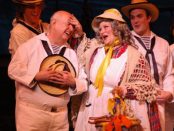
St. Peter's Episcopal Church in Chelsea was used to near perfect effect as the setting for all three acts of the opera. "Tosca"'s first act, which does, in fact take place in a church was, precisely because of the narrative, “easy” to stage, but the successful transformation of the St. Peter's Chelsea chancel into first, the emotional claustrophobia of the villainous chief of police's quarters and then, for the last act, the open air witness to revenge and tragedy resulted from the imaginative, effective stage direction and set management of Chelsea Opera's co-founders Leonarda Priore and Lynne Hayden-Findlay. [more]
The Collegiate Chorale: The Road of Promise

May 30, 2015

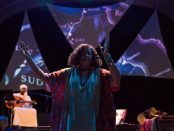
On May 6 and May 7, 2015 at Carnegie Hall, presenting a concert version of Franz Werfel and Kurt Weill's 1937 The Road of Promise, (Der Weg der Verheissung), The Collegiate Chorale conducted and directed by Ted Sperling undertook a near-daring project … and failed. The performance was uneven at best. The work was more interesting for its problems than its ultimate beauty or success. [more]

The Gondoliers

May 24, 2015

Founded by Albert Bergeret in 1974, he continues to this day as artistic director for the NYGASP, and on this occasion served as director and conductor, with an assist by choreographer David Auxier on the direction. A daunting and impressive achievement, this production also marked the conclusion of the first season in which the NYGASP performed in their new residence: NYU Skirball Center for the Performing Arts. A beautiful and state of the art theater, this is a space that can handle the grandeur and scale of a G&S piece. The theater provides remarkable production value, including a massive pit to house the almost thirty person orchestra. Thanks to the latest in acoustic engineering and innovation, the music of "The Gondoliers" was robust and invigorating. Led by Bergeret, the score filled every inch of the theater and truly transported the audience to another time and place. [more]

Clara

May 5, 2015

On the evening of this performance under review, the audience was treated to a rare surprise: Victoria Bond, writer of the music, was not only present but was also the conductor for the evening. Gramercy Trio, under Bond’s musical direction, skillfully maneuvered through the score. Filled with atonal and complex orchestrations, Bond’s music strikes a fine balance between some very vibrant and cheery melodies followed by quite a few haunting and more chaotic progressions which coincide with the show’s climax. [more]

The Tempest Songbook

April 8, 2015

Gotham Chamber Opera's hour-long program at the Metropolitan Museum, entitled "The Tempest Songbook," took these truisms into account by alternating Shakespeare settings by the contemporary Finnish master Kajia Saariaho, with Baroque-era settings attributed to Purcell. Those who found Saariaho's language unfamiliar or taxing were given a reassuring figured bass to fall back on, while those who found the typical Baroque Aria da Capo form tediously repetitious were never more than a few minutes away from the next of Saariaho's elegant and colorful modernist miniatures. Soprano Jennifer Zetlan and bass-baritone Thomas Richards were both excellent, sounding completely at ease and consistently expressive in this sometimes challenging music. The ensemble of Baroque instruments was conducted with élan by Neal Goren, and the production directed and choreographed elegantly by Luca Veggetti. [more]
1 2