
News Ticker

Shayok Misha Chowdhury

Rheology

April 25, 2026

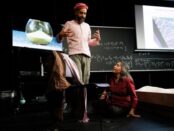
"Rheology" previously seen at Brooklyn’s Bushwick Starr in the spring of 2025 has reopened at Playwrights Horizons and proves to be a unique meta-theatrical experience with both performers, a real mother and son, theoretical physicists Bulbul Chakraborty and writer/director Shayok Misha Chowdhury (Pulitzer Prize finalist for "Public Obscenities"), appearing as themselves. Written and directed by Chowdhury in association with Chakraborty, Rheology begins as a physics TED talk on sand as “capricious matter” (Bulbul’s field) then switches to a demonstration of stage directing (Misha’s field), and finally becomes a metaphysical discussion on life and death tying the two together. This is an unusual theatrical presentation, one you will ponder for a long time to come. [more]
Prince Faggot

June 22, 2025

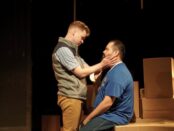
In a sharply observed and emotionally layered turn, "Prince Faggot" brings a fresh perspective to the classic "meet the parents" trope—with a royal twist. John McCrea’s George, the openly gay Prince of England, brings his boyfriend Dev (an excellent Mihir Kumar) home to meet his parents: the seemingly progressive Prince William (K. Todd Freeman, masterfully restrained) and Princess Kate (a poised and quietly complex Rachel Crowl). At first glance, the royal welcome is warm, even congenial. But beneath the polished surface lies a prickly nest of social expectation, national identity, and unacknowledged privilege. [more]

Public Obscenities

March 11, 2023

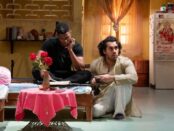
Shayok Misha Chowdhury’s "Public Obscenities" having its world premiere at the Soho Rep is an immersive story into Bengali culture in Kolkata, formerly known as Calcutta. Directed by the author in 12 episodes which are given chapter names, this two hour and 50 minute play is as much like a television mini-series as it is a family saga. The realistic production resembles a film as much as it is possible on a stage with our attention being guided to various alcoves as though they were film cuts on the remarkable setting by the collective dots. The play is challenging as the first long extended scene is mainly in Bangla, the language of Kolkata, without supertitles. While the rest of the play is translated when it is bilingual, the dialogue is studded with Bangla words which are left up to the audience to figure out. [more]