Archive
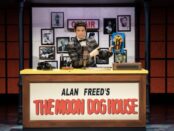
"Rock & Roll Man," the new jukebox/biographical musical at the New World Stages has a great deal going for it. The story of legendary Rock & Roll impresario Alan Freed is told in a series of delicious period songs with a few original works (by Gary Kupper who also cowrote the libretto with Larry Marshak and Rose Caiola) thrown in. The show is basically factual, although a tad exaggerated, and doesn’t shy away from Freed’s well-known issues such as his alcoholism and taking payola. Best of all, the cast is led by Constantine Maroulis in a complicated, fine-tuned and, for him, subdued performance. [more]
ON THE TOWN WITH CHIP DEFFAA… WITH MATTHEW BRODERICK, HARVEY MILK, AND HARRY HOUDINI….
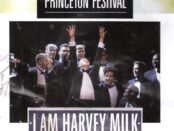
As a lover of the performing arts, I’ll remember this month as when I witnesseed Matthew Broderick give one of the finest, subtlest performances of his career. I’ll remember, too, the uplifting idealism of Andrew Lippa’s I Am Harvey Milk. But I’ll also remember this as the month that some major cultural institutions were forced to make significant cutbacks because audiences have not returned to pre-pandemic levels. And that is worrisome. [more]
Alex Edelman: Just For Us
Alex Edelman in a scene from his one-man show “Just for Us” at the Hudson Theatre (Photo [more]
Eisenhower: This Piece of Ground
Based on a range of Eisenhower’s memoirs, speeches and letters, the play demonstrates without a doubt his belief in moderation and his liberal bent of which many people today are unaware. Set at his Gettysburg farm in 1962, two years after the end of his presidency at age 71, the premise is that while recording his memories for a book on his White House years, he is incensed by a New York Times poll of 75 historians which places him 22 out of 31 presidents, “a great American, not great president.” He then attempts to defend his life and work in the two acts that follow, with the first half taking us through W.W. II and the second half delineating his presidency. [more]
A Simulacrum
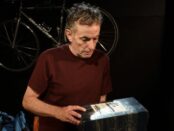
While the show approximates a magic show, it also is a lecture demonstration. However, if you are hoping to hear how the tricks are accomplished you will be disappointed. Cuiffo who has a charming demeanor is both low-key and casual, dispassionate and nonchalant. "A Simulacrum" is a diverting evening but it may leave you hungry for more – or at least the explanations of what you have just seen before your eyes. The rapport between Hnath and Cuiffo is that of friends and by the end of the evening you may feel like you have been admitted to their inner circle. [more]
The Gospel According to Heather
"The Gospel According to Heather," with book, music, and lyrics by Paul Gordon, is a story about a teenager's struggles with fitting in with her contemporaries, finding a boyfriend, and dealing with the supernatural powers which she seems to have acquired after finding a Roman coin in a fish. On the surface, this show appears to be a coming-of-age tale with music, but it is much more: it is a cleverly done and, at times, pointed commentary on the socio-political nature of contemporary America, and of religion. [more]
The Light in the Piazza
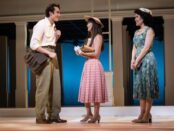
New York City Center Encores!’s new production of the musical, directed by Chay Yew, stars another Tony Award winner, the sensational Ruthie Ann Miles, as the determined Margaret Johnson with beautiful-voiced Anna Zavelson as a believably three-dimensional Clara. The Encores! production is more down-to-earth than either the film or the original Lincoln Center production and more satisfying as a human drama. There’s no stinting on humor, but the characters’ formerly trivial problems now seem more worthy of our attention. [more]
The Trouble with Dead Boyfriends
The show is a deft combination of action and humor with elements of horror. One of the production numbers, "Dissection Dance," is an homage to the "Time Warp" choreography of "The Rocky Horror Picture Show." The name of the high school, George R. Romero High School, invokes the zombie horror films he created. And with the ensemble's comedic timing, the show delivers an entertaining romp, with a feminist twist, through the psyche of three adolescent girls: Madison, Stella, and Grace. It needs a bigger stage and more actors but it is still an entertaining theatrical experience. [more]
Lizard Boy
Scheduled to run only until July 1, "Lizard Boy" deserves a longer life as one of the most satisfying musical theater offerings to be seen currently in New York. While the message of tolerance and diversity is not heavy, the theme is dramatized so that no one can mistake its intent. The three-person cast is superb in the acting, singing and musical departments. Brandon Ivie’s staging is clever and imaginative, while the book, music and lyrics by Justin Huertas make audience goers look forward to his next project with eager anticipation. [more]
Singfeld! A Musical Parody About Nothing!
Picking the easiest possible creative path, a decision the effort-averse George would no doubt admire, the McSmiths forgo imaginative risk-taking in favor of simply copying their source material, shaping "Singfeld!" as a parody musical about writing a parody musical. In other words, "Singfeld!" is also about nothing, which makes the entire endeavor feel, at times, akin to a Sartrean spiral or, as Jerry's archnemesis Newman (Jacob Millman) more bluntly puts it, "hackey." That's not to say there aren't some funny moments during "Singfeld!," but when humor is largely based on "remember when?," the comedic ceiling is right above your head. [more]
Freedom Summer
"Freedom Summer," written by Toby Armour and directed by Joan Kane, is a semi-autobiographical story of the playwright's experiences that summer as one of those students risking their lives in the cause of racial justice. It is an important story in the present time as the same "Jim Crow" racist attitudes that controlled the social and political structures of Mississippi in 1964 have come out of the shadows in an effort to restore the white supremacist mechanisms of voter suppression and control. Unfortunately, this play does not deliver the drumbeat of tension that a deeply felt sense of fear, bordering on terror, engenders. That type of feeling was experienced by the participants that summer. Sadly, this production does not well serve that critical, timely subject matter. [more]
Days of Wine and Roses
Lucas’ script remains faithful to Miller’s teleplay (with the excision of Joe’s delirium tremens in the psycho ward or his second hospitalization) and much of the dialogue is actually Miller’s. However, the problem is the score. Guettel’s 18 songs (including four reprises) are often atonal, unmelodic, unrhymed and don’t scan. While this is true of the Tony Award-winning "The Light in the Piazza" that score had such a lush sound that it was automatically romantic and appropriate for its story. Here it is almost as though Guettel is striving for opera but without the orchestral underpinnings to make it so. The lyrics are mostly recitative, abstract and metaphorical. Aside from three songs in which Joe or Kirsten are joined by their seven-year-old daughter Lila (played by Ella Dane Morgan), only the couple sing, with O’Hara given seven solos. The real problem is as Stephen Sondheim said about his musical Do I Hear a Waltz?: these are characters that wouldn’t sing so the only way to solve this is to have made "Days of Wine and Roses" an opera with a great deal of orchestral music. Here the songs do not add anything to the story. Like Marvin Hamlisch’s score for the stage version of "Sweet Smell of Success," Guettel’s music is devoid of atmosphere, period or otherwise, unless this is the fault of the orchestrations by Guettel with additional orchestrations by Jamie Lawrence. [more]
The Comeuppance
Branden Jacobs-Jenkins’ "The Comeuppance," the culmination of his decade as a Premiere Resident playwright at Signature Theatre, does for the millennials what "The Big Chill" did for the Baby Boomers. Astutely directed by Eric Ting, this fascinating but uneven play also reviews the stresses and traumas of the last 20 years for that generation. This five-character reunion of people who knew each other at St. Anthony, class of 2002, in Prince George’s County, Maryland, is densely plotted and packed with dramatic moments. And then there is a new wrinkle, an uninvited guest. [more]
Alvin Ailey American Dance Theater: Spring 2023 Season
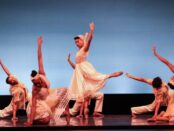
"Dancing Spirit" was a gentle ballet choreographed by Ronald K. Brown to a suite of music by Duke Ellington, Wynton Marsalis, Radiohead and War. First one dancer, then two and then the entire cast slowly made their way down a darkly lit diagonal (perfect lighting by Clifton Taylor) dressed in Omotayo Wunmi Olaiya’s white flowing dresses for the women and dark pants and pale shirts for the men. This was a ritualistic journey. The simple movements—walking, tilting, dipping into deep, wide pliés and bending at the waist—were developed into complex combinations all to quiet music of Ellington. [more]
Wet Brain
Caswell’s dialogue for and wry observation of a family this dysfunctional is quite compelling. Scenes where two of the siblings verbally gang up on the third are fraught with humor as much as real-life situations. Communication is “at your own risk,” with each goading the other about their addictions, instigating full-on relapses at every turn. It is no secret this is a very personal piece for the author. The dedication to the play reads: ”For my father if he’s out there. And for my siblings.” It is a play as much about love and loss (and grief) as it is about the addictions that create chasms in a family. And it is a play that deep down reveals a family with a lot of heart. [more]
Fallen Angels
The problem with the play is that it has a one joke plot, simply what will happen when Maurice appears – if he does. The play runs out of steam very early on. However, if the drunken scene is played as over the top it will generate the comedy that the play doesn’t offer. Unfortunately, accomplished actresses Elizabeth Hayden as Julia and Jenny Tucker as Jane have been directed to remain two upper-class matrons throughout. Neither of them seem drunk enough to cause the chaos that ensues. Otherwise, the acting is of a high caliber though the play peaks much too soon. [more]
Love + Science
As for the play itself, "Love + Science" tells a good story, even if not necessarily a new one. It’s largely another history of AIDS with a few scientific sprinkles thrown in. Where Glass’ script succeeds is in its characters and their determination. There are two especially poignant moments, conveyed by Melissa and Jane (both played by Williams), where they each confront Matt about how damaging his indecisiveness over owning his homosexuality is. And the scene where Jeff reproaches Matt for telling James that AIDS is 100% fatal is riveting. Lastly, it’s in the final scene where Glass’ play provides its most powerful message, when a now middle-aged Matt in 2021 compares the body count of AIDS to that of COVID-19, contrasting the swiftness with which the governments of the world produced a vaccine for COVID-19 where they have yet to create a vaccine for HIV, 40 years into the AIDS pandemic. [more]
Ballet Hispánico: Spring 2023 Season
The major work of the evening was “Sor Juana,” choreographed by Michelle Manzanales (“in collaboration with the Company”) and performed to a selection of period music including a composition by the title character, Sor Juana Inés de la Cruz, the 17th century nun, proto-feminist, poet and composer. “Sor Juana” was commissioned by New York City Center. Gabrielle Sprauve as Sor Juana was dignified and powerful as she strode amongst the others, all dressed in extravagant period costumes by Sam Ratelle. A black and white habit straight out of a famous contemporary portrait of Juana was a standout even though it was soon stripped off to reduce Sprauve to a tight, white leotard as if reducing her to emotional essence. She is joined by the similarly attired Isabel Robles in what became the apex of the work: a sensual, yearning duet that included supported lifts and much entwining. [more]
American One Acts, a double bill
The little OPERA theatre of ny has become known for its adventurous programing of rarely seen and heard operas in English including the New York premieres of Benjamin Britten’s opera for television, "Owen Wingrave," and Carlisle Floyd’s final work for the stage, "Prince of Players," as well as new translations of works by Gluck, Mozart and, Rossini. Now in association with Harlem Opera Theater and National Black Theatre, they have presented an unusual double bill of contrasting "American One Acts," both set in the American South. Act I was a performance of "Highway 1, U.S.A." (1962) by William Grant Still, called the Dean of African American Composers, and the first Black composer to have an opera performed by a major company, his "Troubled Island" premiered by the New York City Opera in 1949. The second half of the bill was Kurt Weill’s "Down in the Valley," a folk-opera intended for schools and community groups, written for the radio in 1945 and then revised for stage production in 1948 at Indiana University by the Bloomington Opera Workshop. After its premiere it had 85 amateur productions in the following ten months. However, it has not remained in the repertory. [more]
The Shylock and the Shakespeareans
Einhorn has reshaped the dramatic elements of the original play to focus primarily on antisemitism. What he achieves is a show that highlights how the antisemitism of the 16th century is connected to the religious dogma of that period, with aspects of it extending to the present day. Although it is superficially faithful to the themes of the source, it is still a play that deals with the elements of prejudice, justice, love, and societal norms within the context of antisemitism. It is for an audience that enjoys a well-acted, thought-provoking story with a solid point of view. [more]
This Land Was Made
In its earliest scenes--as a Marvin Gaye record spins on the turntable, Adam Honoré's lighting design pairs naturalistically with Wilson Chin's meticulous set, and Dominique Fawn Hill and DeShon Elem's beautifully redolent costumes delight our eyes with vibrant patterns--"This Land Was Made" achieves an authenticity that makes you want to sit at the bar and order some lunch, too. Ironically, it's when Newton (Julian Elijah Martinez) and his comrade Gene (Curtis Morlaye) enter the story that the play's verisimilitude begins to come undone. Abandoning realism for audacious dramatic license, "This Land Was Made" turns into an intellectual showdown between Newton and Troy, with the latter becoming entangled in the fatal incident that led to Newton's imprisonment. [more]
Grey House
Eerie and irritating in equal measure, Levi Holloway’s "Grey House" at the Lyceum Theatre dredges up the classic plot device of many horror films: strangers stumbling into a den of oddballs and suffering the consequences. The couple that does, indeed, invade the eponymous domicile, Max and Henry (Claire Karpen – subbing for Tatiana Maslany - and Paul Sparks, both excellent) actually refer to this conceit and even joke that the results are always bad. Sometimes this premise results in hilarity as in "The Rocky Horror Picture Show" and sometimes, as in "Grey House," it causes unintended hilarity for its obvious stunts (faces at a window, smoke emanating from a scary basement) along with some gruesome imagery, too bloody to describe here; but suffice it to say Henry, whose left leg is injured in a snowstorm-caused car/deer collision, suffers in a ghastly manner. That the car was driven by his wife doesn’t help matters. [more]
King James
Whether you are a basketball fan or not, Rajiv Joseph’s "King James" is an intriguing depiction of an unlikely friendship over 12 years. Under Kenny Leon’s polished direction, Glenn Davis and Chris Perfetti hold the stage with their complicated relationship and representation of male friendship. Although the play doesn’t tackle new ground, it remains absorbing as time passes and the men’s careers take different paths. [more]
Bernarda’s Daughters
The six-member cast creates a believable ensemble though their roles are not all clearly defined. While the play reveals much about the Haitian community living in Brooklyn, as 'Bernarda’s Daughters" feels almost plotless it seems to drift from one conversation to another with little or no structure. The idea of an updated Americanized version of Lorca’s very Spanish tragedy "The House of Bernarda Alba" is a good one. However, this is not as compelling or successful as Marcus Gardley’s "The House That Will Not Stand" which reset the play in 1813 New Orleans. [more]
GAS
"GAS" by Charles Cissel explores the “never-never land” of a war without end. It is a time when the characters examine the unreality of the experience. It occurs within an ill-defined dimension resembling a bombed-out children's playground. Felicia Lobo guides the able cast through what is, at times, a complicated, multilayered story that ultimately fails to deliver the nuances of the script engagingly. [more]
The Fears
The world premiere of Emma Sheanshang’s "The Fears" is a hilarious and poignant satire on self-help groups and the sort of people who take their emotional temperature all day long – literally. It is the latest in a new genre of plays in which the humor comes from something that may be painful but it is still possible to laugh at. Smoothly and astutely directed by Dan Algrant who has mainly worked in film, the ensemble of seven actors are entirely convincing as a group of damaged people who meet once a week at a Buddhist center in New York City to deal with early traumas that are keeping them from moving on in their lives. While the play fails to make a bigger statement, it remains entertaining and engrossing throughout. [more]
Evelyn Brown (A Diary)
While the painstaking entry upon entry yearn to be something of import, we can’t help but feel it takes a certain steadfastness and desperate commitment to make the banal seem so extraordinary. This is where the brilliant attack of performance by Ms. Lauren as Evelyn, and Violeta Picayo as Evelyn Brown, come into play. Ms. Picayo can be thought of as the younger Evelyn, but the fact is they are both the same person usually on the stage at the same time, experiencing the same ennui. Ms. Lauren is the human map of a sometime wordless exploration of isolation. There is nothing secretive about it. We are witnesses to every one of her emotions as it makes its way across her face and into her beaten down yet stalwart physical life. Ms. Picayo sometimes has that innocent wide-eyed wonder that gets her through to the end of a scene, making us pity her for her stiff upper lip and beatific smile in the face of a life not well-lived. [more]
Primary Trust
Eboni Booth’s "Primary Trust" at the Roundabout Theatre Company’s Laura Pels Theatre is a genial, gentle tale of a genial, gentle young man and his difficulty negotiating the speed bumps of life. What keeps "Primary Trust" afloat is the light touch of its director, Knud Adams, who never lets Booth’s play bog down. Rather than wallow in sadness, Adams permits the actors—all fine—to ride the gentle waves of their fates. [more]
On the Town with Chip Deffaa: Reflections on “Oliver!”, Revival and Broadway Economics
Oliver! is darker than most so-called family musicals—mixing elation and heartbreak as casually as life itself does—but it touches us more than most family musicals. And Encores’ production deserves a longer life.
[more]
Sorry for Your Loss
As directed by the astute Josh Sharp, Kayne begins his show as a stand-up act, but warns us “This is a comedy show. BUT it is also sad. There will be long stretches where you will not be laughing. I don’t want to feel like I tricked you, so I’m telling you in advance.” However, Kayne is able to find the absurdity in things that are inherently sad so that there is much humor in his one-man show. After his stand-up comedy routine, he gives a short math lesson using a white board and a black board (set design by Brett Banakis) to demonstrate that things are often not what they seem. [more]
Misconceptions
Abortion, pro or con? The Blessed Unrest theater company has taken on this thorny issue. Steven Wangh’s "Misconceptions"—an ironically perfect title—unfolds in the form of a series of interviews which take us into every nook and cranny of the issue—pro and con. It is by no means just a dry documentary or a blasting screed, but a warm, sophisticated and ultimately moving humanization of the subject. [more]
Samuel Clemens: Tales of Mark Twain
All of this is told by Baer in Twain’s humorous and inimitable style filled with anecdotes both true and untrue. As we are told from the author himself, “I have never been a man to allow the truth to stand in the way of a good lie.” The presentation also includes sections from travel letters in Twain’s own words besides a large section of Huckleberry Finn’s adventures down the Mississippi. The presentation also sets Twain’s life in the context of the growing America of those days, events like the Gold Rush, the transcontinental railroad, the election of Abraham Lincoln, the burgeoning of literacy and the press, etc. Even if you know a good deal about the life of Samuel Clemens a.k.a. Mark Twain, Joe Baer’s one-man show fills in a great many gaps with fascinating adventures of a world traveler who had a keen eye for the ridiculous and the satiric. In "Samuel Clemens: Tales of Mark Twain," he remains good company throughout the evening. [more]
Romeo and Juliet (NAATCO/Two River Theater)
And the production is loaded with action. Except for the tender love scenes, the play moves at almost breakneck speed. Where most modern productions of Shakespeare tend toward languor, this "Romeo & Juliet," skillfully directed by the playwright and her co-director Dustin Wills, fills the moments that traditionally let the mind wander. A couple of back-to-back scenes that inform the audience, but with virtually the same content, are now played simultaneously. This makes the audience work more industriously to listen and separate out the conversations and Hansol Jung’s contemporary take on Shakespeare’s text make it that much easier to accomplish. [more]
Hidden
The play is structured as a mystery and that is being revealed with sensitivity and care. As each element is shown, a clearer picture of what is at stake emerges. A discussion in Act II about Hannah Arendt's work "Eichmann in Jerusalem, A Report on the Banality of Evil" triggers a conversation on the meaning of evil. This discussion of the idea of the banality of evil is the thought-provoking idea being acted out in the play: How does one judge what is truly good and what is truly evil? [more]
New York, New York
"New York, New York" is a big, jazzy show in the style of golden age musicals we have not seen for a while. While it removes the abusive relationship between Jimmy and Francine from the film, in doing so it waters down the story to a rather old-fashioned “newcomers make good in the big city” tale we have seen before. The theme of racism is handled rather simplistically, borrowing parts of the Lena Horne and Dorothy Dandridge stories. Characters seem to come and go and are often gone for too long a time. The new collaborations by Kander and Miranda are fun to hear but they do not come up to the standard of the Kander and Ebb songs that we know. The show becomes a showcase for the much loved songs “But the World Goes ‘Round” and “New York, New York” which are given pride of place. [more]
On The Town with Chip Deffaa: At “New York, New York,” “Some Like It Hot,” and Seth Sikes & Nicholas King’s Nightclub Act
In the last few weeks I feel like I’ve been stepping back in time—in a nice way. I’ve enjoyed seeing the new Broadway musicals "New York, New York" (set in 1946-47) and (with some definite reservations, which I’ll get to shortly,) "Some Like It Hot" (set in 1933). And although the current nightclub act of Seth Sikes and Nicolas King is set in the present, most of the Great America Songbook numbers that they sing were written long before they were born; and they put those numbers across with terrific razzle-dazzle showmanship—the kind you always hope to see in clubs but all-too-rarely do. [more]
Muses
However, both every scene as written by Maldonado and directed by Theatre East’s artistic director Judson Jones is staged as though it were the climax. It is one thing to enact a play up to the hilt. Here there is no arc or build up. Every scene begins at the top and leaves the actors with nowhere to go. Although performed by a tight quartet of actors, as written the characters are two dimensional, telling us no back story and little about them. [more]
shadow/land
"shadow/land" by Erika Dickerson-Despenza is a play about the August 2005 disaster, Hurricane Katrina. It is the first episode of a ten-part magnum opus. "shadow/land," though, is more than a play. It is a painfully rich vision of what hundreds and hundreds of stranded rooftop denizens, so touted in the media, must have gone through behind the waterlogged walls of New Orleans. It is the rare theatrical work that recreates the agony and frustration of a natural disaster that transcends the fourth wall, seemingly without artifice, so involving is the entire endeavor. [more]
Being Chaka
There’s no shortage of race-related storytelling in today’s theater and film arenas, and it takes a special entry to become seen among the offerings. "Being Chaka" is one such play; thoughtful, sensitive, and earnest, it weaves an exploration of racism throughout its distinct and intriguing characters, with compassion and without a heavy hand. [more]
Iolanthe (MasterVoices)
MasterVoices concluded its 2022-23 season with a lovely concert staging performance of Gilbert and Sullivan’s rarely seen comic opera "Iolanthe (or The Peer and the Peri)" staged and conducted by artistic director Ted Sperling. The cast was mainly made up of Tony Award winners (Christine Ebersole and Santino Fontana) and Broadway regulars (David Garrison, Jason Danieley and Phillip Boykin) with some fast rising young opera singers (Ashley Fabian and Schyler Vargas) and a principal ballerina from the New York City Ballet (Tiler Peck). All seemed to be thoroughly enjoying their Carnegie Hall outing. The 120-member Master Voices chorus and orchestra gave a glorious rendition of the 141 year old score. [more]
Robin & Me: My Little Spark of Madness
Under the direction of Chad Austin, Droxler uncannily becomes not only Williams (and all of Williams cinematic characters who each serve up different helpful advice), but also his father Ed; mother Mary; and other characters, all, of course, just facets of his own persona. He even conjures the comic actor Jim Carrey who, for a short time replaces Robin Williams as an ad hoc advisor. Even Jack Nicholson makes a guest appearance. [more]
Khan!!!The Musical, A Parody Trek-tacular
The music is well-done, with the songs fully integrated into the storyline and lyrics that help define essential elements of the character's nature and are filled with inside Star Trek references and jokes. For example, when Theerakulstit skillfully sings "Young," entirely in character as Kirk, we hear Kirk as an older man regretting getting old and no longer able to be the arrogant swashbuckling starship captain of his youth. When we meet Khan for the first time, Kropp sings “My Wrath,” which gives a history of how he came to be in this place and the reason for his extreme anger at Kirk. Although many of the references will be missed by a non-Star Trek audience, the songs are well-constructed, and more importantly, they are sung by a cast that knows how to sing on key and on pitch. While you may not leave the show humming a tune, they are the types of songs that one will return to without getting bored. [more]
Eighteen-Year-Old Actor with Autism Honored by Only Make Believe Charity
Collet Reyes has been a part of the Only Make Believe charity since he was eight years old. Living with a developmental disability and being diagnosed on the Autism spectrum, Reyes has worked through these challenges to pursue his dream of becoming a professional actor. For the last ten years, Reyes was able to write, perform and learn all aspects of the theatre industry. He continues today by working with Only Make Believe actors to attend monologue workshops wherein he developed a monologue of his own to use at future auditions. He has taken professional headshots and continues to volunteer in his current role as both stage manager and mentor to children at The Rebecca School. [more]
On the Town with Chip Deffaa: “As You Like It” On Stage and “Banded Together” In the Movies
Each was an individual; I liked hearing all of the different voices and accents and inflections. Each one brought his or her own personality to the work. But—and this is a compliment--they were all performing the play in the same fundamental manner. As performers, they were all on the same wavelength. (Kudos to director Kelly Brady and company.) The characters were talking with one another--not offering orations directed at the audience. The actors all knew the material so thoroughly, they were able to speak their lines easily to each other, with utter naturalness, in a conversational way. They were giving us Shakespeare’s words. But they weren’t delivering speeches to us; they were interacting with one another the way people in real life do. And that made the play come alive for us. It wasn’t a historical relic. The characters felt like human beings, with the same sorts of feelings we all have. We could relate to them. [more]
Good Night, Oscar
Sean Hayes, up till now best known for his Emmy Award-winning performance as Jack McFarland on "Will and Grace," gives a titanic performance as humorist, raconteur and pianist Oscar Levant once called the wittiest man in America, in Doug Wright’s new play "Good Night, Oscar." Although Levant is not much remembered today, you can enjoy this character study and depiction of early late night television even if you have never heard of him before. While "Will and Grace" has made evident Hayes’ way with one-liners, "Good Night, Oscar" demonstrates that Hayes is able to dig deep in a character portrayal as well. Credit must go to director Lisa Peterson for inspiring this memorable performance. [more]
Bliss Street
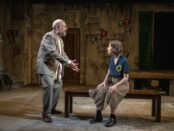
The main issue with this show is the lack of clarity in the book. Who is the play about, the father or the son? Act I is primarily a story about Paul Sub and his business ventures leading up to the creation of The Coventry. Act II is more about Charlie Sub and how his father's business decisions impacted Charlie's life. In both cases, the story's elements need to be restructured to make it more compelling. Does it matter what type of romantic relationship Charlie develops in LA? Did Paul's liquor store fail after the robbery? The book needs to be edited to define clearly which story is being told and to eliminate the scenes that do not advance the story. [more]
New York City Center Encores!: Oliver!
When Mary-Mitchell Campbell’s baton brought out the first notes of the "Oliver!" overture from the Encores! Orchestra, the memorable tunes just flowed and didn’t stop until more than two hours later at the standing ovation and exit music. Lionel Bart’s score is rich in melody, the lyrics and the libretto evoking Dickens while still being theatrical. (The late William David Brohn did the lavish orchestral arrangements.) Lear deBessonet, the show’s director (and the Encores!’ artistic director) has fashioned a fast-moving evening filled with great performances starting with the sweet, fresh-faced Oliver of Benjamin Pajak and the incredibly talented ensemble of kids who gambol about with abandon. [more]
Hong Kong Mississippi
From the moment he walks out with a stuffed “Disneyfied” dragon to tell us a fairy tale his mother told him when he was little, we are enraptured by Pinky, an 11-year-old Chinese boy growing up in San Francisco’s Tenderloin. Written and performed by Wesley Du, "Hong Kong Mississippi" is a coming-of-age tale that speaks innocently, yet often in frank terms, of racism. And providing the real dose of irony, the only other character to experience a seismic shift in the play is the man who resents Pinky the most, a man who against his better judgment unknowingly becomes Pinky’s mentor and father figure he never had. [more]
Summer, 1976
Auburn (Pulitzer Prize winner for Proof) has a knack for writing complex female characters. That knack hasn’t failed him in "Summer, 1976." Diane, the lustrous Laura Linney, is an aloof artist/university professor who meets Alice, the warm and magnetic Jessica Hecht, a stay-at-home mom, via their very young daughters. Alice’s husband, the unseen, but occasionally heard, Doug, an economist on the tenure track at the university where Diane also teaches, devised a babysitting co-op that involved coupons exchanged for hours of babysitting, a system that eventually breaks down quite humorously. [more]
The Knight of the Burning Pestle
Directors Noah Brody and Emily Young, both of the Fiasco Theater, have neatly trimmed the dialogue and some of the minor characters so that the play comes in at two hours and 15 minutes. However, they have made some choices that work much less well. Except for a rolling doorway to designate Merrythought’s home, Christopher Swader & Justin Swader’s scenic design does not differentiate one scene from another due to its lack of design elements. Other than the musical interludes, the productions lacks atmosphere in all its scenes. They have also used doubling and tripling to the point where it is difficult to keep straight who most of the actors are when they appear on stage in this play that has probably never been seen by most members of the audience. Most distracting is actress Royer Bockus playing three male roles – Merrythough’s son Michael, Little George, and a Servant as well as a horse named George. The role of Venturewell has had a change of gender but as Tina Chilip is still called “Merchant” but does not suggest one in her 17th century matron costume, this remains a little disconcerting. Characters who play major roles in one scene return to play minor roles in others which is more than a little confusing. [more]
Peter Pan Goes Wrong
The Company soon loses its way as bunk beds self-destruct, lines get mangled, Peter Pan flails about in failed attempts to fly and crocodiles and mermaids parade about on skateboards. If this sounds like a normal production of Barrie’s classic tale, then I am telling it wrong. The main problem with "Peter Pan Goes Wrong" is that virtually all the jokes are physical, an unending series of scenic disasters that become not just predictable, but tiresome. Even the great physical comedians of the silent film era knew when enough was enough. [more]
Prima Facie
The mesmerizing Jodie Comer, making her Broadway debut in the Olivier Award-winning best new play after starring in the genre-subverting BBC show Killing Eve, portrays Tessa (for which Comer also won an Olivier in her West End bow) with stunning fidelity to the pain she causes and endures. While the tension between these two aspects of Tessa's personal history eventually ignite a fervent reassessment of who she has been, who she is now, and who she should be, Comer never gets ahead of herself in the performance. Early on, as Tessa recounts, in predatory terms, conducting a cross-examination that frees a rapist, Comer convinces us, beyond any reasonable doubt, that Tessa not only perceives practicing law as a "game" but also is emotionless about the outcome, no matter the consequences for others. At this point, in hearing Tessa trumpet her job so blithely, the horror is ours alone, because, for Tessa, everything she's saying is just another day at the office. [more]
The Thanksgiving Play
Larissa Fasthorse’s "The Thanksgiving Play" gives a good tweaking to those who are so hung up on political correctness that they dare not make a decision. On the other hand, the play reminds us how difficult it is to be fair to all sides of the historical spectrum. The erasure of the Native American point of view is made clear by their very absence from the play, while the problem of educators knowing how to walk the fine line between inclusion and suitability is given a rare airing in this delightful parody. The use of in jokes, theatrical, historical and educational notwithstanding, "The Thanksgiving Play" is a satire that entertains while it makes some very real and needed points about political correctness when dealing with unpleasant American history. [more]
God of Carnage
The direction by Nicholas Viselli ultimately misses a key point in this plot, which is that Alan and Annette should be staged as perpetually trying to leave Veronica and Michael’s apartment. These two couples are strangers to each other; they are not friends or even acquaintances. Yet the staging plunks the four of them together with too much familiarity and intimacy. Their situation does not call for them to remain in each other’s company for so long, or for backrubs to be exchanged, etc.; it’s just not believable. The entire premise of the plot is made implausible by blocking and acting choices that should have been redirected. [more]
The Singing Sphere
I left with questions about what I had just experienced. It was not a feeling of dismissal but one of consideration for the experience. It was and is not a question of good or bad but whether it works or not as a play. The average theatergoer thinks "Waiting for Godot" or "Endgame" are bad plays because understanding them is not readily accessible. While "The Singing Sphere" is not an easy play to engage with, I think it does work, but it is for a select audience. [more]
Plays for the Plague Year
While the playlets seem too slight to have much dramatic weight as they are mainly about one minute long, they do have a cumulative effect summing up a year that was like no other in recent memory. Often the scenes feel like they want to go and continue, but Parks keeps them short. Periodically, we have a one sentence scene telling us how many people have died from Covid as of that date. Beginning on March 13, 2020, the first full day of the shutdown, the playlets continue until April 13, 2021, a year and a month from when Parks started. An electronic sign above the stage states the date of each scene and its name which include such titles as “Home,” “Broadway Is Closed,” “The City at 7 PM,” “Who’s Gonna Pay For This?,” and “Hiatus 4 Months: Holding It Together Together.” [more]
Dance Theatre of Harlem 2023
A short documentary film about the fabulous actress, composer, pianist and wife of Adam Clayton Powell, Jr., Hazel Scott, preceded the new ballet, "Sounds of Hazel," choreographed by Tiffany Rea-Fisher. The film revealed Rea-Fisher’s inspiration to put her feelings about Scott into ballet form. The resulting work, though uneven, gave the DTH dancers many opportunities to show their zest, sensuality and grace while still not particularly illuminating the astonishing life of Scott whose career was sidelined by the McCarthy Blacklisting forces. The score, featuring only two Scott performances plus a pro-America speech she made, divides the work into seven sections designated by geographical locations: Trinidad, Harlem, Paris. The score was arranged and partially composed by Erica “Twelve45” Blunt. Although well-meaning, "Sounds of Hazel" is not well choreographed, uneasily combining sassy hip swings with ballet to evoke Trinidad and jazzy movements adorning ballet steps to bring Paris alive. Had Scott’s name not been in the title, there would be no way to infer that Sounds of Hazel was about her. [more]

R.I.P. Robert Patrick, Playwright
He was perhaps best-known for his play "Kennedy's Children"--produced successfully on Broadway and on the West End, and in many cities, internationally. He also gave us some 60 other published plays, including "Camera Obscura," which was filmed for PBS starring Marge Champion, and "The Haunted Host," which helped launch the acting career of a terrifically talented young Harvey Fierstein. They met when Fierstein was 16; Patrick gave Fierstein his first leading role in an Equity production, and they became good friends for life, (I have good memories of Harvey performing a striking monologue from that play, years later, during an appearance at the club Eighty-Eights). [more]
On the Right Track
The latest collaboration by composer lyricist Albert M. Tapper and bookwriter Tony Sportiello, "On the Right Track," proves to be a charming chamber musical for three performers playing seven roles. The show combines realism with magic and the supernatural as it tells three stories which take place on a New Jersey Transit train. The Conductor, the narrator, also is a mystical figure who is able to give the characters second chances in life and lea them to a better place than when they came on board. Owing some inspiration to such classics as Sir James M. Barrie’s "Dear Brutus", Sutton Vane’s "Outward Bound" and Frank Capra’s "It’s a Wonderful Life," "On the Right Track" avoids being preachy at the same time that it offers suggestions about how to live one’s life. [more]