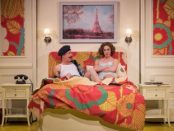
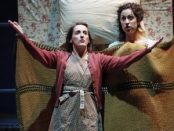
At one point stumbling around in a sleep mask and wearing a colorful nightgown, the 88 year-old Estelle Parsons has a field day as the 88 year-old Evelyn, a former journalist for The International Herald Tribune. Ms. Parsons delightfully barrels through the play growling, cursing, and exhibiting vibrant physicality. Being the skillful old pro that she is, Parsons has the technique to tone it down when needed. [more]
As the women find themselves further and further in the future, it is how each reacts and is forever changed that give the play its emotional weight. Two manage to adjust quite well; one not so much. The whirlwind of mid-twentieth century America takes its toll on these intelligent travelers, outwardly in their clothing and inwardly on their attitudes toward life. The paths each takes at the end of "On the Verge"aren’t just theatrically satisfying—having been telegraphed subtly in many ways—but actually quite moving. Suddenly Overmyer, with the decided support of three fine actresses, ably directed by the astute Laura Braza, turns these silly, living cartoons into flesh and blood. And, that is the real journey of On the Verge. [more]
A leggy dark blonde young woman with her hair pulled up, wearing a black skirt, a patterned short gray blouse and high heels walks through the audience and onto the bare black stage. She begins dancing and then is joined by two lovely young female dancers in psychedelic tunics and all three perform Valerie Mae Browne’s beautifully choreographed modern dance accompanied by mellow pulsating electronic music. It’s all something that would not be out of place on a program at The Joyce Theatre. [more]
The Wheelhouse Theater Company presents this fast-paced and faithful version of the romantic classic. Co-directors Jeff Wise and Matt Harrington have inventively pared down William Shakespeare’s enduringly resonant tragic play to 90 minutes. Mr. Wise and Mr. Harrington’s staging is visually compelling with a number of clever touches. Mortal wounds are indicating with the unfortunates tossing red rose petals. Juliet delivers a speech as a stand-up comedy routine with recorded audience laughter heard. That there’s no actual balcony doesn’t really matter as that famous scene is so finely blocked and performed. [more]
Rolling Stone magazine’s 2014 controversial article "A Rape on Campus: A Brutal Assault and Struggle for Justice at UVA" about an alleged rape at a University of Virginia fraternity house seemingly has inspired the author of this play, Kim Davies. Ms. Davies has taken many of the facts of that story and woven them into this fictionalized narrative that falls short of being compelling. [more]
Samuel D. Hunter’s latest play, "The Healing," is a commission by Theater Breaking Through Barriers, dedicated to advancing the work of performers with disabilities. Not surprisingly, the play gives roles to six disabled actors out of the seven characters in the play, and they acquit themselves well. This story of a reunion of childhood friends in their thirties who have gathered for the funeral of one of their members is made very real by the acting of the cast. The problem with the play is that it appears so tentative and low-key that the explosion we keep waiting for never happens. Under the direction of Stella Powell-Jones, the healing of the title is so subtle that the play could be said to be anti-theatrical. [more]
The American Sephardi Federation’s production of a greatly compressed "Othello" at the beautiful Center for Jewish History. This was the third of a series of three shows staged to showcase the talents of David Serero. He’s a Moroccan Sephardic Jewish performer who has charm and charisma. [more]
Chris Doi winningly conveys Ichiro’s anguish and holds attention as this leading character with his emotional performance. The personable Glenn Kubota is deeply gentle as Pa, and Mr. Kubota performs a beautiful movement piece with his hands fluttering as birds during a storytelling segment. As Ma, Karen Tsen Lee poignantly descends deeper into her delusions with histrionic expertise that Japan won the war and is marvelously engaging during her fable-like recitations. [more]
Ms. Feiffer’s rudimentary characters communicate by the sledgehammer approach to comedy. Until the mawkish finale there is a barrage of zingers, one-liners and vulgarisms. If a theatrical awards body had a category that honored the most abundant use of the word “fuck,” this play would be a major contender for such an honor. [more]
Now having its American premiere in repertory with "Confusions," one of Ayckbourn’s earliest plays, with the same actors in both, the production which is directed by the author is from the Stephen Joseph Theater, Scarborough, where most of the author’s plays have had their world premieres. This is a powerful and engrossing study of friendship, love, jealousy, competition and betrayal. [more]
"Blankets and Bedtime: 3 Restless Plays" is produced by the theater company A Pixie Theory and is presented as part of The Planet Connections Festivity.The stated theme of the three plays is “the extremes people will go to in the name of self-preservation.” Erik Champney succeeds at dramatizing this concern and also demonstrates that he is a talented and imaginative playwright. [more]
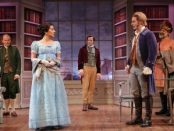
Aside from the obvious misogyny of Shakespeare’s comedy for modern audiences, there is the problem of the heroine’s unpalatable final speech in which she berates women for not being more subservient to their husbands. Lloyd’s solution is to frame the play as a country-western beauty pageant to choose “this year’s Miss Lombardy” whose emcee sounds an awful lot like presidential candidate Donald Trump. In fact, there is a good deal of satiric political talk with comedian Judy Gold as suitor Gremio doing an interpolated monologue complaining that the director is a woman and that “we’ve got a broad running for President.” [more]
Adam Rapp’s plays are often about loners and people outside of mainstream society. "The Purple Lights of Joppa Illinois" now at Atlantic Stage 2 in a production directed by the author falls into this category. Its strength is that the play is a detailed well-developed character study. However, as a drama, it seems more like a sketch or a section of a longer play yet to be written leaving many unanswered questions. [more]
"Now I Ask You" turns out to be comedy of pretentious New York bohemians in 1916, while "Recklessness" is a Strindbergian psychological revenge play. While both have hints of the more famous plays to come, they also stand on their own as the work of a major playwright trying to find his own voice. Whatever you think of the plays and whichever one turns out to be your favorite, Alex Roe’s staging is always entertaining and the plays are truly surprising and unexpected. [more]
Gregory S. Moss’ "Indian Summer" at Playwrights Horizons is an uneasy mix of two stories, the first about the doomed romantic encounter between two teens and the second concerning the quiet existential suffering of an elderly man. Despite sudden shifts of tone, Moss manages to leave the audience feeling deeply for each of these characters. [more]
'Universal Robots" uses historic characters like journalist and playwright Capek and President Masaryk of Czechoslovakia, characters taken from Capek’s play like Rossum, Helena and Radius, as well as fictional characters to fill out Rogers’ story. Seen in a different version at the 2009 New York Fringe Festival under the same name, "Universal Robots" has a long, leisurely expository first act and an exciting, tense, fast-paced second act. Director Jordana Williams allows the talky, intellectual ‘play of ideas’ in the first half to be a drag on the exciting, adventurous, plot-driven second half with its unusual twists and turns. [more]
First performed in 1979, this is a relatively early work by the supreme British dramatist Alan Ayckbourn (b. 1939) who is as of this writing up to his 79th play, "Hero’s Welcome.' The new play is having its U.S. premiere at 59E59 Theaters and performs in repertory with "Confusions." "The Norman Conquests" is among Ayckbourn’s best-known works and "Confusions" is representative of his trademark style and concerns. Human behavior in all its complexities is dramatically rendered with depth and humor in a boldly theatrical and inventive manner. Both productions come from the Stephen Joseph Theatre, Scarborough, which has staged almost all of Ayckbourn's plays and from which he retired as Artistic Director in 2009 but where he continues to direct plays. . [more]
Since his youthful career heyday of the 1980’s with major roles on Broadway in Neil Simon plays and starring in the enduring cultural touchstone film "Ferris Bueller's Day Off," Mr. Broderick has since continued on in such films as "Election" and the Broadway smash hit, "The Producers." Now 54, he is stockier, his hair is gray and his features are fuller but his charisma and commanding talent remains as does his inimitable grin and twinkling eyes. Considering his indelible past successes, this role is quite challenging and he is winningly up to it. Much of the part consists of relatively uninterrupted monologues that Broderick terrifically delivers that range from harrowing recollections to a visit to a brothel that is hilarious. His characterization of this drab, depressed and tormented man is very moving and is a joyous case of riveting star/character acting. [more]
There’s a cascade of military interrogations, implied torture, romantic interludes, sex talk, political sloganeering, vague reminiscences, and other semi-comprehensible digressions that fill the time and that by its conclusion don’t add up to much. Initially there is a modest sense of interest in attempting to discern the events and characters depicted, but that soon evaporates and is replaced by numbness. [more]
An all-around tour-de-force, Dan Hoyle’s "The Block" is a stark portrayal of the times at hand in the Bronx. Though things have changed somewhat since the dangerous days of the 1960’s, the borough is still going through a major shift which has yet to be completed. Filled with interesting, thoughtful and sympathetic characters, this is a play that offers a harsh glimpse of some people’s realities, and that in itself inspires very real self-reflection. Complemented by excellent direction and seamless production design, the characters of "The Block" leave one with the sense that though the struggle seems--at times--absolutely insurmountable, every day is a new opportunity to escape the past as long as one holds onto that most sacred trait: hope. [more]
This is heady theater and demands concentration. However, the excellent cast of four made of Geneva Carr (Theatre World Award winner for "Hand to God"), Charlie Cox (Netflick’s" Daredevil"), Heather Lind (AMC’s "Turn: Washington’s Spies"), and Morgan Spector (Drama Desk Award nominee for "Russian Transport") make this an unforgettable evening in the theater. The versatile cast play 20 characters, some as many as six, without changing costume but with different accents and demeanors, while the succeeding scenes take place almost as fast as the synaptic functions in the brain. The play which alternates in its telling of the three stories is also divided into three parts: "Encoding," "Storing' and "Retrieving." Before each section the cast perform hand gestures create by Peter Pucci that mimic the synaptic actions in the brain. [more]
As with many CSC productions, the modern dress costumes (here designed by Ann Hould-Ward) are entirely in black and white. A small handful of props are used (a tin of buttons, an onion) but the production is basically reduced to its dialogue and story. Since there are no breaks of any kind, the scenes segue one into another without transitions. As a result the audience has to stay focused on the play or it finds itself somewhere new and doesn’t know how it arrived there. The lighting design by Jane Cox alternates between light and dark without creating much atmosphere on the empty stage. [more]
It’s clear why Edward Albee’s "The Sandbox" (1959), María Irene Fornés’ "Drowning" (1986) and Adrienne Kennedy’s "Funnyhouse of a Negro" (1964) are considered modern absurdist classics. They hew to the territory the truly greats like Samuel Beckett, Eugene Ionesco, the Dadas and Alfred Jarry explored, with Beckett the most influential, particularly in the first two plays, interpreting them with an American spin. If they are not as effective—if they seem somehow clichéd—the playwrights cannot be faulted. The Art World simply moves on. [more]
That’s the familiar set up of author Dan Moyer’s engaging contemporary romantic comedy of the two-character "Half Moon Bay." As Mr. Moyer’s lost souls get to know each other, personal secrets are revealed. These revelations are sometimes dark but never seem like gratuitous theatrical gimmicks. Just the believable problems that real people could have. Moyer’s excellent dialogue contains so many sharp and wise lines that precisely delineate the characters. A great asset is that they’re spoken by two gifted actors who effortlessly make it appear as though that the play was written just for them. [more]
British film star Rupert Everett gives a bravura performance as playwright and author Oscar Wilde in the Chichester Festival Theater revival of "The Judas Kiss" by David Hare now at the BAM Harvey. His nuanced performance is remarkable considering how little active the play allows him to be. Wilde dominates the plot even though he sits center stage in the play’s two acts, first in a hotel room in London immediately before and then in a villa outside of Naples immediately after his arrest and incarceration for “gross indecency,” what Victorian England called homosexuality. This is a Wilde we haven’t seen before: rather than tossing off quips and aphorisms, this is a man who is deeply in love and conflicted about questions of self-identity and legacy. He attempts to remain true to his persona at a tremendous cost. [more]
Part of the 2016 Brits Off Broadway lineup at 59E59 Theaters, James Fritz’s "Ross & Rachel" provides a more emotional, poignant and truthful story than what is expected when thinking of our favorite “friends” and their intense relationship. Molly Vevers takes on the role of both partners in a relationship plagued by different viewpoints and dealing with life’s hardships as a couple. This very talented actress relies on wit, candidness and sentiment to tell her story and doesn’t hold back when giving audiences the complete picture – in both the joyful and difficult times. While most people go in thinking that the show is going to be a comedic portrayal of the couple we know and love from television, Ross & Rachel flips the script and leaves you pondering the true meaning of life and one’s identity while in the confines of a relationship. [more]
Playwright William Francis Hoffman offers a quirky, weirdly compelling if not totally satisfying take on contemporary American life. Mr. Hoffman’s dialogue is richly expressive bordering on poetic and enhances his true to life melancholic characters. The plot is slender and problematic. It has the sense of a symbolism-laden short story adapted for the stage rather then a developed play. [more]
Although Quiara Alegría Hudes’ "Daphne’s Dive" follows the lives of seven fascinating people for whom Daphne’s North Philly bar is their true home, it is no "Cheers" and definitely no "The Iceman Cometh." No, "Daphne’s Dive" is a far gentler affair than either of those and more fearless for its gentleness. The seven people in this working class bar and grill affect each others’ lives as the play takes them from 1994 to 2011—and the audience is changed along with them. [more]
A seamless production in many ways, James Phillips’ latest is nothing short of ambitious, and Rosabella Gregory’s music is the perfect companion. Thoughtful and engaging, the enchanting collection of English fairy tales known as City Stories is a serendipitous affair. [more]
She ran down the list of her Broadway co-stars: Ricardo Montalban, Donald O’Connor (the disastrous Bring Back Birdie), Antonio Banderas (upon whose shoulder she placed a shapely leg in Nine) and, her admitted favorite, Dick Van Dyke, with whom she co-starred in "Bye Bye Birdie" from which she sang “A Lot of Livin’ To Do” giving it a sassy, winking interpretation making it impossible to deny that the title is very on the mark. It wouldn’t be a Chita Rivera show without a mention of her iconic Anita in "West Side Story." A meeting with Leonard Bernstein to go over her songs just after she had been cast was nerve-wracking as she never had considered herself a singer. History has proved that her singing almost equals her dancing. “A Boy Like That” and “America,” complete with some mini-choreography were nothing short of electrifying. [more]
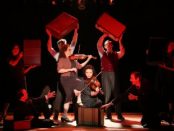
The production of "Indecent" now on the stage of the Vineyard is remarkable on many levels, not the least which is how engrossing it is considering the events are all historical record and the play deals with several serious ethical issues. It is ultimately an extremely moving document of human achievement, betrayal, and destruction. Cheers to Paul Vogel and Rebecca Taichman and their superb ensemble cast for this memorable theatrical evening. You will not be untouched by the final scene. [more]
Wearing a black suit, white shirt and black tie, the mature Morton with his expressive face, smooth resonant voice and fluid physicality, vividly captures the essence of “The black Lenny Bruce” at various stages of his life. He forcefully addresses and engages the audience while at a microphone during his act, backstage, sitting near the front row of the stage or walking through the theater. It is one of those memorably electrifying performances to be treasured. [more]
As the actors interact with each other and work to share this story, the spirit and tenacity in which they do so is something remarkable. Their presence and focus in bringing a significant time in history to life leaves the audience with chills. While it is so important to pay attention to the subtitles in this production, as it signifies when time and seasons pass, it is hard to tear your eyes away from the living story taking place on stage. With a set design also by K.K. Wong that uses simple props to illustrate the basic lifestyle of the residents, audience members get a feel for the day-to-day life in this community. At times, it is challenging to keep up with processing the subtitles and watching the action on stage, and intense concentration is essential in understanding the continued series of events. [more]
Many members of the American public and the journalism community continue to revere Edward R. Murrow as a paragon of integrity in the field of news reporting. Due to the skillfully writing of Joseph Vitale, Joseph Menino’s tremendous performance and its strong physical production, Murrow affirms his noble legacy. [more]
"Strays" is a challenge to describe as it is such a mash-up of traditional theatrical conventions that it doesn’t easily fall into any one category. Directed by Cion, Strays moves as through a haze, scenes folding one into the other, transitions covered by bizarre song and dance breaks (revolving around cats), characters speaking on top of each other almost constantly. The scenic design by Kerry Chipman is straight forward and aided largely by a projector, which displays videos by Maia Cruz Palileo throughout the production. The media element adds to the bizarre tone of the show, and though some of the videos played are designed to help advance the plot, others are simply trippy displays of superimposed kitties floating through the air. [more]
On the ferry, audience members listen to a previously downloaded soundscape which includes a voice-over by Katie (played by Emma Meltzer) who has always seen ghosts and ends up investigating her family inheritance as an archeologist, plus a moody original score by Cameron Orr. Upon docking in the working port on the Brooklyn side, audiences walk three minutes to the Waterfront Museum Barge where the live performance begins on the pier in which four actors carry crates slowly towards us. The audience is then invited into the Museum Barge for the actually theatrical performance. [more]
Meet Sam, a struggling New York actor whose day job is as the reservationist for a popular albeit fictional Manhattan restaurant. Seemingly surrounded by phones at every turn, Ferguson’s Sam has devices that connects him to the chef, the hostess, his manager, as well as to the outside World and those looking for a much sought after reservation. Demonstrating a full spectrum of physical and vocal capabilities, Ferguson manipulates his body and voice to bring to life the many characters that Sam interacts with over the phone. [more]
Playwright Rick Pulos has crafted a well researched and emotionally involving documentary drama that goes overboard with its multimedia elements. The writing is a combination of fine simplicity and the pseudo-poetic that achieves a tender sincerity. [more]
Before the fascinating biographical exploration "Gorey: The Secret Lives of Edward Gorey" begins, the audience is able to walk around the stage and see up close the totemic objects used in the show.
Gorey’s fur coat, an old record player, an artist’s table, vintage luggage and trunks, shelves of books and records are among the items on display. The back wall of the stage is adorned with reproductions of manuscript pages of his writing and drawings and during the show home movies, animations, slides of his work, and images of his residence are projected. [more]
As Hungary took a turn to the extreme right in recent years, anti-Semitism and xenophobia not only raised their heads, but became de facto pillars of the new government. The Place We Built delves into the personal plight of an ad hoc blending of often contentious, mostly loving twenty-somethings who inadvertently wind up building and creating a meeting place of like minds in the old Jewish Ghetto and thereby defying and antagonizing the powers-that-be. [more]
Director and choreographer Kristin Marting masterfully coordinates everything into a spectacle with sensational movement and dance. Robert Lyons who is credited with “Text by” has done a skillful, flavorful and faithful distillation. Ms. Marting and Mr. Lyons jointly conceived and adapted this production. It’s initially stimulating but the incessant franticness of their vision becomes distracting. [more]
Jessica Lange and Gabriel Byrne joyously enter through a porch door after the sounds of the ocean have been heard. Their love and attraction for each other is palpable. Mr. Byrne embraces her and with his Irish accent says, “You’re a fine armful now, Mary, with those twenty pounds you’ve gained.” It is instantly clear that this revival of "Long Day’s Journey into Night" is going to be beautiful. [more]
The cheery Mr. Bowers also explains that in the mime tradition only mimes in whiteface are silent. He simply but breathtakingly mimes a multitude of actions, objects and situations that precisely conjure up the intended imagery. Written by Bowers, the show is comprised of a series of stories of varying length that perfectly transition from one to the other. [more]
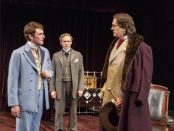
Red Bull Theater which has specialized in Elizabethan and Jacobean tragedies has moved on to the 18th century with Marc Vietor’s exquisite and stylish revival of "The School for Scandal," Richard Brinsley Sheridan’s famous but rarely revived classic comedy of manners. With impeccable casting and a pitch-perfect production team, this School is as witty, delightful and accessible as one could wish. The 18th century look of the play is both historic and satiric. Anna Louizos’ clever settings transform one into the other with the turn of a wall or a door and a rearrangement of the furniture, highlighted by Russell H. Champa’s lighting. Her witty use of props (a chamber pot, a trunk, empty picture frames) adds to the fun. [more]
The show’s creator and director Ramesh Meyyappan also plays a character named Nabokov. The Lolita author Vladimir Nabokov was a renowned butterfly enthusiast. Naomi Livingstone plays Butterfly, a kite maker who hunts, kills and mounts butterflies. She meets Nabokov and they fall in love. Chris Alexander plays a customer who visits Butterfly’s shop and falls in love with her. Their relationships are ultimately marred by violence and tragedy. [more]
Shanahan’s adaptation has a great many delicious one-liners and double-entendres (“I don’t go out for mutton when I can have filet mignon at home;” “Keep referring to me as a plate of food and you’ll be dining a la carte;” “I put a leash on my ‘inner beast’ and take him out for a walk every once in a while;” “Looks like you have a bad case of the puberty, kid. You should see a doctor,”) as well as witty exchanges between the warring couples. Much of the fun of the play is seeing the same actors return over and over again in different roles often within a matter of seconds. Best is Kelly Curran who throws herself into four very different women, one more enticing than the other: the Parisian vixen Claudia Pontegnac, the tempestuous Italian Fabiola Soldignac, the oversexed New Yawker Mandy, and a very sexy French maid in bouffant costume with a feather duster. [more]
Ms. Duffin portrays the heroine as well as a multitude of characters using a strong Irish accent, expert physical transformations and her strong presence. Barefoot, wearing plaid lounge pants and a blue T-shirt Duffin holds forth on the black walled stage that has a few slits of lights and a floor strewn with earth. Though she is commanding, the nature of the material ultimately renders her performance and the overall experience of the play as wearying. [more]
Blizzard doesn’t miss a beat as she keeps the whole room in stitches during the course of this 80 minute performance. Her wit, charm, and wisdom are comedic gold and make for a flawless piece of entertainment. Hidden underneath the humor is the important theme of togetherness and female solidarity as she emphasizes needing your girls to get through life, as they understand many of the emotions/dilemmas that men aren’t able to understand. It is empowering to hear her truth about not trying to be perfect and admitting that sometimes the “crazy” is proof that you are doing this whole thing (“adulthood” and “parent thing”) correctly. [more]
While many of the scenes are right on target, others seem too metaphoric and anarchic to make much impression, while others take on too many targets to make their point. The best ones deal with our long-held accepted beliefs both of our ways of speaking and our societal conventions. In its American premiere, Revolt. She Said. Revolt Again. is challenging theater which doesn’t always land where it wants. However, Alice Birch is definitely a unique new voice in the theater and someone to watch closely in the future. [more]
Playwright Henry Naylor achieved prominence in Great Britain as a television writer most notably for the satirical program "Spitting Image." This work is not groundbreaking but it does very effectively depict the two women and their plights with shrewdly imparted historical and cultural details that conjure up exotic imagery reminiscent of David Lean’s epic films. Humor and tragedy are seamlessly combined. There are topical references to Donald Trump, Ted Cruz, drone strikes and the British tabloids as well as 19th century specifics. [more]
In theory, the material that "A Pregnant Pause" attempts to provide commentary on is thought-provoking. However, this production is one which unfortunately stumbles and falls within its very first minutes and never recovers. Calvin Knie and Carla Duval play the lovers Bob and Susan, respectively. Though the duo deserve some credit for their efforts, there is hardly any chemistry to be found on stage, and thus the entire premise on which the play is founded is hardly believable. Knie turns in an absolutely enigmatic performance as Bob, one which is confusing and muddled, lacking clear intentions and any kind of subtlety. He constantly resorts to screaming and yelling, a confusing choice which is often unfounded and simply out of character. [more]
You might wonder why Morag, Fiona’s mother, in Sharman Macdonald’s groundbreaking Scottish play, "When I Was a Girl I Used to Scream and Shout," is so repressive about sex. What the program doesn’t tell you about this play having its Off Broadway premiere at the Clurman Theatre is that it was first produced in 1984 in London and that the daughter’s childhood goes back to the fifties when female sexuality was frowned upon. Then it becomes obvious that this play is now a period piece dealing with a time when feelings about female sexuality were changing but the older generation was still stuck on the other side of the divide with the teachings of their childhood. While the play seems to be two generations behind the times, what the play continues to be is a blistering portrait of a toxic mother-daughter relationship. [more]
The Royal Shakespeare Company’s "King and Country: Shakespeare’s Great Cycle of Kings" is a magnificent achievement and a fitting tribute in this 400th anniversary of the bard’s death. Not only are the four plays an accessible presentation of what is often confusing for Americans unversed in British history, but taken together they are a very great study in the use and abuse of power and authority in this year of our own contentious political wranglings. Gregory Doran’s unfussy and intelligible productions set a bench mark by which others will be measured and offers star performances that should become legendary. [more]
Van Hove sets his version in a modern classroom. When the curtain goes up we first see the girls who will later accuse various people in Salem, Massachusetts, of having bewitched them, seated at desks and singing in unison. The curtain descends and then the play begins with Miller’s first scene. Puritan Reverend Samuel Parris has caught his daughter, his niece Abigail Williams, his black servant Tituba, and other girls in the community dancing in the forest around a cauldron, all forbidden behaviors. On seeing him, his daughter Betty has become catatonic. When expert witch hunter Reverend Hale, who has been sent for, questions Tituba, she confesses to communing with the devil, an idea he plants in her mind. [more]
Florian Zeller is the most famous French playwright you probably never heard of. He won France’s highest theatrical honor, the Moliere Award, in 2011 for his play, "The Mother," and the Moliere Award again in 2014 for "The Father." This last named international hit is currently running in both Paris and London with major stars in the leading role. Manhattan Theatre Club now brings the Christopher Hampton translation to Broadway with Frank Langella in the title role. As André, an 80-year-old man beset with dementia in which his reality keeps shifting, Langella turns in a virtuoso perform but you won’t be bored for a moment. [more]
This trio certainly embodies the dynamic of most family relationships – with sisters struggling to get along and the eldest child having to take responsibility. Comerzan acts as a parent to her youngest sister and uses her compassionate nature to try and take charge of the situation. D’Angelo is the firecracker in the mix and keeps the audience in stitches with her snappy one-liners and sarcastic comments. Krane plays well to the youngest child part – attempting to be understood while making sense of her bizarre hobby. As the play develops, the audience learns about the fourth sister, Margo, played by Leslie Marseglia, whose life path and relationship with Naomi has greatly impacted her sister’s life and means of coping. [more]
On stage, Birbiglia’s presence differs significantly from that of his fellow comics. It is no exaggeration in referring to Birbiglia as a soft-spoken individual, a term not often associated with a stand-up comedian. Birbiglia embraces his subtlety as his calling card, and this unique quality is the trait that differentiates his style from that of others. Further, because of the way he controls his onstage presence, when he does raise his voice or get particularly physical, it is even more effective as a result. This style paves the way for many different forms of comedy and jokes along the way, thus keeping the show free of any break in pace or monotony. [more]