Off-Broadway
Whether Anthony Anello’s "let’s talk about anything else" is a dark comedy, or a thriller with horror overtones, or drama about the effects of guilt, it is the sort of play that doesn’t need its first act which is used simply to introduce the characters with the play really beginning in its second act. However, it isn’t very good at introducing its characters as it takes a long time to find out the names of the seven friends on stage. It does have a smashing and shocking ending suggesting the lengthy play has a good story that needs to be reworked and shortened. [more]
The Wild Duck
The latest revival has been directed by Simon Godwin, artistic director of Washington, D.C.’s Shakespeare Theatre Company, in a co-production with Theatre for a New Audience. This revival uses the contemporary version by David Eldridge, first seen at London’s Donmar Warehouse in 2005 which combines some of the minor characters, shortening the cast list. While the text is clear, the uneven acting and interpretation of the characters undermines the play’s powerful and tragic resolution. [more]
Relative Stranger
Director Ryan Cunningham has helped Ms. Ali shape the show into a strong piece of theater. There are sound cues (it's raining so you hear rain, that sort of thing) and it helps make it feel less like standup and more like a show. Overall, Relative Stranger is a solid evening of theater. Here's hoping the short run extends, or maybe gets adapted into a series. The story is worth it. [more]
The Essentialisn’t
"The Essentialisn’t" is a complex piece. Davis explores a world of uncertainty and finds her voice while seeking to answer one question: can you be Black and not perform? This question is ultimately unanswerable, and so the show doesn’t try. The personal anecdotes and philosophizing are rarely satisfying, often not building to anything in particular, but the show stays entertaining and interesting off the back of Davis’ force of personality. [more]
we come to collect: a flirtation, with capitalism
Jennifer Kidwell’s "we come to collect: a flirtation, with capitalism" is not so much a theatrical production as it is a revelation—an offering, a conjuring, a glittering séance of self-examination draped in velvet and lit by the shimmer of a slightly crooked chandelier. Co-conspirators Kidwell and Brandon Kazen-Maddox are not here to collect, as the title slyly suggests. No, far from it. They have arrived bearing gifts: extravagant, irreverent, and comforting…gifts of laughter, of vulnerability, of truth. Gifts that ask nothing in return but your full, unguarded presence. Premiering at The Flea Theater in TriBeCa, this audacious production gleefully dismantles the social and economic scaffolding that props up our daily lives, only to replace it with something far more anarchic, more tender, and ultimately more human. [more]
Lady Patriot
Ted Lange’s "Lady Patriot" reunites the author/director with his cast mates from The Love Boat series, Jill Whelan and Fred Grandy. Leaving that aside as it has little to do with his new historical play, the third in Lange’s American history trilogy, "Lady Patriot" is based on true events that took place in the Jefferson Davis White House and the neighboring house, the Elizabeth Van Lew Mansion, in Richmond, Virginia, during the Civil War, 1861 – 1865. While the play purports to tell the story of the leak in the Davis cabinet and the successful Union spying ring in the Confederacy in Richmond, it lacks urgency and tension even at the end when the Confederacy is about to come to an end. Told in 18 short scenes, the play could use a good deal of pruning of its two and a half hour running time. [more]
Color Theories
And by the time we arrive at "Fantasmas"—his 2024 HBO series that feels less like television and more like a guided tour through the psyche of a queer mystic armed with a glitter pen and a penchant for unresolved metaphor—it becomes abundantly clear that Torres is not dabbling in a style so much as building a universe. "Color Theories," then, is not an outlier but an extension—another window into that universe, pastel-hued and ever-so-slightly haunted. But don’t call it a play—at least not in the Off Broadway sense. Call it a chromatic séance, a theatrical mood board, or perhaps a dispatch from the dreamworld of a lonely child with a glitter pen and a grudge against Helvetica. [more]
Hucka
The background on the story indicates that "The Adventures of Huckleberry Finn" by Mark Twain was an inspiration for the story, but the only connections to that book seem to be the idea of traveling on a river and speaking a dialect of English typically associated with poorly educated people. Two examples of the form are in the first two scenes. Hucka (Brooke Elizabeth) in the opening monologue says, “I don haf ta pay hardly pay no attention to ‘em." And in the next scene, Cain (Carson Merrick) says, "Ya tol me ya war gointa finish this ‘fore sunup.” [more]
House of McQueen
Crafted with sensitivity and spectacle by playwright Darrah Cloud and brought to life with unflinching precision by director Sam Helfrich, "House of McQueen" dares to unravel the mythos of the late, great Alexander McQueen (1969–2010), the enfant terrible of British fashion. Here, the theater becomes both confessional and catwalk, memory palace and mausoleum, as the production careens through the designer's short but incandescent life. McQueen's nephew, Gary James McQueen, serving as Creative Director, lends the production an air of intimacy and authenticity rarely achieved in biographical theater. This is no sanitized tribute, no saccharine memorial. It is raw. It is fractured. It is McQueen. [more]
The Life and Death of King John
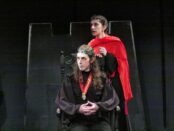
An element of the story is the behavior of the English noblemen. They switch allegiances depending on the behavior of either King John or King Philip II. It is not easy to follow these shifting loyalties in the context of the internecine conflict being played out, and this is made more difficult by the fact that many of the characters are portrayed by the same actors. Since some in the ensemble are tasked with playing two or three characters, this introduces an element of confusion in the production. Given the constraints imposed by the need to play multiple characters, the cast makes a solid effort to achieve a reasonable level of transparency. [more]
Twelfth Night (Free Shakespeare in the Park)
When the play begins those who know the original will recognize that Ali has edited the text: the first two scenes have been flipped which makes perfect sense letting us know that Viola, the heroine, has been shipwrecked off the coast of Illyria, and that she has lost her twin brother Sebastian. (She decides to dress in male clothing in order to see the lay of the land as a single woman in a foreign country.) Unfortunately some of the other edits, including the most famous scene in the play in which the unloved puritan Malvolio reads out loud the forged letter he has received with the famous lines “Some are born great, some achieve greatness, and some have greatness thrust upon ‘em,” are mistakes. Much of the edited material makes the play dark so the intent may have been to soften the play’s somber side, though it does eliminate much of the characters’ best material. [more]
Amaze
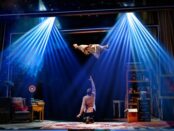
British illusionist Jamie Allan has brought his aptly named magic show "Amaze" to New World Stages and it is truly awesome. His act is so low key that one doesn’t at first realize how remarkable his tricks are taking many familiar and famous magic acts one step further – like the card trick with a deck of blank cards. He also uses his show to build the theory that children are more susceptible to magic and illusion and that we all need to return to our childhood memories and imaginations. [more]
Ava: The Secret Conversations
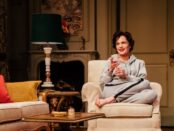
American actress Elizabeth McGovern is best known today for her role as Lady Cora, Countess of Grantham, in the long-running "Downton Abbey" series. However, she is also an Academy-Award winning nominee for her performance in the film of "Ragtime" as chorus girl and actress Evelyn Nesbitt. Since the early 1990s when she moved to London, she has often appeared on the West End stage. Now she has come to our shores as Hollywood icon Ava Gardner in a play of her own devising: "Ava: The Secret Conversations," adapted from the 2013 book of the same name by celebrity journalist Peter Evans and Gardner herself.
Although not the first name that comes to mind when one thinks of actresses to impersonate sex symbol Gardner, McGovern is charming and surprising, profane and coy, an independent woman who knows her own mind and has a great deal to say. She gives off flashes of fireworks along with the witty dialogue taken from Gardner’s own words. She is not only convincing but sympathetic as she recounts the mistakes and tragedies in her life. On stage throughout is Aaron Costa Ganis as British journalist Evans who we don’t learn as much about but makes an interesting foil for the flamboyant Gardner, even in these later years after her screen fame. [more]
Road Kills
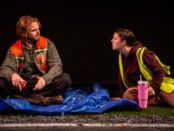
The two characters at the center of the story are Owen (D.B. Milliken) and Jaki (Mia Sinclair Jenness). Owen is a man in his late 20s who works as the roadkill collector in a rural county in Wisconsin. Jaki is a 20-year-old woman who is doing a six-week sentence for a drunk driving violation. What unfolds over the course of the play is how these two very different people discover an emotional connection neither had ever considered which is at the core of empathy: the understanding and sharing of someone’s feelings. [more]
Sulfur Bottom
Part of the problem with the play is that it attempts to cover too many topics in the form of a domestic tragedy: pollution, industrial waste, climate change, toxic chemicals, poverty, red-lining, foreclosures, destruction of animals, etc. It also cannot make up its mind whether its style is realism, surrealism, expressionism, symbolism or even magic realism. Many of the elements seem extraneous, tangential or not fully unified to the plot such as the talking animals. There is an interesting play hiding in this material but the playwright does not seem to know how to shape his ideas and wants to cover everything in this one play. [more]
The Animals Speak
While the ensemble is solid in their portrayals of the characters, the play lacks a clear dramatic line regarding the main point of the story. Bossert's portrayal of Disney and his emotional struggles appears to provide the scaffolding for a story that, in reality, is about Lillian Disney and her influence on the decisions that will ultimately be attributed to Walt. Her careful guidance of Walt's presentation style ultimately enabled him to speak in public with greater confidence and engage more effectively with his audience. Her conversations and skillful guidance of Mary Blair's view of herself as an artist, independent of her husband, led to Mary's increased confidence in herself and ultimately to Walt's recognition of her talent. [more]
well, i’ll let you go
"well, i’ll let you go," Bubba Weiler’s exquisitely devastating new work, staged with unpretentious yet profound grace by director Jack Serio leading a magnificent cast at the Space at Irondale in Brooklyn is, in a word, haunting. The play unfolds as a poignant, slow-burning elegy to ordinary lives and the extraordinary grief that can shatter them. It is a tender meditation on loss, memory, and the fragile architecture of community—one that both embraces and exposes the complex, often contradictory, human heart. [more]
Lili/Darwin
"Lili/Darwin" is a captivating one-woman show from writer/performer Darwin Del Fabro ("They/Them," "A Midsummer Night’s Dream") that explores her own transition as well as that of Danish painter Lili Elbe, with Del Fabro playing both in alternating segments. Elbe was a trans woman in the 1920s/30s and one of the first people to ever get sex reassignment surgery. Del Fabro reads from the painter’s posthumously published journals as a way to reimagine Elbe’s innermost moments contrasted with those of her own. At the same time, she maintains the dramatic distinction between herself and the Danish painter. [more]
Gene & Gilda
The show deals with the emotional impact of their not being able to have children after a series of miscarriages, and finally leading to the diagnosis of ovarian cancer. Gitter adds emotional depth to the story with an understanding and sensitivity to the affection Gene and Gilda had for each other in these moments of stress, culminating in an ending that underscores their love. [more]
Ginger Twinsies
Kevin Zak’s 'Ginger Twinsies" now at the Orpheum Theatre is an outrageous, campy gay stage parody of the 1998 Lindsay Lohan (a true redhead) remake of "The Parent Trap" in which she played fraternal twins, directed by rom-com specialist Nancy Meyers. Much of the humor is based on name dropping of pop culture, film, stage and television lore with “appearances” by Vanessa Redgrave, Demi Moore, Shirley MacLaine, Julianne Moore and Jessica Lee Curtis as well as Ms. Meyers herself. A great many gags come from the Harry Potter movies as well as Curtis in "Freaky Friday" and a plug for her new "Freakier Friday" opening on August 1. You don’t have to know "The Parent Trap" to enjoy the jokes as much of the humor is visual but it helps set up the premise. The laughs come once a minute but not all of them land as successfully as they are meant to. [more]
Transgression
As directed by Avra-Fox Lerner and written by Curtis Fox, the production has many problems, the first being its leisurely slow pace which makes the play seem longer and less dramatic than it is. Written in 19 scenes and taking place on the same Soho loft set throughout, the play is more of a teleplay than a stage play, minus the camera angles and the set changes. Each scene only reveals one new piece of information, a dramaturgically dull way to tell a stage story. In spite of all this, the play might have worked if the acting was passionate and intense but the cool, unemotional style undercuts much of the tension. [more]
Dilaria
How far would you go to be famous on social media? Julia Randall’s "Dilaria" is a stunning exposé of Gen Z 20-year olds, brought up on and addicted to TikTok and Instagram, who spend all their free time on their smart phones trolling the Internet. Making their Off Broadway debuts, rising stars Ella Stiller, Chiara Aurelia and Christopher Briney play very superficial college grads relocated to New York, but Randall gets a tremendous amount of satire from their interactions. The language is raw and sexy, not for senior citizens, but there is much humor in the way these twenty-somethings use words, particularly the latest urban slang. [more]
Open
"Open" is an award-winning love story by Crystal Skillman that uses magic as the emotional hook, taking an audience on a journey through the trials, tribulations, and triumphs of the challenges some people face in the pursuit of love in a socially and politically complicated world. In this case, two young women are drawn to each other by their love of the magical and mysterious. [more]
Out of Order
The idea presented in this prologue is that Holder, after 20 years in his theatrical life, has reached a dead end in his interest in playwriting. He is looking for something to re-energize himself, or he will give it all up and move on to something else. The prologue reader pulls a string, releasing a cascade of 36 folded cards from a box on the ceiling. The claim is that everything that is to transpire is real, and if Holder doesn't complete all of the tasks listed on the cards, he will quit the theater forever. [more]
Angry Alan
John Krasinski, best known for his role as the charming and amiable Jim Halpert on NBC’s sitcom The Office, is inspired casting for Penelope Skinner’s Angry Alan, a perfect showcase for his talents now the opening show at Studio Seaview, the renovated Tony Kiser Theater. In Skinner’s monologue co-created with actor Donald Sage Mackay who first played the part at the 2018 Edinburgh Fringe Festival, Krasinski is Roger, a three-years divorced man, who also lost his executive position job at AT&T and now works as the dairy manager at his local Kroger, a job he hates. Surfing the net, he finds a website called “Angry Alan” which seems to explain his midlife crisis: it is all the result of the “Gynocracy: a female dominated political regime which took over decades ago.” Roger who addresses us directly is still smarting from the fact that his live-in girlfriend Courtney has recently discovered feminism from a community college life class she is attending. [more]
Machinal
"Machinal" makes use of all of these Expressionistic techniques. However, the current production has added tap dancing, practical foley and heightened movement created by choreographer Hilligoss in all of the scenes which both drowns out much of the dialogue and becomes very distracting. Obviously it is meant to emphasize the mechanical aspects of modern life but it also works as a sledge hammer repeatedly hitting the audience over the head with what is perfectly clear in the text itself. It is as though the director and choreographer do not trust the audience to get the message of the play. [more]
Lowcountry
"Lowcountry" by Abby Rosebrock, author of 'Blue Ridge" seen at Atlantic Theater Company in 2019, has a great deal going for it: a fine cast, a play told in real time, scenic design in keeping with the milieu and the plot, and characters quirky enough to keep us interested. However, this talky play doesn’t get where it is going until the last ten minutes and has a great many unanswered questions that perplex as one watches the play. While Jo Bonney’s production is strong on the characterizations, it is weak on pace so the plot seems to go on longer than it needs to and lacks tension until the very end. Ultimately, except for those last surprising minutes, the play eventually becomes tedious and in need of a few cuts – or new devices. [more]
The Man Who Shot Liberty Valance
A famous line from the John Ford film "The Man Who Shot Liberty Valance" is spoken by the newspaper reporter character, Maxwell Scott, near the end of the film, after hearing the true story about the death of Liberty Valance. When asked if he will print the facts, Scott replies: “When the legend becomes fact, print the legend.” These words do not appear in the original story by Dorothy M. Johnson nor the stage version by Jethro Compton. Still, they form the central theme of both. Compton’s play, "The Man Who Shot Liberty Valance," directed by Thomas R. Gordon, is a beautifully realized revival of the 2022 production with most of the original cast. It is a classic story of the Old West presented by a solid ensemble. If you enjoy a good story, well-told, see this one. [more]
Duke & Roya
'Duke & Roya" is an engrossing rom-com with a geo-political background, the sort of story that Hollywood specialized in during World War II. Charles Randolph-Wright’s new play makes use of the war in Afghanistan in 2017 before the American pull out in 2020. The cast is led by television stars Jay Ellis (James in "Insecure") and Stephanie Nur (Aalyiyah in "Lioness") who prove to be engaging company. The cast is filled out by veteran stage performers Dariush Kashani ("The Kite Runner," "The Band’s Visit," "Oslo") and Noma Dumezweni who created the part of Hermione in both the London and Broadway versions of "Harry Potter and the Cursed Child," winning the Olivier Award for Best Supporting Actress. [more]
A Letter to Lyndon B. Johnson or God: Whoever Reads This First
"A Letter to Lyndon B. Johnson or God: Whoever Reads This First" is a gem of a play written, directed, and performed by Xhloe Rice and Natasha Roland. This two-hander makes a connection between a couple of Boy Scouts in the early 1960s and grunts in Vietnam at the end of the decade. While billed as an "absurdist" production, given the various definitions of "absurd," this show is anything but absurd. The words that come to mind are humorous, poignant, comedic, dramatic, provocative, and compelling. [more]
Prince Faggot
In a sharply observed and emotionally layered turn, "Prince Faggot" brings a fresh perspective to the classic "meet the parents" trope—with a royal twist. John McCrea’s George, the openly gay Prince of England, brings his boyfriend Dev (an excellent Mihir Kumar) home to meet his parents: the seemingly progressive Prince William (K. Todd Freeman, masterfully restrained) and Princess Kate (a poised and quietly complex Rachel Crowl). At first glance, the royal welcome is warm, even congenial. But beneath the polished surface lies a prickly nest of social expectation, national identity, and unacknowledged privilege. [more]
Manifest Destiny
Manuel Ortiz’s masterful play "Manifest Destiny" lays bare the complicity of the United States in the overthrow of the Chilean presidency of Salvador Allende and the authoritarian repression of Augusto Pinochet in an engaging, thoughtful and entertaining way. Ortiz’s direction seduces the audience into the darkness of political repression with humor and edgy, light-hearted banter, delivering an unforgettable statement on what happened in Chile and the U.S. organizations bearing responsibility for those events. It is a skillful blend of past, present, and perhaps future, and a show to be experienced by everyone who loves a compelling story solidly presented by an outstanding ensemble. [more]
Prosperous Fools
"Prosperous Fools" is like those 1960s and 70s East Village happenings where one never knew what was coming next. Taylor Mac’s tremendous imagination could use some reining in but his satire is pungent and on target. Like happenings, this is a show that must be experienced to feel the import of the event. And one admires Theatre for a New Audience for risking their funding to offer to stage it. Moliere would be pleased that his 18th century comedy gave rise to this 21st century free-for-all. [more]
At the Barricades
In great theater, history is not merely recounted but resurrected with breath and pulse, defiance and hope. In 'At the Barricades," the indomitable company What Will The Neighbors Say? breathes new life into one of the 20th century’s most harrowing yet heroic chapters — the Spanish Civil War of 1937. We find ourselves in Madrid not as tourists, but as comrades in struggle, embedded within a city and a country fraying at the seams, on the verge of succumbing to the iron fist of fascism. And yet, in the shadow of tyranny, a radiant flicker of international solidarity takes flame. [more]
Medea of the Laundromat
This is not merely a delightful evening of theatre—it is a defiant, sequined middle finger to theatrical complacency. The cast, many of whom trained under the maverick George Ferencz at La MaMa, bring authentic chops to the chaos. Morrison is transcendent, as raw as he is precise. Vath is a hurricane in scrubs (and let it be known she is the hardest working actress south of the TKTS line as she races from her curtain call at Theater Row Theater’s production of Cracked Open to aid and abet the sorceress on the cover of Child Abuse Monthly). Howard’s Jason is laughable, pitiable, and oddly endearing—a fallen hero undone by hubris and soap suds. [more]
Lunar Eclipse
A farming couple who have been married 50 years go out into their western Kentucky field to watch a lunar eclipse. Nothing much happens but, on the other hand, they review their entire lives. There is little we don’t know about them by the end of the eclipse. Under the direction of Kate Whoriskey, Pulitzer Prize-winner Donald Margulies’ latest play, "Lunar Eclipse," with veteran actors Reed Birney and Lisa Emery is extremely poetic and sensitive about people and their feelings. If you are looking for action, this will not be for you. However, if you think plays should reveal the human condition, then you will be caught up in this very human story of lives lived with regrets but always to the best of their abilities. [more]
The Imaginary Invalid
Creating his third outstanding and needed adaptation in conjunction with director Jesse Berger ("The Government Inspector," 2017; "The Alchemist," 2021), Jeffrey Hatcher has salvaged yet another comedy from the classic world theater which has been sorely neglected in the United States. All of these are large cast plays with lengthy speeches that have long needed pruning and updating for contemporary audiences. With Berger’s light touch and swift-paced production, this Molière is not only a delicious treat but a timely satire. [more]
The Wash
Smith’s script, which is heartily laden with day-to-day chatter and feels slightly long, still finds perfect opportunities to divulge important messages about friendship, love, empowerment, loyalty, dignity, and perseverance. The play's conclusion is heartwarming, although there is a missed opportunity for rejoicing, when the ultimate success of the strike is written to occur between scenes. Director Awoye Timpo and dramaturg Arminda Thomas expertly weave the energy of the actors and their keenly intentional listening into a compelling tapestry. Though minimal, the opening choreography by Adesola Osakalumi and Jill M. Vallery is striking; this, and the few instances of singing spur the imagination with thoughts of what a great musical could be born from this material. [more]
Point Loma
Wolf’s direction skillfully manages the emotional tension to maintain the horror element of the story while also paying homage to B-movie scare tactics and tropes. Mulligan uses a device between scenes, featuring brief interludes of Rick and Kim watching scary movies, with Rick displaying fear and Kim being bored. It is an interesting and subtle way of adding definition to the two characters. [more]
Nine Moons
Although Cobb makes references to Iago, Othello’s, second-in-command, and Barbary, the maid to Desdemona’s late mother who brought her up, Nine Moons does not tell us anything we don’t already know from Shakespeare’s play. Since the one thing we are waiting for is Othello’s wooing of Desdemona which will result in their elopement, this does not begin until one hour and five minutes into this 115 minute play. What transpires before that is chit chat about the state of Venice and Cyprus, Othello’s unease in this new city, and Cassio’s army ambitions at odds with his drinking problem, all of which is covered in Shakespeare’s later tragedy. [more]
Chiaroscuro: A Light and Dark Skin Comedy
If "Chiaroscuro" occasionally falters under the weight of its ambition, it ultimately dazzles with its daring. Rahman has crafted a bold, theatrical puzzle box — part satire, part sermon, part séance — that speaks to the depths and contradictions of Black desire in all its shadowed hues. The play doesn’t just shine a light; it refracts it—casting humor and heartache in tandem. With "Chiaroscuro," Rahman leaves us with a final, luminous testament to her unique voice—both searing and sublime. [more]
Eurydice
Orpheus’ song—aching, persistent—guides him deep into the Underworld in search of his lost Eurydice. Whether or not you’ve encountered this myth before, Sarah Ruhl’s "Eurydice" invites a new question: not just will they reunite, but should they? The tension isn’t only mythic—it’s emotional, intimate. As Eurydice teeters between the memory of her father and the love of her husband, the audience is left to wonder: can love pull them both from the brink, or will they vanish into the River of Forgetfulness, together yet apart?
This revival, directed once again by Les Waters more than two decades after he first helped bring Ruhl’s script to life, is a poignant reminder that some stories don’t age—they resonate. The production hums with urgency and heart, made vivid by a cohesive, impassioned ensemble that grounds the myth in emotional truth. [more]
Blood, Sweat, and Queers
In this Czech play, a 1930s transgender/intersex athlete, long forgotten, is brought back to center stage. Yet one can’t help but be disappointed at how little this play actually has to say about its ostensible subject matter of professional sports, fascism, persecution, transgender and intersex people, or even Zdeněk himself. Excellent directing and compelling performances don’t save a cruel script. Zdeněk never gets his moment to speak. Instead, he rides off into the sunset to be forgotten again. [more]
Cracked Open
At an hour and 40 minutes, "Cracked Open" is an earnest but often exhausting theatrical experience. Its heart is unquestionably in the right place—tackling the vital and still-stigmatized subject of mental illness with sincerity—but the journey can feel more dutiful than illuminating. Despite these shortcomings, the cast’s unwavering commitment and playwright Kriegel’s courage in confronting such difficult terrain deserve commendation. [more]
Seagull: True Story
Now premiering at La MaMa’s Ellen Stewart Theatre in a co-production with the MART Foundation and En Garde Arts, "Seagull: True Story" is a barbed, meta-theatrical cri de coeur from creator-director Alexander Molochnikov, with a script by Eli Rarey. Drawing heavily on Molochnikov’s own experiences, the piece is not a retelling of Chekhov but a searing dispatch from the frontlines of artistic exile. It charts not only the cultural deep freeze imposed by Putin’s regime but also turns its gaze, with mordant wit, on the subtler constraints of the American arts ecosystem. The production skewers both overt authoritarianism and the velvet-gloved mechanisms of Western cultural gatekeeping with equal parts satire and sorrow. Bitterly funny and disarmingly candid, the play asks whether escape from tyranny guarantees liberation—or whether a different kind of captivity awaits on this side of the ocean. [more]
Outraged Hearts: “The Pretty Trap” & “Interior: Panic”
Unfortunately, The Fire Weeds’ production directed by Jaclyn Bethany (who appears in both plays) is very uneven. An attempt at expressionism handled differently in each does not work for these Tennessee Williams’ plays. While “The Pretty Trap” eschews props for pantomiming, in “Interior: Panic” lighting designer Zoe Griffith has taken the stage direction “the light is normal” and literally bathed the stage in pink-red light periodically to suggest Blanche’s hallucinations. However, this is both distracting and intrusive. Of course, theatergoers are likely to know the longer more famous versions which are more fleshed out and have pertinent information not in the one act versions. [more]
Collected Stories
The show and production is perfect for the chosen venue, a newly opened theater. Director Lori Kee makes excellent use of the intimate space, full of bookshelves that wrap around the room to give a lived-in look that enhances the setting dramatically. Production manager Akash Inti Katakam and prop coordinator Josie Underwood arrange the set so the audience really feels as if they’re casually inside Ruth’s home. The cramped living room, old desk, and well-worn big chair all create the feeling that someone has lived there for decades. Even the books themselves seem carefully chosen to elucidate Ruth’s life and character, from a copy of "The Autobiography of Malcolm X" to tomes on psychology and classical music. [more]
We Do the Same Thing Every Week
Scenes progress, and it becomes clear that nothing which happens in Dick and Jane’s house makes a whole lot of sense, and that’s absolutely the point of Leverett’s witty, clever, and smart play. Giving a firm nod to the absurdist playwriting genre first popularized in the mid-1950s, "We Do the Same Thing Every Week" imparts the mindless, repetitive, and boring existence of humankind, which no amount of parlor games, huge vacuums (household or existential), duets, tap-dancing Things, or anthropomorphized cats and fish can overturn. [more]
The United States vs Ulysses
"The United States vs Ulysses" by Colin Murphy is a multi-layered play about a seminal case concerning censorship in publishing. The story is set in 1933 in the studios of the CBS radio show "The March of Time." The radio show reenacted recent news stories, including one about the trial of James Joyce’s then controversial novel "Ulysses," but the tapes of it no longer exist. Murphy imagined what that show may have been like, and it forms the framework of the play. [more]
Fat Cat Killers
Timing, as they say, is everything in comedy—and in revolution. In "Fat Cat Killers," playwright Adam Szymkowicz delivers more than just a sharp-edged satire of corporate greed—he peels back the glossy veneer of big business to expose the raw, unsettling truths beneath. The play skewers the systemic exploitation of workers, the yawning chasm between executive privilege and employee precarity, and the emotional toll of soulless labor with biting wit and unflinching clarity. But while it aims its critique squarely at the power structures of late capitalism, it doesn’t let its would-be revolutionaries off the hook. [more]
Mystic Conversations
The play is a nicely developing mystery fantasy story about the paranormal, but when the teenage boy is revealed as the Spirit Child, the show goes off track. The idea presented is that the Spirit Child is the child who would have been born except for the miscarriage. This idea is a stretch in believability for the dramatic structure of the show. It introduces the idea that a consciousness once attached to a developing embryo continues to be attached to the woman who was carrying that embryo even after the tissue has been expelled through a miscarriage. It turns on its head the whole idea of developmental psychology. How is it possible for the miscarried tissue that was not even old enough to definitively determine sex to become a spirit that ages as if it had been born? [more]
Ceremonies in Dark Old Men
At this vantage point 55 years after its premiere, like the Wilson plays which intentionally cover the previous 100 years, "Ceremonies in Dark Old Men" feels like an historical play wedded to its own time period. Its story and characters are a combination of a Black version of "Death of a Salesman" and a Harlem version of "A Raisin the Sun." Like the story of Willy Loman and his hapless family, the tale of Russell Parker and his two wastrel sons could only have a tragic ending, as their values are so hollow. And like "A Raisin the Sun," the Parker family is so desperate to succeed as Black people in Pre-Civil Rights Era America that they put their hopes in a man that even a child would not have trusted. [more]
Hold Me in the Water
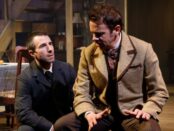
That balance—between emotional vulnerability and razor-sharp humor—is what elevates "Hold Me in the Water" beyond the sea of solo shows that mine personal experience for applause. Haddad’s artistry lies in his fierce honesty and unsparing introspection. He examines his own longing, joy, and heartache with something approaching clinical precision, yet never loses the pulse of the deeply human. He never asks for pity, and when disappointment inevitably arrives, he extends surprising compassion—even to the one who’s let him down. [more]

Soulmate
Clarke's direction is uneven, giving the show a rehearsal or community theater vibe. The narrative line is unclear as to whether the main characters are real or a hallucination of one of them. The songs, what few there are, are extraneous to the action, adding nothing of importance to understanding the point of the story. The main characters are Cyrene (Shannon Wong) who is the wife of Caleb (Zachery Michael Shook), a construction manager. According to the play notes they are involved in pushing "the boundaries of love, desire, and intimacy." The major problem with this dramatic idea is Cyrene is a memory of Caleb's dead wife, who is directing him to find new and provocative sexual relationships with other women. The character is a constant presence with Caleb but is not seen by any other person. This dramatic element is hinted at but unclear until halfway through this short play. [more]

Class Dismissed
The performers inhabit a shared space that hums with latent connectivity, even in the absence of direct dialogue. Their presence to and for one another—unspoken yet palpable—forms the quiet backbone of the piece. What unfolds is a relentless swirl of Marxist theory and grand philosophical overtures, repeated like mantras against a backdrop of absurdist physicality. Narrative cohesion is eschewed in favor of thematic resonance: a professor marks chalk outlines around a silent woman while students volley fervent monologues; later, those same students offer murmured asides as the professor ascends to a pulpit-like presence. Though no linear thread binds them, their trajectories intersect often and with theatrical charge, forming a constellation of meaning just out of reach. [more]
Grief Camp
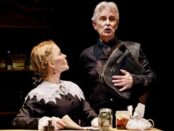
Time passes slowly during "Grief Camp" as a bunch of adolescent characters and the audience watching them struggle collectively to figure out the point of being there. Playwright Eliya Smith fails to provide that enlightenment, though director Les Waters does his best to pretend it might be forthcoming, stretching the emptiness of Smith's script until it simply has to be acknowledged. Set in the actual town of Hurt, Virginia, the play's narrative development is mostly in its title and that correspondingly unsubtle location choice, where Smith hazily depicts a sleepaway camp for young people coping with death at an age when life is painful enough. [more]
Glass. Kill. What If If Only. Imp.
The cumulative effect of the four plays is greater than the sum of its parts. The quartet of plays seems to demonstrate Caryl Churchill in a new mode. While the plots are slight, the themes are of major importance and suggest new ways of thinking about them. James Macdonald’s production and the acting of his cast are quite assured even though the plays are mainly non-realistic and require their own kind of suspension of disbelief. [more]
minor•ity
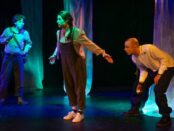
"minor•ity" is a wonder of a play written by francisca da silveira and skillfully directed by Shariffa Ali telling a tale of clashing artistic egos encompassing issues of Black identity, cultural influences, and financial support. The cast of three leaves no question in the viewers’ minds that what is being witnessed are real people telling a story through their actions, not actors playing roles. There is a message in the name of the show presented in the script but not in the show. [more]

The Swamp Dwellers
Before he was a Nobel laureate, before his name was canonized in the firmament of world literature, Wole Soyinka was a young playwright—barely in his mid-twenties—when he penned "The Swamp Dwellers" in 1958. And yet, this early work bears the unmistakable gravitas of myth: a compact, hour-long domestic drama that pulses with elemental force. In director Awoye Timpo’s hauntingly grounded revival, the piece reverberates with contemporary resonance. It is at once a family portrait and a parable, steeped in the muddy waters of postcolonial Nigeria and rippling outward into modern-day concerns—climate change, disillusionment with institutions, and the aching silence left by absent gods. [more]