Articles by Joseph Pisano
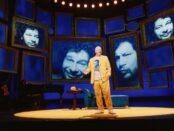
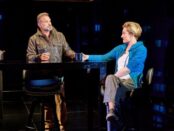
In persistently hopeful defiance of its heavy subject matter, the show strives for lightness. That's largely achieved thanks to Radcliffe's affability, which also swiftly inoculates the audience against his celebrity and lessens the chance for the type of slack-jawed fawning that might grind the proceedings to a halt. But Radcliffe isn't permitted to completely shed his fame, because, in lieu of a fully fledged character, "Every Brilliant Thing" desperately needs it as the engaging force to both form and conduct the "choir." That means, to some unknowable extent, Radcliffe must remain Radcliffe. [more]

The 25th Annual Putnam County Spelling Bee
Not quite as old as its title suggests, "The 25th Annual Putnam County Spelling Bee" premiered off and then on Broadway in 2005. The Tony Award-winning musical wears that age well in a revival that director and choreographer Danny Mefford smartly doesn't exploit as an opportunity for stark reinvention. Yes, there are thoughtful updates, including a much-needed revision to one character's backstory and some pointed criticism of disturbing developments at the John F. Kennedy Center for the Performing Arts, which launched the revival in October 2024. But, as always, the show's heart remains its six endearingly awkward middle-school spellers, each competing for a trophy that masks a much deeper and more elusive desire for connection. [more]
Marjorie Prime
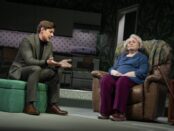
Director Anne Kauffman, who impressively guided the play's Off Broadway premiere a decade ago, returns to do the same for its Broadway debut. With Michael Almereyda's cinematic adaptation having been released between these productions, the new challenge for Kauffman is navigating a wave of narrative familiarities she first fostered. Not only has Harrison's once intentionally disorienting plot become straightforward on a second or third pass, his formerly fanciful depiction of artificial intelligence now carries an impending sense of mundanity, too. [more]
Two Strangers (Carry a Cake Across New York)
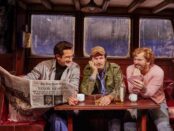
With its big, if economical, imagination, "Two Strangers (Carry a Cake Across New York)" also seemingly contains a metropolis of non-digital humanity, thanks, in particular, to Tony Gayle's robust and amusingly familiar sound design ("stand clear of the closing doors, please"). But Robin and Dougal are the only people ever actually present onstage, which is enough. As they repeatedly scale the twin mounds of literal baggage on Soutra Gilmour's circular treadmill of a set--rotating away from and towards each other--the metaphoric intent is obvious. Still, it's the promptly endearing Pitts and Tutty who must translate that visual meaning into a palpable bond, so that the audience cares deeply when it is eventually threatened by both past and future complications. [more]
The Queen of Versailles
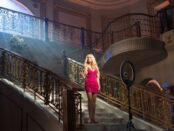
Reunited with Chenoweth for the first time since "Wicked," Schwartz once again benefits tremendously from a genuine member of Broadway royalty who, roughly two decades ago, as the original Glinda, turned a bunch of prosaic songs into popular ones (critic takes ostentatious bow). While the score for "The Queen of Versailles" will not survive in our collective memory (please, no!), Chenoweth, as always, gives it her considerable best, particularly when showing off her coloratura soprano to Marie Antoinette (Cassondra James). That would be worth a severely reduced price of admission, if not for the frustrating inconsistencies of Schwartz's lyrics and Lindsey Ferrentino's book, which eventually turn unconscionable. [more]
Waiting for Godot
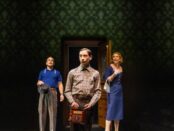
Seriously, using a childhood favorite to throw existential dread into the increasingly lined faces of Gen-Xers isn't a bad idea. At times, it's even brilliant. By respectively casting the now 60-something Alex Winter and Keanu Reeves as Beckett's tragicomic vagabonds Vladimir (née Bill) and Estragon (née Ted), Lloyd creates an often giddily effective cross-decade continuum between highbrow and popular entertainment, which likely would have pleased the Irish playwright's vaudevillian sensibilities. Unfortunately, aside from all the usual Beckettian stuff about the futility of life, the real downer with this new production of Waiting for Godot is that Lloyd can't stop inserting himself into it, as if he's weirdly competing with Beckett for storytelling supremacy. Needless to note, that's a losing proposition. [more]
Punch
Despite its noble-hearted objective to discourage random acts of violence (well, at least among the working class), Punch suffers from "A Clockwork Orange" problem. Jacob (Will Harrison) is a thoroughly charismatic miscreant but, as his "story of guilt and redemption" unfolds, he becomes an equally bland penitent. That's not the fault of Harrison, an actor with presence to spare who merely plays the script he was dealt. In a snatch of Jacob's propulsive monologuing, there is a key to why Punch goes sideways: "no one likes to admit...doing bad things...creates good feelings. It just does." As with Alex and his droogs (or Tony Montana, Dexter, the Joker), Jacob's personal high at deviating from social norms becomes a visceral one for the audience. [more]
The Porch on Windy Hill
There's a palpably tragic tension between Edgar and Mira, which the play's quartet of writers--Sherry Stregack Lutken, Lisa Helmi Johanson, Morgan Morse, and David M. Lutken--naturally let develop, trusting the actors (and, in Lutken's case, himself) to convey it in fraught silences. But "The Porch on Windy Hill" is no joyless drama; it also includes lots of glorious, soul-stirring sound, which buffers the characters' pain through a heady musical mélange that links everyone on the stage, even when they seem worlds apart. A classical violinist, Mira's talent originated from the long-ago example of her grandfather's expert banjo and guitar pickin', while her beautiful singing voice, similar to Edgar's, is much more candid than her speaking one. No mellifluous slouch himself, Beckett joins Mira and Edgar in a series of stringed reveries that run the gamut from Haydn to bluegrass and, as music often does, take up the emotional slack when regular words don't come easily. [more]
Jeff Ross: Take a Banana for the Ride
At the beginning of his eponymous Broadway foray, "Jeff Ross: Take a Banana for the Ride," the self-styled insult comic promises a catharsis, which seems like an obvious setup to soon mock the forlorn theater geeks sprinkled among an audience predominantly there to see Ross unleash the "Roastmaster General" persona he's cultivated over more than a quarter century of televised potshots at dais-trapped celebrities. But, it turns out the joke is on all of us. While Ross doesn't completely abandon his sophomoric shtick, it's also not the heart of his show, which has an unexpectedly big one. [more]
Call Me Izzy
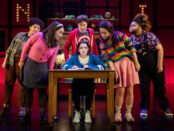
Portraying the eponymous Izzy--or Isabelle per the formal preference of a long-ago teacher--the charismatic Smart earns our rapt attention throughout the play, though she cannot begin to overcome a first-person narrative that doesn't know that person particularly well. Wax, with journalistic straightforwardness rather than dramatic breadth, essentially reduces Izzy to a collection of abject sorrows and artistic inclinations, much of which Izzy shares while on a lid-down toilet seat in a locked bathroom. A grim sanctuary, it's where Izzy reads and writes poetry nightly, accomplishing the latter with an eyebrow pencil and a roll of toilet paper as her husband, Ferd, menacingly slumbers nearby in the bedroom of their Louisiana mobile home. [more]
Stranger Things: The First Shadow
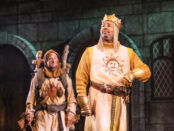
"Stranger Things: The First Shadow" concludes with a Netflix joke that, besides being pretty funny, also represents a bit of chest-thumping for the play's outsized number of developers who manage to successfully blur the line between theater and television. Whether that's a good thing is a matter of taste, or a lack of it, but there's no denying that "Stranger Things: The First Shadow," which has journeyed from the West End to Broadway, is exactly the type of experience it wants to be: immersive; scary; and, even if you've never seen an episode of the streaming series from whence it comes, familiar. That's because, imaginatively befitting its source material, the play is a storytelling stew of cultural callbacks that owes a debt--presumably unpaid-- to Stephen King, Wes Craven, and other unsettling shapers of Gen-X childhoods. [more]
Grief Camp
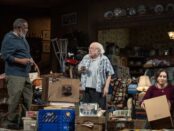
Time passes slowly during "Grief Camp" as a bunch of adolescent characters and the audience watching them struggle collectively to figure out the point of being there. Playwright Eliya Smith fails to provide that enlightenment, though director Les Waters does his best to pretend it might be forthcoming, stretching the emptiness of Smith's script until it simply has to be acknowledged. Set in the actual town of Hurt, Virginia, the play's narrative development is mostly in its title and that correspondingly unsubtle location choice, where Smith hazily depicts a sleepaway camp for young people coping with death at an age when life is painful enough. [more]
Boop! The Musical
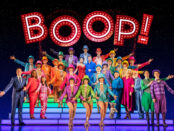
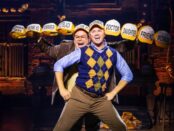
But, top-notch as all of that is, the musical's unmitigated highlight is the Broadway newcomer Rogers as Betty Boop. While the character's trademark look and mannerisms certainly contour Rogers's performance, they do not obscure a wealth of touching flesh-and-blood emotions that all come out in an underwhelming eleven o'clock number, "Something to Shout About," that, because of Rogers, manages to overwhelm. It seems that "Boop! The Musical" has a new star rather than an old one. [more]
Glengarry Glen Ross
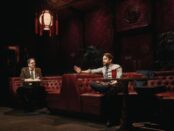
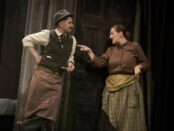
With one exception, however, Marber's cast of notable wisecrackers treats Mamet's punchy dialogue solely like punchlines, even when they're face down on the canvas. As Shelley "The Machine" Levene, a loser among losers, Bob Odenkirk opens an Act I triptych of two-handers that are all set within a capacious Chinese restaurant, nonsensically designed by Scott Pask to indicate a gigantic establishment apparently getting along just fine serving no more than a couple of liquid-lunchers at a time. On the verge of being fired for bringing up the rear in a sales contest for a shiny new Cadillac--that old-timey signifier of virile American success--Levene tries to sweatily sweet-talk the best leads from Donald Webber, Jr.'s insensate office manager, a pleading effort that quickly devolves into a pathetic attempt at bribery. [more]
Sumo
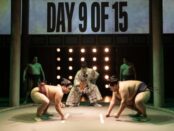
Despite its predictable overarching plot, "Sumo," produced jointly by the Ma-Yi Theater Company and La Jolla Playhouse, is never boring. Partly, that's because, as Mitsuo, Shih is villainously charismatic, portraying the preening bully with the disarming and false sense that there is a method to his sadism. But, even more compellingly, Sumo is an immersive and sumptuous eyeful--no matter your personal predilections for loincloths and bare, overhanging bellies--with a set, props, costumes, projections, and all that glorious sumo hair provided by Wilson Chin, Thomas Jenkeleit, Mariko Ohigashi, Hana S. Kim, and Alberto "Albee" Alvarado respectively. As for the main event, there is certainly loads of cheer-inducing sumo wrestling throughout the play, but it's the sumo karaoke after the intermission that adds much-needed joy to the proceedings. That exhilarating scene, aided by Paul Whitaker's vibrant lighting effects mixed with Fabian Obispo's equally energetic sound design, also offers director Ralph B. Peña the opportunity to let the actors cut loose, at least for a little while. [more]
Redwood
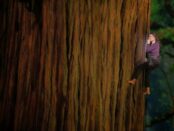
With the same preternatural gusto she brought to "Wicked" and "If/Then," Idina Menzel is back on Broadway in "Redwood" to, once again, confront musicalized trauma, this time as Jesse, a middle-aged art gallery owner from New York who, after her twentysomething son Spencer (Zachary Noah Piser) dies of a drug overdose, manically speeds across the country to climb an exceptionally tall tree. Coinciding with the show's deterministic title, that's where grief pulls Jesse: to a California redwood to grapple high above the ground with soul-crushing sorrow while having nothing to hold onto except for the healing virtue of a trite metaphor. Though it's, of course, easy to sympathize with Jesse's brutal ordeal, unfortunately the creative team responsible for Redwood never takes Jesse as seriously as her suffering, instead relying on Menzel's soaring vocals to defy gravity despite the burden of a leaden score and book. [more]
Eureka Day
It's the play's best scene, an astounding mix of incredible absurdity and, for all the Zoom veterans out there, undeniable believability, especially with everyone talking and typing past each other. Still, while serving the play's humor, director Anna D. Shapiro must simultaneously contend with its overt underside, sick children, as well as a modern audience replete with the traumatic knowledge that, after the 2018-2019 school year, the worst is yet to come. Given that, it's an outright testament to the impressive comedic talents of Shapiro, Spector, and the play's ensemble that the subject matter of "Eureka Day" can remain a laughing matter. [more]
A Wonderful World: The Louis Armstrong Musical
Great in entirely predictable ways, especially its rich musical orchestrations and arrangements from jazz genius Branford Marsalis (he's assisted by Tony Award- winner Daryl Waters), "A Wonderful World" wastes its decided advantages by keeping Armstrong at a distance while incongruously tasking him with narrating his own life. An impassive witness to himself, Armstrong is also a bizarrely unreflective one as he meanders from place to place and wife to wife, before finally appearing with his wronged women to sing "What a Wonderful World" as an ethereal eleven o'clock number on Adam Koch and Steven Royal's protean set. To say the least, it's a lackluster concluding statement on the complexities of Armstrong's marriages, as well as his feelings about a world that, despite all of its "trees of green" and "red roses too," caused him so much pain. [more]
Elf the Musical
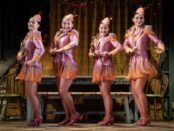
While incorporating the film's most memorable lines and story beats into their book, Bob Martin and the late Thomas Meehan also excised what they could to make room for composer Matthew Sklar and lyricist Chad Beguelin's brassy score, though it's not enough to prevent "Elf the Musical" from being about an hour longer than its cinematic version. Still, fret not accompanying adults, Sklar and Beguelin humorously reward persisting through the added length, with the laugh-inducing cleverness reaching its creative heights in the numbers that respectively kick off Acts I and II: "Happy All The Time," performed by a ridiculously high-spirited elven chorus line, and "Nobody Cares About Santa," a hilarious cry for appreciation from a despairing group of professional St. Nicks. Choreographer Liam Steel delightfully enhances the silliness, especially for the former number in which he cuts his impressively adaptable dancers down to an appropriate size. [more]
Vladimir
Essentially a cri de coeur, "Vladimir" desperately wants to answer affirmatively; however, Sheffer forthrightly acknowledges that it's a dangerously knotty road to yes, requiring Raisa (Raya in the diminutive form) to not only imperil herself but also possibly cause the deaths of others. In particular, passivity is the much safer choice for Yevgeny (David Rosenberg), a financial analyst who, despite having experienced virulent anti-Semitism while attempting to navigate the Russian educational system, helps Raya link that aforementioned suspicious tax refund to the upper echelons of Putin's corrupt administration. Like Raya, Yevgeny is not purely plucked from Sheffer's imagination, as he also possesses a non-fictional counterpart, Sergei Magnitsky, who, in a tragic similarity to Politkovskaya, savagely lost his life for having the courage to tell the truth about Putin's misdeeds. [more]
The Hills of California
In a theatrical era when "full-length" works often fail to exceed 90 minutes, the English playwright Jez Butterworth dares to dubiously dramatize for approximately twice that span. His previous Broadway epic, "The Ferryman," conflated The Troubles with anachronistic paganism, a disturbed old woman's fear of banshees, and lots of boozing, earning Butterworth much critical acclaim, as well as Olivier and Tony Awards, for this bold mix of pretentiousness and unabashed Irish stereotyping. "The Hills of California," Butterworth's latest overhyped synthetic slog teeming with underdeveloped characters, is basically a tale of two postwar entertainment cities: Los Angeles, the world's dream capital, and Blackpool, England, a fading resort town that's become uniquely fit for delusions. [more]
The Counter
Despite this obvious shortcoming of The Counter, Anthony Edwards, a growing New York stage presence after much TV and movie fame, resolutely ignores it, never letting Kennedy's contrived writing come between him and the character (as a frustrated fan of ER, I've seen this steadfastness before). The scraggly bearded Edwards portrays Paul, a retired firefighter from far upstate New York whose geniality occasionally gives way to pronouncements about the monotony of his remaining days and the unfairness of his former ones. Although these gnawing thoughts are "secrets," he shares them with Katie (Susannah Flood), a fairly new transplant to the area who is also a waitress in the diner he frequents when nobody else is around. That's essential for Kennedy's ludicrous plot, because Paul's inner turmoil manifests itself in a grave request for Katie to do something that, if overheard, would cause any sentient adult to immediately contact the authorities, resulting in the play ending not too long after it begins, unless Kennedy felt like keeping the story going through a depiction of Paul's psychiatric treatments. [more]
Ghost of John McCain
If, to paraphrase Mark Twain, a liar's greatest enemy is laughter, then the new musical comedy "Ghost of John McCain" is certainly no friend of Donald Trump. It's also not a hagiography of the late Arizona senator and famed prisoner of war who, after dying in 2018, is condemned for his own political shortcomings to another captivity, this time in Donald Trump's warped subconsciousness. When the show sticks to this satirically low-brow conceit, it rollicks along humorously, thanks in no small part to a nimble cast unafraid of being supremely silly. But Ghost of John McCain also has an off-putting penchant for strained seriousness, as if losing faith in the power Twain proclaimed. [more]
Our Class
Under Igor Golyak's hyper-inventive direction the production's form is masterfully daring, ignoring the barriers of past, present, and future, as well as performance and life. Golyak's double disrespect for temporal and fourth-wall distancing is most evident in the actors' frequently unsettling playfulness, including a foreboding sing-a-long with the audience during a pretend Jewish wedding. Smilingly staged by both Catholic and Jewish classmates when such interreligious bonhomie was still possible, the echoes of these characters' younger, imaginative selves continue to linger as some of them mature into monsters, their brutality imbued with an anachronistic childlike quality that strengthens the devastating sense of a lost innocence. [more]
Job
Max Wolf Friedlich's "Job" starts out with a bang or, more accurately, a near bang that elicits a couple of immediate worries: first, something awful will happen to a seemingly benign character and, second, a potentially overreaching playwright does not have anywhere dramatically to go after such a skillfully crafted throat-grabber. While the stress of the former concern rises and falls and rises again, the sense of foreboding from the other one eventually fades away as the thoughtful depths of Friedlich's compact, mind-bending two-hander become increasingly apparent. Given this gradual profundity, Job is the rare work that genuinely rewards repeat attendance, an opportunity undoubtedly appreciated by theatergoers who have seen Job in either or both of its off-Broadway stints during the past year (the play's world premiere at the SoHo Playhouse received an enthusiastic review from our Editor-in-Chief Victor Gluck). [more]
Home
No matter where you grew up, that place always elicits a tangled mix of memories, including sorrows that were often beyond one's control. That's certainly true for Cephus Miles (Tory Kittles), the Black protagonist of "Home" who endures a particularly powerless coming of age in lawfully segregated North Carolina. The play, which earned Tony Award-nominated success on Broadway, in 1980, after a critically acclaimed downtown run, was revived Off-Broadway at the Signature Theatre in 2008 as part of a season-long tribute to the Negro Ensemble Company, the artistic home of "Home" and its author Samm-Art Williams. Sadly, he passed away right before previews began for his sensitive work's current and only Broadway reappearance, a beautiful production that has now also turned into a fitting memorial. [more]
The Great Gatsby: A New Musical
As for previous theatrical takes on the classic Jazz Age novel--and a few cinematic ones, too--the understandable allure of Fitzgerald's breathtaking sentences has represented a deathly siren's song for those tempted to dramatically interpret Fitzgerald by emulating him. Adopting a much smarter tack, book writer Kait Kerrigan avoids crashing into the tony shores of Long Island, where the story is mostly set, by remembering that imitation is not only the sincerest form of flattery but also usually very boring. Kerrigan still dutifully opens ("In my younger and more vulnerable years...") and closes ("So we beat on, boats against the current...") with the literary hits, also leaving in place the unhappy character arc of the novel's Midwestern narrator Nick Carraway (Noah J. Ricketts), but she lets the transplanted naif enjoy a friskier journey arriving at the disillusionment that he eventually feels from witnessing the cruel machinations of the East Coast elite. [more]
Patriots
If there's a compelling reason to see "Patriots," it's Stuhlbarg, a Julliard-trained actor who can elevate flawed material with the best of them. In "Patriots," his talent bridges a director and writer who are never in sync, finding meaning in Goold's absurdity and a recognizable person in Morgan's pomposity. Actually, the latter frequently has benefited from this type of good fortune. молодец, mate! [more]
The Outsiders: A New Musical
The cast of "The Outsiders: A New Musica"l bring their own substantial charisma to the stage, but it's been dramaturgically constrained by Adam Rapp and Justin Levine's book, which sacrifices poetry for explanation. That unfortunate choice is abetted by a score from Levine, Jonathan Clay and Zach Chance (the latter two comprising the folk duo Jamestown Revival) that, influenced by "Oklahoma!" instead of pure sentiment, is far too Rodgers and Hammerstein, when it should have aimed for Rodgers and Hart. [more]
The Who’s Tommy
But, as the book's co-writer with Townshend, McAnuff is self-aware enough to recognize that "The Who's Tommy" needs to blow one's mind through sensory overload. That way, thoughts can't interfere with the emotional gloss covering the bizarrely bleak world, replete with both Nazis and Nazi wannabes, the show's "deaf, dumb, and blind" protagonist must endure. Its cheeriest passage is, in fact, the British victory over Germany in World War II, which occurs early on and quickly curdles after Captain Walker (Adam Jacobs), an airman thought killed in action, returns home to London in 1945, to discover that Mrs. Walker (Alison Luff) already has found another fella (Nathan Lucrezio), who her rightful husband promptly murders. [more]
Dead Outlaw
Conceived by Yazbek, the show is structured as a folksy retelling of the haplessly heinous Elmer McCurdy's life and post-life story, with the unbelievably true and undeniably dead portion reaching its final chapter after a prop person discovered Elmer's mummified corpse in 1976 on the set of "The Six Million Dollar Man." Unfortunately, Yazbek's collaborators from the Tony-winning "The Band's Visit"--book writer Itamar Moses and director David Cromer--are decidedly second fiddles this time around, adding little to the proceedings to make "Dead Outlaw" notable as anything other than a pretty solid concept album, especially as performed by an indefatigable combo that includes Della Penna belting out some of his own lyrics and strumming multiple instruments. [more]
The Life & Slimes of Marc Summers
Christopher Rhoton's Double Dare-inspired set belies these weightier autobiographical details, offering enough of a time-warping simulacrum to help middle-aged members of the audience shed a few decades when Summers interrupts his fraught remembering to twice become a kid's game show host again. Those who legibly scribble their names on a piece of paper dropped into a fishbowl before the performance, eventually get the chance to head onstage (not sure if mezzanine ticket buyers are eligible), answer trivia questions, and launch pies on a catapult (a warning for the first few rows). Amid all the cheers, laughter, and chaotic fun, there's also an opportunity for the quick-witted Summers to go off-script, asking the theatergoers-turned-contestants trite questions like "Where are you from?" and "What do you do?" to set up a slightly mischievous back-and-forth. [more]
Sunset Baby
"Ain't nothin' sentimental about a dead revolution." Wearing a too-short, too-tight dress, shiny thigh-high boots, and a long fuchsia wig, the twentysomething Nina (Moses Ingram) attempts to plunge these words like a dagger straight into her estranged father's idealistic heart, which has survived a long prison stretch for an armored truck robbery committed decades ago to aid the Black liberation movement. Coming early in Signature Theatre's revival of Dominique Morisseau's "Sunset Baby," it's obvious Nina's flinty declaration will never be genuinely up for debate--at least not for Nina--nor should the audience get even passingly optimistic about a dewy-eyed mending of the broken familial bond between Nina and the recently freed Kenyatta (Russell Hornsby). It's a lot to so quickly take off the dramatic table, but the unrelenting Morisseau does it forthrightly and thoroughly to serve the play's one overriding objective: being true to Nina. [more]
Days of Wine and Roses: The Musical
Reteaming with O'Hara and book writer Craig Lucas for the first time since the 2005 Tony-award-winning "The Light in the Piazza," Guettel's hodgepodge of a score equates jazz with blithe inebriation and opera with soul-crushing regret, a mostly tiresome juxtaposition that includes the gobsmacking discordance of Kirsten drunkenly bebopping around her apartment while vacuuming it. That O'Hara is never less than luminous, coordinated, and note-perfect during this ill-conceived pas seul fundamentally captures what's wrong with the musical: it's much too beautiful. [more]
How to Dance in Ohio
Based on an identically titled 2015 HBO documentary by Alexandra Shiva, "How to Dance in Ohio," in its musical form, works best whenever that magnificent seven is completely together onstage and falters mightily if none of them are present. Their characters' bond comes courtesy of Dr. Emilio Amigo (Caesar Samayoa), a psychologist--in both real and theatrical life--who specializes in social therapy for autistic people. To assist them in the closing stage of their adolescent development, Dr. Amigo's creative approach is to hold a spring formal, a traditional rite of passage that, of course, generally produces a lot of anxiety even if you're not neurodivergent. Through the voice of Marideth (Madison Kopec), the newest and most studious member of the group, Rebekah Greer Melocik's high-minded book makes sure to point out this hoary event's gendered baggage, though simply as an annotation rather than as the basis for any intriguing character conflict. [more]
Spamalot
Still, whatever faint accommodations he grants it, for Idle, structure is the enemy of joy, which every aspect of "Spamalot" is relentlessly intent on delivering, not only from a few well-performed and well-known old Monty Python bits (the Knights Who Say "Ni!"; the French Taunter; the Black Knight) but also through amusing allusions to classic Broadway musicals that Aaron Sorkin was never given the chance to ruin. To be sure, it is fan service on a couple fronts, forming a Venn Diagram highlighting anyone who adores, for example, how Idle's brainy, irreverent silliness transforms Stephen Sondheim's song "Another Hundred People" from "Company" into a running plague count. It takes incredibly varied abilities to appealingly belt out Sondheim while landing that joke, which Ethan Slater, as the dejected Prince Herbert, does impressively and without remotely shortchanging either responsibility. [more]
I Need That
A repetitively thin outlook on grief, "I Need That" ostensibly concludes with an image of healing, but I'm not sure why, or if it actually does. It's possible the famously prolific Rebeck had another play to write and figured DeVito would leave the audience feeling better no matter what she put on the page. That wasn't a bad bet, I suppose, but not everyone has the privilege of casting DeVito to pull attention away from writing that ultimately falls prey to a cheaply metaphoric sunrise (no knock on lighting designer Yi Zhao who was just doing his job). [more]
Gutenberg! The Musical!
How much you enjoy 'Gutenberg! The Musical!" likely depends on a combination of factors entirely unrelated to that German fellow: familiarity with the tropes it's skewering; your own level of disdain for such hackney execution; and your tolerance for Rannells and Gad's incessant mugging. In their first Broadway pairing since "The Book of Mormon" over a decade ago, Rannells and Gad are less a comic team than a comic rivalry, with neither willing to be the Abbott to the other's Costello. Fortunately, their ping-ponging, look-at-me dynamic only occasionally grows tiresome, usually when either of them is trying to gin up laughs that aren't there or shouldn't rise above a tee-hee. [more]
DruidO’Casey: Sean O’Casey’s Dublin Trilogy
Director Garry Hynes (a co-founder of the Druid) heightens the portent of this bellicose rhetoric, as well as O'Casey's mockery of it, by having a fractious collection of barroom denizens stop their arguing to silently imbibe the outside speechifying with upturned faces (hauntingly lit by James F. Ingalls). As for a verbal rebuke, a biting one comes courtesy of Rosie Redmond (Anna Healy), a prostitute, who pragmatically declares she won't "fight for freedom that wouldn't be worth winnin' in a raffle!" With O'Casey, female wisdom, unfortunately, is never heeded, which inevitably has dire consequences for female sanity and female safety. [more]
Purlie Victorious: A Non-Confederate Romp Through the Cotton Patch
In 1961, Ossie Davis channeled the hurt of growing up in segregated Georgia into "Purlie Victorious: A Non-Confederate Romp Through The Cotton Patch," humorously attacking the cause of his suffering rather than giving into it. A Broadway revival of the play, the first since those heady days of the modern Civil Rights Movement, is a current reminder that it's possible to smile through the pain. That it's a needed one is the tragedy. [more]
Swing State
Gilman's triteness and predictability combine to poorly serve a talented acting quartet, all of whom originated their roles in a 2022 production of "Swing State" at the Goodman Theatre under the usually steady hand of that institution's former Artistic Director Robert Falls, a Chicago legend. For whatever reason, Falls has kept his directing duties for the Off-Broadway run, too (a nice dinner at Minetta Tavern perhaps?). But it was a wasted trip for everyone, likely motivated by tragic topicality, the reputation of a world-class theater company, and a local sense of obligation to peek outside the New York bubble. [more]
The Shark Is Broken
As for what's in a name, yes, Ian Shaw is Robert's son, returning the life-giving favor not just through his words but also bodily, portraying his father in "The Shark Is Broken" with a candid empathy (and astonishing physical resemblance) that highlights the elder Shaw's strengths while giving context to his weaknesses, too. Because of ongoing technical difficulties with Spielberg's monstrous mechanical fish, known as Bruce, there was protracted downtime during the filming of "Jaws," which the play fills with imagined conversations between Robert and his co-stars Richard Dreyfuss (Alex Brightman) and Roy Scheider (Colin Donnell). Despite set designer Duncan Henderson's remarkable recreation of the Orca, the movie's barely seaworthy boat, hardcore Jaws fans might feel as if they've been bait-and-switched, since, in the final tally, they only get one early image of a not-so-ominous shark fin to satiate their thrill-and-chill-seeking expectations. In keeping with what's on the marquee, it quickly malfunctions, sinking into video designer Nina Dunn (for PixelLux)'s vast ocean backdrop, never to be seen again. [more]
Alex Edelman: Just For Us
Alex Edelman in a scene from his one-man show “Just for Us” at the Hudson Theatre (Photo [more]
Singfeld! A Musical Parody About Nothing!
Picking the easiest possible creative path, a decision the effort-averse George would no doubt admire, the McSmiths forgo imaginative risk-taking in favor of simply copying their source material, shaping "Singfeld!" as a parody musical about writing a parody musical. In other words, "Singfeld!" is also about nothing, which makes the entire endeavor feel, at times, akin to a Sartrean spiral or, as Jerry's archnemesis Newman (Jacob Millman) more bluntly puts it, "hackey." That's not to say there aren't some funny moments during "Singfeld!," but when humor is largely based on "remember when?," the comedic ceiling is right above your head. [more]
This Land Was Made
In its earliest scenes--as a Marvin Gaye record spins on the turntable, Adam Honoré's lighting design pairs naturalistically with Wilson Chin's meticulous set, and Dominique Fawn Hill and DeShon Elem's beautifully redolent costumes delight our eyes with vibrant patterns--"This Land Was Made" achieves an authenticity that makes you want to sit at the bar and order some lunch, too. Ironically, it's when Newton (Julian Elijah Martinez) and his comrade Gene (Curtis Morlaye) enter the story that the play's verisimilitude begins to come undone. Abandoning realism for audacious dramatic license, "This Land Was Made" turns into an intellectual showdown between Newton and Troy, with the latter becoming entangled in the fatal incident that led to Newton's imprisonment. [more]
Prima Facie
The mesmerizing Jodie Comer, making her Broadway debut in the Olivier Award-winning best new play after starring in the genre-subverting BBC show Killing Eve, portrays Tessa (for which Comer also won an Olivier in her West End bow) with stunning fidelity to the pain she causes and endures. While the tension between these two aspects of Tessa's personal history eventually ignite a fervent reassessment of who she has been, who she is now, and who she should be, Comer never gets ahead of herself in the performance. Early on, as Tessa recounts, in predatory terms, conducting a cross-examination that frees a rapist, Comer convinces us, beyond any reasonable doubt, that Tessa not only perceives practicing law as a "game" but also is emotionless about the outcome, no matter the consequences for others. At this point, in hearing Tessa trumpet her job so blithely, the horror is ours alone, because, for Tessa, everything she's saying is just another day at the office. [more]
Fat Ham
When it comes to modern adaptations of Shakespeare plays, many theatergoers tend to treat them like a test, mentally annotating plot and character correlations as if their high school English teachers were going to tap them on the shoulders and ask, "Did you catch that one?" If you suffer from this same hang up, then consider James Ijames' Pulitzer Prize-winning "Fat Ham" therapy, not only encouraging its audience to break free from fawning fidelity to the Bard but also, more poignantly, tragic endings. Simply put, for Ijames' insightfully idiosyncratic take on Hamlet, we're not in Elsinore anymore, and that's a good thing. [more]
Shucked
In addition to a surfeit of approximate rhymes, the score for Shucked includes a paean to corn and a reprise of the following ready-for-Hallmark advice: "maybe love is like a seed/a little sun is all you need." Meanwhile, Horn blithely salts the earth with acerbic observations about how "marriage is simply two people coming together to solve problems they didn't have before." Foregoing any accountability for this philosophical inconsistency, director Jack O'Brien instead attempts to cover for it with turbo-charged pacing that not only sacrifices thought for an admittedly infectious energy but also, as a part of this devil's bargain, undermines the comic timing necessary for a lot of Horn's jokes to land properly. But the amiable cast never falters, even when the laughs do or the score becomes more saccharine than corn syrup. The cast is adept, too, at executing Sarah O'Gleby's inventive choreography on scenic designer Scott Pask's ramshackle barn of a set. Particularly enchanting is a rolling barrel dance that Durand daringly pulls off with impressive grace. It's just too bad that this delightful surprise isn't accompanied by many others. [more]
Parade
While Brown's tunefully varied score strives to historically situate the bigoted nightmare we're witnessing within the cultural context of the South's fabricated sense of nobility and victimhood, an offensive postbellum myth known as The Lost Cause, Alfred Uhry's reductive book ham-fistedly narrows our attention, transitioning from a corrupt law-and-order procedural in the first act to a preposterously scripted search for the truth after the intermission. Although Dane Laffrey's unremarkably fungible from-courthouse-to-prison-to-gallows set overbrims with historical figures, most of them exist on a character believability spectrum somewhere between "My Cousin Vinny" and "Driving Miss Daisy" (also written by Uhry). If not for Sven Ortel's rear-wall historical projections of these real people, an audience might suspect at least a few of them were invented out of whole cloth. [more]
The Coast Starlight
When it comes to plot, characters, or often both, even the best theater tends to require a suspension of disbelief. Given that it's hardly a sucker's bet for indolent playwrights to pin their hopes on the lack of effort it requires an audience not to think, what Keith Bunin does in "The Coast Starlight" is astonishing. Taking its title from the Amtrak overnight sleeper that scenically services an ocean-hugging route from Los Angeles to Seattle, the play is primarily set in one of the train's coach cars, where the passengers, a group of strangers, are reluctant to break the silence between them. Mostly, like real human beings, they don't, or at least not when it might have done some good. [more]
Fall River Fishing
Absurdist to an increasingly ho-hum degree, Szadkowski and Knox let their imaginations run amok with silly speculations about pre-double-homicide life in the Borden household that are punctuated by head-scratchingly anachronistic jokes involving Tinder, Cabbage Patch Kids, John Belushi, and whatever other free associative references apparently sprung to mind during their no-doubt personally enjoyable writing sessions together. The problem is that Szadkowski and Knox are incapable of bridging the gap between their evident fun and our actual entertainment, an obnoxious shortfall made cringe-worthy by the fact that they both star in "Fall River Fishing." For the charitable among us, I suppose, seeing Szadkowski and Knox delivering their own unfunny dialogue might compel a forced giggle, especially in such close downtown quarters. But theater is expensive and time is fleeting, so a lack of chortling generosity is also perfectly understandable. [more]
Lucy
Writer/director Erica Schmidt's "Lucy" is a play struggling to find a point of view, or perhaps a point of view struggling to find a play. If the latter is true, then that narrative position seems to be "good help is hard to find," which generally only satisfies an audience, at least the "help" part of it, when there's a "My Man Godfrey," or even "Mary Poppins," spin attached. But Schmidt apparently has adopted her position sincerely, with some topical digressions into issues like healthcare coverage and paid sick leave. Or maybe Lucy is just an exceptionally slippery satire, and I failed to grasp its profundity while wondering why the play had to last more than one scene. [more]
Between Riverside and Crazy
Living in his "palatial" rent-controlled apartment on one of Manhattan's most stunning architectural stretches, Walter "Pops'' Washington (Stephen McKinley Henderson) is an aging man of aging principles. A Black ex-cop, he presides over a crumbling kingdom from the figurative throne of his dead wife's wheelchair in Stephen Adly Guirgis' Pulitzer-Prize-winning "Between Riverside and Crazy." The gruffly engaging Henderson, along with the rest of the heady ensemble, feast on Guirgis' piquant dialogue that blends the sacred with the profane, the comic with the tragic, and earnest social commentary with intense silliness. It's just unfortunate that Guirgis' shaggily constructed plot inspires doubts about whether a brilliant cast and brilliant writing necessarily equate to a brilliant play. [more]
Without You
And that's the agonizing tension in "Without You;" in his lyrical responses to Larson, Rapp is well aware that it's not a back-and-forth, that Larson can't say anything more than he has already. But, just as with "Rent," there is still solace, because I'm sure Rapp, the show's impressive five-member band cozily tucked into Southern's set, and the production crew could hear what I did in the audience: lots of crying. It came with a palpable feeling of not being alone in your thoughts for the dearly departed, especially those taken much too soon. A generation or two removed from having attended "Rent," it was an unspoken bond not only worth revisiting but, if I'm being honest with myself, desperately needed. [more]
The Far Country
All of the above occurs prior to the intermission and, if "The Far Country" has a shortcoming, it's that the second half feels like a sequel to what came before rather than a continuation of the same play, despite the sensitive efforts of director Eric Ting to emotionally stitch everything together. In part, that's because characters disappear entirely after Suh's story resumes, though the more salient cause is the relatively late introduction of Yuen (Shannon Tyo), a desperate, but still strong-willed, young woman to whom Gyet proposes marriage after returning to China with his U.S. citizenship, essentially replicating Gee's offer to him with an even more intimate bond. [more]
KPOP
Adopting the hokey framing device of a concert documentary, Kim turns the impending U.S. debut of a South Korean entertainment company's three hottest acts into a triptych of rigorously gendered plots. While attempting to capture all the glitz, glamor, and artistry, the American documentarian (Aubie Merrylees) also relentlessly stirs the pot to heighten any behind-the-scenes discord for the cameras, which doesn't make much sense since his paycheck is signed by Ruby (Jully Lee), the record label's iron-fisted founder and driving force, who obviously wants a glorified promotional video, not an investigative report. But to ascribe dramaturgical logic to the situation is to entirely miss the point. Aided by Peter Nigrini's voyeuristic projections of backstage squabbling, the objective is not truth but, rather, to establish the type of assiduously rendered false intimacy fans perceive as truth. [more]
Mike Birbiglia: The Old Man & The Pool
Still, rest assured, most of what Birbiglia says is funny, even for any fans well aware that Birbiglia is leading us somewhere that is not. Given the eponymous Hemingway allusion, the show's mortal endpoint is obvious, but the journey to it is full of surprising, and sometimes touching, laughs. They begin with an annual health checkup that includes a worrisomely poor performance on a spirometer, the ball-and-hose machine that measures lung function. The results baffle Birbiglia's doctor, since they seem to indicate he was having a heart attack while taking the test. [more]
You Will Get Sick
Ostensibly a comedy, or a tragi-comedy, or a dystopic mashup of "The Wizard of Oz" and "Field of Dreams," Diaz's play could possibly be enjoyed as a befuddling trifle if not for its serious pretensions about morbidity and mortality. Both aspects of this double downer involve a young man (the hopelessly adrift Daniel K. Isaac) recently diagnosed with a terminal disease that Diaz, desperately straining for universality, never identifies. He also doesn't note any character names in the program's cast list, referring to each of the actors only by the numbers 1 through 5, even though character names are used in the script. This concealment likely is a way of protecting the play's huge final reveal, or it could have another point that exists in Diaz's noggin but not in mine. [more]
Walking with Ghosts
"Walking with Ghosts" is a decidedly intimate experience, one that seems tailor-made for an off-Broadway theater like the Irish Rep. Price and his production team try to expand the show to Broadway proportions through McKenna's lighting and aforementioned set and Sinéad Diskin's vivid sound design. But its true scale is human, which means all that's required is Byrne and his bravery. [more]