Articles by Joel Benjamin
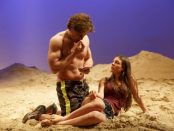
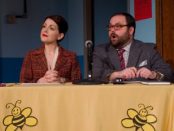
In the course of 90 minutes, we follow the ups and downs of Strauss’ professional, mental health and romantic lives in great detail. To his credit, Strauss gives the impression of delivering these stories as if for the first time. He was fresh and very involved, yet sensitive to the audience’s reactions. He managed to make a tediously unattractive condition fascinating and also managed to make himself affecting and human, his disability notwithstanding. OCD has never been as attractively rendered. [more]
Bridgman|Packer Dance
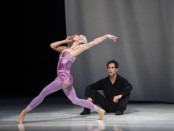
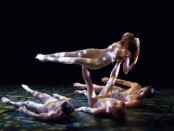
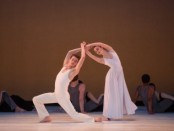
At times, Hopper’s paintings—mostly the moody ones—were inhabited by the dancers who took on the iconic, emotionally laden poses so brilliantly painted by Hopper, helped by Frank DenDanto III’s fine lighting. Outdoor scenes, images of isolated houses and rows of urban buildings added to the complexity. Endlessly long corridors, down which the dancers wandered, appeared as the soundtrack (by Scott Lehrer and Leon Rothenberg) alluded to city sounds, distant trains, conversations and nature. The two dancers were never eclipsed by the set and projections, their emotional states always in flux and always crystal clear. The effect was often breathtakingly and movingly beautiful. [more]
Twyla Tharp and Three Dances
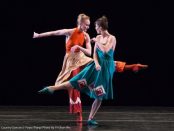
From 1976, “Country Dances” represented the post-experimental avant-garde phase after breakout success with her ballets for major dance companies. From 1980, there was “Brahms Paganini,” her entrée into her hybrid style combining her eccentric, seemingly casual movements with the classical ballet vocabulary and from 2016, “Beethoven Opus 130,” virtually a classical ballet with quirky touches. [more]
DELIRIOUS Dances: To Begin the World Over Again
Edisa Weeks’ DELIRIOUS Dances company presented "To Begin the World Over Again," an ultimately hopeful, informal look at American values filtered through the words of Thomas Paine, the Revolutionary War era philosopher and rebel-rouser—sort of an informal, easy-to-get-into Hamilton. [more]
On the Verge
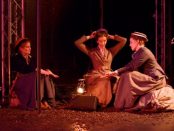
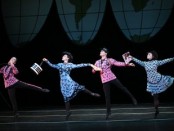
As the women find themselves further and further in the future, it is how each reacts and is forever changed that give the play its emotional weight. Two manage to adjust quite well; one not so much. The whirlwind of mid-twentieth century America takes its toll on these intelligent travelers, outwardly in their clothing and inwardly on their attitudes toward life. The paths each takes at the end of "On the Verge"aren’t just theatrically satisfying—having been telegraphed subtly in many ways—but actually quite moving. Suddenly Overmyer, with the decided support of three fine actresses, ably directed by the astute Laura Braza, turns these silly, living cartoons into flesh and blood. And, that is the real journey of On the Verge. [more]
RIOULT Dance New York 2016
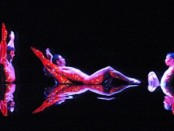
The New York City premiere of “Polymorphous” to Bach was a coolly elegant work that featured ever shifting black and white projections (by Brian Clifford Beasley) matched by the witty leotards by Karen Young which were white in front and black on the back. The video also featured reverse shadow images surreally mirroring the dancers as they plied the light jumps, gentle partnering and beautifully arching steps. The most balletic work on the program, “Polymorphous” used one of Rioult’s frequently used technique of working one pair of dancers in contrast to the other. In this case, the four dancers—Brian Flynn, Ms. Haines, Jere Hunt and Sara Elizabeth Seger—created two different pools of emotions—one quietly amorous, the other darker. “Polymorphous,” with its careful, quiet craftsmanship, was a kind of choreographic palate cleanser between the heated “Dream Suite” and the four “Duets Sacred & Profane” which followed. [more]
Florencia en el Amazonas
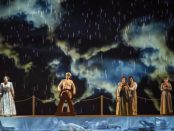
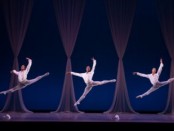
This production had two brilliant design/directoral conceits that worked hand in glove with the musical elements to tell the story. The first involved twelve dancers from Ballet Hispanico’s BHdos all in white body suits from head to toe, undulating virtually continuously down stage in front of the ship, representing the river and its secrets. With indefatigably choreographed by Nicholas Villeneuve and breathtakingly lit by Barry Steele, they, indeed, became a living part of the scenery, even interacting with the characters on the ship. [more]
Othello (American Sephardi Federation)
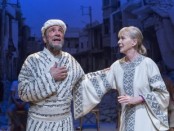
The American Sephardi Federation’s production of a greatly compressed "Othello" at the beautiful Center for Jewish History. This was the third of a series of three shows staged to showcase the talents of David Serero. He’s a Moroccan Sephardic Jewish performer who has charm and charisma. [more]
Shuffle Along, or the Making of the Musical Sensation of 1921 and All that Followed
"Shuffle Along..." follows the travails and triumphs of the creators of the 1921 David that fought what was at first a losing battle against the Goliath of the Broadway powers-that-be. The quartet that put the show together on a long road tour were libretto creators F.E. Miller (Brian Stokes Mitchell whose charisma and mind-boggling professionalism makes his character the safe harbor) and his partner, Aubrey Lyles (Arbender Robinson, brilliantly taking on the part usually played by Billy Porter); composer, Noble Sissle (Joshua Henry, giving a quietly dignified performance as an artist whose disappointment in America takes him to Africa) and lyricist, Eubie Blake (Brandon Victor Dixon, the more effervescent and demanding of the two songwriters). [more]
Ballet Tech presents Kids Dance
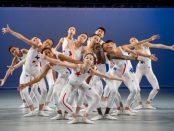
However, the main thrust of this troupe is to stimulate a gentle discipline and the ability to work effectively with others. It’s clear that these youngsters who range from seven or eight years old to teenagers enjoy their time on the stage and have been rehearsed to perfection. Occasionally a look of concerted concentration replaced smiles but this experience—whether any of these kids will go on to careers in the performing arts—is priceless and will have positive repercussions throughout their lives. [more]
Indian Summer
Gregory S. Moss’ "Indian Summer" at Playwrights Horizons is an uneasy mix of two stories, the first about the doomed romantic encounter between two teens and the second concerning the quiet existential suffering of an elderly man. Despite sudden shifts of tone, Moss manages to leave the audience feeling deeply for each of these characters. [more]
Paramour (Cirque du Soleil)
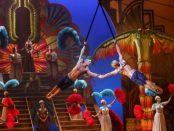
"Paramour," the Cirque du Soleil’s stab at producing a Broadway style musical at the Lyric Theatre, is the circus equivalent of a jukebox musical. Instead of songbook—Beach Boys, Four Seasons, Carole King, etc.—this show is a panoply of circus shtick: juggling acts, trampoline chases, trapeze acts, contortionists, teeter board high fliers, etc. Although the circus bits aren’t truly integrated into the overblown plot—a rather silly "42nd Street"/"A Star is Born"/"Red Shoes" mash-up—it’s great to see the Cirque du Soleil performers in any context, but why the creators couldn’t dovetail the wonderful circus bits with an intelligent plot, is a mystery considering all the money that clearly went into "Paramour." [more]
The Total Bent
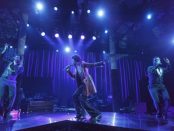
Stew and Ms. Rodewald’s command of the musical genres of the 1960’s and 1970’s—gospel, Motown, soul, glam-rock, funk, R&B, blues, etc.—is astounding. The songs are organic extensions of the dialogue. In fact, this show could easily have been a straight drama or a sung-through opera. [more]
American Ballet Theatre: La Fille mal gardée
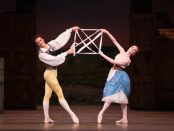
Leading this bucolic tale of amor interruptus were Gillian Murphy (her usual strong technique subsumed in girlish sweetness) as the farm girl, Lise, the “badly guarded girl” of the title, and Cory Stearns (at his lyrical best) as Colas, her young farmer swain. In the drag role of Lise’s mother, Widow Simone, was Marcelo Gomes, the still vibrant classicist perhaps just having a bit of fun in a character role, or keeping an eye on the future—distant future!—when character roles will be the natural progression for this great artist. [more]
Signature Plays
It’s clear why Edward Albee’s "The Sandbox" (1959), María Irene Fornés’ "Drowning" (1986) and Adrienne Kennedy’s "Funnyhouse of a Negro" (1964) are considered modern absurdist classics. They hew to the territory the truly greats like Samuel Beckett, Eugene Ionesco, the Dadas and Alfred Jarry explored, with Beckett the most influential, particularly in the first two plays, interpreting them with an American spin. If they are not as effective—if they seem somehow clichéd—the playwrights cannot be faulted. The Art World simply moves on. [more]
Ariel Rivka Dance’s Ninth Season Festival
Ms. Grossman’s three works were all world premieres: “Hallelujah Eva” to the famous Leonard Cohen song, “Beatrice’s Rainbow” to the Yip Harburg/Harold Arlen classic “Over the Rainbow,” and “Variations on a Box” to music by Ms. Grossman’s husband David Homan (who also did the beautiful arrangements of the first two works). Each was a study in relationships and community. [more]
Daphne’s Dive
Although Quiara Alegría Hudes’ "Daphne’s Dive" follows the lives of seven fascinating people for whom Daphne’s North Philly bar is their true home, it is no "Cheers" and definitely no "The Iceman Cometh." No, "Daphne’s Dive" is a far gentler affair than either of those and more fearless for its gentleness. The seven people in this working class bar and grill affect each others’ lives as the play takes them from 1994 to 2011—and the audience is changed along with them. [more]
Chita Rivera at the Café Carlyle
She ran down the list of her Broadway co-stars: Ricardo Montalban, Donald O’Connor (the disastrous Bring Back Birdie), Antonio Banderas (upon whose shoulder she placed a shapely leg in Nine) and, her admitted favorite, Dick Van Dyke, with whom she co-starred in "Bye Bye Birdie" from which she sang “A Lot of Livin’ To Do” giving it a sassy, winking interpretation making it impossible to deny that the title is very on the mark. It wouldn’t be a Chita Rivera show without a mention of her iconic Anita in "West Side Story." A meeting with Leonard Bernstein to go over her songs just after she had been cast was nerve-wracking as she never had considered herself a singer. History has proved that her singing almost equals her dancing. “A Boy Like That” and “America,” complete with some mini-choreography were nothing short of electrifying. [more]
American Ballet Theatre: Shostakovich Trilogy
His Shostakovich Trilogy may have been too much of a good thing, somewhat weakened by too many overlapping themes, generally dark moods (with some bright moments, of course) and a sameness of choreographic technique. However, these three ballets displayed his talent for moving dancers around the stage with musicality and dramatic expressiveness and a good ear for Shostakovich’s quick-changing musical themes which often go from ponderous to lighthearted within a few measures. [more]
Still Standing You
The duo that makes up and has created 'Still Standing You" consists of the charmingly suave Guilherme Garrido from Portugal and the dour, heavily bearded Pieter Ampe from Belgium, neither of whom appear to have ever set foot in a dance class. Skinny, but out of shape, they nevertheless proved that they certainly were not weaklings, supporting each other in odd lifts, tucks and all sorts of interlocking of body parts. [more]
Bianco
Frankly, the main difference between Bianco and its sister circuses is its ambiance and not the acts, wonderful as they are. Every circus has jugglers, tightrope walkers, silk artists and hula hoop masters, but Bianco presents them as people, not virtuosos (which of course they are). This philosophy sacrifices awe for user friendliness. [more]
The 25th Annual Putnam County Spelling Bee
Director Dev Bondarin cleverly enlisted scenic designer Tim McMath to transform the APAC’s theater into a high school gymnasium, complete with posters (“No Bullying Allowed,” “Today is a great day to learn something new,”) banners (“Go Cougars,”) and the kind of simple platform that would be at home in any gym. Bondarin also gifted this production with an air of immediacy and an unrelenting up-tempo. [more]
Dear Evan Hansen
The way Mr. Levenson keeps things moving is both clever and exhausting. The songs mostly explore the inner emotional lives of the characters: “Waving through a Window” (Evan’s feelings of alienation); “Anyone Have a Map?” (frustrations of the two moms); “To Break in a Glove” (Larry Murphy’s heartbreaking song of unfulfilled paternal rituals); and the heartbreak and promise of “For Forever” which ends the show. [more]
The Place We Built
As Hungary took a turn to the extreme right in recent years, anti-Semitism and xenophobia not only raised their heads, but became de facto pillars of the new government. The Place We Built delves into the personal plight of an ad hoc blending of often contentious, mostly loving twenty-somethings who inadvertently wind up building and creating a meeting place of like minds in the old Jewish Ghetto and thereby defying and antagonizing the powers-that-be. [more]
Waitress
The musical’s new libretto, written by Jessie Nelson, riffs broadly on Shelly’s quietly poignant storyline and her very human, finely etched characters. The characters, broadened and amped up several notches to register on the large stage of a Broadway house, eventually do endear themselves even if they are just a bit shy of caricature. Singer-songwriter Sara Bareilles’ music and lyrics further perpetuate the broad brush paint job with all the characters getting an exultantly defining number that elucidates their eccentric stories or the turmoil in their minds. [more]
Ballet Preljocaj: “Empty Moves”
Testing the patience and understanding of both the audience and the dancers, Ballet Preljocaj, Angelin Preljocaj’s modern troupe from Aix-en-Provence, performed the complete version of his “Empty Moves” at the Joyce Theater. Two of the three parts were previously seen in New York City. Set to John Cage’s “Empty Words,” a deconstruction of a text by Henry David Thoreau, the work put four terrific dancers through their paces for nearly two hours. [more]
Les Fêtes Vénitiennes
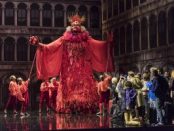
At turns beautifully silly, dreamy, exquisitely moving and always delightful, "Fêtes" is a sweeping, if daffy, look at life in eighteenth century Venice. Christie and his director Robert Carsen, framed the opera ingeniously by beginning the work in modern day Saint Mark’s Square complete with modern day tourists—mostly members of Ed Wubbe’s Scapino Ballet—with their cellphones, backpacks and obnoxious behavior. [more]
Miami City Ballet
I cannot remember the last time a ballet company so completely blew me away as the Miami City Ballet did during its recent, depressingly short season at the David H. Koch Theater in Lincoln Center. The explosive metaphor is entirely apt. This is a stylish classical ballet troupe that is definitely a company whether they are dancing works by Alexei Ratmansky, Twyla Tharp or George Balanchine. They exude a lushness of style that allows them all to be individuals, yet cohere into an exciting artistic unit. [more]
Eclipsed
An opportunity to see the luminous Academy Award winner Lupita Nyong’o live on stage may be the reason most people are rushing to the Golden Theatre, but, thrilling as that may be, "Eclipsed" is its own reward, a starkly detailed, microcosmic observation of just one ghastly corner of a ghastly civil war. [more]
Nathan the Wise
It’s an uneasy stretch that ultimately fails to convincingly conflate the surprisingly liberal religious arguments that Lessing makes with the extraordinarily complex political/religious/cultural impasse in today’s Israel. The interactions between the Christian, Muslim and Jewish characters are frank, barbed and boldly modern sounding—at least in Kemp’s version—but come across more as statements of the class structure of eleventh century Jerusalem than deep-seated psychological or sociological issues. [more]
Dance Theatre of Harlem 2016
The four works on the Dance Theatre of Harlem’s program revealed a troupe that loves to entertain and show off but one that also hasn’t quite reached a secure level of technical achievement. Fervor and personality can take a dance company only so far. Nevertheless, this is definitely a ballet company with most works featuring solid point work. [more]
Ballet Hispanico
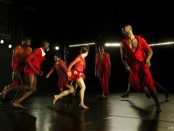
The Ballet Hispanico wants to be meaningful while at the same time entertaining. It is a difficult course to chart—just look at the Alvin Ailey American Dance Theater—and, so far, the entertainment element seems to have taken charge. There’s nothing wrong with wanting to please an audience, but, let’s face it, others do it better. Mr. Vilaro has kept the technical level of the dancers and the productions at a very high level and shouldn’t be afraid to shock, move and confound his audiences—along with making them happy. [more]
From the Horse’s Mouth Celebrates Gus Solomons jr
Nearly thirty speakers glorified Solomons, but none quite as well as himself who appeared in three bits that deftly paid tribute to—and simultaneously gently poked fun at—his two choreographic mentors. Watching Solomons’ Martha Graham and Merce Cunningham hand puppets debating their individual philosophies of the art of dance, while getting their personality foibles down perfectly, was the highlight of the program. This was the rare Horse’s Mouth in which the object of the show performed. [more]
Bright Star
"Bright Star," the new bluegrass/country music comedy-drama, rises—just barely—above Hallmark Network romance level thanks to its energetic score by the Hollywood star, Steve Martin (music and book) and singer-songwriter Edie Brickell (lyrics) and an astonishing, charismatic performance of Carmen Cusack in her Broadway debut. [more]
Julliard Dances Repertory 2016
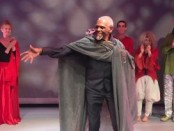
This was a particularly satisfying showing by the Juilliard Dances Repertory. It’s good to know that there is hope for the future of dance represented by these students, all of whom displayed fine technique and understanding of the different works. Also, the respect and care paid to these three choreographic geniuses makes it clear that they won’t soon be forgotten. [more]
She Loves Me
Scott Ellis’ direction avoids caricature, even in the most broadly drawn characters like the man-hungry Ilona, the gigolo Steven and the scared, but pragmatic clerk Sipos. He make the one touch of melodrama, involving Maraczek’s marriage, seem human and a touch tragic, helped by Mr. Jennings subtle, but exuberant performance. He also draws a tender performance from Ms. Benanti who gets to use the more operatic part of her marvelous voice. [more]
Disaster!
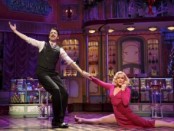
Seth Rudetsky and Jack Plotnick’s libretto mocks all the famous disaster films of the seventies, like 'Jaws,' "Earthquake," "The Poseidon Adventure," "The Towering Inferno," "Ben," etc., and squeezes every Bible worthy catastrophe onto the Nederlander stage, all the while using hit songs from the seventies, sung live, to punctuate the libretto with music that makes singing—and dancing—along difficult to avoid. [more]
Sokolow Theatre/Dance Ensemble
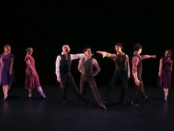
“Ride the Culture Loop” (1975) to dark, percussion-heavy music by long-time Sokolow colleague, Teo Macero, pitted small groups of dancers against each other, all seemingly trapped in a nightmare of frustration symbolized by jutting elbows, pained expressions and tense pile-ups that led inevitably to one dancer being lifted high and slowly rotated only to be subsumed back into the flailing bodies a second later. Dressed in hippy-ish jeans and colorful tops, they seemed more concerned with their inner turmoil than communicating with each other. The tense movements gave the work a thick, emotional veneer. “Ride the Culture Loop” was staged by Samantha Geracht. [more]
Joan Osborne – Songs of Bob Dylan
Most people have difficulty imagining Bob Dylan as anything but the down-and-out troubadour singing for his supper in Greenwich Village nightspots in the early Sixties. He is, in fact, an incredibly prolific, sophisticated writer and Ms. Osborne slid easily from his country/western tinged ballads (“Tonight I’ll be Staying Here with You”) to his scathing, but clear-eyed philosophy of the world (“Gotta Serve Somebody”) to his tender love songs (“Forever Young”) and on to his Christian evangelical period (“Saved”). [more]
Fyvush Finkel
Finkel needed only minimal help to get up on the stage after recovering from a short illness. He began with patter about how Jews don’t usually drink because it interferes with their suffering. He also quoted humorist Sam Levenson’s retort to an anti-Semite. Levenson suggested that this person refuse to take advantage of all the cures and tests for illnesses discovered by men such as Sabin and Salk and their Jewish medical colleagues. [more]
Mabel Madness: The Life of Mabel Mercer
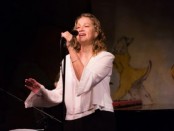
Along the way she met the songwriters whose work she illuminated. During "Mabel Madness," Ms. Beverley sings “Can’t Help Lovin’ That Man of Mine” (Kern/Hammerstein), “Down in the Dumps on the Ninetieth Floor” (Porter), “Summertime” (The Gershwins), amongst others. She uncannily finds Mercer’s style, sounding surprisingly like Mercer in her speak-singing period which depended mostly on exquisite timing, understanding the lyrics and hitting the few notes still within her power. She catches Mercer's regal, yet still down to earth, quality, too. [more]

From Moses to Mostel: A History of the Jews
Robert Klein, the comedian/actor/writer, was the laid back host whose shtick—a cell phone conversation with God (a humorless lady)—provided the backbone of the show. Klein had to prove to the very distracted all-powerful lady that the world was worth saving. From this fragile premise came a very amusing, slightly overlong, program, performed by a large band conducted by Frank London and four fine singers: Joanne Borts, Rachel Stern, Rob Evan and Steve Rosen, plus a guest artist or two. [more]
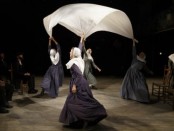
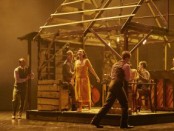
Angel Reapers
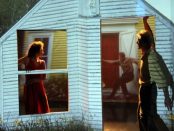
The audience for "Angel Reapers" is immediately immersed in the Shaker world, forced to cross the set—simple board floors, ladder-back chairs, a couple of windows and doors—en route to the seats. Several cast members are already in place. As more characters saunter on and take their seats, men and women on opposite sides, an infectious laughter spreads improbably through the cast before hymns are sung and a long list of proscribed activities is chanted. They also express delight in the “gifts” they contribute: “I have the gift of gathering eggs;” “I have the gift of reaping hay;” etc. [more]
New York Theatre Ballet: Legends & Visionaries 2016
“Song Before Spring,” to a vibrant and pulsating steel band score by Philip Glass is an exciting addition to the NYTB repertory. Choreographed by Zhong-Jing Fang and Steven Melendez, “Song” caught the rambunctiousness of the score while telling many poignant and funny stories about the characters’—the entire company—lives. Dressed in Ms. Nolan’s incredibly witty street clothes, these young dancers became a community, a microcosm of urban life as they interacted. There were a sullen youth (Mr. Melendez), three flirty young ladies (Alexis Branagan, Carmella Lauer, Mayu Oguri), two aggressive young men (Joshua Andino-Nieto and Michael Wells) and a panorama of telling activities that combined ballet, modern dance, mime and very fine acting. “Song Before Spring” is a real forward leap for Ms. Byer’s troupe of dedicated dancers. [more]
Pacific Northwest Ballet
The second Balanchine masterpiece was “Prodigal Son,” the final work that the great impresario Serge Diaghilev commissioned. Prokofiev’s moody, rough-hewn score and colorful, scenery and costumes by Georges Rouault which evoke a fanciful, ancient biblical era give Balanchine’s story heft. The clever scenery includes wildly colorful backdrops and features a large wooden structure that ingeniously becomes a pathway away from the Prodigal’s home, a dining table, a stage and even a poignant place of crucifixion as the Prodigal writhes against it. [more]
The Cherry Orchard
The focus too often strays from Chekhov and his darkly comic portrait of a Russia to a piece of silly business or a maladroit placement of rows of audience members, breaking the fourth wall. He has the working class upstart Lopakhin sing “My Way,” the Frank Sinatra classic, to celebrate his buying the cherry orchard—a jarringly farcical bit. [more]
Les Ballets de Monte Carlo’s Cinderella
Maillot decided, however, to set his version in a distorted fantasy realm, with no identifiable time period or place, distancing the story’s emotional impact. It is difficult to identify with the group of highly stylized, caricatured characters he presents and the tortured, though imaginative, path he takes them on. [more]
Alwin Nikolais Celebration
A constant criticism of Nikolais’ work is that he “de-humanized” his dancers by putting them into odd, sculptural costume constructions and giving them “mechanical” movements. This program of four major works disproves this, hopefully once and for all. All the choreography, music, lighting and costumes were by Mr. Nikolais—with Frank Garcia assisting on the costumes—and, yes, at times the dancers were hidden under masks and props, but always—always—they were clearly humans expressing human emotions and relationships. [more]
Soaking WET 2016
There are relatively few venues, even in dance crazy NYC, where fledgling choreographers can work on their craft in a totally professional environment. Soaking WET at the West End Theater is one of them. Curator David Parker and producer Jeffrey Kazin run a tight, but open-minded, ship. The dances I saw, flawed as they were, had inklings of wit and inspiration. [more]
Dada Masilo’s Swan Lake
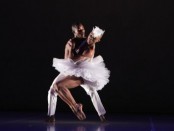
In the course of a single hour, Ms. Masilo managed to tell the basic story of Swan Lake—albeit a reconfigured version in which the Prince, Siegfried (a wiry, stalwart Songezo Mcilizeli) wants to run off with a male Odile, the black swan (Thamsanqa Tshabalala, tall, languid and quite agile in his pointe shoes) rather than marry the female Odette (Ms. Masilo, combining strength and fragility in equal measure). [more]
Our Mother’s Brief Affair
Linda Lavin wears Anna in Richard Greenberg’s "Our Mother’s Brief Affair" like a chic couture outfit with many layers each of which reveals layers of colorful, woven cloth. There is a constant glow about her as she relates, mostly in flashbacks, the story of an illicit, but exciting affair with a stranger she met many years ago while waiting for her son, Seth (a bemused, but effective Greg Keller) to emerge from his Juilliard viola lessons. [more]
Alison Chase/Performance
Chase put extreme physical demands on her dancers in some works, relied on their acting ability in others, most often combining these elements. She also—as the Pilobolus creators did—collaborated with her dancers on virtually all the choreography, so where she leaves off and they begin is difficult to ascertain. [more]
Newsteps: a choreographers series
Question: Why are these five young choreographers so unhappy, so full of angst and disquietude? There’s nothing wrong with exploring the darker side of life, but virtually all of the works presented in the 22nd anniversary chapter of Chen Dance Center’s Newsteps were either dreary or darkly agitated which probably should be taken as a sign of the psychological state of today’s younger artists. Even the one piece that seemed to have a dreamy quality quickly turned sour. [more]
American Dance Platform: Fist and Heel Performance Group & Martha Graham Dance Company
Reggie Wilson has been combining dance and cultural anthropology for many years. His troupe, Fist & Heel Performance Group, is a living testament to his passion with “Moses(es), Moses(es),” his full-company work, a living and breathing example of his philosophy. In his program notes, Mr. Wilson explained that this work was based on “the many iterations of Moses in religious texts, and in mythical, canonical and ethnographic imaginations,” a big subject that, unfortunately, doesn’t lend itself to a dance interpretation. In fact, Mr. Wilson’s description, not withstanding, it would be difficult to find any reference to that Jewish Biblical giant in “Moses(es), Moses(es),” except when the entire company sang a song whose only word was “Moses.” [more]
Maurice Hines: Tappin’ Thru Life
"Maurice Hines: Tappin’ Thru Life" is a pleasantly entertaining look at the personal and professional life of Maurice Hines. Of course, his life and career were closely intertwined with his late brother Gregory’s, his dance partner for many years. The story of how their parents, Maurice and Alma, pushed them—willingly, it seems—into show business and their almost immediate success is the gist of this smooth, occasionally exciting show. Two boys from D.C. made good. [more]
These Paper Bullets!
In Rolin Jones’ re-do of "Much Ado," the soldier buddies have become a Beatles-like rock band called The Quartos, the first of many Shakespearean references. Continuing the parallels: Leonato (the always terrific Stephen DeRosa) has become Leo Messina whose Hotel Messina takes the place of the Italian town, Messina; his daughters, Bea (Nicole Parker) and Higgy (Ariana Venturi) are the Beatrice and Hero characters, whose romantic adventures with Ben (Justin Kirk) and Claude (Bryan Fenkart) (stand-ins for Benedick and Claudio), are the strength-testing plot-churners here as in the original. [more]
The Algonquin Kid
Colby’s fascinatingly entertaining autobiography, "The Algonquin Kid," was turned into a one-time theatrical event as part of the Urban Stages’ Winter Rhythms series, hosted by Mr. Colby, produced and directed by Peter Napolitano, with Bill Zeffiro at the piano playing a rich list of songs associated with the many famously creative hotel guests and a few written by Mr. Colby himself. As a real-life Eloise, Mr. Colby was witness to much history and this show, barely scratching the surface, was witness to his good fortune. [more]
Once Upon a Mattress
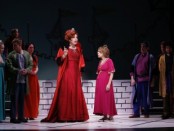
Jackie Hoffman is famous for her combination of sarcasm and wit in a small, rubber-faced package and John “Lypsinka” Epperson, for his uncanny way of taking lip-synching to the heights of great art. Hoffman imbues the character of Princess Winnifred with New York street smarts, despite coming from a Swamp. (Well, maybe NYC is a swamp!) Lypsinka’s Queen Aggravain is, amazingly, the most possessive mother ever and at the same time the most self-involved human in the kingdom. She does not want her simpering son, Prince Dauntless (the sweetly shlumpy Jason Sweet Tooth Williams), to marry—ever!—but if he doesn’t marry, no one else in the kingdom can, either. [more]
The Hard Nut
"The Hard Nut" is certainly beautiful to behold, its production design based on the work of Charles Burns whose graphic novels feature vividly surreal and haunting images. But, it’s also frustratingly erratic—slow at some points, confusing in others—and shtick-laden, with silliness too often overriding beauty and romance. The brilliantly witty sets and inventive costumes by Adrianne Lobel and the late Martin Pakledinaz, respectively, are totally in synch with Morris’ wickedly camp mentality. Indeed, they are a show in themselves, beautiful and witty in equal measures. [more]
Plaid Tidings
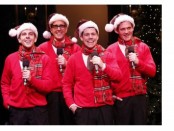
The tale of their demise in 1964 en route to a show in their native Pennsylvania and their temporary 2015 resurrection still works brilliantly. Even though "Tidings" cover a good deal of the "Forever Plaid" musical territory, the holiday songs they’ve added give this show seasonal warmth. [more]