News Ticker
- December 13, 2025 in Off-Broadway // BUM BUM (or, this farce has Autism)
- December 12, 2025 in Musicals // The Faggots and Their Friends Between Revolutions
- December 12, 2025 in Cabaret // Mary Foster Conklin — Mirrors Revisited (50th Anniversary)
- December 11, 2025 in Cabaret // Kathy Kaefer — Kiss Me Once: Stories from the Homefront
- December 11, 2025 in Off-Broadway // The American Soldier
- December 9, 2025 in Off-Broadway // This World of Tomorrow
- December 9, 2025 in Cabaret // A Noel Coward Celebration — Steve Ross & Friends
- December 7, 2025 in Off-Broadway // Diversion
- December 5, 2025 in Off-Broadway // Meet the Cartozians
- December 5, 2025 in Features // Tom Stoppard: An Appreciation
- December 4, 2025 in Off-Broadway // Practice
- December 4, 2025 in Cabaret // Eddie Bruce — The Magic & Music of Tony Bennett
- December 3, 2025 in Interviews // Interview with Ty Jones, Classical Theater of Harlem
- December 2, 2025 in Features // Gingold Theatrical Group’s 20th Anniversary Gala at The Players
- December 2, 2025 in Interviews // The American Soldier – An Interview with Douglas Taurel
Archive
The program consisted of three fairly short works, an intermission, and then the complete, relatively unknown Maddalena ai piedi di Cristo by Venetian Baroque master Antonio Caldara (1670-1736). The Church of St. Mary the Virgin provided an especially marvelous venue for this concert: the organic warmth of the American Classical Orchestra's period instruments and the singers' felicitous precision were exceptionally clear and clean in the high, mysteriously golden American Gothic space of The Church of St. Mary the Virgin in the Times Square area. The concert suffered only one difficulty: it was too long. Some people left starting around the middle of the second half; fortunately, their furtive, tip-toed departure did not disrupt the concentration of the musicians or compromise the performance.
[more]
Charlie is an amiable, 31-year-old struggling actor, writer and motivational speaker, who chickens out while calling a woman from a Village Voice personal ad. He soon becomes romantically involved with Carol, a successful lawyer, and later the temperamental Susan, a controlling singer. During these complications, we meet an assortment of colorful best friends, sidekicks, and view a satirically enacted commercial casting session. Most crucial is “Charlie’s Head,” which is the theatrical device of his subconscious being represented by another actor. This alter ego is always present, commenting on the action with the honesty and insight that Charlie is often unable to articulate.
[more]
We associate Jacobean revenge tragedy with the reign of King James I. Each play’s atrocities seemed to dare the next playwright with an unspoken “Can you top this?” Playwright John Ford continued the genre under the next king, Charles I, coming up with new and even more lurid variations. Red Bull Theater which specializes in the plays of Shakespeare and his contemporaries is offering a staging of Ford’s rarely revived masterpiece "‘Tis Pity She’s a Whore." While artistic director Jesse Berger has piloted a solid production which is a good introduction to this unfamiliar play, it all seems a bit tame when the script seems to cry out for tremendous excesses. As always, however, with Red Bull productions, the diction in this revival is impeccable and totally intelligible.
[more]
Four intensively self-involved, but personable, performers meandered on and off the stage which was glaringly lit by the geometrically arranged fluorescent bulbs designed by Barbara Samuels, their paths only occasionally crossing. Each was given or created a simple movement theme: one a stomping walk, another a finger snapping hip sway and a third some steamy hip-hop movement, complete with the usual badly rhymed “poetry” and a plethora of N- and F-words.
[more]
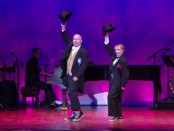
Sandy Duncan and Don Correia, wearing shabby tuxedos, top hats, and Converse high top sneakers, beautifully dancing and singing, “A Couple of Swells,” was one of the many highlights of the 92 Y’s Lyrics & Lyricists Series’ "All Dancing! All Singing! Irving Berlin in Hollywood." Ms. Duncan and her husband Mr. Correia vibrantly demonstrated why they have had such enduring careers in show business, which have included a number of appearances on Broadway. Guest starring here, they effortlessly recreated that famous number from MGM’s 1948"Easter Parade," originally performed by Judy Garland and Fred Astaire, who replaced the injured Gene Kelly. The tune itself dated from 1917, when it had the unpopular title and lyrics, “Smile, and Show Your Dimple.”
[more]
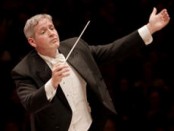
On the evening of this performance under review, the audience was treated to a rare surprise: Victoria Bond, writer of the music, was not only present but was also the conductor for the evening. Gramercy Trio, under Bond’s musical direction, skillfully maneuvered through the score. Filled with atonal and complex orchestrations, Bond’s music strikes a fine balance between some very vibrant and cheery melodies followed by quite a few haunting and more chaotic progressions which coincide with the show’s climax.
[more]
Clyne's music is a combination of electronic and recorded material on the one hand and live performance on the other. In both process and product, Clyne incorporates and is inspired by other creative media; her works can “stand alone” or in conjunction with their original collaborators. Two works originally conceived in collaboration were performed on April 23 “on their own.” Fits + Starts for amplified cello and tape (2003) was performed without dancers; Rapture for clarinet and tape (2005) was presented without the visual components that accompanied its original performances.
[more]
"Something Rotten!" isn’t just for insiders, though. Its pleasures are multiple: a divinely hyper cast led by Mr. d’Arcy James, John Cariani (sweet and lovable as Nick Bottom’s feckless younger brother, Nigel) and Christian Borle (manically over the top as a rock star Shakespeare); a fabulously tongue-in-cheek Tudor-ish set and costumes (Scott Pask and Gregg Barnes); a bouncy, funny score (Wayne Kirkpatrick and Karey Kirkpatrick); and the wittiest, non-stop choreography on Broadway (Casey Nicholaw who also directed). Mr. Nicholaw’s pacing is breathtaking. It’s almost too exhausting to keep up with the unstoppable cast.
[more]
"It Shoulda Been You" is the new musical by Brian Hargrove (book and lyrics) and Barbara Anselmi (music) and marks the Broadway directing debut of Broadway veteran David Hyde Pierce. The theme is a wedding. Nothing new about that. The two families are of two religions. Nothing new about that, either. What sets "Shoulda" apart are its hilariously surprising twists and the perfectly hewn comic turns by a cast headed by three brilliant ladies: Lisa Howard, Tyne Daly and Harriet Harris, each adroit comic actors.
[more]
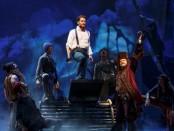
Directed by the usually innovative Diane Paulus (whose credits include the critically acclaimed "Hair," "Porgy and Bess," "Pippin"), "Finding Neverland" has been created by the numbers and its staging suggests a great many earlier musicals. The score by Gary Barlow & Eliot Kennedy, long associated with the UK band, Take That, and writing their first musical, is filled with serviceable and prosaic ballads and anthems (with many false rhymes) to pleasant melodies but none which really forward the story. With titles like “Believe” and “Neverland,” they often have an overly familiar feeling. While Finding Neverland steals shamelessly from the 1954 Jule Styne-Comden & Green musicalization of Barrie’s play"Peter Pan," it never comes close to the charm of that earlier musical.
[more]
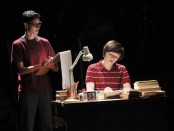
Inside this less-than-"Fun Home" of deception and repression is an exceedingly endearing and relatable cast of characters. Sydney Lucas, Emily Skeggs, and Beth Malone star as Small, Middle, and Adult Alisons, respectively; while their individual mannerisms and inflections may not depict a consistent character, their passionate performances work well enough together to amount to a moving “portrait of the cartoonist as a young woman” (or what have you). Stage and screen veteran Judy Kuhn likewise shines—or, more appropriately, fades—as the Alisons’ defeated mother Helen. As her former Disney princess voice glides across a broken ballad, Kuhn shows the anguish of a wife with nothing left to sing about. Perhaps most notably, Michael Cerveris’ heartbreaking portrait of Bruce is both authoritative and impotent, loveable and despicable.
[more]
On April 27, Symphony Space and Words on Dance presented “Christopher Wheeldon in Conversation with Rita Moreno: From Ballet to Broadway,” a delightful romp through the dancing career of one of Broadway’s brightest choreographers. The lecture was moderated and led by Oscar, Emmy, Tony and Grammy winning actor-singer-dancer Rita Moreno. Moreno’s conversation with Wheeldon was prompted by a series of film clips featuring him as a young dancer as well as brief segments of his past choreographic work with the New York City Ballet, the San Francisco Ballet, the Royal Ballet, the Joffrey Ballet, the Wheeldon Company, and his most current work in the new Broadway production of "An American In Paris" where he serves as both director and choreographer. It is the fusion of his classical European ballet training, his love for American music, American dance stars, and American dance that Wheeldon has established himself as a leading force in the world of dance.
[more]
A play that has much opportunity to expose the relationship of casting director with actor, not merely across the table but across racial backgrounds and stereotypes begins as it promises. Enter Cobb, a large black man, anxiously awaiting the call of the casting assistant as he proceeds to unapologetically disturb the entire waiting room with his nervous behavior. The thought of playing Othello brings back memories of his youth and a single theater teacher unwilling to allow him to play any role other than that which he might be traditionally cast in for an assignment. As the character’s exposition is beginning to evolve, the casting agent interrupts us. We can tell the actor has an agenda to prove; that now as a grown man in this audition things will be different.
[more]
Unlike D’Amour’s last New York play, "Detroit," a Pulitzer Prize finalist which had four characters and a tight arc, "Airline Highway" is diffuse and sprawling with a large cast of 16 actors ably piloted by director Joe Mantello. Set in the shabby, rundown Hummingbird Motel on New Orleans’ Airline Highway, the play introduces us to a colorful but down-and-out cast of characters just eking out a living: Krista, a now homeless stripper in her 30’s; Tanya, a 62-year-old hooker and drug addict; Terry, an African American handyman always in need of money; Francis, a 50ish poet who seemed to have missed his moment, and Sissy Nan Na, a transvestite bartender and karaoke wrangler on Bourbon Street of African American and Puerto Rican descent. The motel is managed by Wayne, in this late 50’s, always good for a soft touch or ready to tell his life story.
[more]
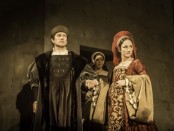
As deftly adapted by British playwright Mike Poulton and vigorously directed by Jeremy Herrin, the plays on the stage of the Winter Garden vividly bring to life the British court and its intrigue during the early sixteenth century, from about 1529 - 1536. Poulton wisely leaves out Cromwell’s childhood and youth described in the first novel and begins with him as lawyer to Cardinal Wolsey where the real story begins. However, like the published books, many of the major events take place between the scenes and the characters meet up to discuss the outcome. These are not plays for those who have not read the novels or are not familiar with the historical events or characters as there are too many people and relationships to keep straight if one doesn’t. Nine of the actors play one character each, the rest play between two and four.
[more]
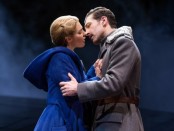
Where is John Doyle when we really need him to whip new life into a musical? [Answer: he’s directing another Broadway musical, "The Visit."] There’s a moving chamber musical hidden amidst all the incessantly dashing chorus kids, shifting scenery, smoke effects, loud explosions and eerily surreal video projections that are the raison d’être of this production from the Nobel Prize winning novel by Boris Pasternak. This more-is-more approach to the new musical "Doctor Zhivago"—written by Michael Weller (libretto), Michael Korie & Amy Powers (lyrics) and Lucy Simon (music), choreographed by Kelly Devine and directed by Des McAnuff—dulls any emotional impact the story and the characters might have evoked.
[more]
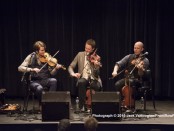
The Nordic Fiddlers Bloc consists of Olav Luksengard Mjelva from Norway (hardanger and octave fiddles), Kevin Henderson from Shetland (fiddle) and Anders Hall from Sweden (fiddle and viola); the three met informally through mutual friends and colleagues and have been playing together seriously for some five years. Each artist has an extensive and stellar career apart from and in addition to Nordic Fiddlers Bloc. They live their professional lives in overlapping spheres of teaching and composing as well as collaborating, recording and performing with other artists and groups. As the competently English speaking Nordic Fiddlers Bloc, they have developed a congenial performance style that alternates humorously self-deprecating but helpfully informative banter with individual “tunes.” The evening had the feel of both formal concert and calmly funky gig.
[more]
Rodriguez, Brown and McNeill all go that extra mile to establish a connection - and make eye contact with every single audience member contained on the three sides of the theater. As they share their stories, the emotion and passion used to bring out the truth in each of these East Village residents is well translated from a period in time to the present day. While the historical elements are fascinating and provide context, the ultimate theme of acceptance, finding a guiding light to outshine the world's cruelty, and celebrating life creates a lasting impact.
[more]

The Ballet Hispanico has long been revered as a beacon of dance art in the Latino community. Its school and repertory have helped illuminate the Latino experience while instilling the discipline and joy of dance, particularly under the direction of its founder, Tina Ramírez. Eduardo Vilaro, the troupe’s artistic director, seems to be slowly turning the company away from ethnic exploration towards the generic modern dance aesthetic of companies like Complexions and the soon-to-be-defunct Cedar Lake Contemporary Ballet. Although the three works on this program were choreographed by Hispanic artists to music by Spanish-influenced composers with themes seemingly concerning the nature of Latino behavior, the impression was of a company working hard to find a choreographic aesthetic that can satisfy its identifying with both the Latino community and the newer ideals of modern dance, only partly succeeding. He may eventually find this balance between the two ideals. Certainly he has an absolutely brilliant company of good-looking, talented dancers to work with.
[more]
The illustrious Chita Rivera appears in an elegant floor length white dress and bedecked with jewels. The grande dame’s presence electrifies the audience. Unfortunately, with little to work with, she postures and delivers McNally’s lines the best she can. Along with co-star Roger Rees as Anton Schell, her lover from the old days, she breathes some life into the song, “You, You, You.” When she dances, the ball is back in her court. There is a magnificent moment when she dances with her younger self (Michelle Veintimilla). Sensitively choreographed by Daniele, they do a sweet dream-like duet with grace and passion, the highlight of the evening.
[more]
The ample set by John McDermott is an intelligent divide between interior and exterior life, the run down streets of Belfast and a humble, wooden and warm rectory. Contemplation goes on in both places, be it perils of war or morals. Famed film director Claudia Weill returning to the New York stage establishes this well. Each character has his or her place and is well defined. Weill has a clear vision of the conflict at hand. Impressive music, explosions and street noise punctuate the scenes artfully with sound design by Daniel Kluger.
[more]
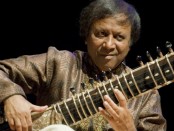
Shahid Parvez Khan comes from a long line – seven generations – of musicians and sitar masters. This fact is emphasized in both the musician's own and the World Music Institute publicity materials. Shahid Parvez Khan's ancestry is critically important for those who are well versed in both historical and contemporary Indian culture and music, but for those who know little about Indian music, it figures only as an interesting biographical fact. What is much more relevant to the listening experience is Shahid Parvez Khan's assertion that “the Sitar and Self are identical entities,” a statement confirmed by the experience of simultaneously watching and listening to the sitar player as well as his colleagues.
[more]
Set in South Wales in the 1950’s, "The Unexpected Guest" (first produced in London in 1958) is a mystery surrounding the events that led up to the death of Richard Warwick, patriarch to the Warwick fortune. In the opening minutes of the play, his lifeless corpse is discovered by Michael Starkwedder (Nicholas Viselli), a seemingly random stranger who—upon driving his car into a ditch—stumbled up to the Warwick Estate in search of assistance. Upon discovering the body, Michael is confronted by Laura Warwick (Pamela Sabaugh), now widow to Richard.
[more]
Defaa’s direction is imaginative and is aided by the sensational choreography of Rayna Hirt, in creating precise, amazingly arresting production numbers with the large cast on the small stage. Standouts include a rousing military tap dance, Cole Porter’s “Find Me a Primitive Man,” with cast members dressed as cavemen, and a thrilling version of Noel Coward’s “Mad About The Boy,” with cast members wearing all black.
[more]
Working from Simon Corble and Nobby Dimon’s 1995’s original concept, Patrick Barlow’s adaptation is a witty, tongue-in-cheek, homage that recreates the plot of the film, with comic flourishes. There are also verbal, musical and visual references to other Hitchcock films such as The Man Who Knew Too Much, North By Northwest, The Lady Vanishes, Vertigo, The Birds, Strangers On a Train, and Psycho. There’s an updated nod to Downton Abbey.
[more]
Though this sophisticated story was intended for equally sophisticated adults as part of the mores and manners of a society and culture gone with the wind, the stylish and colorful Broadway revival has solved all these problems with Heidi ("Call the Midwife," "Cranford," "Upstairs Downstairs") Thomas’ new adaptation of the Alan Jay Lerner book and the casting of Disney heroine Vanessa Hudgens in the title role. Gigi is now over 18 and Gaston is in his 20’s, which puts a decidedly different complexion on things. “Thank Heaven for Little Girls” is now sung by Gigi’s grandmother Mamita and her Aunt Alicia. All decidedly right and proper and the word courtesan (which is what this is about) is never once mentioned. Sex is never even an issue. Here love is simply a game. So what are we left with?
[more]
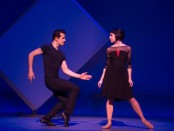
The director/choreographer Christopher Wheeldon has re-envisioned this icon with a panache that borders on the genius, fulfilling the promise he showed with his extraordinary choreography for the 2002 "Sweet Smell of Success." This time around, from the windswept opening sequence, with its thumbnail sketch of W.W. II history to the breathlessly simple fade-out, it was clear that Wheeldon was in total command of his material, illuminating all of "An American in Paris"’ emotional twists and turns.
[more]
The first problem is the attractive modern setting by Walt Spengler of the wedding breakfast of Claudius and Gertrude with a huge cake in the background. The issue is that the table and the cake remain on stage for the entire evening, a terrible distraction. Does this palace have only one public room? The next situation is that Pendleton has chosen to cut both ghost scenes so that the audience is never told that Gertrude had an affair with her brother-in-law or that Claudius poisoned his brother Old Hamlet. The problem that this creates is that young Hamlet has to be played as paranoid as we have no way of knowing what the off-stage ghost told him, nor do we know what is bothering him when he acts so badly to his mother and step-father.
[more]
“A dance of our actions to your reactions. No one knows the steps yet,” explains the charming and funny performer Colin Davis, during his introductory remarks to Séquence 8, a thrilling program of contemporary circus sequences. For 95 minutes, there is one often dazzling number after another, performed by this Montreal- based troupe of eight, athletic, international, youthful performers. Their physical prowess is combined with modern dance choreography, acrobatics, verbal and visual comedy, a lively score of original music and pop songs, and striking lighting.
[more]
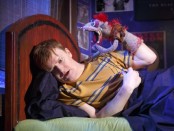
Though operating under the guise of a rather nonsensical comedy, Askins’ play is actually a sophisticated examination of how we handle grief. The text depicts two competing sides of a boy newly without a father and in the throes of puberty: while Jason appears too innocent to ever do anything wrong, the sock on his hand offers a convenient outlet for his bad behavior. Laced in this dichotomy are hints of schizophrenia, allusions to autoerotic stimulation, and a critique of the Christian notion that “unholy” behavior exists outside of the pure self and thus can be forgiven and eliminated. The question literally “at hand” is as follows: is the puppet actually possessed or is Jason mentally ill? If the latter, to what extent should the otherwise sweet boy be held responsible for the evil puppet’s actions?
[more]
The Hindemith was beautifully performed and the second half of the concert was successful. But the first half, the Adams, was not a success. It was not an abject failure – Hayes wouldn't permit that – but the performance did not produce the kind of considered satisfaction that New York Choral Society concerts typically do. The reasons for this lay in the nature of Adams' piece and in particular features of the performance itself.
[more]
An actor in a suit wearing a pony mask and a tail trots out on stage a few times and later appears some more times without the mask to sing. A woman in a burqa (ordered from Amazon) walks around with a laptop. An ensemble of relatively mature women cavorts as high school cheerleaders, one of whom has sex with the pony. This same multi-racial group have another production number as all of them portray teen detective Nancy Drew. The show opens and closes with a young girl dressed as a boy in a seersucker shorts suit who sings. The drawn out finale involves a bunch of polygamous wives wearing different colored pastel gowns and singing what is called “Oratorio.” These are among the David Lynch-type surrealistic flourishes on display.
[more]
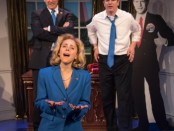
After a brief stint in the future, the show jumps back in time to the 1992 evening of Bill Clinton’s election. As the First Lady, Broadway veteran Kerry Butler is bold with her characterization, using vocal variation and employing highly stylized physical choices to bring Hillary to life. Still grandiose at best, Butler brings just enough warmth and heart to the character to ground the few fleeting dramatic moments. Early on the music is quite simply that of a musical comedy, but the writers manage to incorporate signature moments to showcase Butler’s true vocal abilities, in none more so than “Both Ways,” a power ballad performed by Butler with familiar command and ease.
[more]
«
1
…
100
101
102
103
104
…
114
»
Copyright Jack Quinn, 2001-2023