One of the strengths of this performance was in fact the clarity with which the many elements of Bach's music could be heard: without any compromise to tempo and without favoring any theme, instrument or voice over any other, Bach's music was unpacked. Because of the period instruments – and the skill of the musicians – even the most densely monumental passages, including the final movements, were powerful not because they were monolithic but because they were revelatory. Subtleties were not lost but illuminated. [more]
This season's over-arching theme, as explained in the always helpful program notes, is music that reflect(s) the idea of number in some way." In this first concert, "1 on 1: Music for Solo Instruments and Choir," the focus was on pieces with one choir and one musical instrument. [more]
The New York Pops are the perfect antidote for those who suspect orchestral music to be dull or tedious. Proving again that celebrity performers are not needed to fill performance venues, Steven Reineke and his orchestra brought Carnegie Hall to life with their second installment in what is shaping into a rather exciting season. With adoring regard By Special Request: An Evening with the Orchestra truly had two stars, the orchestra itself and the music of seven time-honored composers. [more]
Since its composition and premiere in 1978, "The Face on the Barroom Floor" has been a familiar piece in the repertoire of small American and European opera companies for good reason: it is an accessible, well-conceived and lovely work. "Emperor Norton," written just four years later, is even stronger than The Face: it is more substantive musically, artistically and intellectually. This performance was "Emperor Norton"'s New York premiere. [more]
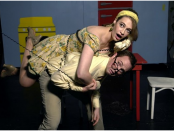
Encompass New Opera Theatre, under longtime director Nancy Rhodes, is presenting the East Coast premiere of Richard Pearson Thomas's chamber opera A Wake or a Wedding at the Baruch Performing Arts Center. The opera is a burlesque of 19th Century melodrama, with stereotypical characters and a series of silly 'revelations' to resolve the convoluted plot. The music uses an accessible mid-century modernist style, conservative but not inappropriately so.
[more]
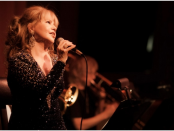
In "Hard Rain," Jungr performs songs which capture the artists' views on subjects involving what she calls the three "P"s: philosophical, political, and personal. These are the issues that pulled the heartstrings of Dylan and Cohen and were the driving force behind most of their lyrics written back in the tumultuous 60's. [more]
Acclaimed playwright Xiu Fen – one of China's most influential contemporary women writers – takes Eugene O'Neill's setting and opening plot elements, transforming Puritan New England into a small Chinese village, and focuses on the cruel, miserly old man, his new, very young and beautiful wife, and the young son who enters into an adulterous affair with his father's bride. O'Neill himself, writing stunningly innovative plays in the early twentieth century, looked to ancient Greek tragedies for his inspiration and to tragedy's archetypal figures. [more]
Jon Peterson's dazzling performance in "He Wrote The Good Songs" will enthrall admirers of Anthony Newley and joyously enlighten those interested in show business that are unfamiliar with him.
These are all interspersed with very well chosen and delivered biographical reminiscences that are addressed to the audience. Included is a hilarious recounting of the nine-month film shoot of Dr. Doolittle, and unpleasant co-star Rex Harrison "who was bitten by every animal" and nicknamed "Tyrannosaurs Rex" by the crew. Through expert mimicry Peterson also portrays various figures from Newley's life such as his parents, a stuffy teacher, and producer David Merrick. [more]
Despite the sometimes-questionable song selection and orchestration choices, All You Need Is Love upheld the New York Pops' well-established standard of excellence. Reineke's unparalleled expertise and steady hand provide evenings of culture, history and entertainment time and time again. [more]
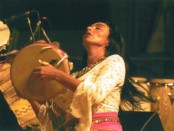
Choosing National Domestic Violence Awareness Month as the time to premiere her Voices of the Tarantate, internationally acclaimed Italian singer and dancer Alessandra Belloni led her dance troupe, Daughters of Cybele, with additional dancers and performers, in a remarkable performance whose purpose was to examine the annihilating violence of domestic sexual abuse, to identify the rituals of song, dance and folk traditions that can heal the pain, and to celebrate rebirth, wholeness and sanctifying joy. [more]
Since 2001, Gotham Chamber Opera has specialized in the production of major operas – well known, not known, new, traditional, experimental – and has developed a reputation for intelligence and a consistently high level of artistic integrity. This pair of Martinu comic operas, sung by an enthusiastic young cast performing on a gorgeously set stage, preserves Gotham Chamber Opera's fine reputation. [more]
The debonair Holbrook sang his way down memory lane with his enchanting voice and interesting stories about Astaire that he shared in-between songs, many showing a side to the man that is relatively unknown. This is one of the aspects of the show that makes it intriguing and a must-see for those who appreciate the talents of this widely respected artist.
Most remember Fred Astaire for his singing and dancing, and for his movie roles, but there was much more to the man. [more]
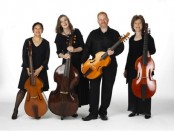
English baroque court music is steeped in contradictions. It is both intimate and public; it is conventional and playful; it is topical and occasional on the one hand and non-specifically accessible on the other. Lawes inherited these basic contradictions together with the demanding formal features of traditional musical genres. Within these constraints, he was so daringly inventive that artistic freedom is ultimately more his signature than genre or time period. [more]
it was almost entirely slow music, and over 90 minutes of it, something which might give even a Wagnerian pause. This is billed as a new piece, so perhaps it's not too late to suggest that the authors consider some discreet compression, as the opera might benefit from judicious cuts. It takes perhaps half an hour to read the original story, and its brevity is one reason for its effectiveness; but this was more than three times that length, though the original Hawthorne plot has been only very slightly expanded. [more]
"I've been a pauper, a poet—no! That's not right! How does it go?" she feigned confusion as the audience called out lyrics before she launched into a rollicking "That's Life." Having seen the original cast of My Fair Lady, she was transfixed at observing Rex Harrison on the street soon after and "stalked him" she recounted before singing a touching "I've Grown Accustomed to His Face" and a jazzy "On the Street Where You Live." [more]
Strongest in the cast were Ms. Brittingham as Laurie and Mr. Fredericks as Grandpa. Some of the other singers were defeated by the church acoustics, and director Lynne Hayden-Findlay did what she could with the impossibly tiny playing area. Conductor Samuel McCoy kept everything running smoothly and the ensemble sounded well. [more]
The evening's genial host, artistic director and writer lyricist David Zippel explained that the purpose of the event was to rediscover "hidden gems" from shows that suffered through "the Broadway rollercoaster of failure." [more]
Two sensational sequences were dances from Forever Tango and Swing! Mark Stuart and Mindy Wallace breathtakingly did a super sensual "Libertango," climaxing with him tossing and catching her a few times. "Don't try that at home," joked Siegel. "Sing, Sing, Sing" appeared in Swing! and Fosse, both in 1999, and was aggressively and euphorically tapped and choreographed by charismatic Jimmy Sutherland.
[more]
Award-winning director Lennie Watts lived up to his reputation for his part in making the night a success and acclaimed musical director Steven Ray Watkins brought the piano to life with his accompaniment to her songs. [more]
The three sopranos, Compassion, Freedom I and Freedom II, whether singing alone or in various combinations, functioned as the voices of Ginsberg's muses, embodying individual threads of Ginsberg's philosophical preoccupations and convictions. [more]
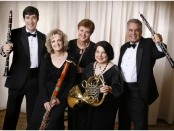
Last was the gem of the concert, Sierra's new Sexteto para piano y vientos in its first performance anywhere. This piece is a concertino in three movements, and often the winds become an extension of the piano, sustaining and elaborating its lines and motifs. [more]
The understanding of music as an exploration of the shifting relationship of sound and silence, of creation and emptiness echoes Poe's purposes in The Raven: the story of a love lost and never to be recovered is also an exploration of constantly shifting experiences of discovery and loss, hope and despair, communion and isolation, life and death. [more]
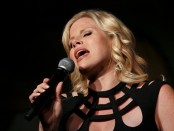
“For years I walked by this place and saw all the fancy people going in. It’s a dream come true to be here,” said Megan Hilty during her wonderfully eclectic debut cabaret show at the Café Carlyle. [more]
David Lang's forty-five minute long piece is divided into five movements, all a cappella, with the exception of the fourth movement in which a snare drum is played throughout. Three of the five movements the first, third and fifth use Stephen Foster (1826-1864) song texts; the text of the second movement is Lang's adaptation of Civil War soldier Sullivan Ballou's letter to his wife, a now famous document that encapsulates the ways in which the war shredded domestic lives; the text of the fourth movement is Lincoln's core statement about both identity and citizenship, As I would not be a slave, so I would not be a master. [more]
"For many of us this was our golden age," said creator, writer and host Scott Siegel in his introduction that for many present devotees of the art form that this evening's presentation was very meaningful as this was the era in which they came of age seeing many of these shows in their original productions and they are quite appreciative of them. [more]
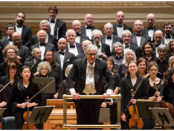
When WQXR's Elliott Forrest joined James Conlon on the podium to engage in a brief conversation about the evening's program and its world-wide live broadcast, the audience cheered; shouts and ululations reverberated. [more]
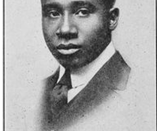
The performance was superb both for its innate musical excellence a first rate piece of music was given a first rate presentation and for the explanation of the work's difficult, extended history in predominantly white concert venues. [more]
Mark Shapiro, music director and conductor of The Cecilia Chorus, explained in the program notes that the evening would present an exploratory voyage through the spiritual cosmos, searching out the individual's place in the universe. [more]
As always, the bright, clear acoustics of St. Jean Baptiste at Lexington Avenue and 76th Street served the music and the musicians well. The church's highly ornamented, shiny blue, white and gold American Baroque interior seemed at first at odds with Bach's Passion story. Throughout the sanctuary, however, major statues were shrouded head to toe in the purple cloths of Lent; it was as if unknown and unnamed witnesses mourned in the midst of glitter and jewels. [more]
Every song was well chosen to demonstrate the versatility and range of R & H and the singers all met the challenge. Rebecca sang the often neglected "The Gentleman is a Dope" (Allegro) and turned it into a showstopper. The show closed with "Edelweiss" (Sound of Music) that Ted said people think is an old Austrian folk song but was written by these legendary collaborators. It was the perfect ending for a wonderful tribute to a never to be duplicated writing team whose shows and music will live forever. [more]