JOEL BENJAMIN was a child performer on Broadway and danced with leading modern dance and ballet companies. Joel has been attending theater, ballet and opera performances ever since childhood, becoming quite opinionated over the years. He was the founder and artistic director of the American Chamber Ballet and subsequently was massage therapist to the stars before becoming a reviewer and memoirist. He is a member of the Outer Critics Circle.
The Ballet Hispanico has long been revered as a beacon of dance art in the Latino community. Its school and repertory have helped illuminate the Latino experience while instilling the discipline and joy of dance, particularly under the direction of its founder, Tina Ramírez. Eduardo Vilaro, the troupe’s artistic director, seems to be slowly turning the company away from ethnic exploration towards the generic modern dance aesthetic of companies like Complexions and the soon-to-be-defunct Cedar Lake Contemporary Ballet. Although the three works on this program were choreographed by Hispanic artists to music by Spanish-influenced composers with themes seemingly concerning the nature of Latino behavior, the impression was of a company working hard to find a choreographic aesthetic that can satisfy its identifying with both the Latino community and the newer ideals of modern dance, only partly succeeding. He may eventually find this balance between the two ideals. Certainly he has an absolutely brilliant company of good-looking, talented dancers to work with. [more]
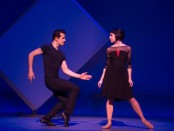
The director/choreographer Christopher Wheeldon has re-envisioned this icon with a panache that borders on the genius, fulfilling the promise he showed with his extraordinary choreography for the 2002 "Sweet Smell of Success." This time around, from the windswept opening sequence, with its thumbnail sketch of W.W. II history to the breathlessly simple fade-out, it was clear that Wheeldon was in total command of his material, illuminating all of "An American in Paris"’ emotional twists and turns.
[more]
There is audience participation; a huge orchestra—conducted by Patrick Vaccariello—that keeps rising from the depths, acrobatic choreography, and, most of all the mesmerizing Rockettes who look ravishing in their many costumes (designed by ESOSA) and routines.
As my grandmother used to say, “What’s not to like?” I agree wholeheartedly. [more]
What became clear over the course of the four performances under review attended were the subtle changes in Mr. Taylor’s work over the years, how his works have become less deep and more oddball. This was a terrific way to see everything from his delightfully lovely “white” ballet, “Aureole” (1962), to his most recent opus, “Death and the Damsel,” a dark, distorted—sadistic, even—view of female sexuality. No matter what period the works come from, and no matter what one thinks of them, they are always models of craftsmanship, design and musicality. [more]
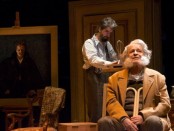
In Doug Wright’s "Posterity" at the Atlantic Theater Company two monumental cultural figures of 19th century Norway lock horns in a battle of wits and sensibilities with tragic results. Wright, who seems to have a penchant for writing about real people (viz. "Quills," "I Am My Own Wife," and "Grey Gardens"), here, takes on Henrik Ibsen, monumental 19th century playwright, and sculptor Gustav Vigeland, forty years his junior. [more]
The maternal ending was considered problematical in 1988, but seems less of a copout in 2015. In fact, the feminist thrust of the play has also dulled in the ensuing decades, making Ms. Wasserstein’s play far less effective as an instructive tool. " The Heidi Chronicles" has always been weighed down by too much polemic passed off as drama. What keeps this production afloat now is the incredible filigreed and witty lines that so quickly delineate each character’s foibles and feelings. [more]