News Ticker

Seth Reiser

Zemlinskys Zimmer/Zemlinsky’s Room
June 10, 2025

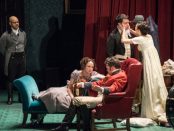
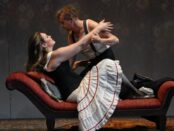
Conducted expertly by Tiffany Chang in a new chamber orchestration by Roland Freisitzer, this three-character opera is inspired by the lush romantic sound of Richard Wagner and Richard Strauss. As the libretto is based on a German prose translation of the Wilde play by Max Meyerfeld, there are no arias per se but the leading character Simone, a Florentine fabric merchant, has many long passages. Artistic director Philip Shneidman who staged the evening has chosen to set it in turn-of-the-last-century Vienna, home to Zemlinsky, rather than Florence in the 16th century as Oscar Wilde’s play is set. This takes a bit of getting used to considering the plot and the subject matter. However, Kylee Loera’s projection design of historical photographs of Vienna city streets and then an art nouveau wallpapered room sets the proper mood for pre-W.W. I Vienna. [more]
The Swamp Dwellers

April 14, 2025

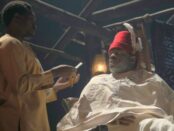
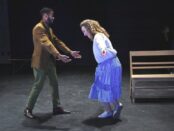
Before he was a Nobel laureate, before his name was canonized in the firmament of world literature, Wole Soyinka was a young playwright—barely in his mid-twenties—when he penned "The Swamp Dwellers" in 1958. And yet, this early work bears the unmistakable gravitas of myth: a compact, hour-long domestic drama that pulses with elemental force. In director Awoye Timpo’s hauntingly grounded revival, the piece reverberates with contemporary resonance. It is at once a family portrait and a parable, steeped in the muddy waters of postcolonial Nigeria and rippling outward into modern-day concerns—climate change, disillusionment with institutions, and the aching silence left by absent gods. [more]

American One Acts, a double bill

June 8, 2023

The little OPERA theatre of ny has become known for its adventurous programing of rarely seen and heard operas in English including the New York premieres of Benjamin Britten’s opera for television, "Owen Wingrave,"  and Carlisle Floyd’s final work for the stage, "Prince of Players," as well as new translations of works by Gluck, Mozart and, Rossini. Now in association with Harlem Opera Theater and National Black Theatre, they have presented an unusual double bill of contrasting "American One Acts," both set in the American South. Act I was a performance of "Highway 1, U.S.A." (1962) by William Grant Still, called the Dean of African American Composers, and the first Black composer to have an opera performed by a major company, his "Troubled Island" premiered by the New York City Opera in 1949. The second half of the bill was Kurt Weill’s "Down in the Valley," a folk-opera intended for schools and community groups, written for the radio in 1945 and then revised for stage production in 1948 at Indiana University by the Bloomington Opera Workshop. After its premiere it had 85 amateur productions in the following ten months. However, it has not remained in the repertory. [more]

Vanity Fair

April 11, 2017

Tucker’s production uses seven actors playing 20 named characters plus members of the ensemble: the women (Joey Parsons and Hamill play one each, good girl Amelia Sedley and bad girl Becky Sharp, respectively) and the men play all the rest, including other female characters with the addition of wigs and slight costume changes. This allows the cast to demonstrate tremendous versatility in these juicy roles. [more]

Phoenix Rising: Girls and the Secrets We Keep

July 10, 2016

"Phoenix Rising: Girls and the Secrets We Keep" takes place in two worlds: the New York CBGB punk scene of 1985, and a dark, Greek mythological other world of indeterminate time and place. In 1985, a high school social worker by the name of Grace mentors an after-school, trauma therapy session. In the other world, the Archetypal Mother/Storyteller presides over her “damaged souls” and reads from an ancient tome, the “Phoenix Book.” [more]

Winners

February 4, 2015

Although I was never bored, at 135 minutes (including intermission) the play is quite long for the story it's telling. The animals, as fun as they are, get a considerable amount of stage time but never move the narrative forward. They even get solo spots where they recite beat poetry, which are brilliant and amusing but stop the show dead. Even money says that if the parents’ through line was clarified and strengthened this play would slim down easily to a more appropriate length. [more]