
News Ticker

Rosie Benton

Stranger Things: The First Shadow
April 30, 2025

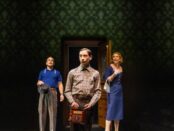
"Stranger Things: The First Shadow" concludes with a Netflix joke that, besides being pretty funny, also represents a bit of chest-thumping for the play's outsized number of developers who manage to successfully blur the line between theater and television. Whether that's a good thing is a matter of taste, or a lack of it, but there's no denying that "Stranger Things: The First Shadow," which has journeyed from the West End to Broadway, is exactly the type of experience it wants to be: immersive; scary; and, even if you've never seen an episode of the streaming series from whence it comes, familiar. That's because, imaginatively befitting its source material, the play is a storytelling stew of cultural callbacks that owes a debt--presumably unpaid-- to Stephen King, Wes Craven, and other unsettling shapers of Gen-X childhoods. [more]
Illyria

November 17, 2017

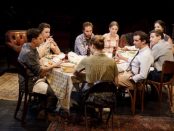
The conversations revolve around the topics of the New York Shakespeare Festival’s poor finances in 1958, Vaughan’s defection to the Phoenix Theatre which was paying a living wage while the NYSF was not, the choice of Mary Bennett (Vaughan’s choice) or Peggy Papp (Papp’s choice) to play Olivia, George C. Scott’s defection to the movies in his unnamed first film, the House UnAmerican Activities Committee appearances by both Papp and Gersten which has put their jobs in jeopardy, and whether Free Shakespeare in the Park can survive without charging admission. However, none of these conversations are allowed to erupt into real conflict. We are placed in the center of the action as though we are in the room where it happened, but the dialogue remains on the level of chit-chat rather than life or death threatening decisions. The problems never seem to be resolved and the play moves on to its next topic. [more]