Full Contact

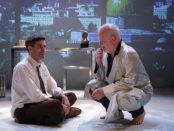
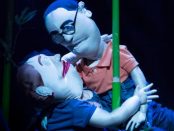
In its final form, the piece stands as both elegy and proclamation: a testament to a heritage reclaimed, and to the fierce, necessary act of making contact—full, unguarded, and profoundly human—with oneself. Estrada exists here in a purgatorial tension, suspended between the gravitational pull of guilt and the stark instinct toward survival. The play chronicles not simply his attempt to move forward but the Herculean labor of taking even the first tremulous step toward healing—an act rendered as perilous as any physical combat he has ever undertaken. At times it seems his own mind, a treacherous and labyrinthine opponent, threatens to drag him beneath its tide. And yet, in the fragile space between collapse and catharsis, the work finds its most haunting register: a portrait of a man grappling to reclaim his narrative before the darkness that shaped him claims him once more. [more]