News Ticker
- April 7, 2026 in Musicals // No Singing in the Navy
- April 7, 2026 in Off-Broadway // Uncle Vanya, scenes from country life
- April 7, 2026 in Off-Broadway // The Last Audition
- April 2, 2026 in Columns // THE EXPLOSIVE GROWTH OF FILM AND TV PRODUCTION FACILITIES IN THE NEW YORK / NEW JERSEY AREA
- April 1, 2026 in Musicals // Gotta Dance!
- March 31, 2026 in Off-Broadway // Jesa
- March 30, 2026 in Musicals // Monte Cristo
- March 30, 2026 in Off-Broadway // The Unknown
- March 30, 2026 in Off-Broadway // Antigone (This Play I Read in High School)
- March 30, 2026 in Off-Broadway // Antigone in Analysis
- March 29, 2026 in Off-Broadway // Bughouse
- March 28, 2026 in Musicals // The Paparazzi
- March 27, 2026 in Broadway // Giant
- March 26, 2026 in Off-Broadway // Ivanov
- March 25, 2026 in Musicals // Blood/Love
- March 24, 2026 in Off-Broadway // Touch
- March 24, 2026 in Music // The Silent Serenade
- March 23, 2026 in Musicals // The Wild Party (New York City Center Encores!)
- March 22, 2026 in Broadway // Every Brilliant Thing
- March 22, 2026 in Multimedia // Burnout Paradise
- March 20, 2026 in Musicals // Chasing Grace
- March 20, 2026 in Off-Broadway // Entangled: 12 Scenes in a Circle K off the I-40 in New Mexico
- March 19, 2026 in Off-Broadway // Trash
- March 17, 2026 in Concerts // The New York Pops: “United in Sound: America at 250”
- March 17, 2026 in Musicals // Bigfoot! A New Musical
- March 14, 2026 in Off-Broadway // Spare Parts
- March 14, 2026 in Off-Broadway // Zack
- March 13, 2026 in Off-Broadway // Dear John
- March 10, 2026 in Off-Broadway // Our House
- March 10, 2026 in Off-Broadway // Body Count
- March 8, 2026 in Off-Broadway // Chinese Republicans
- March 7, 2026 in Off-Broadway // The Mall The Mall The Mall
- March 7, 2026 in Off-Broadway // The Reservoir
- March 1, 2026 in Off-Broadway // Marcel on the Train
Archive
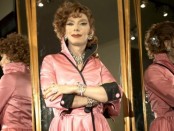
"Ladies and Gentlemen! Miss Joan Crawford!" announces the host. Embodying old-time Hollywood glamour, Mr. Epperson regally enters, wearing an elegant black gown with a bejeweled collar, voluminous crimson wrap, strawberry blonde updo, ruby bracelets, and diamond rings, to the sound of recorded and live audience applause. Then he and the host sit down on puffy white chairs, with black and white hanging dots in the background, a bottle of Pepsi on the table, and proceed to meticulously lip synch to the actual 1973 interview that included the host's questions and those from the audience read from index cards. Off to the side are illustrative slides of Crawford and her career that are projected onto a large screen.
[more]
Since its composition and premiere in 1978, "The Face on the Barroom Floor" has been a familiar piece in the repertoire of small American and European opera companies for good reason: it is an accessible, well-conceived and lovely work. "Emperor Norton," written just four years later, is even stronger than The Face: it is more substantive musically, artistically and intellectually. This performance was "Emperor Norton"'s New York premiere.
[more]
Lift is billed as novelist Walter Mosley's first play to reach New York. He is a wonderful novelist but not yet a good playwright, and this is student work unworthy of a full 59E59 production. The basic setup will be familiar to anyone who has taken an improv class: Tina Pardon (MaameYaa Boafo) and Theodore "Big Time" Southmore (Biko Eisen-Martin) are two strangers who find themselves stuck in an elevator. What will they do to pass the time?
[more]
The York is celebrating their 20th season and this is their 100th show. It is fitting that these milestones are being commemorated by showcasing the work of one of the preeminent figures of musical theater. Their small-scale version of Saturday Night is exuberant, very entertaining and revelatory. This is all chiefly due to the talented cast of 15, largely composed of energetic youthful performers and several excellent mature character actors. Everyone effortlessly appears to be Brooklyn denizens and all bring comedic talent and depth to their roles. That they rehearsed for less than a week before giving their first performance makes their accomplishments even more considerable. Great credit must go to casting director Geoff Josselson for assembling them.
[more]
Encores!, known for reviving neglected Broadway musicals for limited runs, is presenting the show. Here, it has strayed from its mission by producing this new adaption of a classic film musical, billed as "A Special Event," with mixed results. The first act drags with exposition and setting up complications that are sluggishly rendered. The second act is lively and very enjoyable.
[more]
This
On the Town, with 29 musicians and 31 actors, begins with a huge American flag and the singing of the national anthem, just as would have happened every night of the original run back in the 1940's during World War II. The show begins and ends at 6 A.M. at the Brooklyn Navy Yard. Three sailors, Gabey (played by Tony Yazbeck for the third time), Ozzie and Chip have 24 hours shore leave to see all of the Big Apple before shipping out to Europe. Each wants to see the sights, both cultural and female.
[more]
Encompass New Opera Theatre, under longtime director Nancy Rhodes, is presenting the East Coast premiere of Richard Pearson Thomas's chamber opera
A Wake or a Wedding at the Baruch Performing Arts Center. The opera is a burlesque of 19th Century melodrama, with stereotypical characters and a series of silly 'revelations' to resolve the convoluted plot. The music uses an accessible mid-century modernist style, conservative but not inappropriately so.
[more]
Mr. Pulos' writing concisely and effectively defines each character. Some could view them as typical gay stereotypes, but with descriptive biographical details and personality traits, they come across as real individuals. Visits to a bathhouse, a public health clinic, and nightclubs are rendered with authenticity.
[more]
The Girl Who Came to Supper from the 1963-64 Broadway season was Noel Coward's last musical and the only one in which he wrote music and lyrics to another author's story. In this case the musical was the work of playwright and screenwriter Harry Kurnitz, adapted from Terence Rattigan's
The Sleeping Prince, which originally premiered in 1953 to commemorate the Coronation of Queen Elizabeth II. Better known in its film version called
The Prince and the Showgirl, its plot travels back to June 1911 for the Coronation of George V, grandfather of Elizabeth. The lavishly costumed concert staging by Musicals Tonight! features first-rate leads and an excellent musical ensemble. It also demonstrates the strengths and weaknesses of the material.
[more]
When Terrence McNally premiered
Lips Together, Teeth Apart in 1991, the world was in the throes of fear over the AIDS epidemic. This long three-act play about how two straight couples deal with their reaction to it must have seemed topical and profound at the time. Unfortunately, 23 years later, in Peter DuBois' revival for Second Stage Theatre, the play now seems dated and talky without the emotional heft to make it still seem important.
[more]
Despite the novel's length of 511 pages, its focus on the music of its period would make this a natural for musicalization. The resulting show is an unusual stage work blending time and space, realism and magic, and exploring themes of race and gentrification, culture and self-discovery, fathers and sons, and how music defines the generation we live in. The music and lyrics in Friedman's magnificent and complex pastiche score includes pop, rock, rhythm & blues, soul, punk, hip-hop and heavy metal. While the musical doesn't entirely reach its goal as of now, it is most of the way to being an extraordinary new theater work. In defining a community and a generation through its music, it attempts to create a new form of musical.
[more]
The problem with the show is the book by first time librettist John Logan (Red, Never the Sinner) and Brian Yorkey (winner of the Pulitzer Prize for the musical Next to Normal) which leaves plot points undeveloped, characters on the one dimensional level and an ending which leaves much unresolved. What the show is best at is creating a sense of community among the men who work in the shipyards and the women in their lives who back them up. The choreographed movement by Steven Hoggett ("Once," "Rocky" and "The Curious Incident of the Dog in the Night-Time") has knit the large cast of 30 into a cohesive whole with its muscular routines.
[more]
Underlying all of the storytelling is the archetype of Homer's Odyssey, the story of another journey in another time of war. Many of the characters (Penny, Ulysses, Homer, Odyssey pronounced "Odd-see") take their names from this work. What may be most unusual about this first cycle of plays is that it is one of the few stage works to tell the story of the Civil War entirely from the point of view of African American slaves.
[more]
Clad in black jeans, black leather jacket and black T-shirt with a tree design; Mr. Waters' captivating rock star presence recalls that of the mature Terence Stamp and Malcolm MacDowell. However, instead of relying on his own persona, he does his Lennon impersonation to varying results. At times his singing of these familiar songs comes across as strained.
[more]
That such a devastating scramble of lives can happen in as handsome a setting as John Lee Beatty, magic set designer, manages to evoke, heightens the irony of what takes place there. The rest of the superb production is of equal caliber: Jennifer Von Mayrhauser's so right costuming, Kenneth Posner's so apt lighting, Jill BC Cu Boff's sound. But is this who we are? Where do we go from here? You don't want to miss Disgraced. How are you going to know what the title means?
[more]
In "Hard Rain," Jungr performs songs which capture the artists' views on subjects involving what she calls the three "P"s: philosophical, political, and personal. These are the issues that pulled the heartstrings of Dylan and Cohen and were the driving force behind most of their lyrics written back in the tumultuous 60's.
[more]
Acclaimed playwright Xiu Fen – one of China's most influential contemporary women writers – takes Eugene O'Neill's setting and opening plot elements, transforming Puritan New England into a small Chinese village, and focuses on the cruel, miserly old man, his new, very young and beautiful wife, and the young son who enters into an adulterous affair with his father's bride. O'Neill himself, writing stunningly innovative plays in the early twentieth century, looked to ancient Greek tragedies for his inspiration and to tragedy's archetypal figures.
[more]
Twenty-two of the 28 songs set to the sophisticated rhythms of composer Eli Bolin are based on the actual texts of these found missives and all of the many notes read are the original texts. The versatile and talented cast of ten (drawn from many different fields in the performing arts) offers various takes on the many notes and letters woven into the story of Davy and the magazine. Director Lee Overtree, co-founder of Story Pirates, the arts education organization, has realized inventive ways of staging this novel and unusual material.
[more]
I got the Video Star app on my iTouch and I really liked it. I saw other kids my age that had YouTube channels where they posted their Video Star videos. I really wanted a YouTube channel to post my videos so I asked my mom and she thought it was a fun idea.
[more]
Jon Peterson's dazzling performance in "He Wrote The Good Songs" will enthrall admirers of Anthony Newley and joyously enlighten those interested in show business that are unfamiliar with him.
These are all interspersed with very well chosen and delivered biographical reminiscences that are addressed to the audience. Included is a hilarious recounting of the nine-month film shoot of Dr. Doolittle, and unpleasant co-star Rex Harrison "who was bitten by every animal" and nicknamed "Tyrannosaurs Rex" by the crew. Through expert mimicry Peterson also portrays various figures from Newley's life such as his parents, a stuffy teacher, and producer David Merrick.
[more]
Despite the sometimes-questionable song selection and orchestration choices, All You Need Is Love upheld the New York Pops' well-established standard of excellence. Reineke's unparalleled expertise and steady hand provide evenings of culture, history and entertainment time and time again.
[more]
Choosing National Domestic Violence Awareness Month as the time to premiere her Voices of the Tarantate, internationally acclaimed Italian singer and dancer Alessandra Belloni led her dance troupe, Daughters of Cybele, with additional dancers and performers, in a remarkable performance whose purpose was to examine the annihilating violence of domestic sexual abuse, to identify the rituals of song, dance and folk traditions that can heal the pain, and to celebrate rebirth, wholeness and sanctifying joy.
[more]
"Almost all the families I knew were struggling to find their way forward and make sense of a way of life that was unraveling before their eyes," writes Ms. Pedersen in her author's note in the program. She has a laundry list of period-piece social issues that are superficially covered including abortion, pre-marital sex, the economy, interfaith marriage, homosexuality, Watergate, and The Vietnam War. The writing is often sharp and well observed, with zingers and jokes that effectively register. "If Irish Dementia is only remembering the grudges, than Irish Amnesia is only forgetting the food." "Excuse me, but is this twentieth century Buffalo or fifteenth century Barcelona?"
[more]
Set in at ill-defined Halloween party raging somewhere in the universe between life and death, Back depicts numerous formerly living Greenwich Village icons, from founding father Alexander Hamilton to Flower Power movement leader George Harris, III. Cookie Mueller—writer, muse to the famous filmmaker John Waters, and AIDS victim—leads the proceedings as this scripted Pride Parade's grand marshal. Filled with recurring mantras, bizarre non sequiturs, and gratuitous nudity, the performance under review (the rotating script allows for different variations at different performances) followed—or, more appropriately—circled around the respective, untimely demise of both poet Frank O'Hara and actress Mueller.
[more]
Most of the pieces will be familiar to the readers of The Portable Dorothy Parker: "The Garter," "A Telephone Call," "The Waltz," "Just a Little One," "The Taxi," and a few poems. This is supplemented with bits from more ephemeral work, such as her book reviews.
[more]
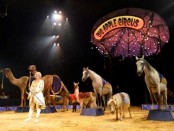
The Big Apple Circus' new edition for its 37th Season called "Metamorphosis" is a winner. Breathtaking acts alternate with performances of such skill that all you can ask is how did they do that. Aerial acts, gymnastics, contortion, animals, clowning, and audience participation – "Metamorphosis" has it all. The youthful and attractive cast dazzles with their skill and artistry. The colorful performance in the famed single ring where no member of the audience sits more than 50 feet from the action is an intimate show allowing the viewer to see up close. "Metamorphosis" is great fun for all ages.
[more]
Everyone loves Lili and she is back in the crisp, taut, melodic revival of Bob Merrill's Carnival! in a concert staging courtesy of Musicals Tonight!. Aside from the colorful production, the cast includes a skillful ensemble all with circus training from jugglers to acrobats.
[more]
Since 2001, Gotham Chamber Opera has specialized in the production of major operas – well known, not known, new, traditional, experimental – and has developed a reputation for intelligence and a consistently high level of artistic integrity. This pair of Martinu comic operas, sung by an enthusiastic young cast performing on a gorgeously set stage, preserves Gotham Chamber Opera's fine reputation.
[more]
Mike Bencivenga's Billy & Ray is the story of Wilder and Chandler's famously contentious collaboration. The lighthearted comedy drama includes an insider's view of Hollywood and a good many famous anecdotes about their fighting over the Double Indemnity screenplay. While it will probably be enjoyed most by those who know the movie and/or the original novel, the play does clue the audience in to what they need to know about the original material as well as its eventual screen treatment.
[more]
Nairoby Otero as Roberta is a wondrous feisty spitfire, whose energy never subsides and deeply conveys the character's poignant sense of despair. Michael Micalizzi hauntingly captures the essence of a hotheaded, lost soul as Danny. They each expertly deliver Shanley's identifiably unique dialogue, getting all of the laughs while achieving pathos. Their chemistry together is tremendous and a huge asset.
[more]
The debonair Holbrook sang his way down memory lane with his enchanting voice and interesting stories about Astaire that he shared in-between songs, many showing a side to the man that is relatively unknown. This is one of the aspects of the show that makes it intriguing and a must-see for those who appreciate the talents of this widely respected artist.
Most remember Fred Astaire for his singing and dancing, and for his movie roles, but there was much more to the man. [more]
This outstanding cast of seven is all perfectly in synch with each other and are a true ensemble of the highest caliber. The highly successful artistic collaboration of all the creative talents involved makes this Deliverance a boldly striking work of uniquely theatrical storytelling.
[more]
"The Curious Incident of the Dog in the Night-Time" is the sort of very special play that only comes along once in a very great while. It is a play that will not only astonish you while you are in the theater but will also stay with you for a long time after you have left. In addition, you will come away with a much greater understanding of people with autism and how their minds work.
[more]
This new production of "You Can't Take It with You" proves that not only has the comedy passed the test of time, it also remains a wonderful evening in the theater. It may be set in the 1930's but America in 2014 needs to hear its message all over again. And it is still joyful and uproarious as it shows up real human foibles of which people are still prone.
[more]
Romantic comedies often collapse under such contrivances, but in practice this play holds up beautifully. Nirmala's struggle to accept that she has a right to tenderness in her life is sensitive without being preachy, and Ms. Kakkar is frankly fantastic in the part. She finds an exceptionally quiet and truthful center for her characterization, and as a result Nirmala's breakthrough moments feel absolutely real and not at all melodramatic.
[more]
This was my first in-person experience of Finley's work, and unfortunately it was a shambles. What could have been forty intense minutes of poetry and music was padded with rambling introductions and mostly aimless patter to more than twice that. The night I attended she was nervous and flustered, repeatedly losing her place in the program, and allowing herself to be distracted over and over again by a leaky water pitcher. (Why didn't the stage manager just replace it?)
[more]
English baroque court music is steeped in contradictions. It is both intimate and public; it is conventional and playful; it is topical and occasional on the one hand and non-specifically accessible on the other. Lawes inherited these basic contradictions together with the demanding formal features of traditional musical genres. Within these constraints, he was so daringly inventive that artistic freedom is ultimately more his signature than genre or time period.
[more]
Wildly painted panels with words and images such as Big Ben, Keep Calm, and a Union Jack, simply and concretely establish the locale during the opening scene. The actors on either side of the small bare stage are at large, movable, gray wooden cubes that are resourcefully used as scenery. Sounds and announcements of the London Underground are heard as well as song clips from time to time, adding to the sense of place.
Director Peter Darney's staging is tremendously forceful, fluid, acutely visual and very well serves the material. In addition to creating a vibrantly watchable piece, he has gotten finely pitched performances from the very appealing cast who for a good deal of the show address the audience with their thoughts.
[more]
details a specific subset of affluent, privileged, urban teenagers with no concepts for independence or ambition. In the larger context, the characters' problems are mostly petty and self-inflicted; consequently, the subject matter is difficult to relate to. I cannot speak for everyone, but the careless spending, rampant drug use, and overinflated egos presented in Lonergan's play were certainly not characteristic of my youth.
[more]
Structurally, it is a collection of vignettes that all end in a blackout, punctuated with the sounds of composer Nino Rota’s lively music used in many of Fellini’s films. Here, it comes across as a bunch of connected, superficial comedy sketches, many of which fall flat. The actors, though all are talented, in some cases don't quite fit their roles but commendably do their best. The overall effect at times is of awkwardness and pacing that is less than comic.
[more]
During 70 engrossing minutes on a bare stage with only a tall stool as a prop, he vividly recounts these long ago incidents with great detail. Youthfully complaisant during his three prior drug runs, his fourth turned nightmarish with a dramatic arrest by armed soldiers at the airport. Four harrowing years in various oppressive prisons were made endurable by his strength and the aid of his benevolent father who provided money for bribes. Then the incredible escape, "catching The Midnight Express" to freedom.
[more]
"The Country House" is an old-fashioned drawing room comedy about theater and film people inspired by the plays of Anton Chekhov. From Donald Margulies whose track record includes "Time Stands Still," "Brooklyn Boy," "Sight Unseen," "Dinner with Friends" and "Collected Stories," we have come to expect something more emotionally satisfying. Blythe Danner, Daniel Sunjata, David Rasche and cast are good company but do not make a very convincing case for this new play
[more]
the relationship between Eleanor Swan and Anish Das is flirtatious from the outset. As the 75-year-old Mrs. Swan, Harris is a joy, making even her unfinished sentences perfectly obvious as well as her very English prejudices. Bhavesh Patel plays the younger Das with matinee idol suavity. As Captain David Durance, the British army officer who falls in love with Flora at first sight, Lee Aaron Rosen is suitably stiff, stalwart and handsome.
[more]
The writer's narrowness of view is a temporary problem, of course. As the play's historical moment recedes from memory, we will once again read the story for what the characters are, rather than what they aren't. On the other hand, the same kind of claustrophobia exists in the work of Tennessee Williams, though the latter digs deeper to find the root causes beneath the limitations, pain, and just plain weirdness of his people.
[more]
Viola Gregg (1925 -1965)was an activist Michigan housewife who drove to Selma, Alabama, in March of 1965 to participate in the Civil Rights marches there. She was later shot and killed, from a car with four Klu Klux Klansmen. One (Tommy Rowe (1933-1998) was an informant for The Federal Bureau of Investigation, used for infiltrating the KKK. He testified against the other three, and was put in The Witness Protection Program.
[more]
As the sophisticated, experienced Irina Botvinnik, Chalfant is utterly delightful. She makes Irina’s tactic of changing the subject into a fine art. Her charm is evident even when she is disagreeing with her opposite number. Her Irina’s wry sense of humor is conveyed in all her remarks, but it is often difficult to know when she is kidding and when she is serious, another calculated tactic. And Chalfant’s timing is impeccable making the most of both her banter and when she is deadly serious.
[more]
Lanky, animated, and with his characteristic twang, Fred Weller is very lively and appealing as the dim franchise star Steve. Elizabeth Reaser winningly captures the insecurity and self-absorption of the fading female star Karen. With physical sight gags to work with, such as a bizarre cheerleading dance inspired by Arthur Miller's "The Crucible," and overindulging in hors d'oeuvres, GiaCrovatin makes the most of the proverbial blonde bimbo Missy.
[more]
Up until now when the name of Owen Davis' 1923 Pulitzer Prize winner "Icebound" comes up, the response is likely to be a head shake that the year's prize did not go to a more worthy candidate like Eugene O'Neill, Elmer Rice, Sidney Howard, Philip Barry or George Kelly. Now with the Metropolitan Playhouse's revival of "Icebound," theatergoers can see for themselves what a trenchant and engrossing drama this actually is.
[more]
During the prologue, they enter and play musical instruments that include the banjo, acoustic guitar, fiddle, accordion, glass harmonica, hammer dulcimer, and later the piano. They perform their original score that is a charming blend of folk and rock style songs throughout. Recurring laughter, gasps of astonishment, and measured silences confirm that for the many children in attendance, The Old Man and The Moon is absolutely enchanting entertainment and certainly for adults as well.
[more]
Under Gregory Mosher's subtle and assured direction, the two performers always seem age appropriate to their characters. While they do nothing to disguise their real ages, it is as though two older people have gotten together to review the letters that they have written to each other over a lifetime.
[more]
In a large, energetic cast, Amy Spanger, Mitchell Jarvis and Wesley Taylor stand out. I have to confess never to have heard a louder finale. No wonder there's a surge in hot looking, fashionable hearing aids for the Boomer set. They've earned them.
[more]
The three couples are played with fierce conviction, total commitment and great talent by a corps of strong actors seemingly also cast for their individuality. Alex Hurt and Susannah Flood are the young couple. Dallas Roberts and Roslyn Ruff are the middle-aged couple. Arliss Howard and Tina Benko are the older couple. They appear to have been cast for their differences rather than any similarities.
[more]
n suburban Westchester, 1976, we meet three couples. Lively, free spirited and just turned 40, Joyce Horowitz is married to the older, cantankerous W.W. II veteran Ed. They have a rebellious 18-year-old daughter Staciawho has recently become involved with her earnest, good-natured, 18 year-old college boyfriend, Simon Davies. There is also the Horowitzes' new neighbors in their 30's, the Prescotts, anxiety ridden Judy and her pompous psychiatrist husband, Liam.
[more]
Aside from his light touch which keeps the play from seeming gloomy, Brooks has an uneasy hold on the play's rhythms which seem erratic – we are never sure what kind of play we are watching. Schmidt's translation goes a long way to blowing off the cobwebs on Chekhov's 19th century Tsarist Russia but his occasional use of a contemporary word like "freak" draws attention to itself. While Simms' unit set suggests a summer retreat with its green walls covered with vegetation, he makes little distinction between indoors and outdoors and the claustrophobia which the characters are feeling is never real to the audience.
[more]
Craig ‘muMs’ Grant and DJ Rich Medina in a scene from A Sucker Emcee (Photo
[more]
Kristin Griffith and Victoria Mack in a scene from The Fatal Weakness (Photo credit: Richard
[more]
Shelly Watson on mike and company members in a scene from Rococo Rouge (Photo credit:
[more]
Almost Home Joe Lisi, Jonny Orsini and Karen Ziemba in a scene from Almost Home (Photo
[more]
it was almost entirely slow music, and over 90 minutes of it, something which might give even a Wagnerian pause. This is billed as a new piece, so perhaps it's not too late to suggest that the authors consider some discreet compression, as the opera might benefit from judicious cuts. It takes perhaps half an hour to read the original story, and its brevity is one reason for its effectiveness; but this was more than three times that length, though the original Hawthorne plot has been only very slightly expanded.
[more]
Richmond Shepard (Photo credit: Nicholas Wolfson) “You Want to be a
[more]
«
1
…
59
60
61
62
63
64
»
Copyright Jack Quinn, 2001-2026