Archive
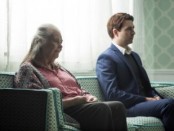
Both teenagers are desperate for our approval and understanding of their lives and what they did, unlike the tabloids which have apparently had headlines branding them as monsters. Listening to their sides of their stories, we are initially conned into a false sense of security – always a dangerous thing to do in a Philip Ridley play. By the end, we discover these are damaged youth we would not want to know personally, but we understand their motives entirely from their point of view. [more]
Noises Off
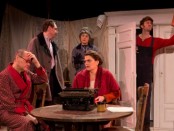
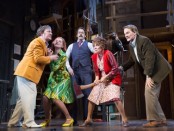
While Frayn’s roles are juicy parodies of very specific kinds of people, for the laughs to roll in one on top of the other, the play must be performed fast enough that we don’t have time to think about it or what we are laughing at. Consequently, though the production is entertaining for its comic portrayals, it fails to trigger all the laughs inherent in the script or become the laugh riot it is intended to be. Possibly, as the actors have more performances under their belts, the play may pick up speed and more laughs along the way. [more]
A Dream of Red Pavilions
A Dream of Red Pavilions is set in 18th century China during the reign of Emperor Qianlong. The framing story which gives the plot its mythic quality involves a stone and a flower that are reborn as cousins, the rich scion Baoyu and sickly Daiyu, who fall in eternal love. Like" The Forsyte Saga" or "Downton Abbey," the social context depicted is the rise and fall of an aristocratic family. Beginning with the birth of Baoyu, the oldest son on whom the Jia family’s future fortunes rest, the play which takes place in 30 short scenes follows the affairs of these nobles and their servants over 20 years until Baoyu’s young adulthood. [more]
The Gambler
Director Lordi-Kirkham has unaccountable staged the play as though it were a radio play or a reading, making it more talky and static than it needs to be. While the text is faithful to the Russian novella with some trimming to reduce the number of characters, the use of both a narrator and much of the narration from the novel makes this seem like an interior monologue rather than a play. Unfortunately, the actors playing the twenty somethings who are given the most stage time do not have the technique necessary to bring off this psychological drama. At two hours and 10 minutes with no intermission, this is a long evening in the theater. [more]
Our Mother’s Brief Affair
Linda Lavin wears Anna in Richard Greenberg’s "Our Mother’s Brief Affair" like a chic couture outfit with many layers each of which reveals layers of colorful, woven cloth. There is a constant glow about her as she relates, mostly in flashbacks, the story of an illicit, but exciting affair with a stranger she met many years ago while waiting for her son, Seth (a bemused, but effective Greg Keller) to emerge from his Juilliard viola lessons. [more]
Wide Awake Hearts
Brendan (NBC’s "Blindspot") Gall’s sexy and seductive new thriller, "Wide Awake Hearts," thrusts audiences into a challenging game of cat and mouse, as they are left to decipher the story of four friends in a case of art imitating life. An actor, director, writer and actress are faced with the intricacies of dealing with relationships, infused with passion and threats of infidelity, as they are in the process of creating a movie dealing with these very themes. [more]
What the Horse Saw
The collaborative script is by the One Idiot troupe’s writers that include Jon Bershad, Aaron Burdette, Allie Kokesh, Kristy Lopez-Bernal, Nathan Min and Katelyn Trela. It’s a smart mash-up of plot points and characters that those familiar with Williams’ play will recognize and those who aren’t would still find funny due to the franticly goofy presentation. The writing is also characterized by an abundance of vulgarity and scatological humor that is relatively tame rather then being offensive. [more]
Alison Chase/Performance
Chase put extreme physical demands on her dancers in some works, relied on their acting ability in others, most often combining these elements. She also—as the Pilobolus creators did—collaborated with her dancers on virtually all the choreography, so where she leaves off and they begin is difficult to ascertain. [more]
Collaborators
Ross DeGraw as Joseph Stalin and Brian J. Carter as Mikhail Bulgakov in a scene from John Hodge’s [more]
Allen Wilder 2.0
Joe Casey is a charming actor. He exudes a “playboy” vibe which goes hand-in-hand with the character of Michael whose vices range from women to booze and back again. Casey shows an understanding of a man who is largely misunderstood and actually well-intentioned. Steph Van Vlack plays the role of Donna. Nearing 50 and a divorcée with a child, Donna is conflicted in light of the fact that she—a woman of her age—is engaging in an apparent “one night stand.” Among other things, this is also a character deeply disturbed that she’s actually considering sleeping with the child she used to babysit for all those years ago. Van Vlack brings a necessary uncertainty to the character. Playing a woman of certain age, Van Vlack’s performance indicates that Donna still has deep insecurities and still has quite a bit to learn about relationships. [more]
The Screwtape Letters
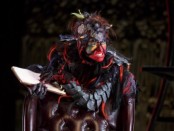
This Grand Guignol concept is sensationally realized by the striking physical production. John Gromada’s chilling sound design configures his spooky original score with its dominant organ along with bomb blasts and other sound effects for very effective results. Cameron Anderson’s scenic design is a dazzling haunted house affair with the stage wall covered in tiny bones and skulls, a ladder and ramp for the creature to scamper on, and manor-style furnishings. Hellish red hues are prominent features of Jesse Klug’s eerie lighting design. [more]
Newsteps: a choreographers series
Question: Why are these five young choreographers so unhappy, so full of angst and disquietude? There’s nothing wrong with exploring the darker side of life, but virtually all of the works presented in the 22nd anniversary chapter of Chen Dance Center’s Newsteps were either dreary or darkly agitated which probably should be taken as a sign of the psychological state of today’s younger artists. Even the one piece that seemed to have a dreamy quality quickly turned sour. [more]
2016 LaBute New Theater Festival
The opening one is British author Lexi Wolfe’s delightfully wistful "Stand Up for Oneself." It’s a Chekhovian romantic comedy with clipped Noel Coward-style dialogue taking place in the room of a house where a party is going on. Lucas, a 42-year-old morose music professor sits alone drinking with his cane nearby when the free-spirited 26-year-old Lila enters. There is flirtation and revelations. Sensitively directed by John Pierson, the play’s very fine writing is boosted by the wonderfully detailed and effecting performances of Alicia Smith and Mark Ryan Anderson. [more]
A Man and His Prostate
Asner’s appearance in "A Man and His Prostate" is a delightfully thrilling opportunity to experience his considerable talents live. He vividly grouses, grimaces, and perfectly lands every joke with his monumental comic timing. The seriousness of the play is also conveyed when he skillfully tones his performance down to recite medical facts and to express the fears of the ramifications of the character’s condition and prognosis. Sitting raised above the audience at times he looks and sounds like a sage. [more]
In Quietness
Directed by Danya Taymor, 'In Quietness" excels in its exploration of intimacy. When dialogue is being spoken between two actors at a time, there are moments of silence that are loaded with implication. It is a credit to the director that more character development happens with nothing being said at all rather than when a character is speaking. Kristen Robinson’s set design is efficient enough—the whole stage is made to look like the inside of a chapel—though it is made much more effective by intelligent lighting design by Masha Tsimring and Caitlyn Rappaport. [more]
American Dance Platform: Fist and Heel Performance Group & Martha Graham Dance Company
Reggie Wilson has been combining dance and cultural anthropology for many years. His troupe, Fist & Heel Performance Group, is a living testament to his passion with “Moses(es), Moses(es),” his full-company work, a living and breathing example of his philosophy. In his program notes, Mr. Wilson explained that this work was based on “the many iterations of Moses in religious texts, and in mythical, canonical and ethnographic imaginations,” a big subject that, unfortunately, doesn’t lend itself to a dance interpretation. In fact, Mr. Wilson’s description, not withstanding, it would be difficult to find any reference to that Jewish Biblical giant in “Moses(es), Moses(es),” except when the entire company sang a song whose only word was “Moses.” [more]
Marilyn Maye: “Marilyn by Request”
The crowd went wild when she sang some iconic favorites and became silent so as you could hear a pin drop when she crooned out others. Maye sure knows how to work a room. This snazzy, jazzy one-of-a-kind artist sang a lot of ballads, Broadway tunes and anything fabulous. Only the best would do for this phenomenal performer. Among the highlights were “Luck, Be a Lady Tonight, “Guess Who I Saw Today,” “Country Boy,” “That's Life” and “I'm Still Here” which was very apropos. [more]
Key Change
Director Laura Lindow’s staging is a thrilling exhibition of pure stagecraft using very simple elements. The expressive actors are choreographed at times often in arresting tableaux especially a scene depicting drug addiction. There are powerful sequences visualizing violent clashes, flashbacks, fast-forwards and fantasies. A quite poignant one involves the complications of using the telephone in prison to keep in touch with loved ones. The pace is fast and vibrantly conveys the emotions of the characters’ situations. [more]
The Changeling
The interpretations are also open to question. Although she should be demure before her sexual awakening, Sara Topham plays Beatrice as experienced and sophisticated which allows her nowhere to take her character. While the beauty and the beast theme is much in evidence, Manoel Felciano’s make-up as the ugly De Flores fails to make him the monstrous embodiment of the play’s description. Christian Coulson’s Alsemero is described by his friend Jasperino as asexual and he seems to have taken this as the basis for his character. As a result he is extremely bland, as is John Skelley’s Alonzo, so that we never see what Beatrice is supposed to see in these men. [more]
92Y’s Lyrics & Lyricists Series: “A Funny Thing Happened: Songs from the Road to Broadway!”
Displaying her flawless vocal abilities, superb comic timing, dramatic range and exuberant presence, Ann Harada was the standout of the six-member company. She was in the original Broadway cast of "Avenue Q" and appeared in the recent Broadway production of "Cinderella." Her exquisite renditions included “Getting to Know You” from "The King and I," “Do You Love Me?” from" Fiddler on The Roof," “Sing Happy,” the 11:00 number from Flora The Red Menace, and “Distant Melody,” from "Peter Pan." Ms. Harada vividly demonstrated her delightful skills throughout. [more]
Maurice Hines: Tappin’ Thru Life
"Maurice Hines: Tappin’ Thru Life" is a pleasantly entertaining look at the personal and professional life of Maurice Hines. Of course, his life and career were closely intertwined with his late brother Gregory’s, his dance partner for many years. The story of how their parents, Maurice and Alma, pushed them—willingly, it seems—into show business and their almost immediate success is the gist of this smooth, occasionally exciting show. Two boys from D.C. made good. [more]
China Doll
The title is never explained and remains a cryptic point of thought. Is it the name of the jet that the plot revolves around? Is it a reference to a woman? What could it mean? Knowing the work and personality of David Mamet, perhaps it’s a "House of Games" con device that has no significance at all just like the play itself. Muddled and rambling it comes across as an arrogantly tossed off minor exercise by an eminently established author solely for profit. The dialogue is a grating rehash of his patented style of staccato vulgarisms and explosive tirades interspersed with pauses that result in self-parody. If "Glengarry Glen Ross" was his zenith, "China Doll" is his nadir. [more]
Villain: DeBlanks
The personable Mr. Mitchell is the evening’s host and starts off the show by explaining the format. The six performers then go through the theater asking audience members for missing words that they then write in their scripts. After obtaining this material they then go onstage to sit in chairs with music stands on which they place their scripts and read from. For just over thirty minutes, they enact this silly and entertaining murder investigation with often funny results. [more]
School of Rock – The Musical
Though the stage show does not have the imitable and irrepressible Jack Black, it does have rising stars Alex Brightman and Sierra Boggess who make the roles of hero Dewey Finn and Principal Rosalie Mullins their own. The book by Julian Fellows (television’s "Downton Abbey" and the stage version of" Mary Poppins") based on the screenplay by Mike White is extremely faithful to the movie while also giving several of the students’ backstories which makes them more three-dimensional. Before the show begins, we are told by a voice-over (Webber?) that all of the students play their own instruments. [more]
The Pirates of Penzance
The cast includes beloved NYGASP favorites as well as some less familiar faces. Coloratura soprano Sarah Caldwell Smith’s Mabel wins a justly earned ovation signing her aria, “Poor Wandering One!,” declaring her love for Frederic. He is played with cheerful restraint by tenor Carter Lynch (alternating with Daniel Greenwood). Bass-baritone David Wannen has a fine swashbuckling time as The Pirate King. Contralto Angela Christine-Smith as Ruth gives a memorable rendition of her aria, “When Frederic Was A Little Lad.” Bass David Auxier as the Sergeant of Police deals delightfully with his band of bumbling officers. [more]
Meg Flather: “Portraits”
The act itself is a potpourri of story songs that she was drawn to at an early age starting in 1985 when making her cabaret debut with pianist Christian Daizey at the old Duplex on Grove Street. After a few incarnations, the show was booked into The Ballroom in 1993, the legendary, now defunct, club in Chelsea that presented star attractions such as Eartha Kitt and Peggy Lee. The act was a big success and received raves. Now, twenty-two years later, she brought it back for one show with the masterful Paul Greenwood as musical director and John Mettam on percussion/guitar. Shaped by Lennie Watts as director, her reminiscences and silly quips explaining her more mature take now on her song choices then made for an engaging and totally fun hour (“... I had no business singing these songs in my twenties!”) With a few nips and tucks, Flather steered it all into the twenty-first century. [more]
2 Across
Jerry Mayer’s "2 Across" will remind of a great many other romantic comedies but in the hands of Andrea McArdle and Kip Gilman, it is a charming light-hearted evening in the theater. At least half way through the 90 minute encounter you will be rooting for this seemingly mismatched couple to get together – if not long before. Brought together by a love of the daily crossword puzzle, this warm and wise comedy covers a great many topics that engage couples to day. [more]
The Carnival of the Animals, featuring the poetry of Ogden Nash
The gifted puppeteer-dancers – Kristen Kammermeyer, Brendan McMahon, Justin Perkins, Rachael Shane – were barefoot and dressed in black; they moved with graceful economy of movement and made themselves into a fantastic combination of invisibility and magisterial artistry. They manipulated more than two dozen every-day-object puppets in gorgeous worlds of sky for birds, water for fish, field and forest for all sorts of creatures large and small. All these animals – made of sticks, brooms, mops, feather-dusters, cardboard-cut-outs, fabric scraps, familiar bits of this-and-that, and unexpected parts of who-knows-what – were right there in front of us. They leapt and loped, swooped and soared; they teased and pleased, tested, tormented and befriended each other and the narrator; they made each person in the audience – old and young, big and little – feel individually included in the menagerie's movements. [more]
These Paper Bullets!
In Rolin Jones’ re-do of "Much Ado," the soldier buddies have become a Beatles-like rock band called The Quartos, the first of many Shakespearean references. Continuing the parallels: Leonato (the always terrific Stephen DeRosa) has become Leo Messina whose Hotel Messina takes the place of the Italian town, Messina; his daughters, Bea (Nicole Parker) and Higgy (Ariana Venturi) are the Beatrice and Hero characters, whose romantic adventures with Ben (Justin Kirk) and Claude (Bryan Fenkart) (stand-ins for Benedick and Claudio), are the strength-testing plot-churners here as in the original. [more]
The Algonquin Kid
Colby’s fascinatingly entertaining autobiography, "The Algonquin Kid," was turned into a one-time theatrical event as part of the Urban Stages’ Winter Rhythms series, hosted by Mr. Colby, produced and directed by Peter Napolitano, with Bill Zeffiro at the piano playing a rich list of songs associated with the many famously creative hotel guests and a few written by Mr. Colby himself. As a real-life Eloise, Mr. Colby was witness to much history and this show, barely scratching the surface, was witness to his good fortune. [more]
Lazarus
Although this is the eighth show minimalist director Ivo van Hove has directed for New York Theatre Workshop, one would be hard put to recognize it as his. The production uses Tal Yarden’s almost continual streaming video, slide projections, a huge screen representing a television monitor, and an on-stage band made of seven musicians. The pink beige set is often turned into other locales with video which covers all three walls of the set. The band sits behind the set but is often revealed when Venetian blinds on the back wall of Newton’s apartment occasionally open for actors to be seen behind the windows or for the video to transform the stage like cinematic cuts into scenes from various locales. Like Roeg’s movie version of "The Man Who Fell to Earth," Lazarus makes use of surrealistic imagery that gives the evening a psychedelic sensibility. [more]
The New York Pops Family Concert: “A Charlie Brown Christmas”
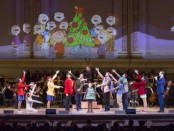
Members of the classic Peanuts gang were voiced by students from TADA! Youth Theater. Joshua Andino-Nieto took on the role of Charlie Brown and was joined by Amanda Treibner who starred as Lucy and Michael Wells as Linus. The trio brought the wholesome characters to life as they recreated Charlie Brown’s journey to finding the meaning of Christmas, including the famous scene picking out his sad tree, played by the adorable Finley McElhinney – and made the audience fall in love with these friends all over again! [more]
How Alfo Learned to Love
Directed by Daisy Walker, "How Alfo Learned to Love" is chock full of Italian-American stereotypes. The characters are just heightened enough that the gimmick works, but there is also a lot of heart behind this story. Walker has brought to life a group of characters who are quirky and lovable, and in the end it really feels like a family affair. All of this is contingent on Thom’s performance as Alfo whose character arc is fleshed out and brimming with variety. This redemption story about learning to love is a rollicking good time. Backed by strong performances and direction, a slick and consistent pace, and an entertaining script which sticks to a winning formula, nary a soul is likely to leave this theater without a smile. [more]
ON THE TOWN … with CHIP DEFFAA (Dec. 21, 2015)
It did my heart good to see Matanya Solomon dancing all-out after being pretty much sidelined as a "Nutcracker" dancer, due to injury, for the last two years. I greatly admire all good dancers for their dedication and hard work; but to not give up after being hampered for so long is extra admirable. And he was fun as the Grandfather, making the most of the part (and interacting well with others) in the prologue (staged by Victoria Mazzarelli and Tim Melady). [more]
A View from the Bridge
Belgian–born director Ivo van Hove has brought his London Young Vic revival of Arthur Miller’s" A View from the Bridge" to Broadway in a production so stripped down to its essentials that it seem to reinvent theater as well as this play. The minimalist director already known in NYC for his seven stagings at the New York Theater Workshop (including "The Little Foxes" and "Scenes from a Marriage") and his five at Brooklyn Academy of Music (including "Angels in America" and "Antigone") has reduced the cast list from 15 to eight, eliminated scenery and props, has the actors go barefoot, and has washed out almost all color from the stage. The result once the plot is wound up has hypnotic power that is rarely seen in our theater. The cast led by British stage star Mark Strong as protagonist Eddie Carbone includes five of the actors from the London production, as well as British stage and screen star Russell Tovey. [more]
Rudresh Mahanthappa: “Bird Calls”
Mahanthappa's elegant and exciting compositional voice is well established. His jazz combines the full development of the genre since its inception with the idiom of South Indian classical music which is his personal inheritance. Mahanthappa – among other jazz artists featured in recent years in the Jazz at Miller Theatre series, such as Anat Cohen and Miguel Zenon – has already contributed to an expanded vision of jazz as an American art form that can incorporate global influences; Mahanthappa has indeed been both exemplar and participant in the necessary and welcome twenty-first century examination of the fluid meanings of “American” and “global.” [more]
Once Upon a Mattress
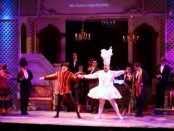
Jackie Hoffman is famous for her combination of sarcasm and wit in a small, rubber-faced package and John “Lypsinka” Epperson, for his uncanny way of taking lip-synching to the heights of great art. Hoffman imbues the character of Princess Winnifred with New York street smarts, despite coming from a Swamp. (Well, maybe NYC is a swamp!) Lypsinka’s Queen Aggravain is, amazingly, the most possessive mother ever and at the same time the most self-involved human in the kingdom. She does not want her simpering son, Prince Dauntless (the sweetly shlumpy Jason Sweet Tooth Williams), to marry—ever!—but if he doesn’t marry, no one else in the kingdom can, either. [more]
The Hard Nut
"The Hard Nut" is certainly beautiful to behold, its production design based on the work of Charles Burns whose graphic novels feature vividly surreal and haunting images. But, it’s also frustratingly erratic—slow at some points, confusing in others—and shtick-laden, with silliness too often overriding beauty and romance. The brilliantly witty sets and inventive costumes by Adrianne Lobel and the late Martin Pakledinaz, respectively, are totally in synch with Morris’ wickedly camp mentality. Indeed, they are a show in themselves, beautiful and witty in equal measures. [more]
The New York Pops: It’s Christmas Time in the City
Opening with a soaring symphonic “Deck the Halls” and then joined by the wonderful Essential Voices USA chorus for it, The New York Pops closed their concert, "It’s Christmas Time in the City,." with a rousing audience sing-a-long of “Come All Ye Faithful” and “Silent Night.” In between, there was a delightful selection of classic and newer Christmas songs several performed by Broadway stars Stephanie J. Block and Brian d’Arcy James. Santa Claus and one of his elves also comically visited. Beaming music director Steven Reineke commandingly conducted the 78-piece orchestra and personably hosted this engaging presentation. [more]
The Color Purple
Playwright Marsha Norman’s book brilliantly and very faithfully streamlines and extracts the events and themes of the novel and film. These include racism, sexism, self-esteem and same-sex attraction. In addition, Ms. Norman created the clever device of three gossiping church ladies who appear throughout and briskly impart exposition. Her work swiftly and skillfully renders this sprawling tale into a contained and emotionally involving narrative. [more]
Matthew Welch Music: Three Residency Concerts
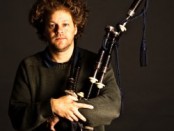
At the 10:00 show on Wednesday, December 9, Welch played bagpipes with Brendon Randall-Myers on electric guitar and Brian Chase on drums and electronics performing "The Library of Babel," a 35 minute piece Welch composed in 1999. In a subsequent post-concert conversation, Welch indicated that the work of Jorge Luis Borges had been a foundational inspiration in his composing early in his career. This piece, titled to pay homage to Borges' astonishing 1941 story of the same name, is an immediately recognizable child of Borges. It is also, however, strong enough to stand on its own, meaningful and effective, even for listeners unfamiliar with the works of the Argentinian writer. [more]
Plaid Tidings
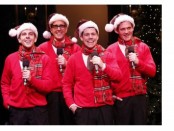
The tale of their demise in 1964 en route to a show in their native Pennsylvania and their temporary 2015 resurrection still works brilliantly. Even though "Tidings" cover a good deal of the "Forever Plaid" musical territory, the holiday songs they’ve added give this show seasonal warmth. [more]
Marjorie Prime
Playwright Jordan Harrison is a graduate of the Brown University M.F.A. program and the recipient of several prestigious awards such as a Guggenheim Fellowship and the Kesselring Prize. On a technical level "Marjorie Prime" is expertly constructed and contains serviceable dialogue that propels the plot, but in totality it never rises above the level of an academic contrivance. The premise is a familiar but promising one, but in execution it is flat. The exposition and setup never really become emotionally involving and the closing revelations are consciously sensationalistic. [more]
Who Left This Fork Here
Conceived by Daniel Fish and Jim Findlay, "Who Left This Fork Here"—inspired by the emotional themes found in Anton Chekhov’s "The Three Sisters"—is a stark and jarringly honest piece which examines morality and aging through the eyes of three different female performers. Separated by nearly seven decades, the three women (Tina Benko, Judith Roberts, and Auden Thornton) each represent a different phase of a woman’s life. [more]
Our Friends the Enemy
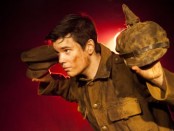
Besides playing Boyce, Gwyther depicts other British soldiers as well as Germans. It is an exhilarating display of rapid vocal and physical transformations subtly giving each brief characterization a fleeting depth. With his angular features, intense eyes, expressive voice, and limber physicality, his performance is a superb display of riveting solo theater acting. [more]
The Tallis Scholars: “Christmas Across Centuries”
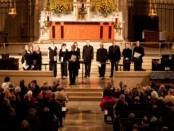
The program itself was a masterpiece of artistic and theological integrity. Pieces by three composers – contemporary Estonian Arvo Part (b.1935), and Renaissance Englishmen John Sheppard (c.1515-1558) and Thomas Tallis (c.1505-1585) – carried the full chronological account of the earthly life of the Word made Flesh, from conception in the Virgin's womb to emergence as the salvation-bearing Lamb of God. The order of the program essentially replicated the Nicene Creed, each piece providing an illumination of a particular narrative or liturgical moment. [more]
The Golden Bride
It has taken years and many people, to restore the book and score of the 1923 "The Golden Bride" which was last performed in 1948. A concert performance by the National Yiddish Theatre Folksbiene in May 2014 laid the groundwork for the current full-blown staging with its large cast, orchestra, sets and costumes, zestfully co-directed by Bryna Wasserman and Motl Didner with not so great, but energetic, choreography by Merete Muenter. [more]
A Wilder Christmas
The Peccadillo Theater Company’s "A Wilder Christmas" is a gentle and genteel evening of theater: two early Thornton Wilder one-act plays, directed with an attention to detail and a leisurely sense of timing by Dan Wackerman, the company’s artistic director. "The Long Christmas Dinner" (1931) and "Pullman Car Hiawatha" (1930) together make for a rich sampling of Wilder’s familiar themes of family and the unavoidable specter of death (which, in Wilder, is only the beginning of another journey). These themes were perfected in his 1938 masterpiece, "Our Town," including the conceit of a godlike Greek chorus in the form of a Stage Manager who explains and even supervises the action. [more]
The Great Divorce
While C.S. Lewis’ famous theological allegory, "The Great Divorce," is written as a series of conversations, you might not expect that it would be suitable for stage dramatization as a religious treatise. However, the Michael McLean and Brian Watkins adaptation for Fellowship of the Performing Arts turns this into a high provocative and theatrical evening. Under the assured direction of Bill Castellino, three extremely talented actors (Christa Scott-Reed, Joel Rainwater, and Michael Frederic) play 19 characters among them, making them distinct and fully dimensional. The remarkable projections by Jeffrey Cady and the evocative original music and sound design by John Gromada make this a treat for the ear and eye as well as the mind.
[more]
The Astonishing Times of Timothy Cratchit
Alas, the Tiny Tim of olden days exists no more. Thanks to medical advancement in the mid-1800’s, young Tim underwent a surgery which not only cured him of his ailment, but gave him a new heightened ability referred to as “a dancing leg.” This newly autonomous dancing leg is Timothy’s calling card and—whether he accepts it or not—the leg which was once a burden is now the precious asset upon which this grand adventure is based. "The Astonishing Times of Timothy Cratchit" is massively ambitious. As if imagining a sequel for one of Dicken’s most famous fictional characters wasn’t enough, Knee and Catrini scale things to an even higher level by tying in the fictional accounts of A Christmas Carol with the real-life autobiographical "Memoirs of Joseph Grimaldi," written first hand by the famous English clown and then later rewritten by Charles Dickens. It is a heroic effort which attempts to bridge the gap between two of Dickens' most famous works, even if there isn’t much correlation between the two to begin with. [more]
Pylade
Marko Mandič is an award-winning acclaimed classical actor from Slovenia who has worked several times with Mr. Buljan. His talent, charisma, and physicality justify that acclaim as witnessed here by his performance in the title role. Vocally expressive and emotionally volatile, he is truly naked through most of the play’s second half and unselfconsciously performs heroically even through the most awkward sequences. These include the incident with the watermelon and later painting his genitals black to match those of the actor playing Orestes who doesn’t display his. [more]
Gigantic
"Gigantic," the new feel-good musical, is a dynamic up-to-date show about teenagers at a summer weight-loss camp. Previously seen as Fat Camp in the 2009 New York Musical Theatre Festival, Gigantic’s book by Randy Blair & Tim Drucker may be conventional, but its pulsating pop-rock score by Matthew roi Berger to lyrics by Blair is vigorous and high-powered and the energetic, first-rate cast under the fast-paced direction of Scott Schwartz makes the material seem better than it is. This is one of the few teen musicals in which the characters actually sound like modern youth rather than what adults think they sound like. [more]
New York Animals
The new musical is similar to Sater’s "Spring Awakening" in that it takes a group of people in a specific historic time and place (here New York, circa 1995) and adds music between the scenes which is in a different style from the play. It also resembles Bacharach’s "Promises Promises" in depicting a series of New York types at work and play. While the Bacharach/Sater score is sumptuously sung by an on-stage band of five led by impressive lead vocalist Jo Lampert, Sater’s book in which we meet various Manhattan denizens whose lives intersect in the course of one day feels dated in that we have met these people before and the problems of the characters seem trivial compared to the problems of today. [more]
A Child’s Christmas in Wales 2015
Over the course of just over an hour, the actors enact Dylan Thomas’ classic prose work of his childhood recollections interspersed with their sweet performances together and solo of familiar Christmas songs including “Silent Night” in his native Welsh. Cullum often sits in a chair holding an elaborately covered edition of the book, reading from and sometimes referring to it as if grandly telling a story. [more]
Quantum Joy
Victor Morales enters and introduces himself and notes that we are at Dixon Place. Mr. Morales who created this piece is stocky, bald, bespectacled, and possessed of a quirky everyman presence. For just under an hour, he delivers an amusing lecture with serious overtones enhanced by the illustrative projections. [more]
The Bellagio Fountain Has Been Known to Make Me Cry
Every member of this trio has experienced love and loss, and this show explores what it truly means to be human. Moments of drama exemplify the character’s toughest challenges, and their individual approaches to solving them. The strength of a woman as the leader of a household is brought to the surface, as these women have been let down by the men in their lives. The bond they share ultimately proves that true happiness can be found whether you achieve your personal goals and dreams or find something beautiful within yourself. [more]
Rose, The Kennedy Story as Told by the Woman Who Lived It All
The legendary stage actress Kathleen Chalfant is appearing in her second one-woman show, a follow-up to her “Mrs. Dalloway” in The Party, from the Virginia Woolf stories in 1993. This time she plays Rose Fitzgerald Kennedy, the 79-year-old matriarch of the most famous political family in 20th century America. It is July 1969 and we meet her in the tasteful living room of her Hyannis Port, Massachusetts, home (designed by Anya Klepikov) one week after her youngest son Teddy’s tragic accident at Chappaquiddick. The premise of "Rose, The Kennedy Story as Told by the Woman Who Lived It All" is that we are members of the Ladies Auxiliary of the Knight of the Redeemer visiting from Dublin. We are invited to stay until Teddy comes back from sailing which he has been doing since the previous day. Her husband Joe, Sr., who has had a stroke eight years before is being cared for in an upstairs bedroom. [more]
Nutcracker Rouge
Bejeweled codpieces, sequined thongs, taut bustiers, powdered wigs, elaborate masks, frock coats, tutus, and leather harnesses, are among the eye-catching elements of Zane Pihlstrom’s lavish costume designs. Mr. Pihlstrom’s dazzling set is composed of spiral staircases, ramps, old-fashioned footlights, mirrors, a miniature carousel with a pole on top used for dancing, and a period-looking curtain. [more]
That Physics Show
"That Physics Show!" is the brainchild of David Maiullo, a professional physics demonstrator who also happens to have a knack for comedy. Created and performed by Mr. Maiullo, this one man show—plus his assistant Kelsey Lane Dies—is a surprisingly educational production which, though it doesn’t have any narrative, is very engaging. From the moment the theater doors open, there is an infectious curiosity which permeates through the crowd: the stage is littered with test tubes, weights, racks, liquids, mysterious boxes containing curious looking objects and random items such as balloons, a fire extinguisher, and even a can of coke. Looking around, one can’t help but wonder how all the different objects will come to use. [more]