
Conversation with Dominick LaRuffa Jr.
Dominick LaRuffa Jr. speaks without mythology about acting, teaching, and building a sustainable life in the business. In this conversation, he reflects on discipline, long-term patience, and why his work with Blue Collar Artist Studio — including its Veterans Acting Fellowship — treats artists not as students, but as working professionals.
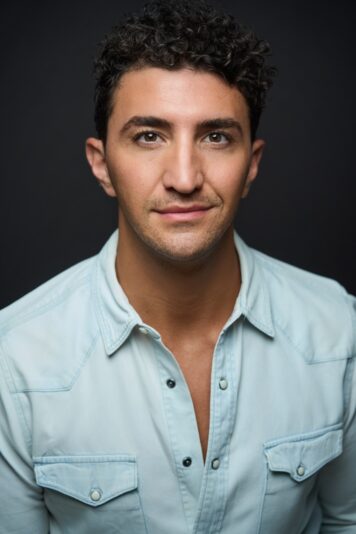
Dominick LaRuffa, Jr.
Interview by: Jack Quinn, Publisher
Dominick LaRuffa Jr. speaks like someone who has done the work from the inside: actor, teacher, dramaturg, collaborator, and founder of the quietly influential Blue Collar Artist Studio. His career moves between screen and stage—from The Irishman and Poker Face to the upcoming films The Florist and The Leader, alongside Off-Broadway premieres and long-running commercial runs—but range isn’t the point.
In conversation at The Players club this past week, where we are both members, LaRuffa isn’t juggling lanes; he’s ignoring them. He talks about credits the same way he talks about coaching a first-year student: show up prepared, stay open, trust the work. His thinking is unsentimental and practical, shaped by an ethic handed down long before the industry entered the picture.
That ethic traces to his grandmother, Bensonhurst’s unspoken mayor, who wrote a Brooklyn newspaper column in the 1970s under the name Carol Day—plainspoken observations of daily life. Not performance. Practice. The same principle runs through LaRuffa’s work today: labor over mythology, craft over display, and a steady commitment to the job.
“People are conditioned to put you in a lane — and I’ll rail against that for the rest of my life.”
TheaterScene Publisher, Jack Quinn: When you look at your career so far, what’s the story people tell about you — and what’s the story that feels truer from the inside? Where do you think that outside perception comes from?
Dominick LaRuffa Jr: Outside perception is almost always flawed, especially in the era I grew up in, where social media became the way everyone communicates. And for a long time, I probably didn’t help things — I would try to explain how hard this life choice really is.
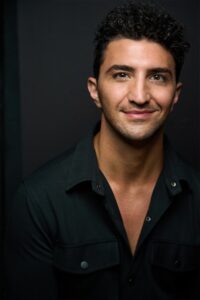
Dominick LaRuffa, Jr.
Depending on when someone met me, they might say, “Oh wait, you act?” Or, “Wait, you teach?” People love putting you in a bucket. But I don’t let that define me anymore.
The business talks about being “inclusive,” but particularly in theater – most granularly on Broadway – once they decide what your lane is, that’s it.
I will rail against that for the rest of my life.
He says this without bitterness, just clarity. He has built a career by doing the work in front of him, whether that meant learning from a Martin Scorsese set, shaping a writer’s early draft, or teaching a twenty-year-old how to breathe onstage for the first time.
Jack – The phrase “blue collar artist” reframes creativity as craft, not mystery. What does it mean to you at the deepest level?
Dom: At its core, it means no one determines your fate for you. I used to compare myself to peers who had a head start – parents paying their bills, no day jobs, no overhead. Meanwhile I was working until 3, 4, 5 a.m. and still showing up at 9 a.m. auditions.
I used to feel like a piece of shit because even when I was on Broadway or in real movies, I still needed another job. Now I see it differently. The discipline it took to stay afloat is what allows me to help other artists now.
And I got to the place where I can say: I do the thing I love every day. I still work eighty hours a week — just doing things I enjoy.
Jack: Was there a moment when you realized creativity requires discipline, not just inspiration?
Dom: Discipline equals freedom. You can have the X-factor, the instinct, the talent, but without discipline, it won’t last. Not long-term. I want to be doing this when I’m 90.
Jack: You’ve been described as an actor with instinctive power. Can you remember the first time your instinct was right before you had the technique to explain it?
Dom: The Irishman. It was the biggest movie I’d ever been in — two scenes, three days. I understood the world at a cellular level. And everything I did in that audition room was the opposite of what I’d been taught. But the training had given me enough foundation that I could throw it away.
You have to know all the rules before you can break them.
Jack: Was there another role that changed you?
Dom: Yes, the most recent film I did, The Leader (coming next year). Best filmmaking experience of my life. Modest budget but run with absolute excellence. I left a better actor, smarter, more capable.
“Technique is teachable. Grit is contagious. When you put those two things in the same room, that’s where the magic happens.”
Jack: The Studio has become a kind of ecosystem now. How did it begin?
Dom: By accident, like most good things. I never set out to start a company. It began in my Brooklyn bedroom during the 2020 lockdown. One student became five, five became twenty, and suddenly it was a real thing.
And for five years I didn’t advertise. My Gen Z kids forced me to make a public profile because they wanted something to point to when they talked about the work we were doing. When they phrased it that way, I understood it.
The Studio has since become a vibrant hub for actors across theater, film, and television, known for rigor, honesty, empathy, and the belief that great acting should be accessible, demanding, and deeply human.
Jack: You collaborate closely with writers and actors in development. What’s the first thing you listen for in a script or a performance?
Dom: Everyone has great ideas. My question is: what else do you have? Do your characters actually sound like themselves? Does the piece understand its own world? You can get to draft ten without wasting ten years — but only if you’re honest about where you are.
Jack: Do writers usually know what their piece is about?
Dom: My favorite ones don’t. If they stay open, the piece reveals itself. Same for actors. You have to train yourself to tolerate uncertainty, that’s where the work grows.
“The Fellowship is about honor. It’s about giving people who’ve given everything a place to build something new.”
Jack: Your coaching work with military veterans is extraordinary. How did it begin?
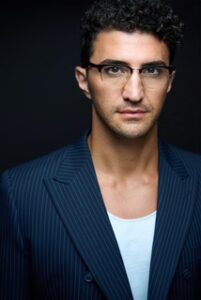
Dominick LaRuffa, Jr.
Dom: Completely by accident — and it’s the most fulfilling thing I’ve ever done.
It started with one guy who came to me while finishing at Strasberg. He’d been on six continents, seen and done things most people can’t imagine — and he couldn’t get through a monologue. What we were really doing was building trust, breath by breath.
When I realized what was happening, I told him, “You don’t pay anymore. Keep your slot.” Three years later, every veteran I work with trains for free.
Jack: What do veterans bring to the arts?
Dom: Discipline is unmatched. But also an openness they don’t even recognize yet. They’ve spent years being told who they are. My job is to help them discover something else.
Jack: What does the Fellowship mean to you?
Dom: It’s a community. And it’s a responsibility. The Studio now sponsors veterans as they train, write, collaborate, and rebuild a sense of self through craft. Storytelling lets them process what therapy sometimes can’t. Helping them find themselves through the work — I’ll do that for as long as I can.
“My job isn’t to tell someone who they are. My job is to give them the tools to discover it.”
Jack: Your studio takes a holistic approach. What’s the most misunderstood skill an artist needs?
Dom: People misunderstand two things, and they’re usually taught badly. First, there’s this idea that struggle is noble — that poverty somehow sharpens the work. It doesn’t. Artists need to understand money at a basic level. Not in some abstract way, but practically — how to pay bills, how to stay afloat, how not to be panicked all the time.
The second is personal life. I was told early on that if I wanted a real career, I shouldn’t get married or have kids. That advice was completely wrong. Becoming a father improved my work in ways nothing else ever did. My career actually took off after that, because I was more grounded, more present, more disciplined.
You can’t separate who you are from what you make. Your personal life and your artistic life have to be in conversation, or the work suffers.
Jack: Is there a project you didn’t pursue that revealed something about your artistic compass?
Dom: Yes — a film I loved more than almost anything. I waited over a year, passed on other work, trusted the wrong people. I almost lost my house.
The rebound took a long time. I learned: I will never again make someone else’s problems my problems. And I must choose more wisely who I leap with.
“My grandmother told me, ‘Talent is a gift, but discipline is a choice.’ I’ve been choosing it ever since.”
Jack: When you look at the artists you’ve coached, acted with, or collaborated with — what do you hope they carry forward because of you?
Dom: Character — who you are when no one is watching.
I want them to remember who they were on the first day they walked into the Studio.
And if they get the chance to send the elevator back down, do it — without sacrificing themselves. That used to be my issue.
Also: it’s okay that not everyone is your friend. Learn terms like coworker, colleague, associate. You can go to bat for someone without taking everything personally.
“Working with legends isn’t intimidating if you show up prepared — it’s a masterclass you’re grateful to be in.”
Jack: What’s the next risk you’re ready to take?
Dom: Professionally, I’m stepping into much higher-level film work now. I don’t need to be the center of everything, but the work has to be right for where I am — or meaningful enough to help someone else realize a vision they couldn’t make without support.
It feels like a real risk, but it’s a considered one. I’m more selective, more patient, and more honest about what I want to spend my time on. I believe 2026 will be the best year of my life — not because something suddenly opened, but because I’ve spent fifteen years building toward it.
The Veterans Acting Fellowship
LaRuffa’s work with veterans is not symbolic or episodic. Through the Blue Collar Artist Studio’s Veterans Acting Fellowship, former service members receive sustained, tuition-free access to professional training, mentorship, and real-world production experience across theater, film, and television.
The yearlong fellowship combines acting and writing instruction with hands-on exposure to producing, budgeting, and industry practice. Fellows shadow working professionals, participate in active productions, and complete a capstone project presented to industry insiders — positioning them not as students, but as working artists.
The program reflects the same values articulated throughout this conversation: discipline over mythology, access over gatekeeping, and craft as a daily practice rather than a credential. Blue Collar Artist Studio operates as a registered 501(c)(3).
Publisher’s note:
What runs through LaRuffa’s work — acting, teaching, the Studio — is a refusal to mythologize the business. Those who work with him talk less about inspiration than about learning how to do the job, and how that clarity carries over into the rest of their lives. LaRuffa puts it more plainly: it’s the work in front of him.

This interview was very interesting. Thanks for sharing it. I hope to make Dom’s aquaintance at the club.
Wonderful core info. It’s the discipline. It always is. The years I spent not choosing that. Live a full life, help who you can without self injury and do the work in front of you. What a wonderful meal you will get out of that recipe. ❤️
Wonderful article on a young actor, dramaturg and creator of The Blue Collar Artist Studio. The article easily conveys the dimensions of LaRuffa’s talents and shows that he has learned a great deal in his early acting years and has a wide variety of paths that he already has the skills to pursue. He is diversely talented and Quinn pulls out that information in his broad-ranging interview.